
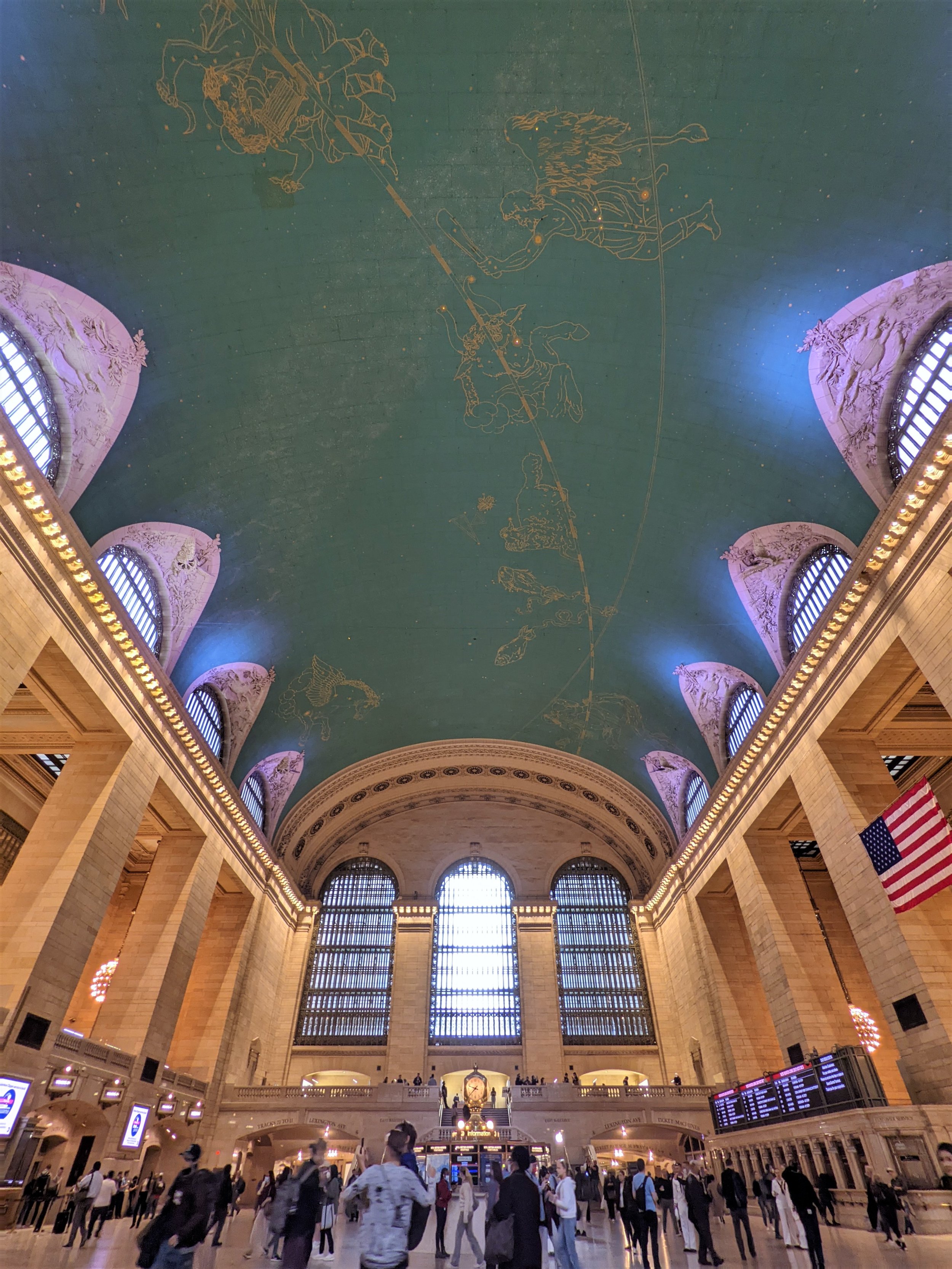
Opened in 1913, Grand Central Terminal is a gorgeous example of the Beaux-Arts architectural style, blending modern efficiency with ornate and impressive detail. The Main Concourse is one of the most recognizable spaces in New York City, particularly because of the famous mural on the ceiling, which features the night sky complete with several constellations. The mural was originally painted directly on the plaster ceiling of the Main Concourse, with detailed artistic depictions of several of the zodiac signs, including Cancer, Gemini, Taurus, Aries, Pisces, and Aquarius, along with Orion, Pegasus, and a few lesser-known constellations. Unfortunately, a leaky roof mostly destroyed the original mural within the first few decades after it was painted, so the roof was “restored” in the 1940s. However, when the new ceiling was unveiled, the original mural had not been restored at all, merely covered up with large boards. A new mural was painted, with a few puzzling changes, including much-simplified images. The new mural retained a major error in the original – the mural was painted backwards, with east and west reversed. The original mural is probably long-gone behind the boards and their “restoration,” but the Main Concourse is still an impressive sight to behold.
As Preposterous as it is Evil

George Rickey on the Highline
One of the most influential American sculptors of the twentieth century, George Rickey spent much of his long career fascinated with the movements of the wind. He was captivated by “the waving of branches and the trembling of stems, the piling up or scudding of clouds, the rising and setting and waxing and waning of heavenly bodies.” His most famous sculptures reflect this preoccupation with movement. Rickey developed a distinct style of kinetic sculptures: simple, large-scale forms that were carefully balanced and calibrated to move with the slightest breeze. Several of these simple, gently moving pieces are currently on view at Kasmin Gallery’s rooftop sculpture garden in Chelsea, viewable from the High Line. The three works visible there, Five Lines in Parallel Planes, Peristyle II, and Two Red Lines, are all made up of elegant steel spikes, precisely balanced to sway and dip with the movements of the air. All created in the 1960s and 1970s, these pieces are emblematic of the sculptor’s signature style.
Temporary Increase of Automatic Extension Period for Certain Renewal Applicants’ Employment Authorization
United States Citizenship and Immigration Services (“USCIS”) adopted a Temporary Final Rule (“TFR”) on May 4, 2022, to increase the automatic extension period for employment authorization and Employment Authorization Documents (“EADs”) available to certain EAD renewal applicants. Previously, work authorization granted to foreign nationals who had filed a timely Form I-765 application to renew certain categories of EADs was automatically extended for 180 days. The new rule will effectively increase this period to up to 540 days from the expiration date stated on the EAD. During the eighteen month period after publication of the TFR, eligible applicants with a timely-filed, pending Form I-765 renewal application will receive up to 360 days of additional automatic extension time (for a total of up to 540 days).
Read moreRemember that Life is Like a Wheel
![P]erhaps you think what happens now and going forward doesn’t matter to you, since you are already guaranteed your place in the United States. But you should remember that life is like a wheel: sometimes we go up and other times we go down. Or maybe](https://images.squarespace-cdn.com/content/v1/518a56c0e4b0f73b5500b4b6/69f7b091-9aa4-4491-864d-ec4fc7347b64/Remember+that+Life+is+Like+a+Wheel.png)
Yayoi Kusama’s Infinity Mirrored Rooms
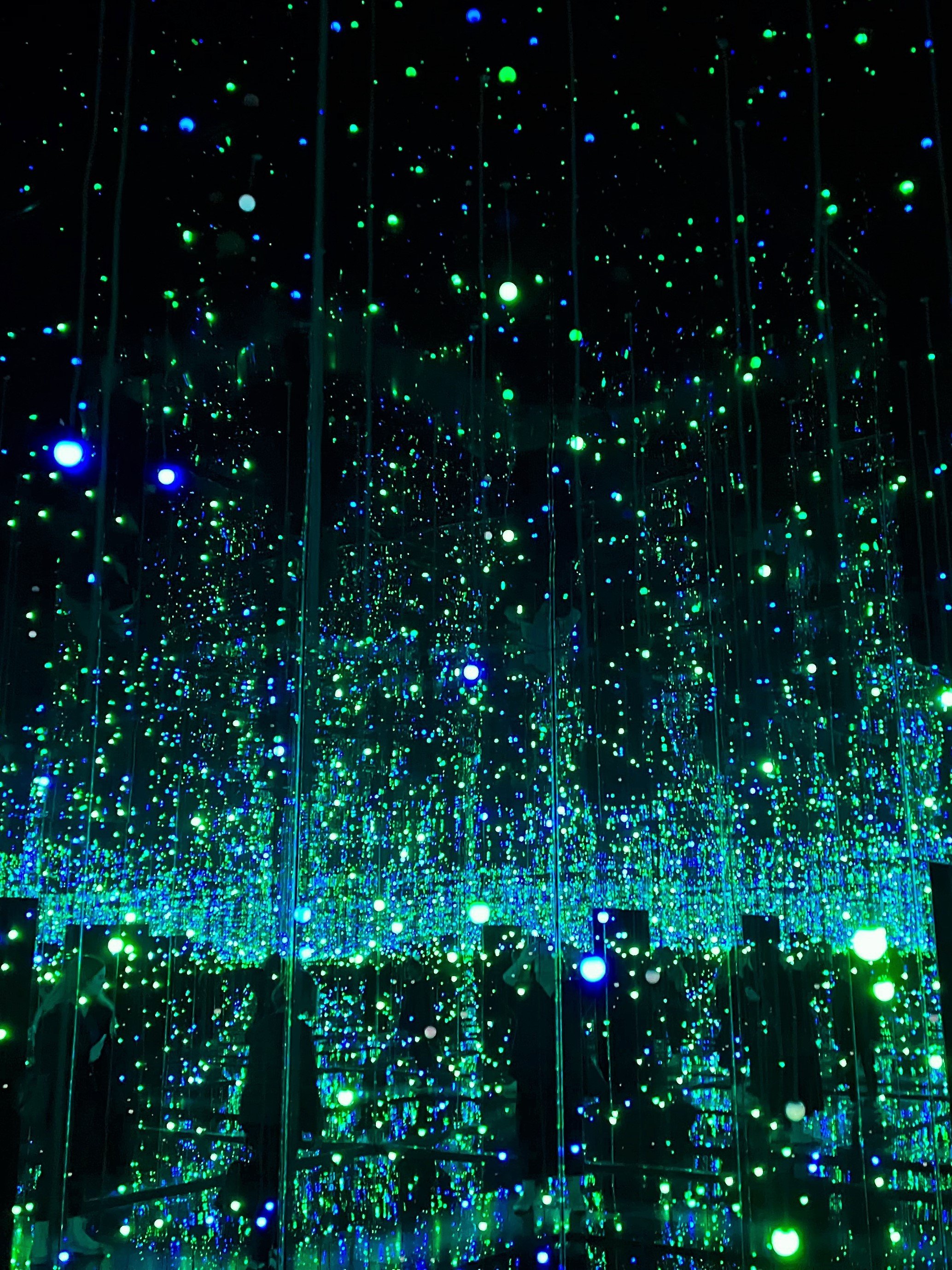
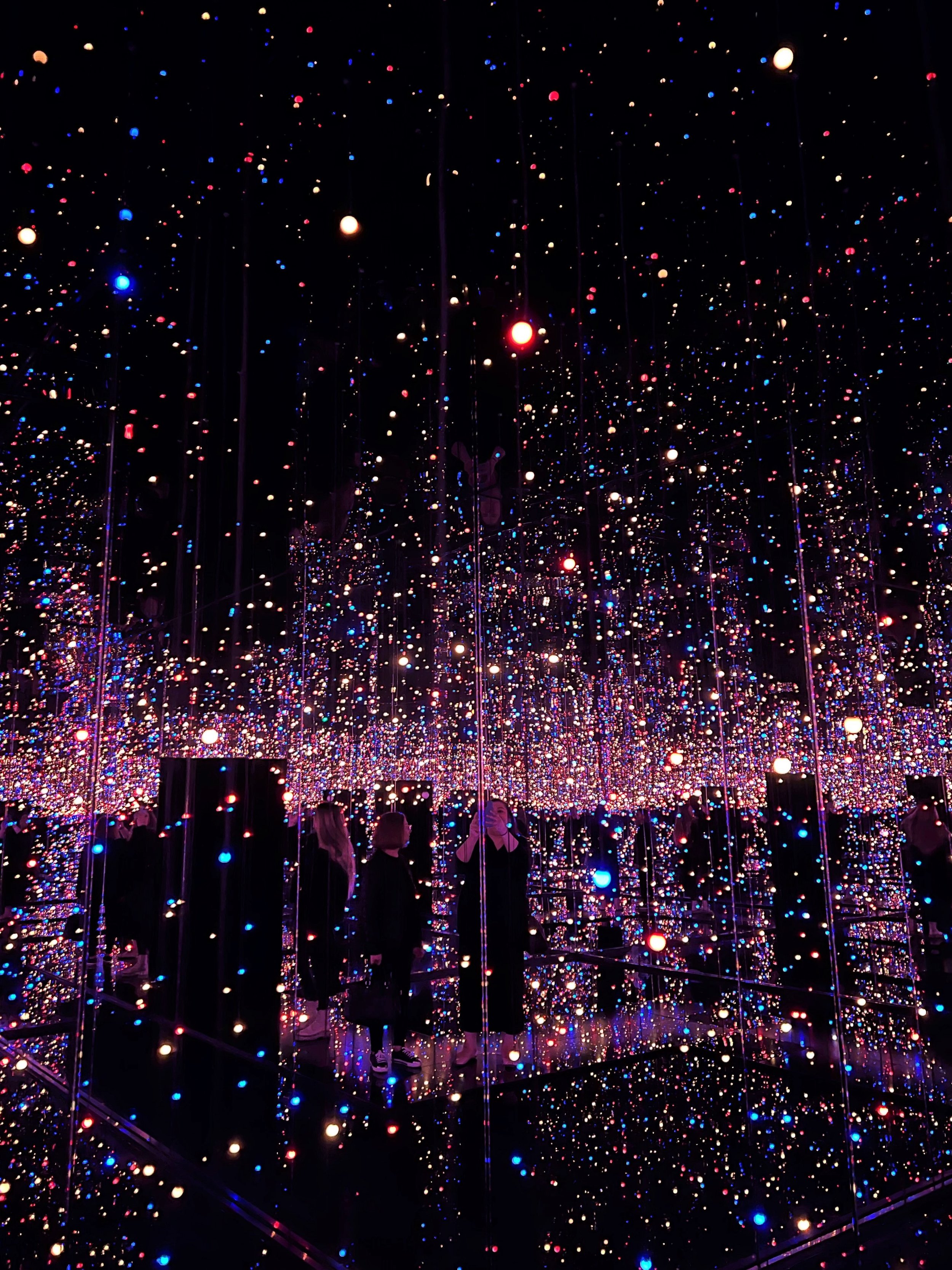
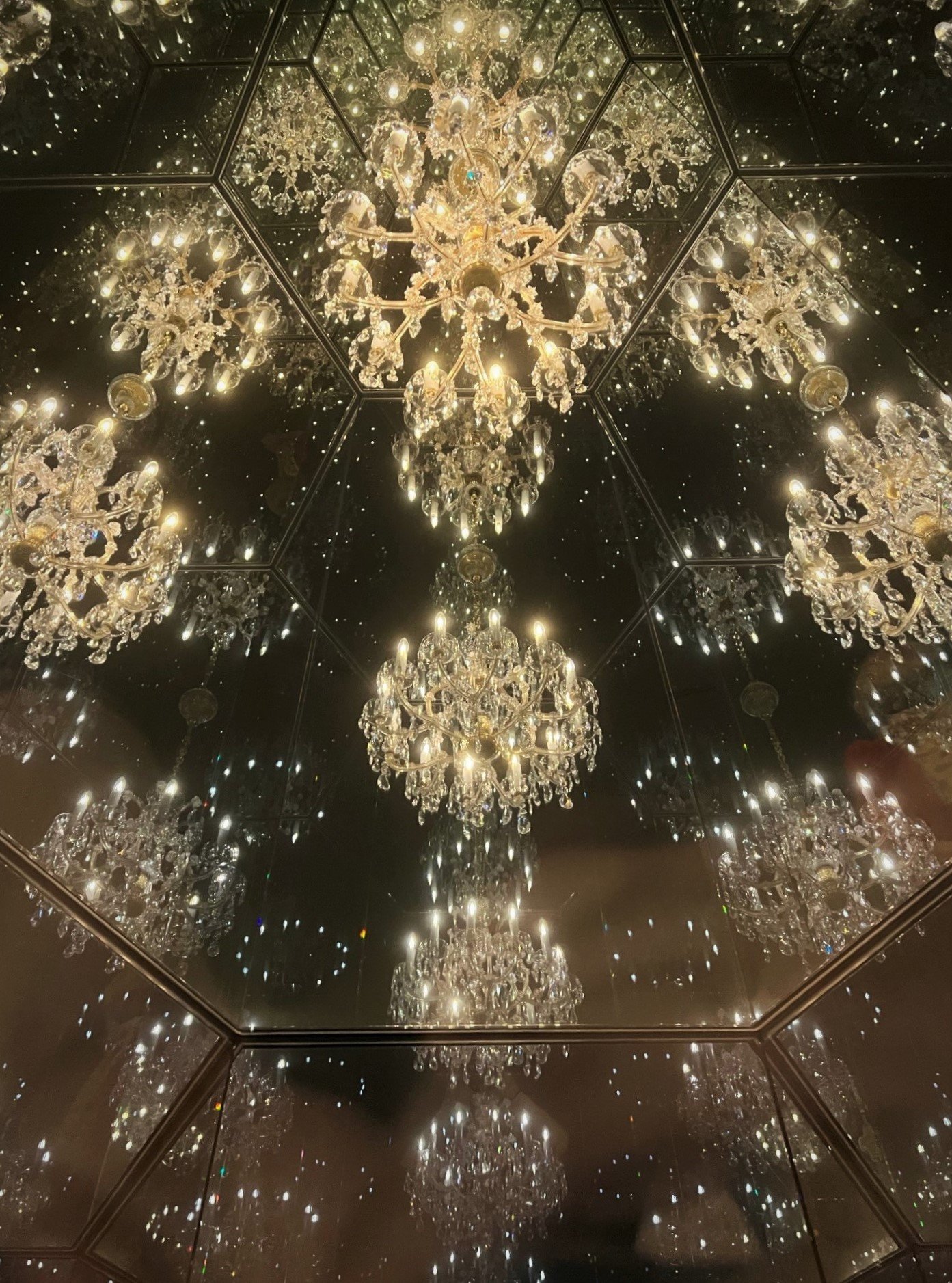
Yayoi Kusama is one of the most well-known contemporary artists in the world. She is best known for her conceptual and sculpture and installations, which blend elements of surrealism, pop art, abstract expressionism, and minimalism. Two of her Infinity Mirrored Room installations are currently on view at the Tate Modern in London. Both rooms strategically use lights and mirrors to create the illusion of infinite space. Infinity Mirrored Room – Filled with the Brilliance of Life is the artist’s largest mirrored room. Pinpricks of colored light shift rhythmically between hues, reflected off the mirrored walls, floors, and ceiling, as well as the still water filling pools on the floor. The effect is dizzying and beautiful. The other room, titled Chandelier of Grief, consists of a flickering baroque-style chandelier inside a smaller, hexagonal mirrored room. This meditative installation is meant to provoke thoughtful exploration of the viewer’s place in their environment. The current exhibition has been exceedingly popular, and it is easy to see why. These mesmerizing rooms are unique and transportive.
USCIS Adopts Changes to Simplify and Improve Public Communication of Case Processing Data
Keeping in line with its commitment to increase efficiency, US Citizenship and Immigration Services (“USCIS”) announced changes to improve and simplify how the agency communicates case processing time data to the public. Effective immediately, users can now “find the processing time information for their particular type of case, rather than seeing an aggregate of all related case types.”
Read moreMarginalized Groups Will Bear the Brunt of the Consequences

At The Met – Fictions of Emancipation: Carpeaux Recast
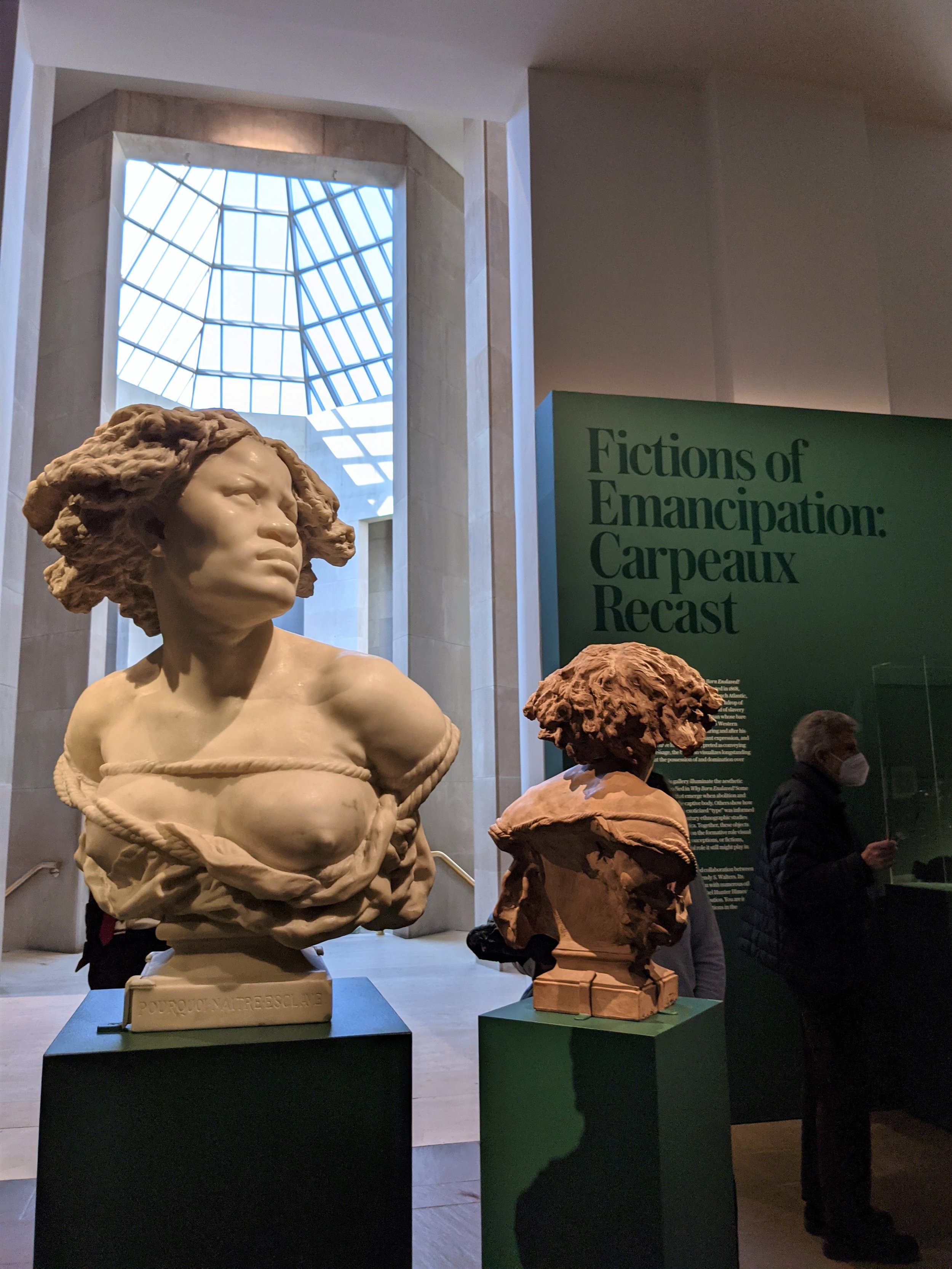
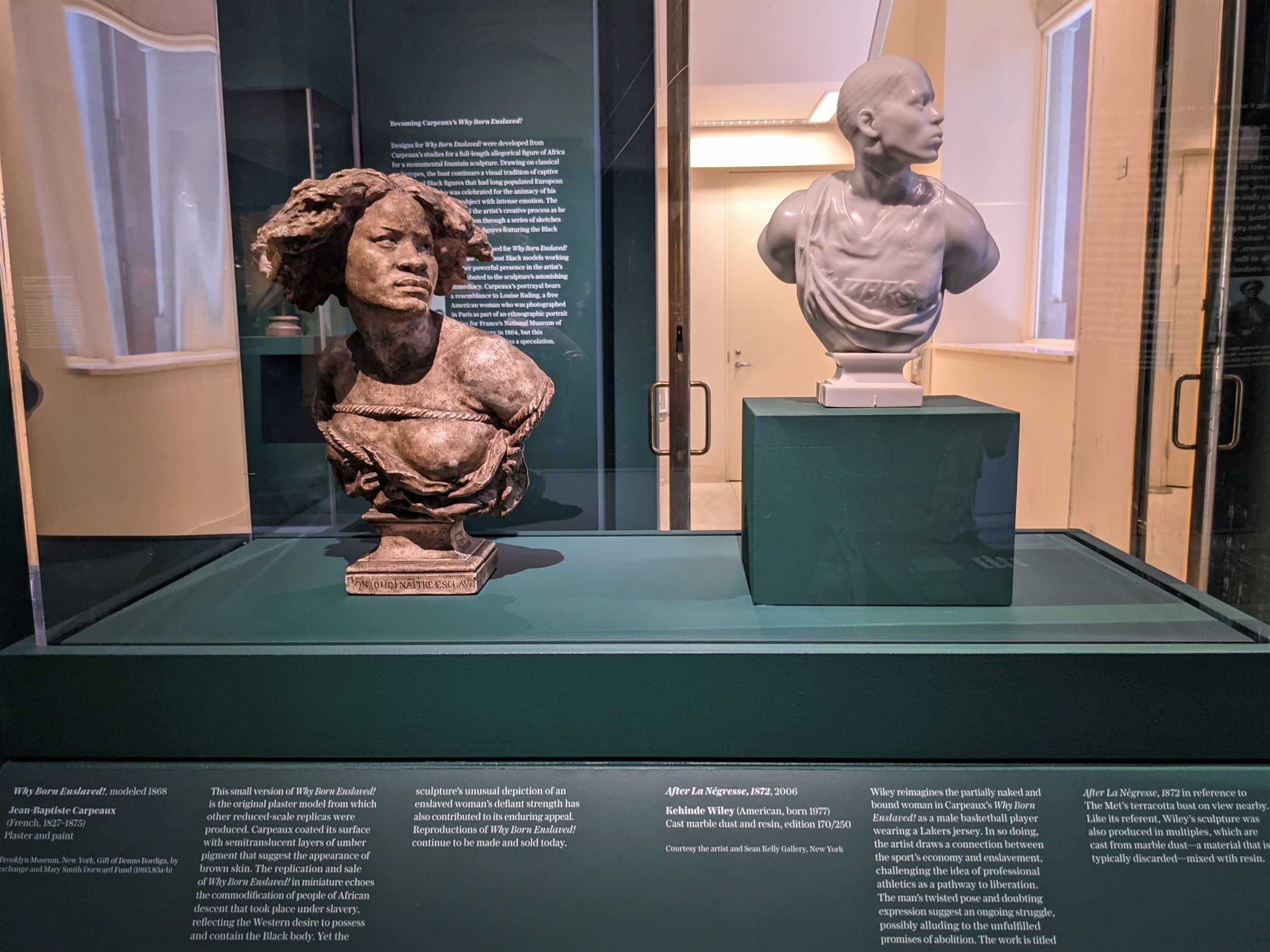
New York’s most famous art museum, the Metropolitan Museum of Art, is currently featuring a groundbreaking exhibition called “Fictions of Emancipation: Carpeaux Recast.” The exhibition is centered around a single sculpture – a marble bust by Jean-Baptiste Carpeaux entitled Why Born Enslaved! (1868). The bust, featuring a Black woman with tied arms and a defiant expression, became very popular in Europe when it was created. The Met’s exhibition explores the idea that antislavery imagery often reinforced the colonial power structures that they were meant to critique. It is “the first exhibition at the Met to examine Western sculpture in relation to the histories of transatlantic slavery, colonialism, and empire.” The exhibition is thoughtfully and expertly curated to challenge “institutional narratives… bringing race to the forefront of discussions about art and culture.”
