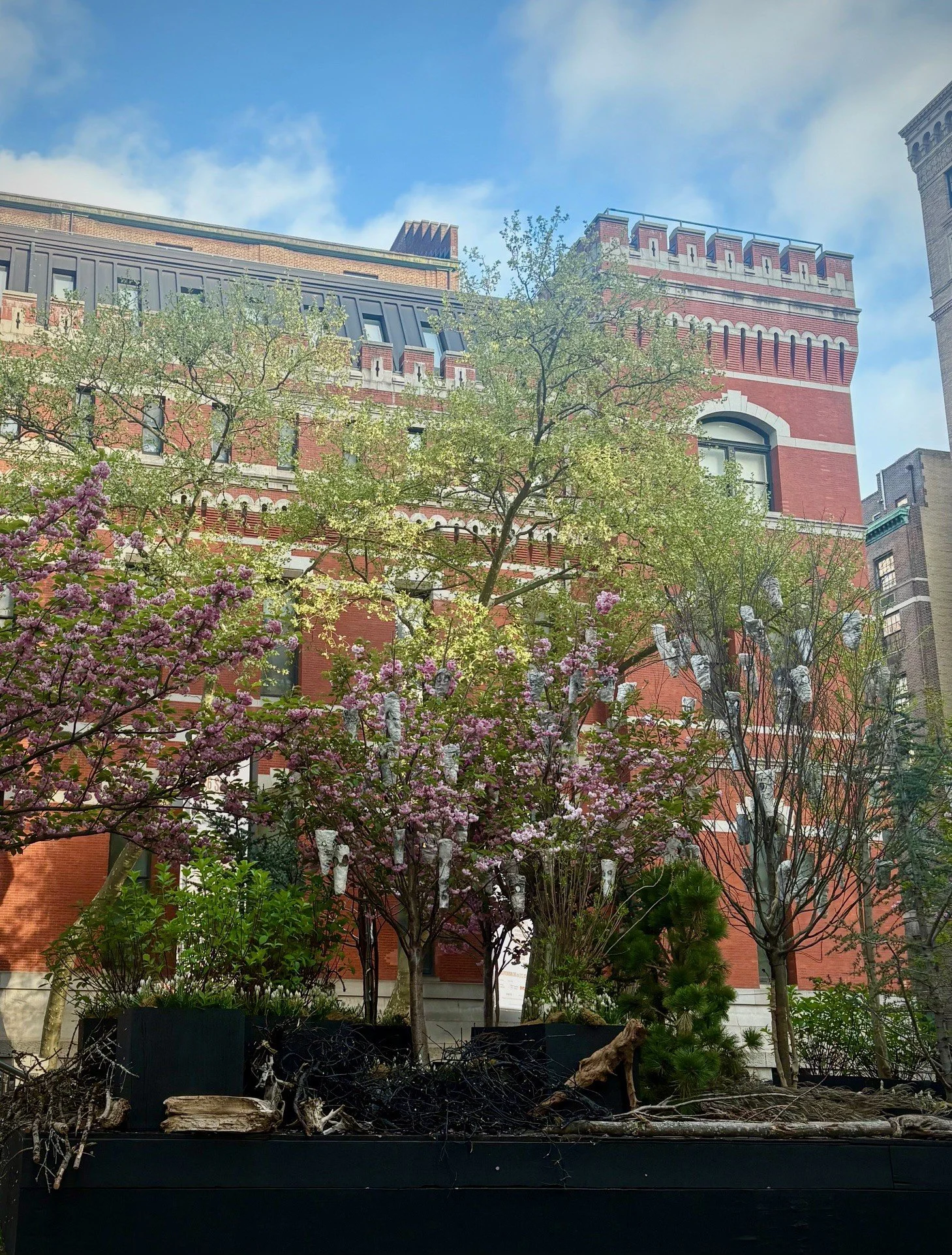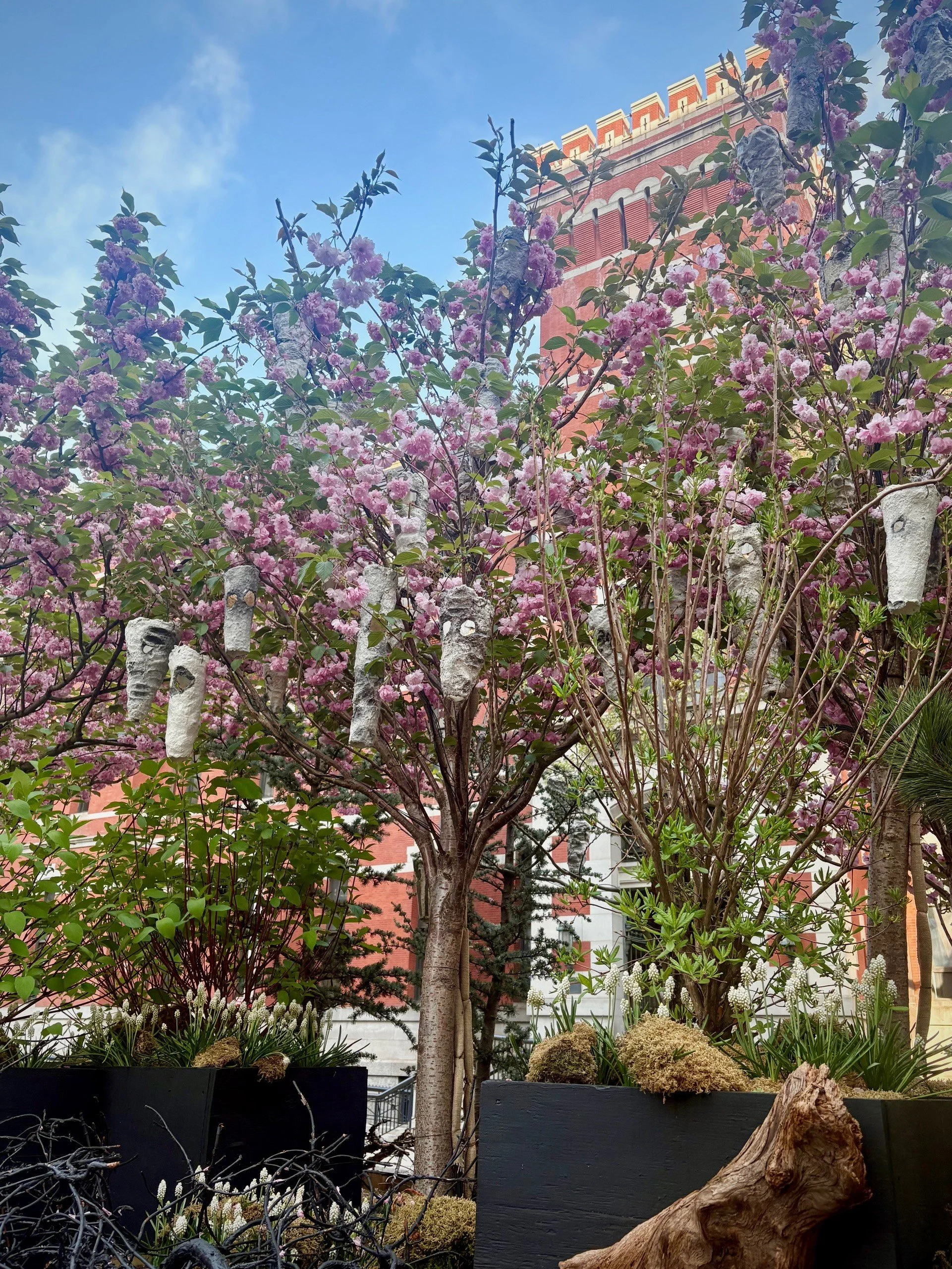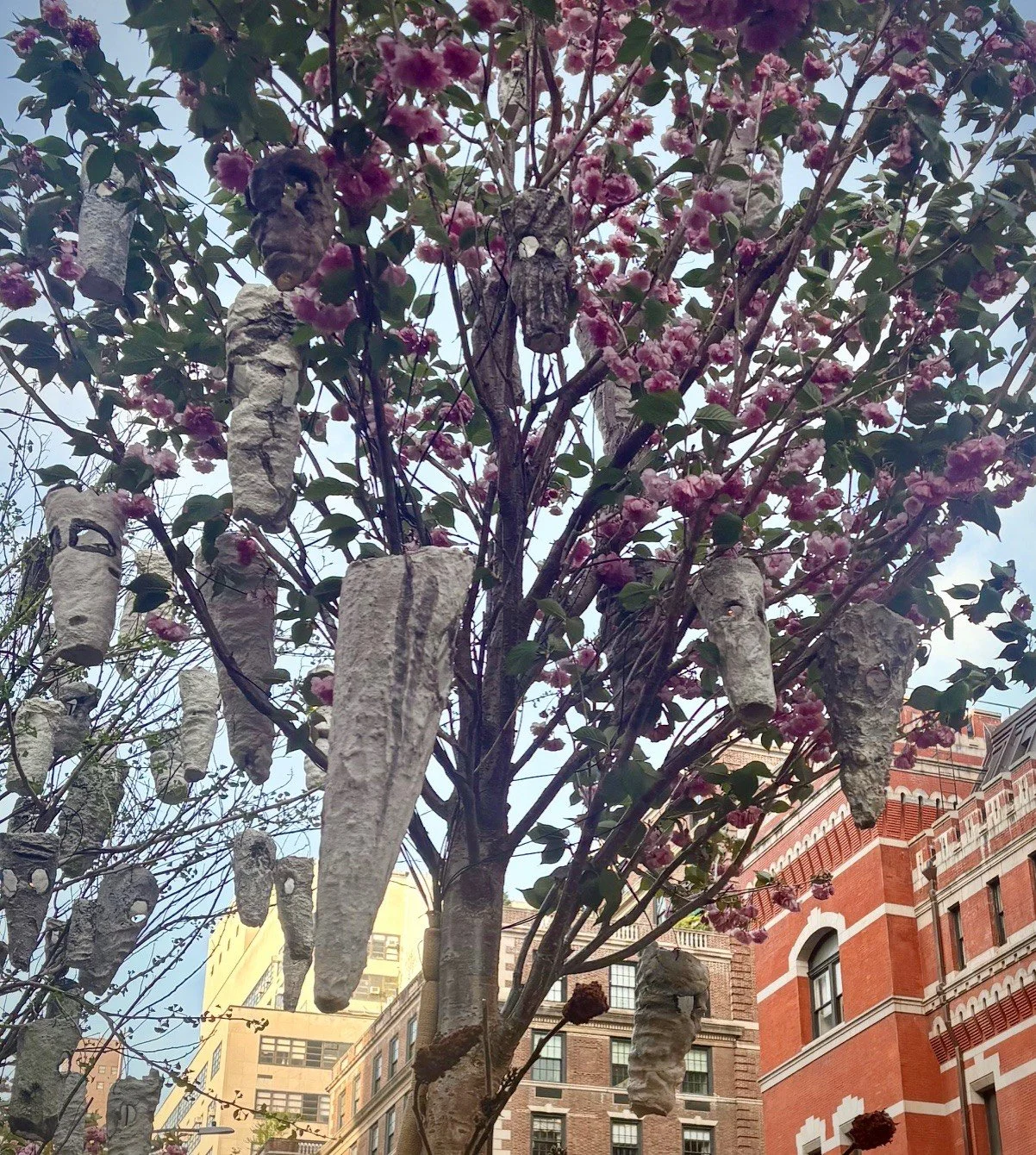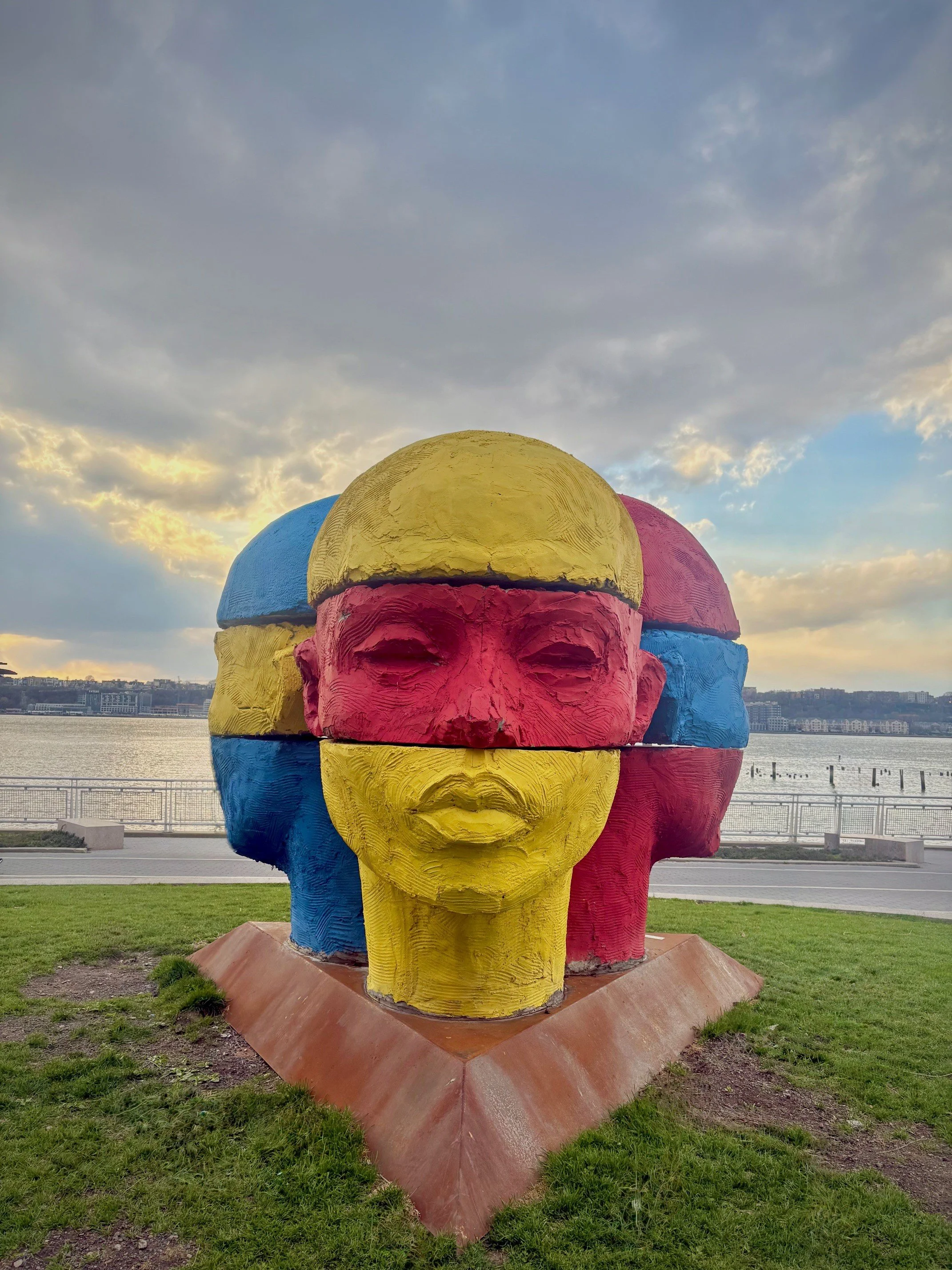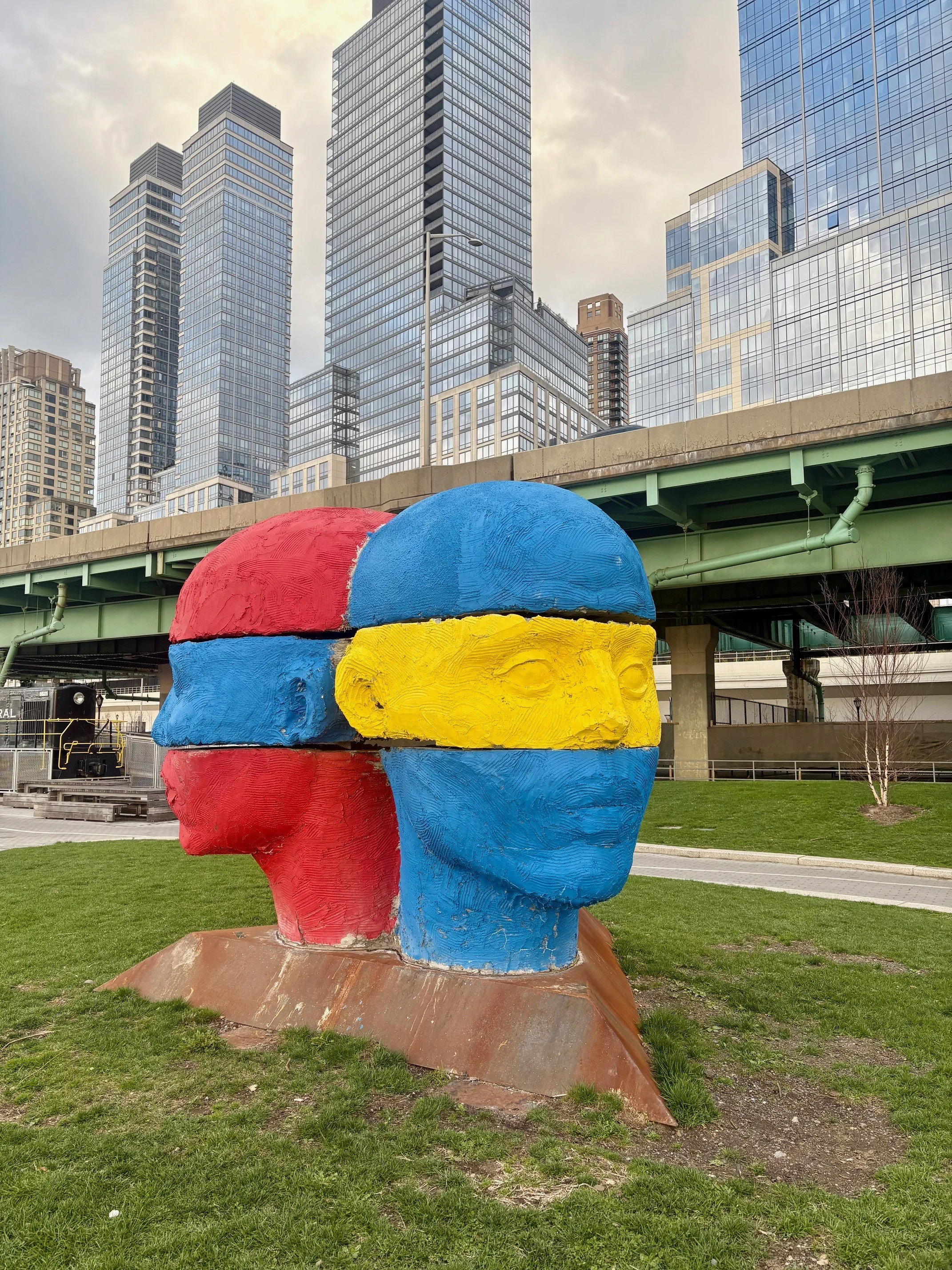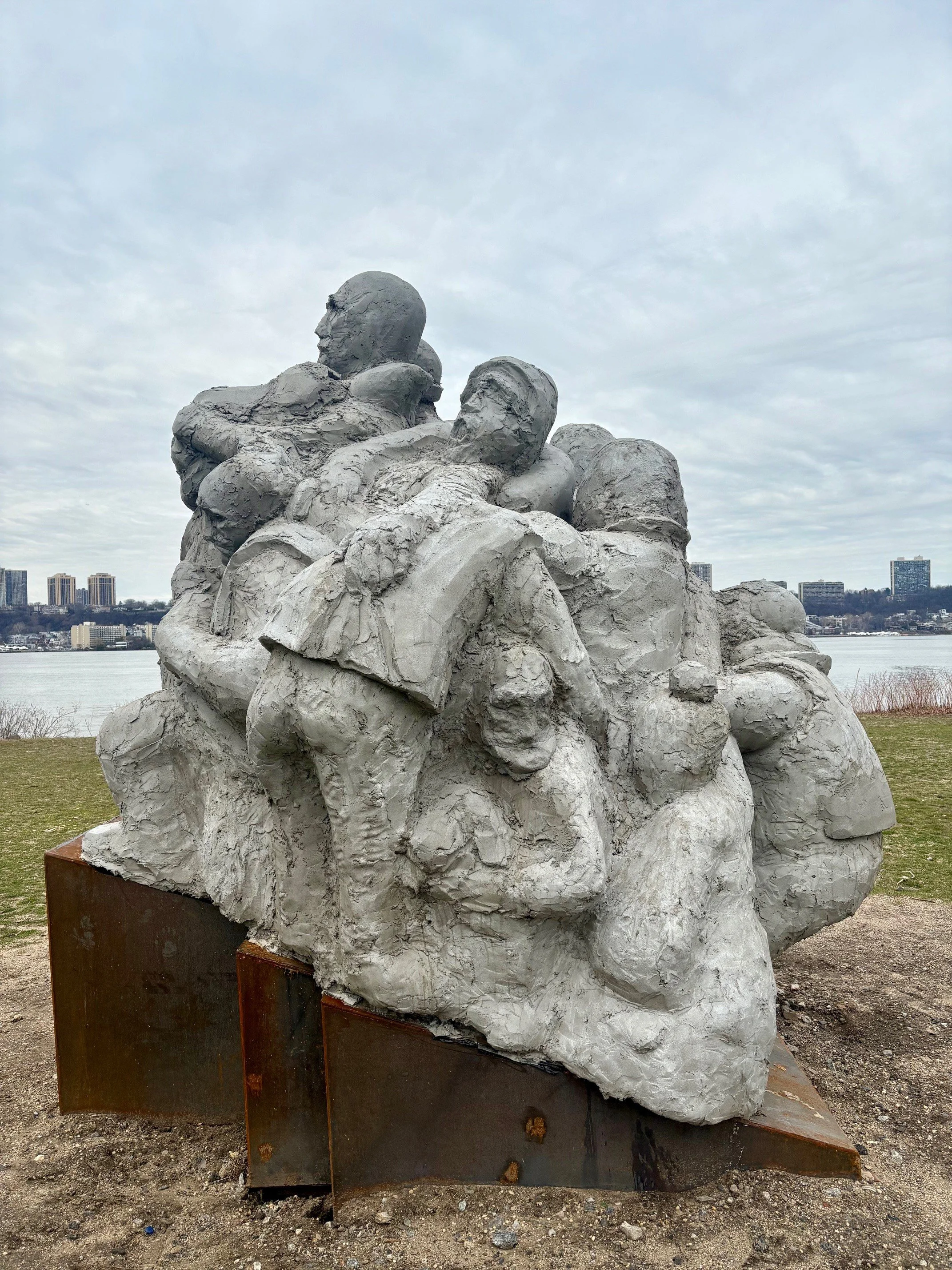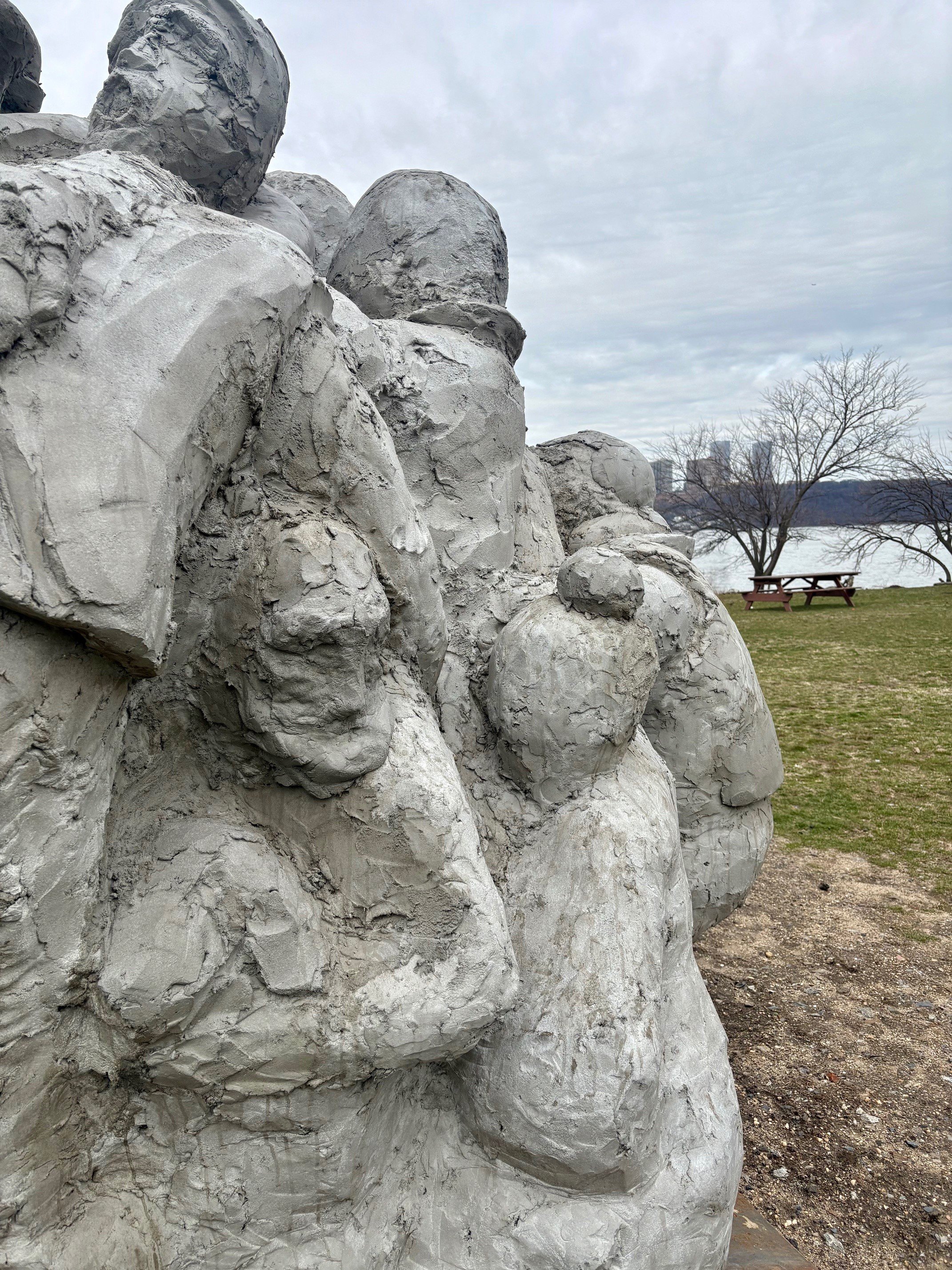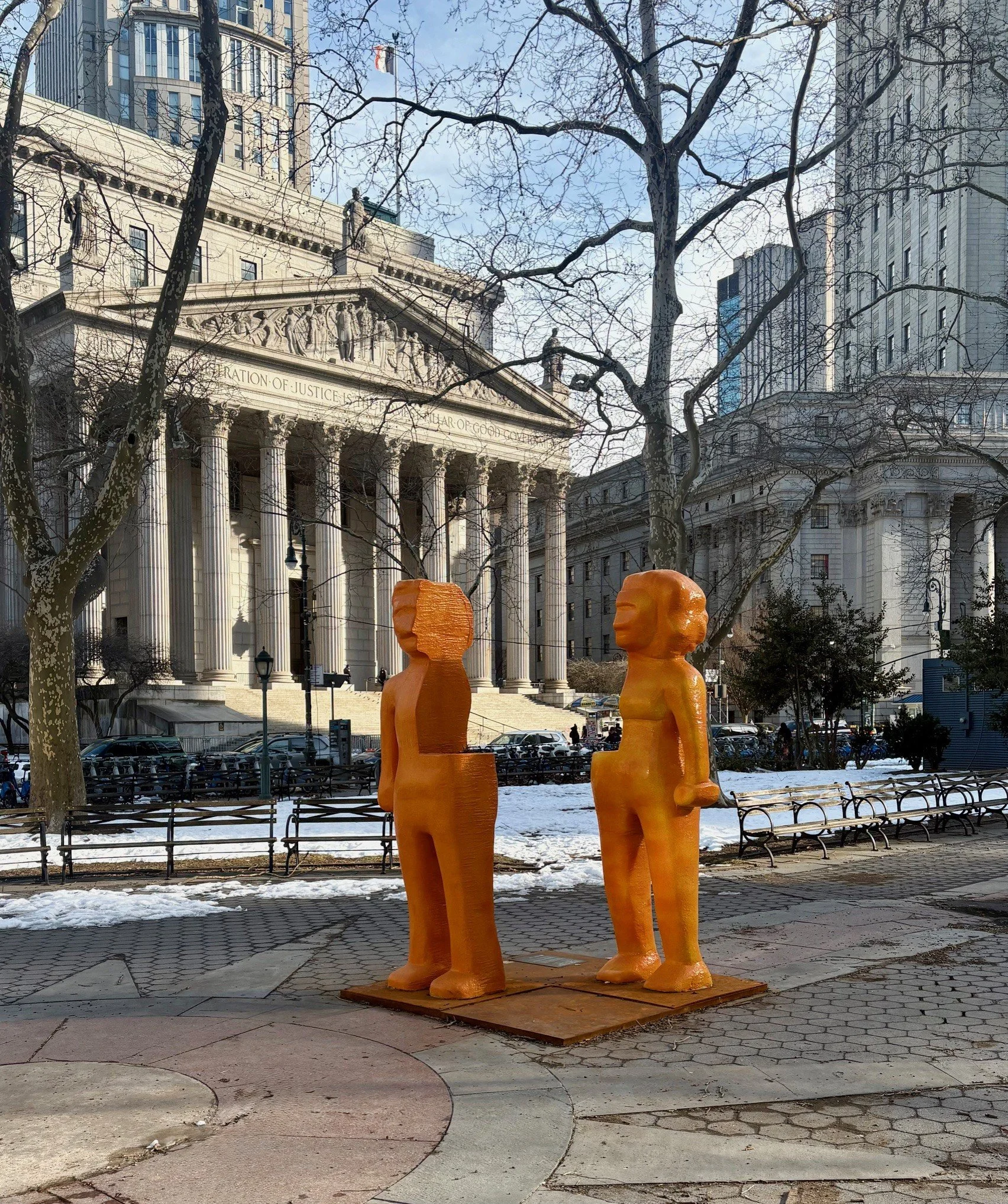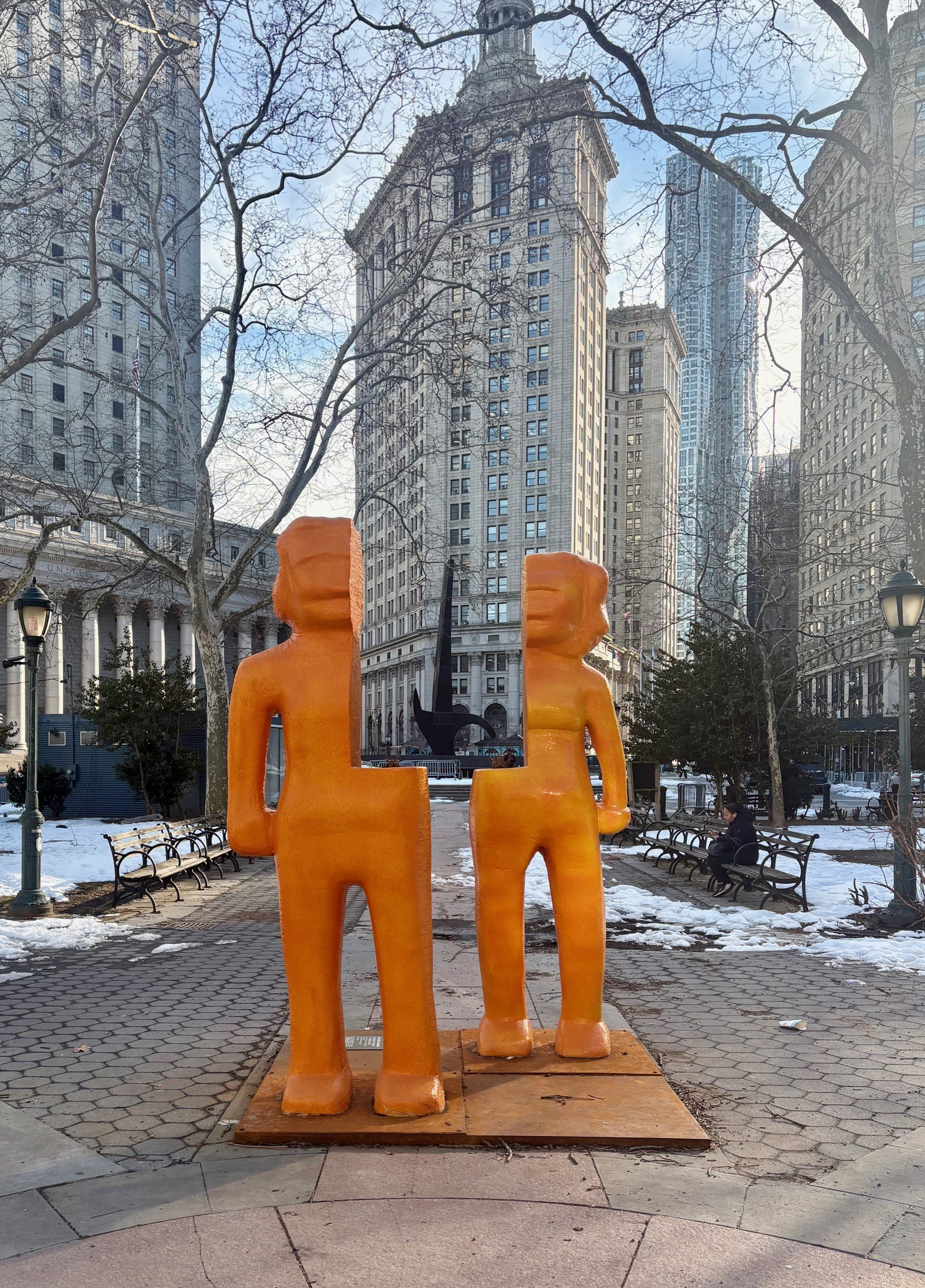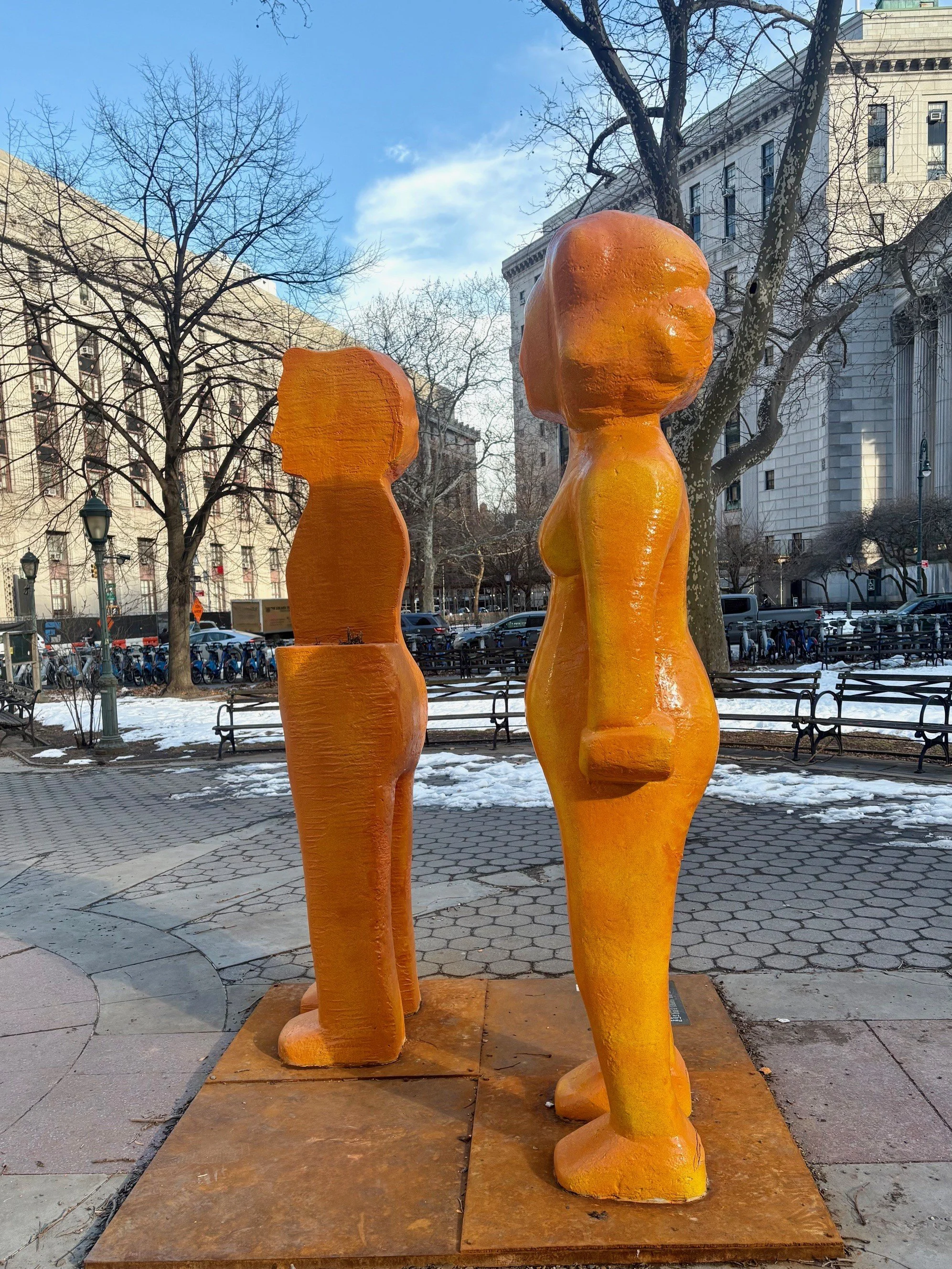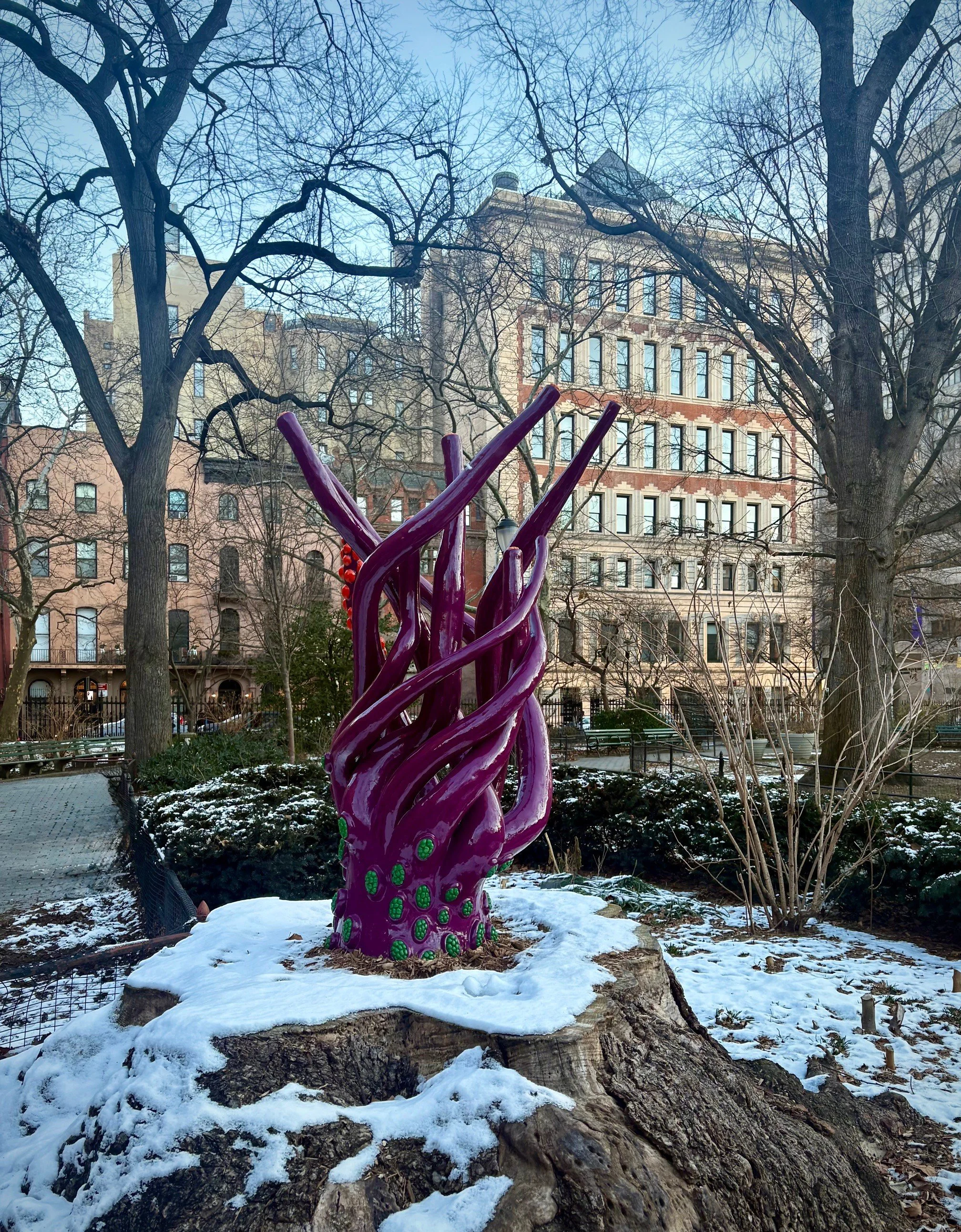
Tucked away in a quiet corner of Stuyvesant Square stands “Nurturing Tree,” a 2025 installation by New York City–based artist Judith Modrak. Known for her bright sculptures inspired by the social and natural sciences, Modrak brings a sense of wonder and reflection to this striking piece. Its vibrant purple, and almost alien, outstretched arms echo the form of the beloved mother elm tree that anchored the community for more than three centuries. The sculpture rises directly from the elm’s remaining stump, which now serves as its pedestal, a powerful reminder that beauty and meaning can emerge from spaces shaped by loss. Commissioned by the Stuyvesant Park Neighborhood Association, “Nurturing Tree” encourages viewers to consider how kindness can be cultivated wherever we plant it. Brightly colored seed pods scattered across the sculpture symbolize small acts of care and compassion, each one carrying the potential to take root and spread far beyond the park itself.
"Kânh Chhrôôl (Gluta Usitata), Melembu, and Khlông (Dipterocarpus Tuberculatus)" by Sopheap Pich
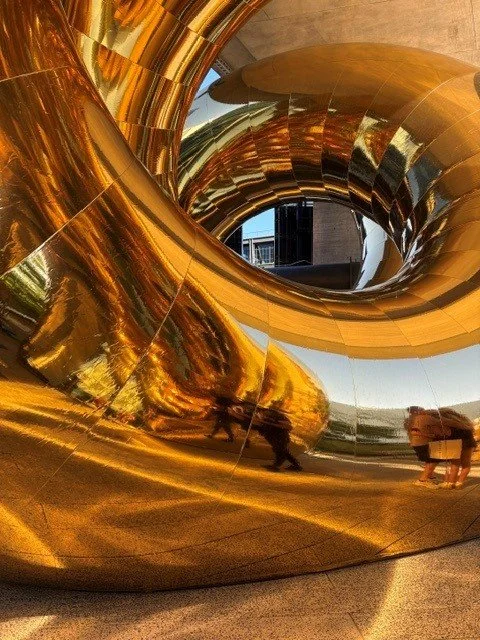
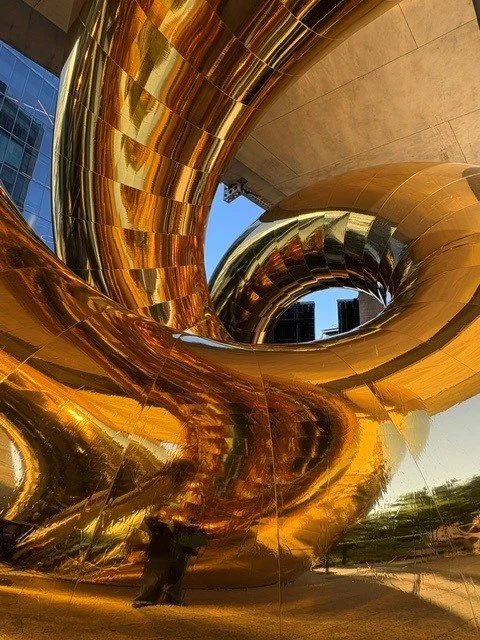
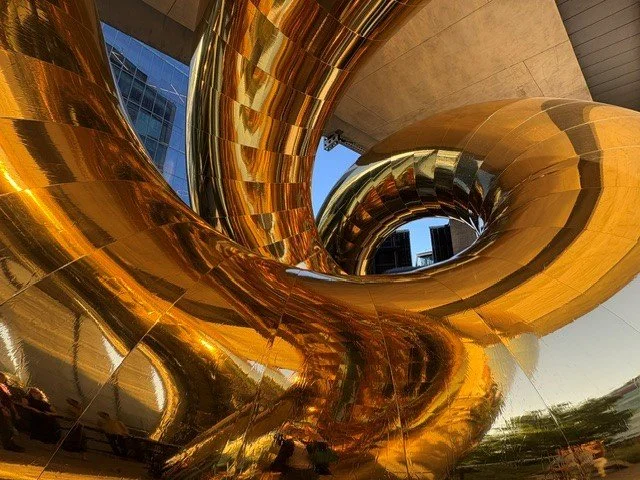
This week, we explored the High Line to experience Kânh Chhrôôl (Gluta Usitata), Melembu, and Khlông (Dipterocarpus Tuberculatus) by Cambodian artist Sopheap Pich on view through August 2026. Known for transforming natural materials into sculptures inspired by bodily organs and plant structures, Pich’s pods suspended above West 24th Street are crafted from copper, gleaming in the sunlight while embracing natural hues. Raised during the Cambodian genocide, Pich’s work often weaves themes of memory, nature, and migration. This piece is no exception. It references the hardwood trees in the garden of the National Museum of Cambodia, whose pods spiral through the air, traveling long distances before settling. These forms serve as a poignant metaphor for human migration and the lasting effects of conflict and displacement. This evocative installation also draws attention to environmental fragility. The trees are threatened by poaching for their valuable timber, reminding us of the delicate balance between human impact and the resilience of nature. Pich’s installation invites reflection on history, movement, and the intricacies of the natural world around us.
“Improvisations in the Park” by Larry Bell
Happy New Year! We hope you enjoyed a restful holiday season filled with meaningful moments with friends and family. To kick off the year, we ventured just steps away to Madison Square Park for our first exhibition of 2026: “Improvisations in the Park”, a striking glass installation by New Mexico–based artist Larry Bell. With nearly seventy years of artistic practice, Bell is internationally celebrated for his masterful and innovative use of glass to create captivating minimalist forms. This installation marks his largest outdoor presentation to date and draws inspiration from musical improvisation, inviting viewers to notice how the glass structures shift and transform with changing light, weather, and seasons. As the year unfolds, the work encourages us to slow down, observe closely, and embrace new perspectives. Its message of welcoming change, nuance, and embracing seasonal beauty feels especially fitting as we step into 2026 with curiosity, openness, and renewed creative energy.
"First Sun" by Monira Al Qadiri
While still adjusting to the weekend’s time change and in search of as much sunlight as we can gather, we wandered through New York’s Central Park in search of “First Sun”, a stunning aluminum sculpture by Senegalese artist Monira Al Qadiri. Positioned at the park’s southeast corner, the piece greets visitors with a mesmerizing play of color and light.
“First Sun” reimagines Khepri, the ancient Egyptian god of the rising sun, denoted by the deity’s scarab face, cast in shimmering purples and blues that shift with the sunlight. The sculpture’s reflective surface and ever-changing hues engage the viewer in a dynamic dialogue with the piece and the natural world which surrounds it.
Al Qadiri’s choice of location is extremely intentional. The sculpture serves as a symbolic gateway to one of New York’s most beloved green spaces, encouraging visitors to reflect on the transition from the stylized cityscape to the wild of the park. “First Sun” invites us to pause, reconnect with nature, and appreciate the balance between humans and the humble creatures that share our world.
“Camouflage” by Ai Weiwei
Seeking a new landscape within the bounds of New York City, this week we ventured to Roosevelt Island, a narrow strip of land nestled between Manhattan and Queens. While the island is known for its striking views and the Four Freedoms Park at its southern tip, which honors President Franklin Delano Roosevelt, our visit was inspired by a more recent addition: “Camouflage”, a new work by Chinese contemporary artist Ai Weiwei, and a part of the Art X Freedom public art initiative. Unveiled on September 10, 2025, to mark both the 80th United Nations General Assembly across the East River and the anniversary of the end of World War II, Weiwei’s installation reimagines the space surrounding the existing bronze sculpture of Roosevelt, building a pavilion that incorporates animal motifs. These elements are a nod to both the island’s historical and current wildlife and the toll of human conflict. Adding an interactive layer to the experience, visitors are invited to tie ribbons inscribed with their thoughts on freedom to the pavilion’s netting, transforming the piece over time, one ribbon at a time. “Camouflage” is a moving and immersive tribute to both its setting and enduring themes of humanity and resistance. By blending memory, environment, and participation, it creates a powerful and evolving reflection on what freedom means today.
“Dear New York” by Brandon Stanton
This week, we happened upon “Dear New York,” a striking new exhibition at Grand Central Terminal. Conceived by artist Brandon Stanton, who is best known for his work “Humans of New York,” and produced in collaboration with the MTA, Pentagram, Juilliard, Korins Studio, and NYC Public Schools, the installation transforms one of the city’s most iconic public spaces into a powerful celebration of everyday New Yorkers.
Replacing the advertisements that typically adorn the space, Stanton’s immersive art installation of vivid photographs fills the terminal. Each photograph captures authentic moments and stories from across the five boroughs. In the grand concourse, 50-foot projections cycle through portraits and quotes, set to a moving live piano performance that adds emotional depth to the experience. A particularly meaningful section features portraits of individuals nominated by NYC students, accompanied by heartfelt notes explaining why their nominee inspires them.
“Dear New York” is more than an art installation, it’s a love letter to the city and its dwellers, as well as a reflection of its diversity, resilience, and creativity. It also highlights the transformative potential of public art in urban spaces. If you're in the area within the next two weeks, through October 19th we encourage you to visit and celebrate humanity.
“Don’t ASK” by Allison Katz
As a slight chill descends on New York, we sought comfort from the changing seasons at one of our favorite places for public art, the High Line, to observe Allison Katz’s Don’t ASK. Hovering above the intersection of 18th Street and 10th Avenue, Don’t ASK features two oversized chickens mid-crosswalk, playfully referencing the classic anti-joke: “Why did the chicken cross the road?” But rather than providing an answer, the installation leans into uncertainty, highlighting possibility, anticipation, and the unknown. Katz’s piece reflects her interest in roads and transportation systems, not just as infrastructure, but as symbols of thought in motion. The road becomes a metaphor for ideas, transitions, and open-ended futures. Visually, Don’t ASK mimics the towering advertisements that define New York City’s skyline. However, instead of selling a product, it reclaims the billboard format to provoke reflection rather than consumption. In a city of constant movement and noise, Don’t ASK offers a quiet interruption, a thoughtful invitation to pause, consider, and embrace not knowing.
“What’s so Funny About Peace Love and Understanding” by Adam Cvijanovic
This week, we visited the recently dedicated mural “What’s so Funny About Peace Love and Understanding” at the iconic St. Patrick’s Cathedral in the heart of New York City, a work named in reference to the song popularized by Elvis Costello. Created by Brooklyn-based artist Adam Cvijanovic, the mural marks the first major art commission at the cathedral since 1949.
Standing at roughly 21 feet tall and comprised of four segments that frame the cathedral's entrance, the mural is a sweeping visual narrative. It depicts the arrival of immigrants to New York City in the 19th century and today, alongside powerful imagery of first responders and traditional Catholic iconography.
Cvijanovic’s work is an artistic feat that seamlessly blends Catholic tradition with American pluralism. Drawing inspiration from Baroque drama, Byzantine iconography, and modernist abstraction, the mural honors the diversity of New York and the immigrants who have shaped the city’s identity. This vibrant addition to St. Patrick’s Cathedral is both a spiritual and civic celebration, one that will continue to inspire for generations to come.
The Mosaic House
Tucked away on a charming, tree-lined street in the artsy neighborhood of Cobble Hill Brooklyn, one house instantly captures your attention. Among rows of classic brownstones, this home dazzles with a vibrant display of tiles, beads, shells, and gems, turning its façade into a joyful, eye-popping mosaic masterpiece. The Mosaic House is a beloved neighborhood treasure that’s as much a local icon as it is a delightful surprise for visitors. As a result of the diligent work of artist Susan Gardner, who started pasting things on the walls of her house in 2001, every inch of the home’s exterior tells a story, blending colorful elements into a whimsical scavenger hunt that brings smiles to everyone who passes by. Look closely and you’ll spot inspiring messages like “Celebrate Hope” and “Celebrate Life” amongst the images of nature and humanity crafted by Gardner. These words, combined with the house’s joyful design, radiate positivity and creativity. Whether you're in the neighborhood or intentionally seeking it out, the Mosaic House is sure to brighten your day. Let it be a reminder to celebrate the little things, embrace everyday beauty, and always keep an eye out for the hidden gems around you.
“San Juan Heal” by Nina Chanel Abney
Lincoln Center, renowned for its world-class performances, is now showcasing its vibrant artistic side to the public with no ticket required. Outside David Geffen Hall, the home of the New York Philharmonic, a bold graphic façade wraps the building, transforming its exterior into a vibrant tapestry of vivid colors, dynamic patterns, and striking imagery that brings the energy of the arts into the streets. “San Juan Heal” by Nina Chanel Abney, who previously shared some “NYC LOVE” with us, pays tribute to what existed before the urban renewal project that transformed 16.3 acres of the San Juan Hill neighborhood into Lincoln Center: a culturally rich, densely populated, working-class community. Within the piece, you’ll find glimpses of those who once called this area home, including jazz and bebop legends like James P. Johnson and Thelonious Monk, dedicated schoolteachers, and pioneering healthcare workers such as Edith Carter and Elizabeth Tyler. Through vivid colors, graphic shapes, and bold typography, “San Juan Heal” reclaims this important history and invites New Yorkers to remember the rich cultural spirit that still resonates throughout the neighborhood.