• Home
  • What We Do
  • How We Work
  • Who We Are
  • Blog
  • Contact Us
Menu

Daryanani Law Group, PC

330 Seventh Avenue, Suite 2003
New York
212-431-5576
US Immigration Law

Your Custom Text Here

Daryanani Law Group, PC

  • Home
  • What We Do
  • How We Work
  • Who We Are
  • Blog
  • Contact Us

"Kânh Chhrôôl (Gluta Usitata), Melembu, and Khlông (Dipterocarpus Tuberculatus)" by Sopheap Pich
January 16, 2026 Misia Delgado
Pich 1.jpg
Pich 2.jpg
Pich 3.jpg
Pich 1.jpg Pich 2.jpg Pich 3.jpg

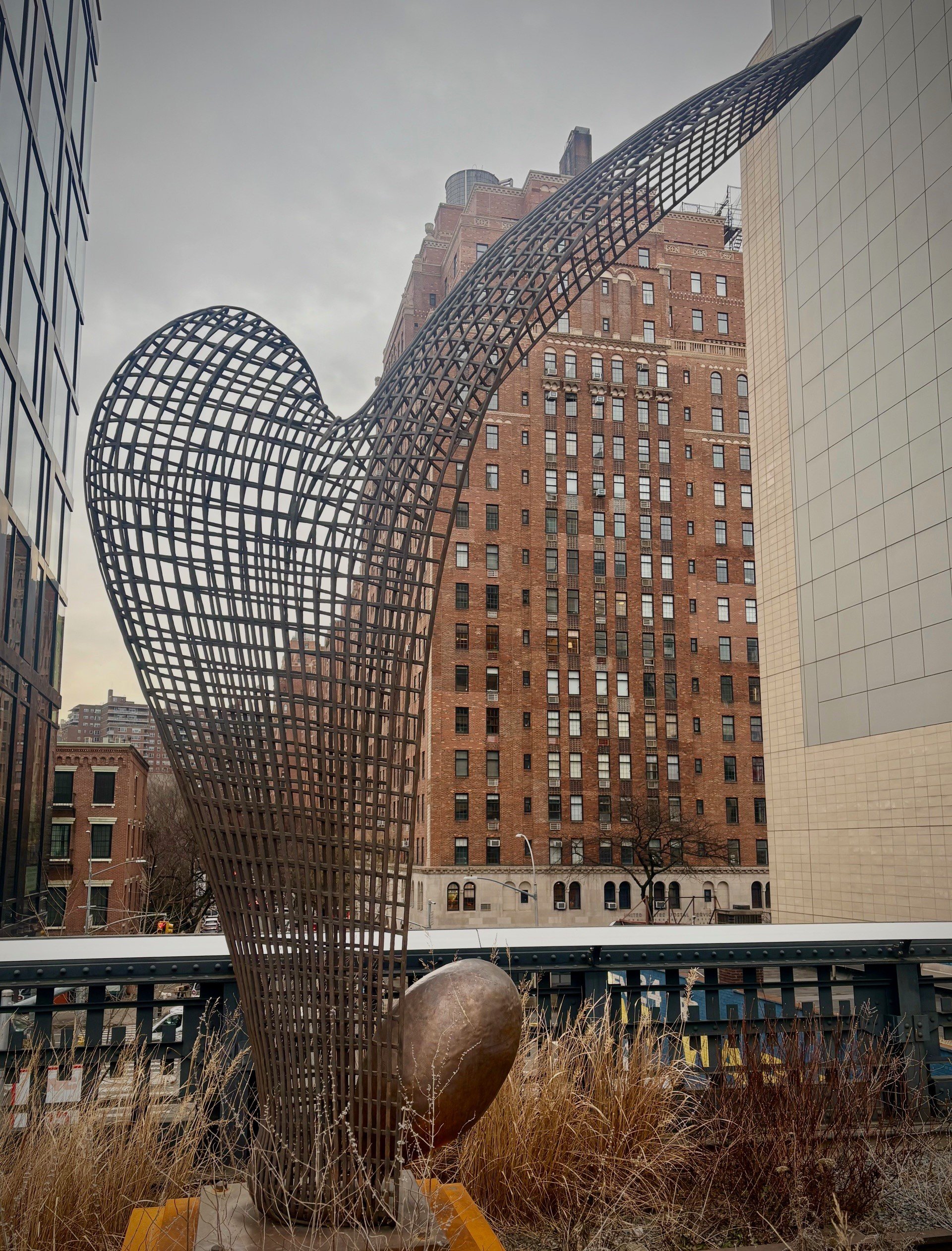
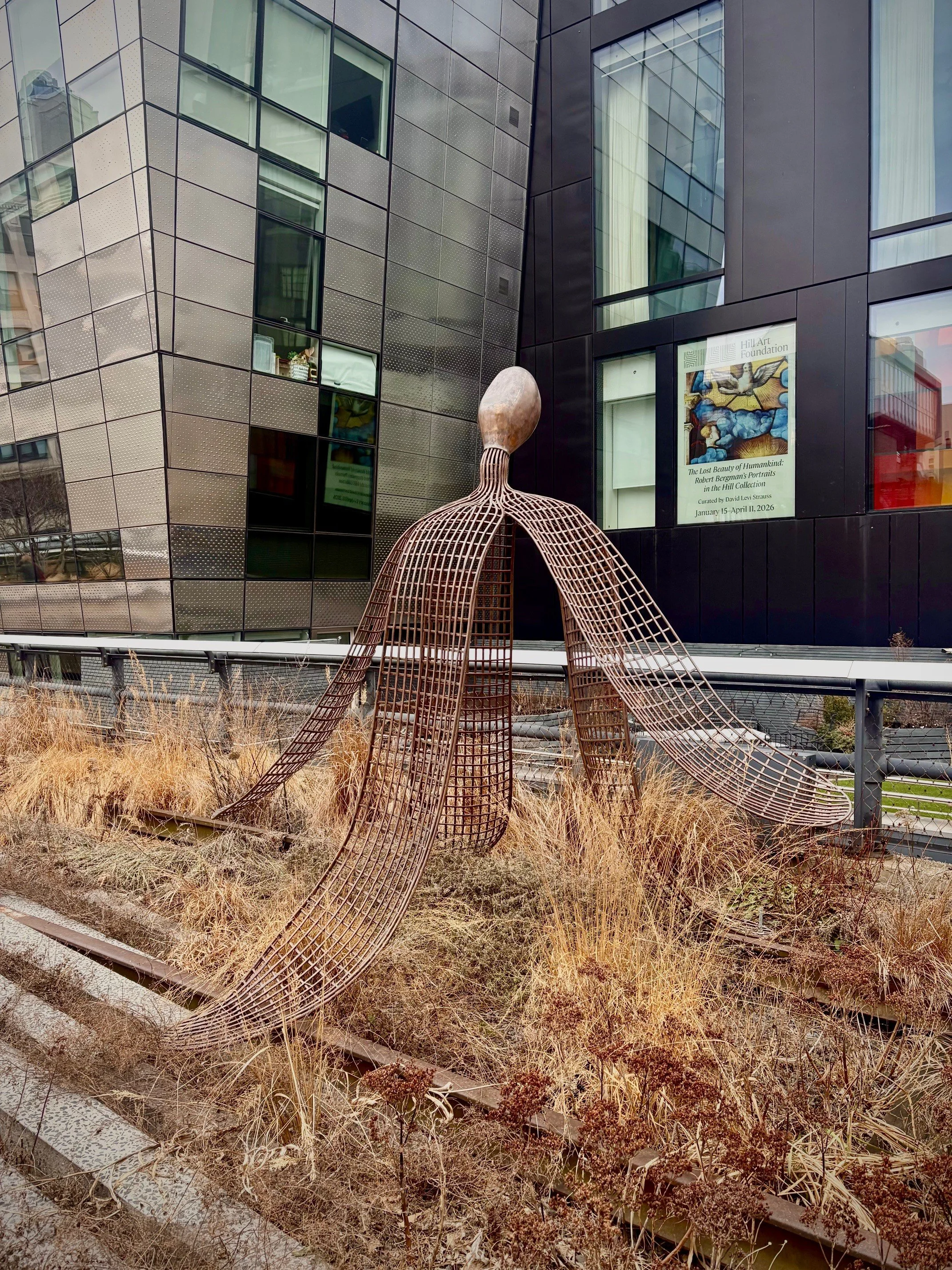
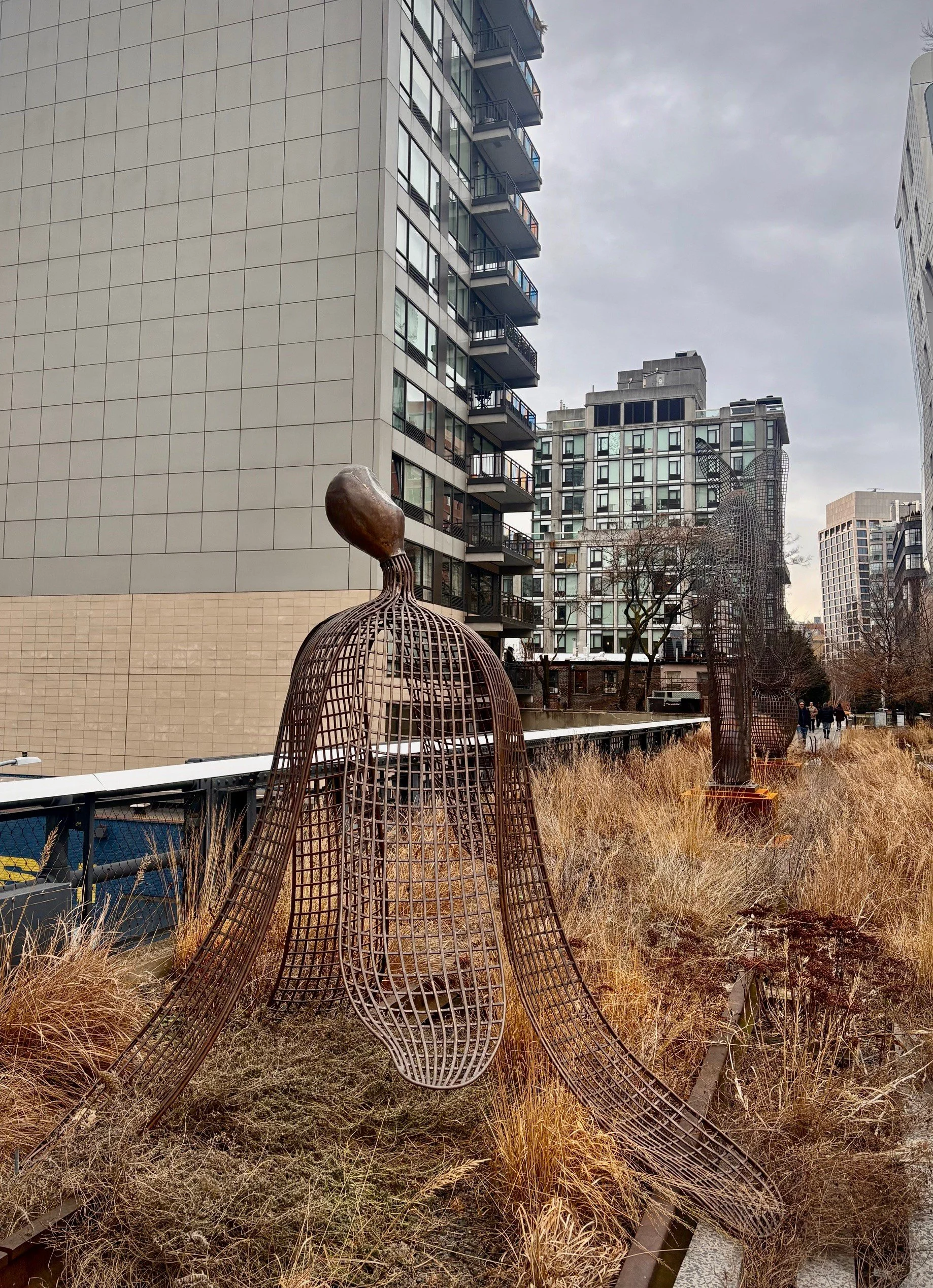
This week, we explored the High Line to experience Kânh Chhrôôl (Gluta Usitata), Melembu, and Khlông (Dipterocarpus Tuberculatus) by Cambodian artist Sopheap Pich on view through August 2026. Known for transforming natural materials into sculptures inspired by bodily organs and plant structures, Pich’s pods suspended above West 24th Street are crafted from copper, gleaming in the sunlight while embracing natural hues. Raised during the Cambodian genocide, Pich’s work often weaves themes of memory, nature, and migration. This piece is no exception. It references the hardwood trees in the garden of the National Museum of Cambodia, whose pods spiral through the air, traveling long distances before settling. These forms serve as a poignant metaphor for human migration and the lasting effects of conflict and displacement. This evocative installation also draws attention to environmental fragility. The trees are threatened by poaching for their valuable timber, reminding us of the delicate balance between human impact and the resilience of nature. Pich’s installation invites reflection on history, movement, and the intricacies of the natural world around us.

Tags friday photo, public art, migration, high line, sopheap pich, nature, history, nyc public art

What American History Tells Us About Fear of Immigrants

November 4, 2024 Fiona Danyko
Tags monday quote, the hill, glenn c altschuler, stuart m blumin, immigrants, immigration, history, america, election, presidential election 2024

Women’s Book Battles

October 11, 2024 Fiona Danyko
1.jpg
2.jpg
3.jpg

The New York Historical Society is currently showcasing “Circulating Control: Women's Book Battles, 1880-1930,” which explores the influence of New York City’s first librarians – women. In the late 1870s, women in New York started the New York Free Circulating Library, creating the largest network of literature in the city. By managing and keeping this library system, these women naturally began influencing and mediating the kinds of books New Yorkers had had access to.

In the nineteenth century, Christian reformers targeted these efforts, attempting to censor books and publications they saw as immoral. However, the women who ran these libraries resisted control, and still found ways to circulate literature on controversial topics of the time. The exhibit highlights how censorship often sparks greater public support for the ideas censors seek to suppress, a trend we still see to this day.

Visitors can explore preserved texts, photographs, and relics from New York City’s first librarians through November 30, 2025.

Tags friday photo, women's book battles, ny historical society, new york historical society, new york history, book censorship, library, libraries, new york city, nyc, history, nyc history

Perhaps a Congressional Happy Hour Is in Order to Resolve Immigration Reform?

July 8, 2024 Fiona Danyko
Tags monday quote, the new york times, jt rogers, playwright, oslo, drinks, history, food, diplomacy, ny times

Let Us Not Forget

April 3, 2023 Paola Calero
Tags monday quote, migration, immigrant stories, maribel hastings, david torres, latino los angeles, history

New York City’s Federal Hall

July 1, 2022 Melanie Katz
Front view.jpg
Side view.jpg
Front view.jpg Side view.jpg

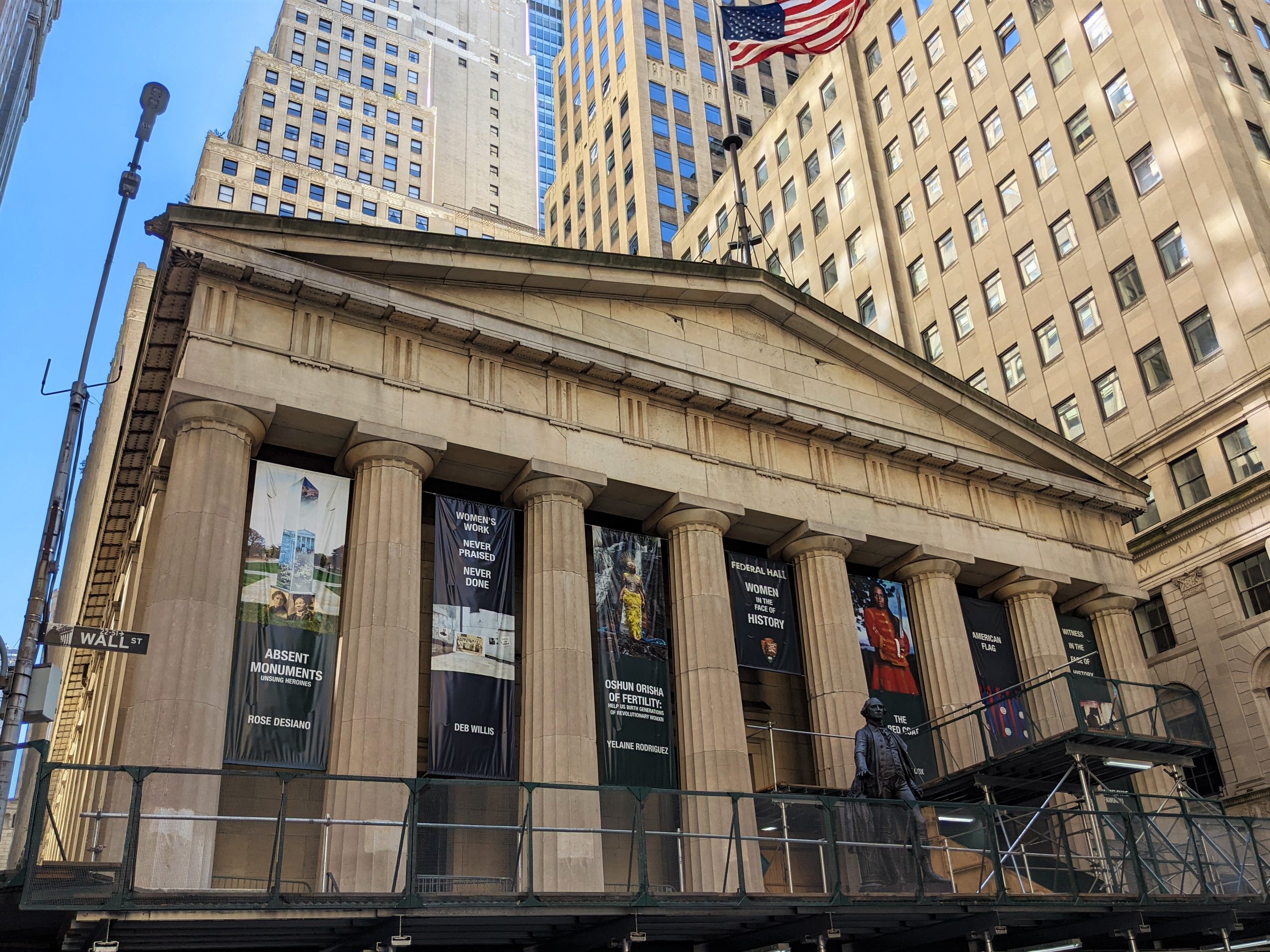
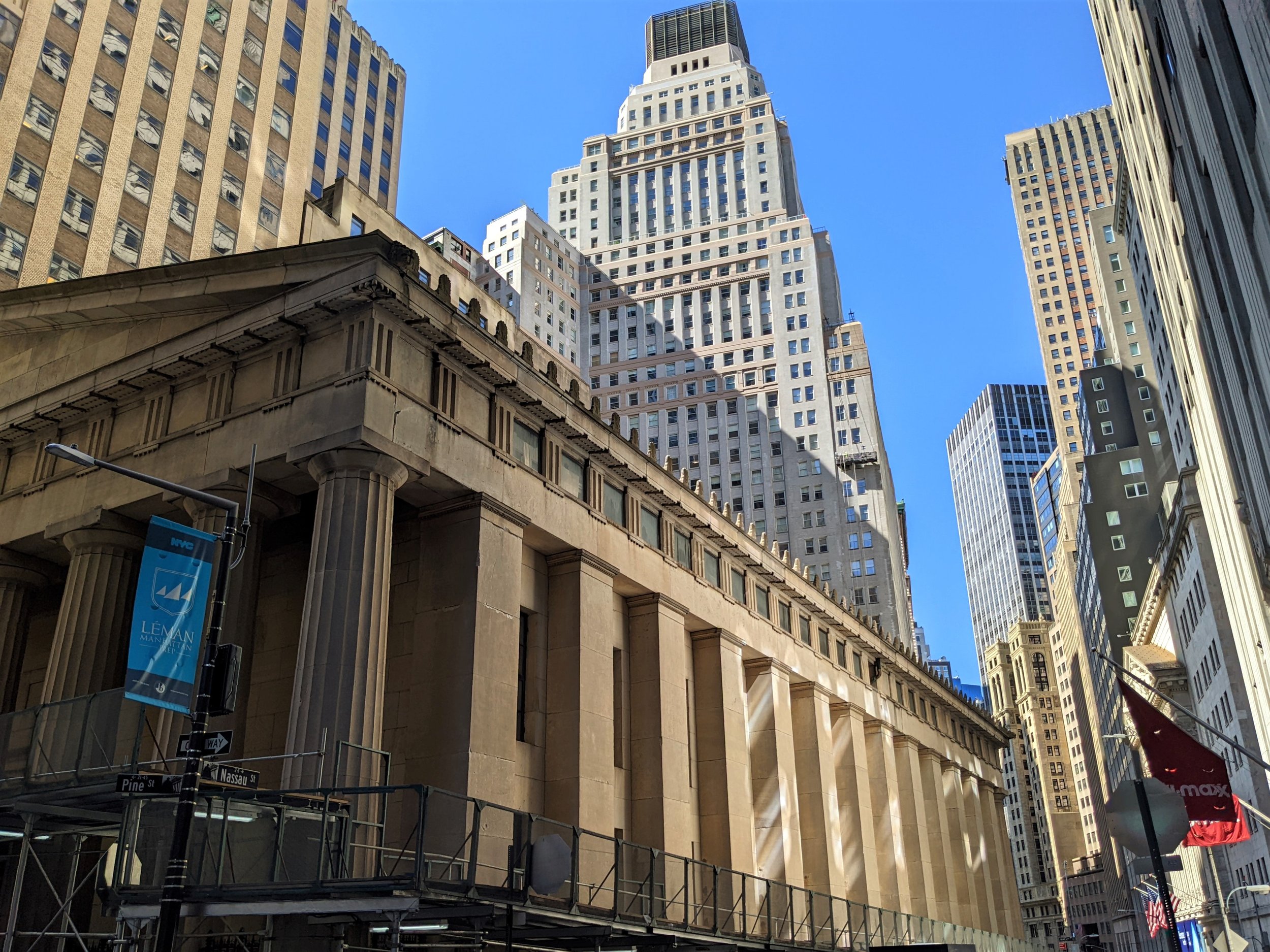
Nestled on Wall Street among the skyscrapers of lower Manhattan sits a historic landmark which has been a major seat of local and national government since before the American Revolution. Originally the site of New York City Hall, this spot has been a center of political activity since the 18th century: the Stamp Act Congress was held here to protest “taxation without representation,” and in the wake of the Revolutionary War, it was where the shape of the new nation was decided. The Continental Congress, which at that point was known as the Confederation Congress, met here between 1785 and 1789. Following the ratification of the Constitution in 1788, New York City was proclaimed the first capital of the United States. The same building, now known as Federal Hall, was the location for George Washington’s inauguration as the nation’s first president. It was here that the first United States Congress, made up at that point of exclusively white, property-owning men, met in 1789 and wrote the Bill of Rights, expanding and defining some of the rights of offered in America. Federal Hall also witnessed the nation’s first lobbying campaign, as abolitionists voicing their opposition to slavery prompted the new government’s first explosive debate over rights in 1790. The balance of power between the federal and state governments was hotly debated in this building – a debate which continues to this day. This Independence Day, the echoes of this landmark building’s rich history and this nation, where rights and liberties have been altered and debated again and again, seem more relevant than ever.

Tags friday photo, independence day, july 4th, federal hall, government, constitution, rights, history, american history, nyc

Grand Central Concourse

May 27, 2022 Melanie Katz
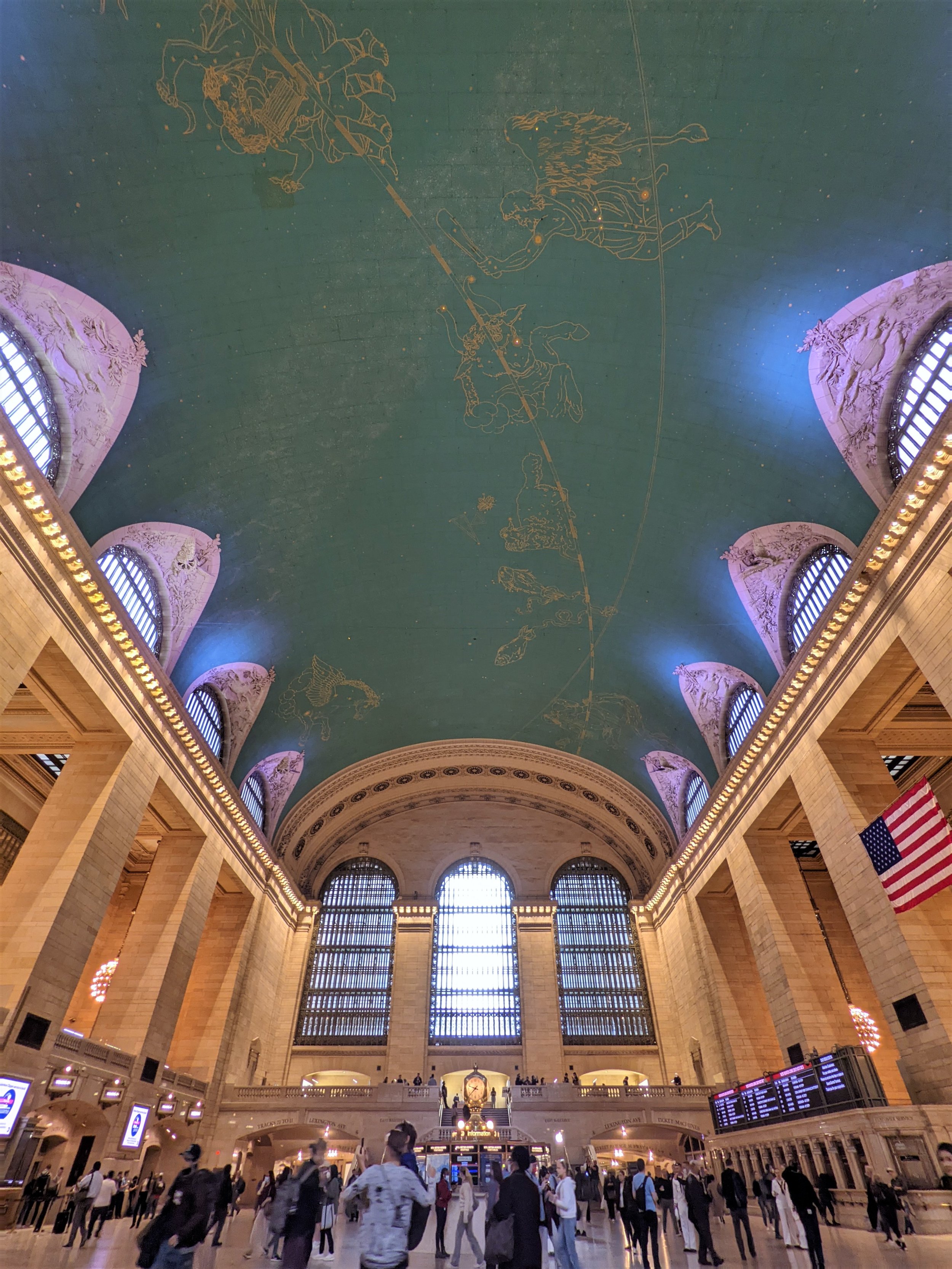
Ceiling of Grand Central above arched windows, featuring Gemini, Orion, Taurus, Aries, Pisces, Aquarius, and Pegasus.

Opened in 1913, Grand Central Terminal is a gorgeous example of the Beaux-Arts architectural style, blending modern efficiency with ornate and impressive detail. The Main Concourse is one of the most recognizable spaces in New York City, particularly because of the famous mural on the ceiling, which features the night sky complete with several constellations. The mural was originally painted directly on the plaster ceiling of the Main Concourse, with detailed artistic depictions of several of the zodiac signs, including Cancer, Gemini, Taurus, Aries, Pisces, and Aquarius, along with Orion, Pegasus, and a few lesser-known constellations. Unfortunately, a leaky roof mostly destroyed the original mural within the first few decades after it was painted, so the roof was “restored” in the 1940s. However, when the new ceiling was unveiled, the original mural had not been restored at all, merely covered up with large boards. A new mural was painted, with a few puzzling changes, including much-simplified images. The new mural retained a major error in the original – the mural was painted backwards, with east and west reversed. The original mural is probably long-gone behind the boards and their “restoration,” but the Main Concourse is still an impressive sight to behold.

Tags friday photo, grand central terminal, grand central, ceiling, mural, constellations, zodiac, history, train station, nyc

At The Met – Fictions of Emancipation: Carpeaux Recast

May 6, 2022 Melanie Katz
Why Born Enslaved!
Why Born Enslaved!

Jean-Baptiste Carpeaux

Modeled 1868, carved 1873

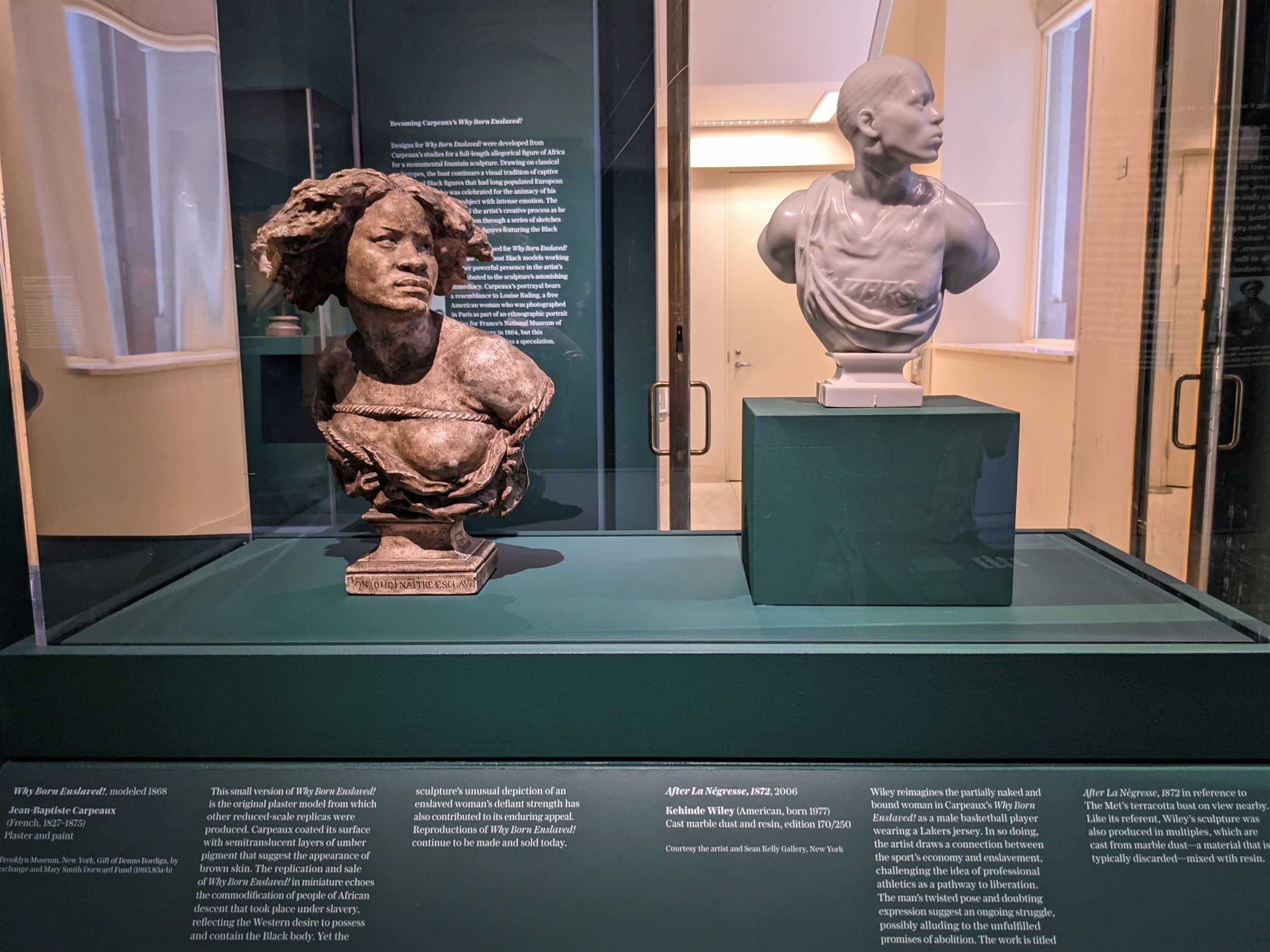
Why Born Enslaved! (right), After La Negresse (left)

RIGHT: Reduced-scale plaster reproduction by Jean-Baptiste Carpeaux, used to make other reproductions for sale.

LEFT: cast 2006 by Kehinde Wiley

Why Born Enslaved! Why Born Enslaved! (right), After La Negresse (left)

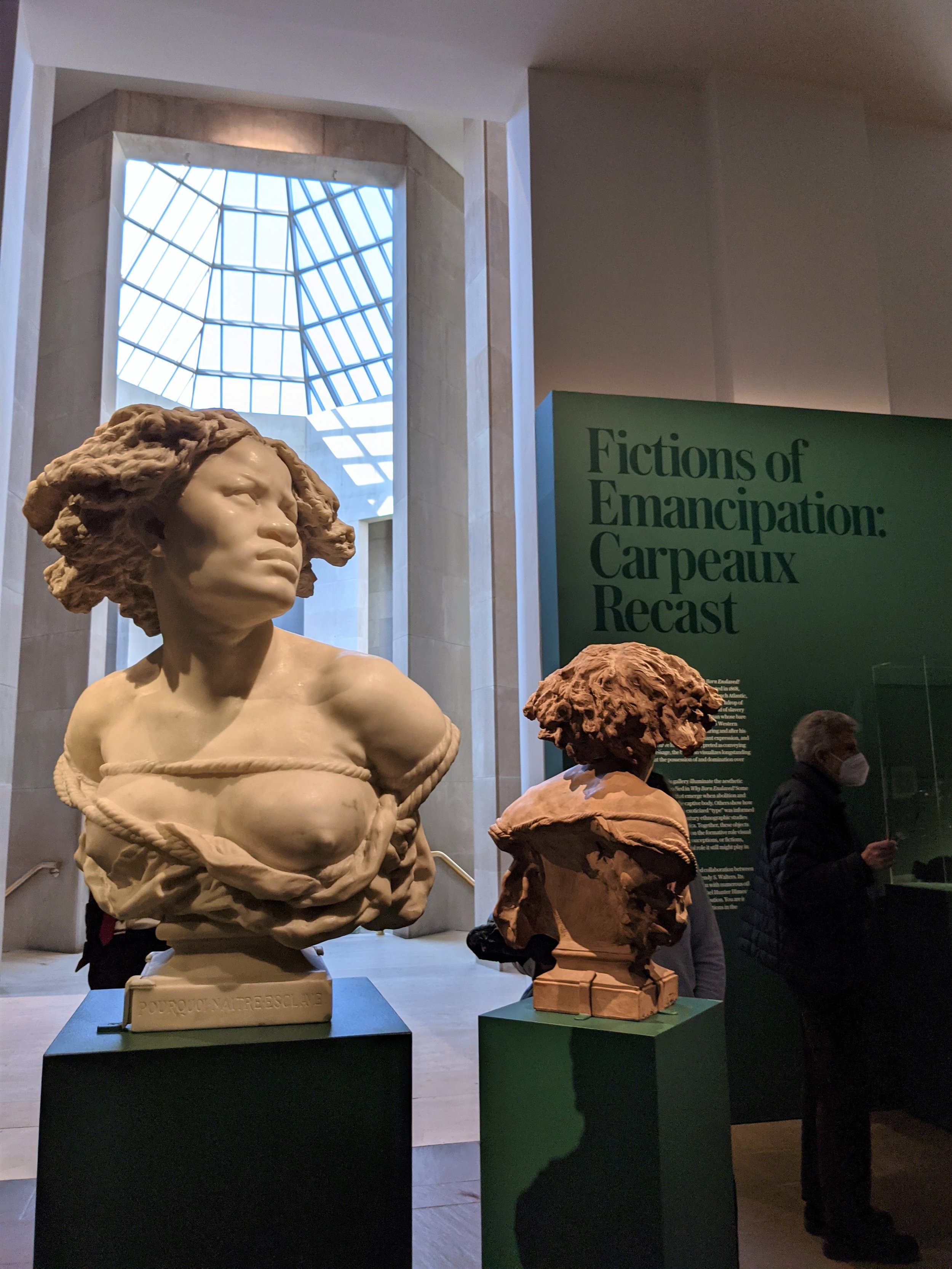
New York’s most famous art museum, the Metropolitan Museum of Art, is currently featuring a groundbreaking exhibition called “Fictions of Emancipation: Carpeaux Recast.” The exhibition is centered around a single sculpture – a marble bust by Jean-Baptiste Carpeaux entitled Why Born Enslaved! (1868). The bust, featuring a Black woman with tied arms and a defiant expression, became very popular in Europe when it was created. The Met’s exhibition explores the idea that antislavery imagery often reinforced the colonial power structures that they were meant to critique. It is “the first exhibition at the Met to examine Western sculpture in relation to the histories of transatlantic slavery, colonialism, and empire.” The exhibition is thoughtfully and expertly curated to challenge “institutional narratives… bringing race to the forefront of discussions about art and culture.”

Tags friday photo, art, museum, history, exhibit, sculpture, antislavery, abolition, nyc, met museum

The Harlem Meer

April 15, 2022 Melanie Katz
Photo from the southern tip of the Harlem Meer on a sunny morning

Central Park, built in the mid-1800s, was the first landscaped public park in the United States. Its designers, Frederick Law Olmsted and Calvert Vaux, were ambitious, aiming to create a space in the middle of New York City where residents could experience a wide variety of landscapes all in one place. The park successfully combines landscaped gardens, wild wooded areas, pastoral fields, and more. The designers also incorporated several bodies of water – ponds, lakes, and streams – into their plans. In the northeast corner of the park, the Harlem Meer is one such manmade lake. The Meer, Dutch for “lake,” is today a haven for wildlife like fish, turtles, and waterfowl, as well as a popular destination for the neighboring community in Harlem.

Tags friday photo, harlem meer, harlem, central park, nyc parks, nyc, history, design

Gay Liberation Monument

March 4, 2022 Melanie Katz

Located in Christopher Park, a small park in the Greenwich Village neighborhood of Manhattan, stands a permanent monument to the gay rights movement in the United States. Known as the Gay Liberation Monument, the small group of statues by artist George Segal sit and stand in couples, seeming to relax and enjoy the park, “showing the public comfort and freedom to which the gay liberation movement aspired.” The monument is positioned in front of the historic Stonewall Inn, a bar and dance hall which has catered to the LGBTQ+ community since 1966, and which was the site of the famous Stonewall Riots in the summer of 1969. The riots, led by heroes like Marsha P. Johnson and Sylvia Rivera, began when police raided the bar and arrested many of the patrons. The Stonewall Riots are widely acknowledged as a major galvanizing force in the fight for gay rights in the United States. The figures placed in the park outside are a poignant tribute to the LGBTQ+ community, and the people who fought for acceptance and visibility.

Tags friday photo, lgbtq, history, stonewall, nyc, gay liberation, gay rights, marsha p johnson, silvia rivera
Older Posts →
 

Sign up for our monthly newsletter and special updates!

Summary Block
This is example content. Double-click here and select a page to feature its content. Learn more
Featured
Cursus Amet

COPYRIGHT 2026 © DARYANANI LAW GROUP, PC (FORMERLY DARYANANI & BLAND, PC). ALL RIGHTS RESERVED.
DARYANANI LAW GROUP, PC. 330 SEVENTH AVENUE, SUITE 2003, NEW YORK, NY 10001. 212-431-5576.
UNDER NEW YORK STATE GUIDELINES, THIS WEBSITE MAY BE CONSIDERED ATTORNEY ADVERTISING.

PRIVACY POLICY | COOKIES POLICY | LEGAL DISCLAIMER