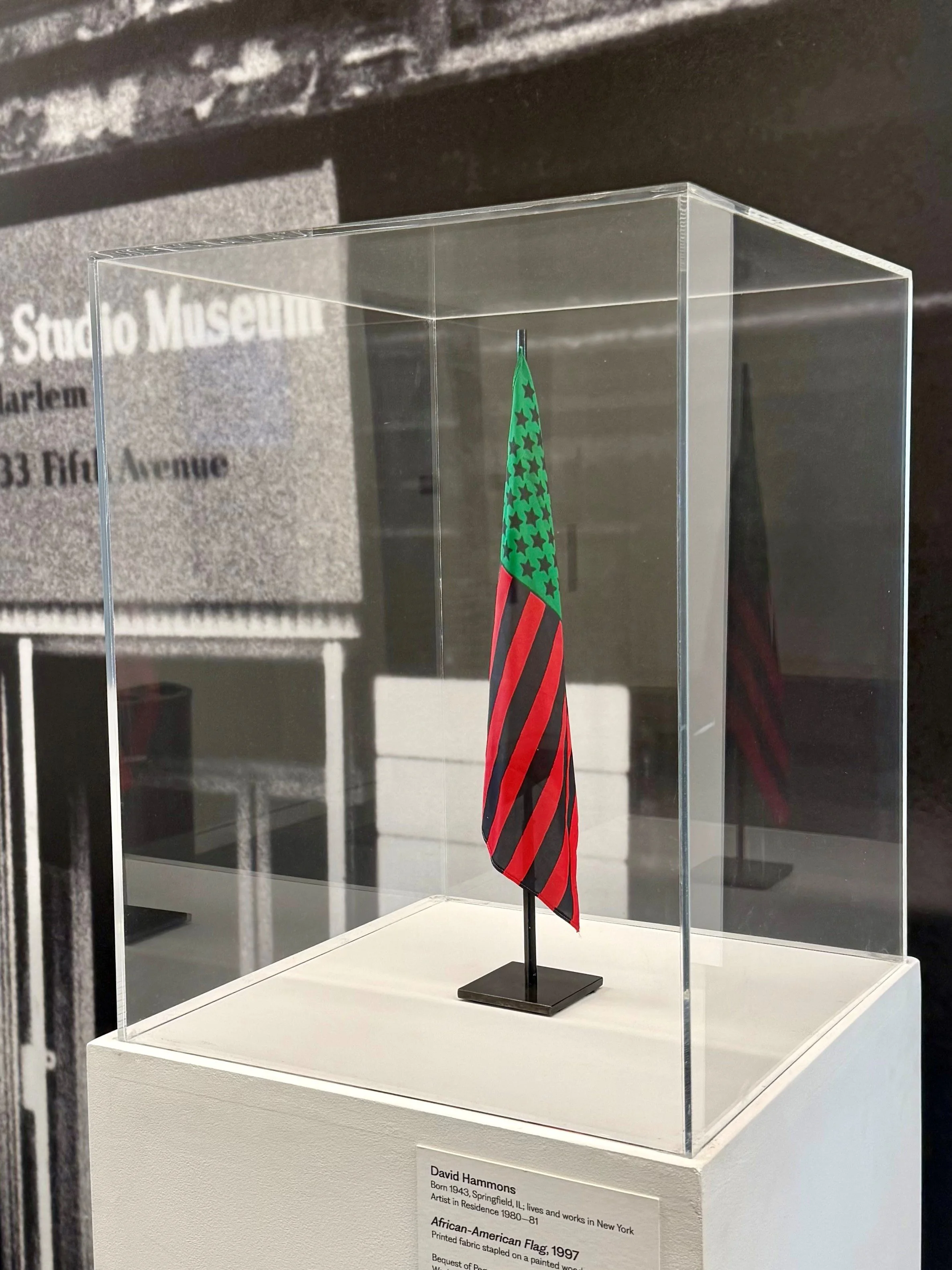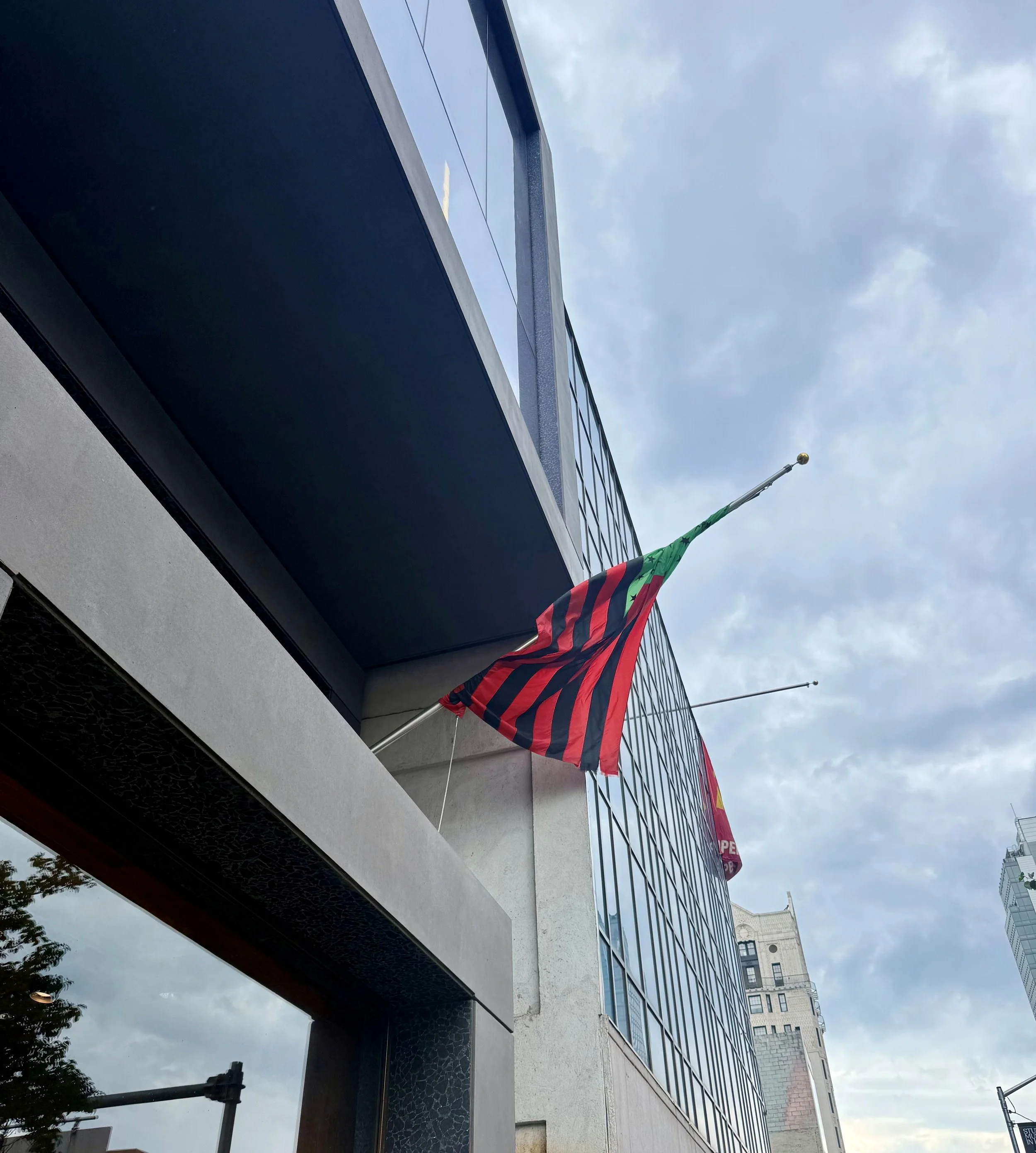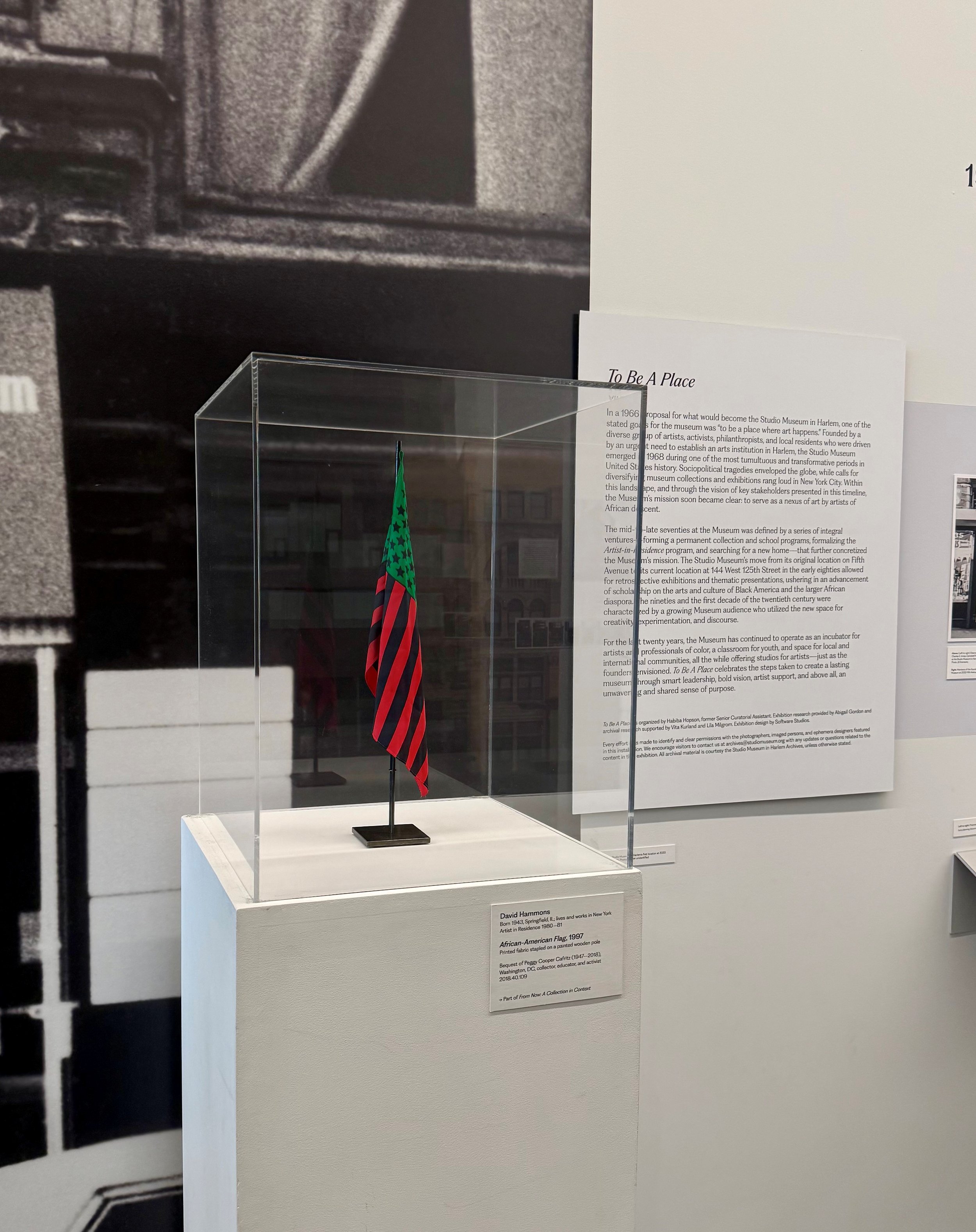
In celebration of Juneteenth, we headed uptown to visit the Studio Museum in Harlem, which exhibits work reflecting the African diaspora. The Museum, founded in 1968, is rich with history and showcases a stunning collection of art, from icons like Jean-Michel Basquiat and Kehinde Wiley to up-and-coming names supported by their Artists-in-Residence program. On display right now as part of the “To Be A Place” exhibit, is “African-American Flag” by David Hammons, an artist known for his use of political symbolism throughout multimedia practice. Another flag made by Hammons, this one untitled, is proudly hoisted in front of the museum. Together, the works stand as symbols of joy, resilience, and history, reflecting the rich cultural legacy of Harlem’s Black community and inspiring audiences far beyond the neighborhood.
Harlem Fire Watchtower
Harlem is one of New York City’s most vibrant and historically significant neighborhoods and home to the majestic Marcus Garvey Park . Perched 70 feet above street level, on top of the park’s Atrium, is the historical Harlem Fire Watchtower, also known as the Mount Morris Park Tower. Designed by James Bogardus and built by German American engineer Julius H. Kroehl, from 1855 to 1857, the Tower stands 47 feet tall, with a 10,000-pound bell suspended at its center.
After a catastrophic fire in 1835, a series of watch towers were built throughout New York City to give firefighters a bird’s eye view to watch over the wooden buildings of the community, and ring the bell to alert the local fire station. As industrialization swept America, and pull boxes were invented, the watchtowers, which numbered eleven at their peak, became obsolete, and in time the towers were torn down.
Due to its location in the city and the support of the community, the Harlem Fire Watchtower is the only surviving structure from Bogardus’ designs using cast-iron architecture which inspired the steel cages that help support our modern-day skyscrapers. The Tower became a New York City landmark in 1967, and underwent full restoration in 2019. Today, this historical monument stands tall, honoring the evolution of the NYC Fire Department.
Renaissance Women by Alice Mizrachi
The Harlem Renaissance was the period from the 1910s through the mid-1930s when the New York City neighborhood of Harlem became the centerpiece of African-American culture, bursting with Black artists, poets, musicians, writers, dancers, and activists. “Renaissance Women,” by New York-based artist and educator Alice Mizrachi, is a sculpture of an abstracted feminine face. It looks like a line drawing inscribed in the air, as it is made of a single metal tube. Fittingly, the sculpture stands in Marcus Garvey Park in East Harlem, which is named for Harlem Renaissance activist Marcus Garvey. The sculpture honors the women of the Harlem Renaissance, like Zora Neale Hurston, Josephine Baker, Bessie Smith, Ethel Waters, Billie Holiday, Dorothy West, Augusta Savage, Lois Mailou Jones, and many more. Many of these women are still household names, and their lives and their work are still influential for scores of artists working today.
The Harlem Meer
Central Park, built in the mid-1800s, was the first landscaped public park in the United States. Its designers, Frederick Law Olmsted and Calvert Vaux, were ambitious, aiming to create a space in the middle of New York City where residents could experience a wide variety of landscapes all in one place. The park successfully combines landscaped gardens, wild wooded areas, pastoral fields, and more. The designers also incorporated several bodies of water – ponds, lakes, and streams – into their plans. In the northeast corner of the park, the Harlem Meer is one such manmade lake. The Meer, Dutch for “lake,” is today a haven for wildlife like fish, turtles, and waterfowl, as well as a popular destination for the neighboring community in Harlem.
Ascending the Mountain by Susan Stair
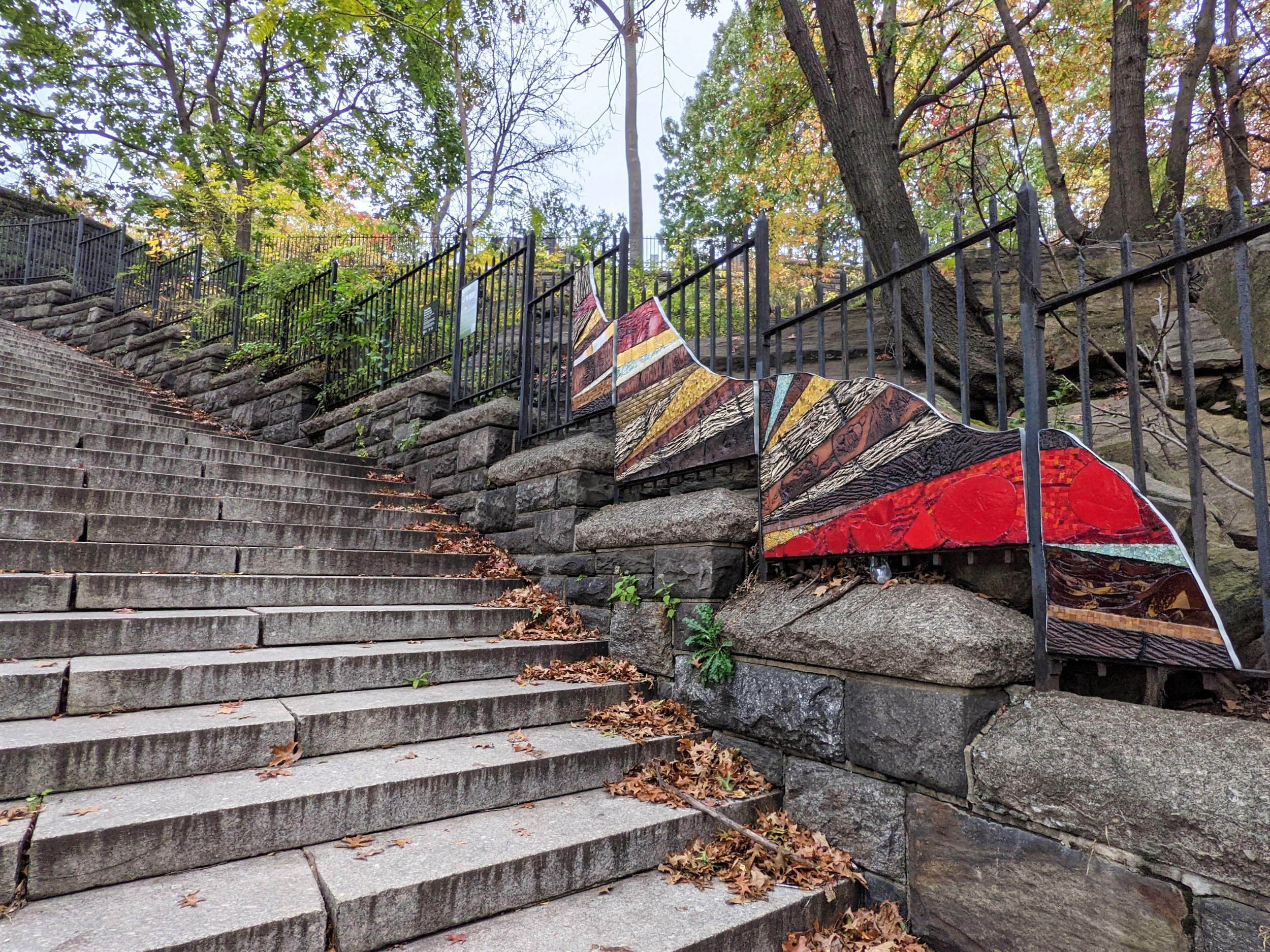
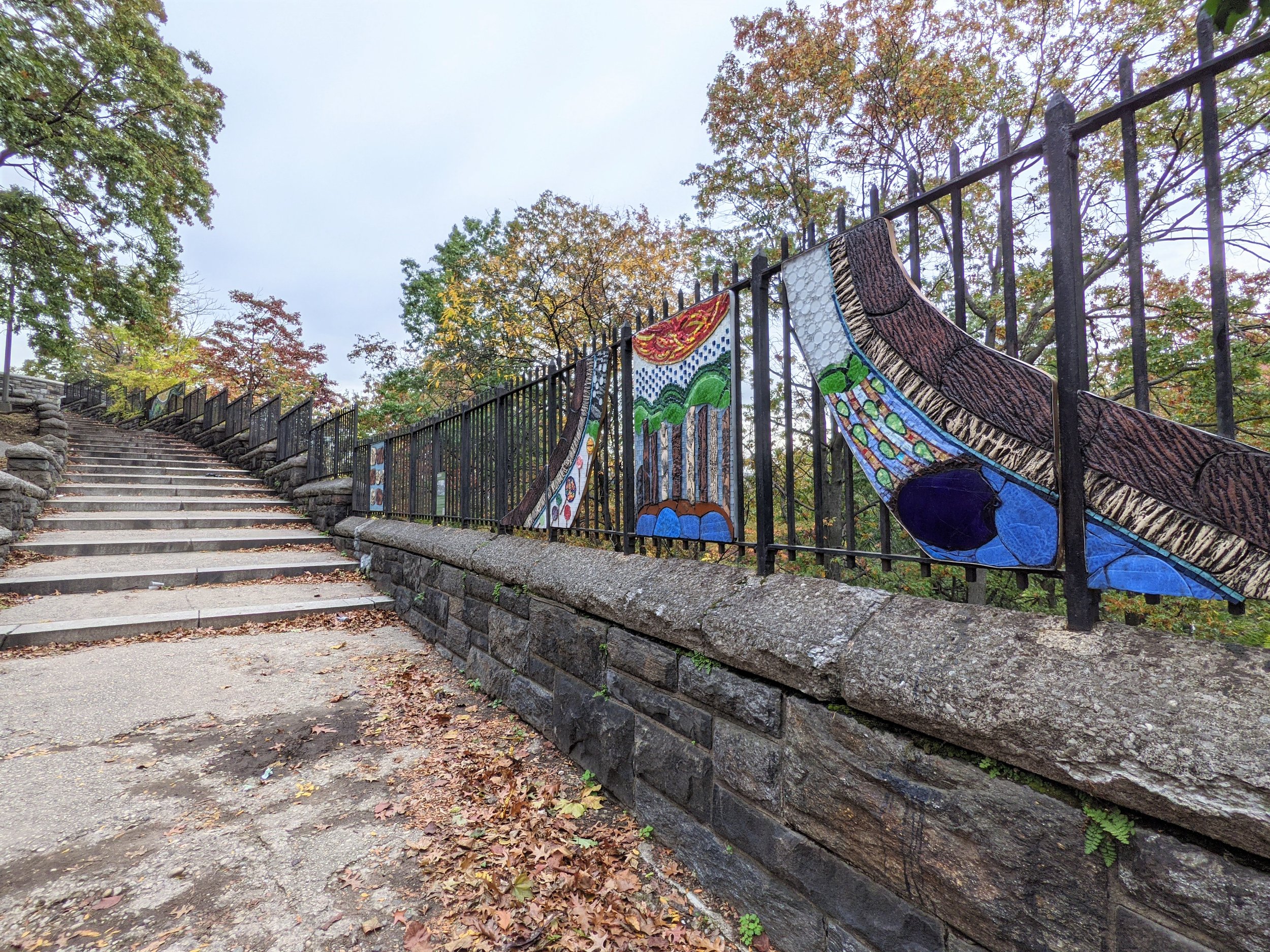
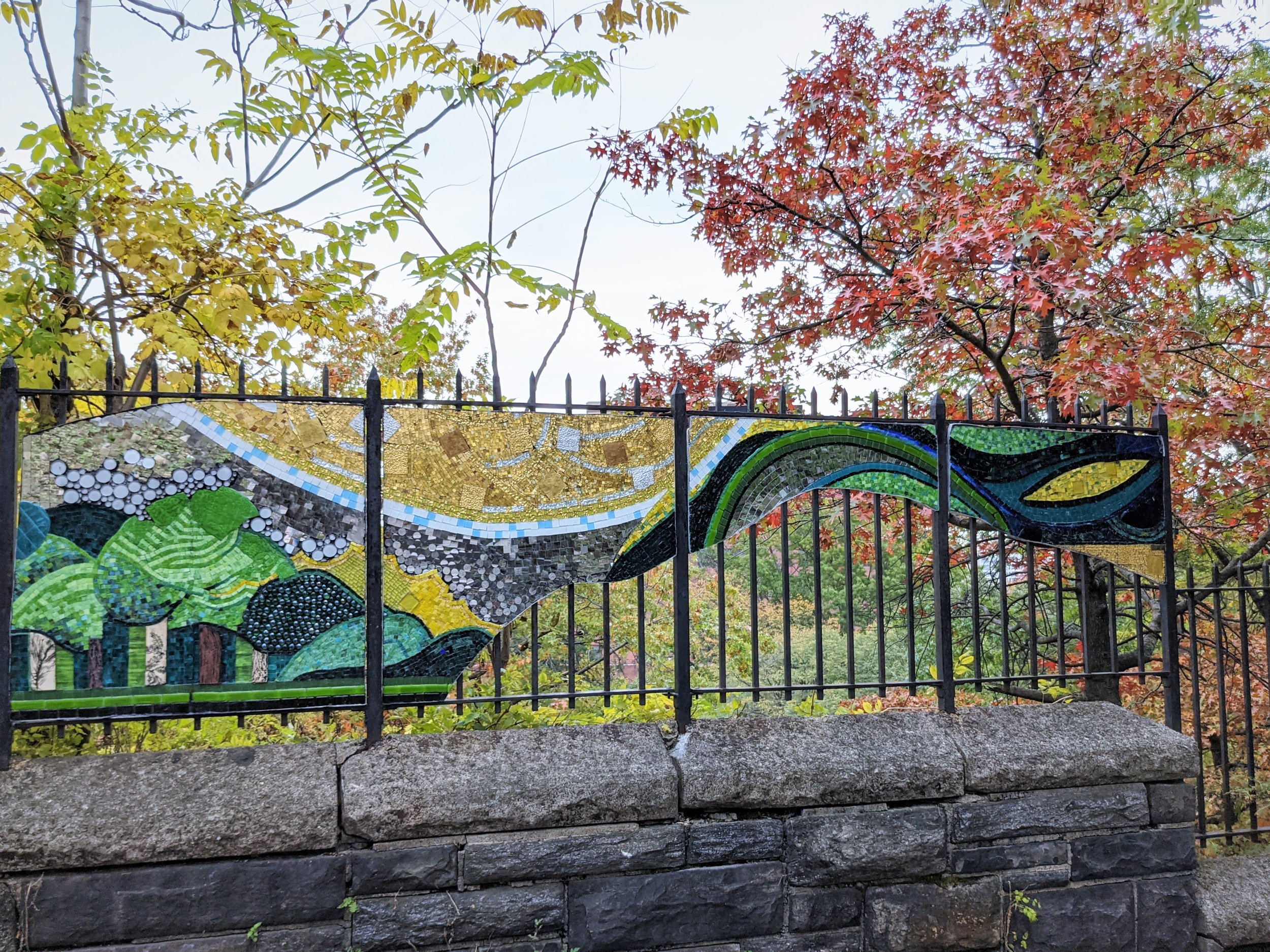
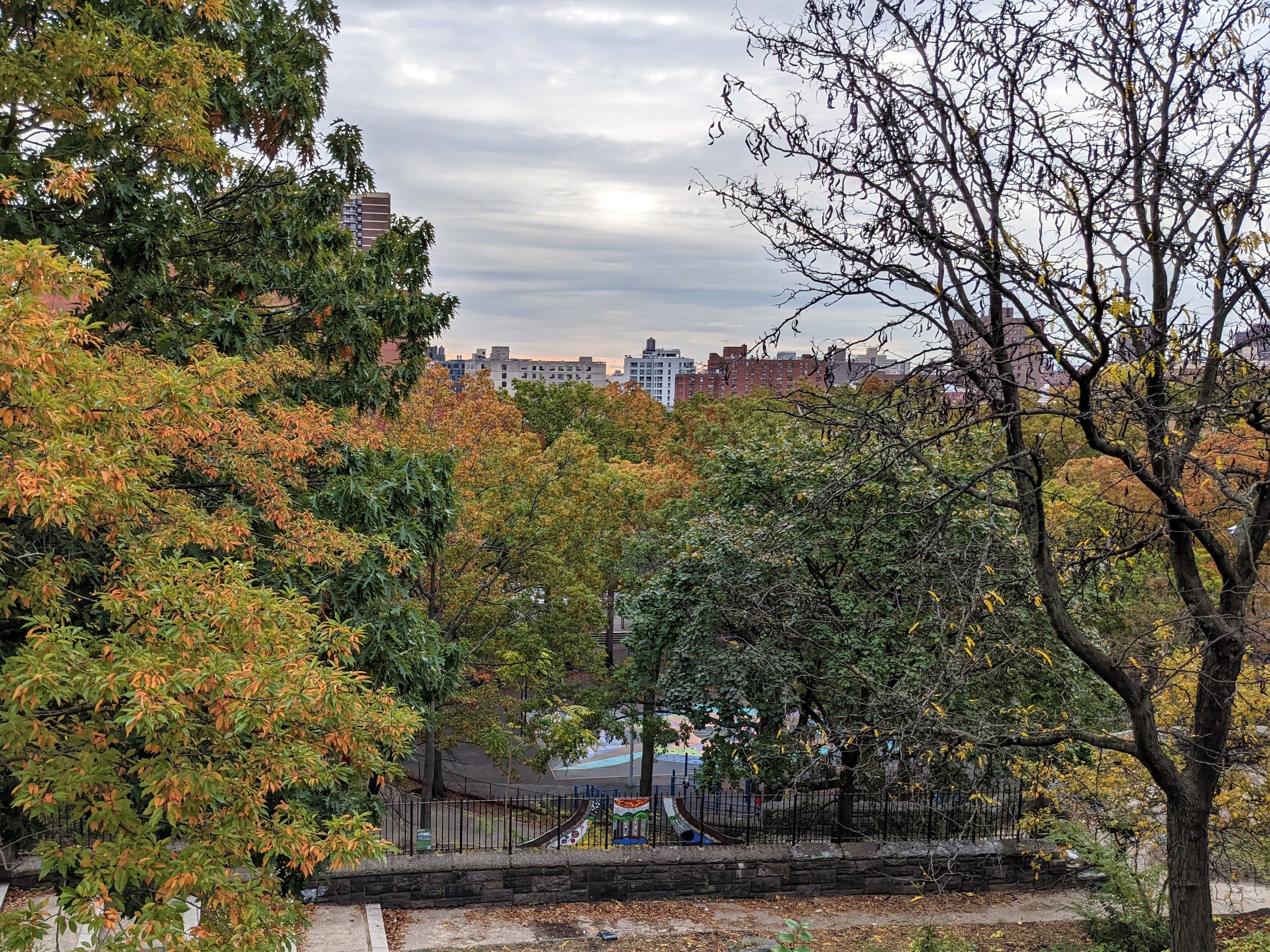
At the center of Harlem’s Marcus Garvey Park is a small, rocky mountain covered with trees. It wasn’t always so verdant, though. Less than 100 years ago, the mountain was mostly bare rock, but over time, trees that were planted at the beginning of the twentieth century grew through the solid Manhattan Schist. Today, the entire park is shaded with trees. “Ascending the Mountain” is a three-part installation by artist Susan Stair, created as a tribute to this urban forest and the trees that make it up. The first part of the work, called “Roots in Rock,” is at the bottom of the mountain, visible from the first step of the staircase that leads to the top. You can look through the artwork, you can see the actual roots of the trees anchored in the rocky ground. The next part of the work, “Growing Powerhouse,” is a bit higher up on the winding stairs. This piece “illustrates the trees’ ability to bring gallons of water and minerals up the side of the mountain through their trunks.” The upright shapes of this portion echo the tree trunks and branches visible through the fence behind them. The final part is at the top of the staircase, near the highest point in the park. The flowing greens and golds of “Tree Canopy” look like an extension of the leafy treetops behind it. Looking out from the top of mountain, you can see out across the small forest and into the urban landscape beyond, offering a rare and wonderful perspective on the city and its relationship to nature.
Plastic Fantastic! by Capucine Bourcart
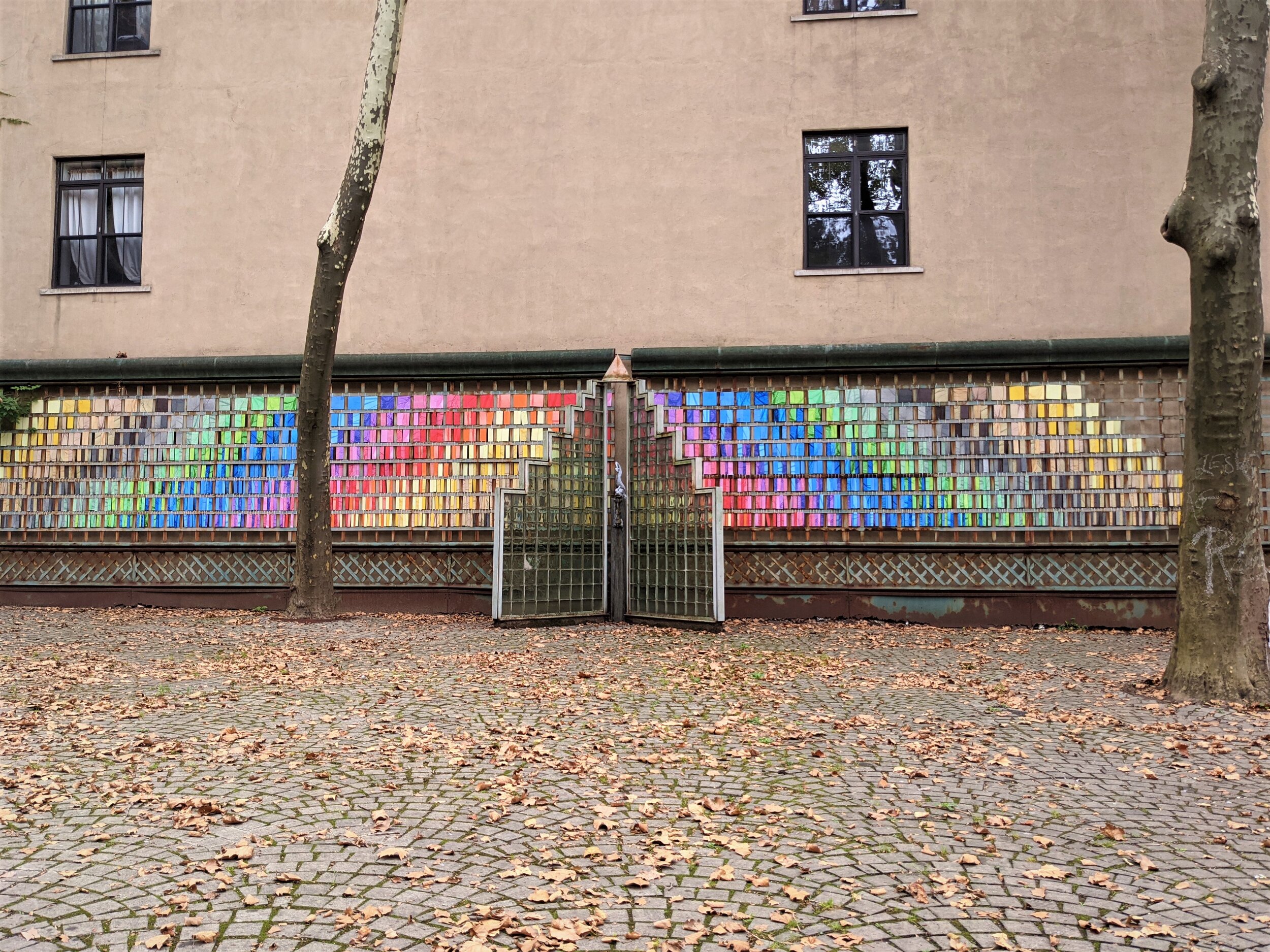
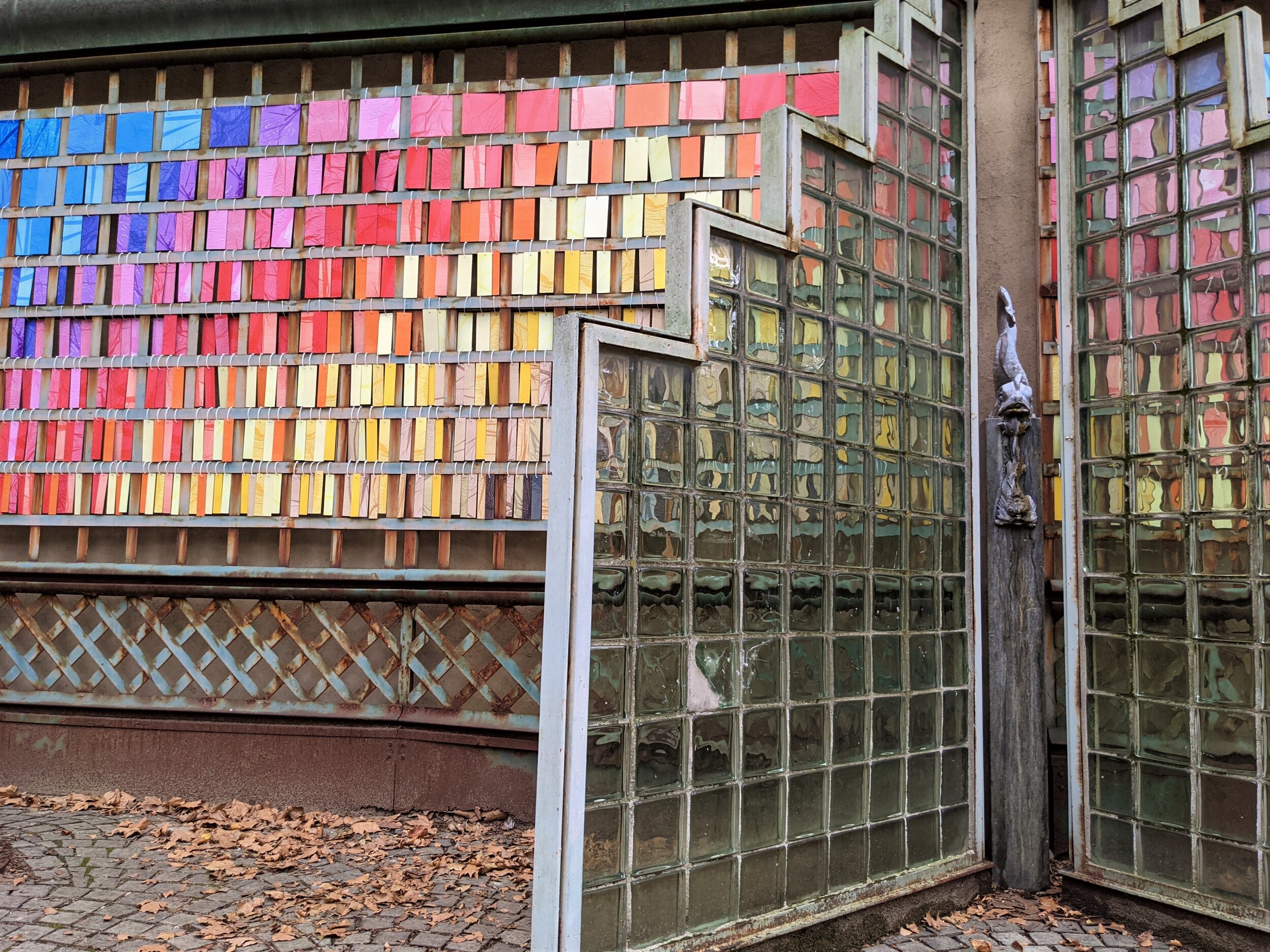
Last year, New York enacted a law banning single-use plastic bags in an attempt to reduce waste and pollution in a state where over 23 billion plastic bags have typically been used every year. Artist Capucine Bourcart has long been fascinated with single-use plastic bags as a symbol of both waste and consumerism. Her newest work, “Plastic Fantastic!,” on display in Harlem Art Park, is a large-scale consideration of these items. Consisting of about 1600 small pieces of colorful aluminum sheeting, the work spans 66 feet across one side of the small park. Each piece is printed with a close-up image of a plastic bag, which the artist collected from friends and neighbors over several years. The colored blocks are woven into the existing metal trellis in the park, creating a rainbow gradient that catches your eye immediately. The wide span of the work illustrates the far-reaching effects of single-use plastics on the environment. Bourcart seems to ask, now that plastic bags are banned in New York, how much of this environmental harm will be mitigated?
Project Backboard in St. Nicholas Park
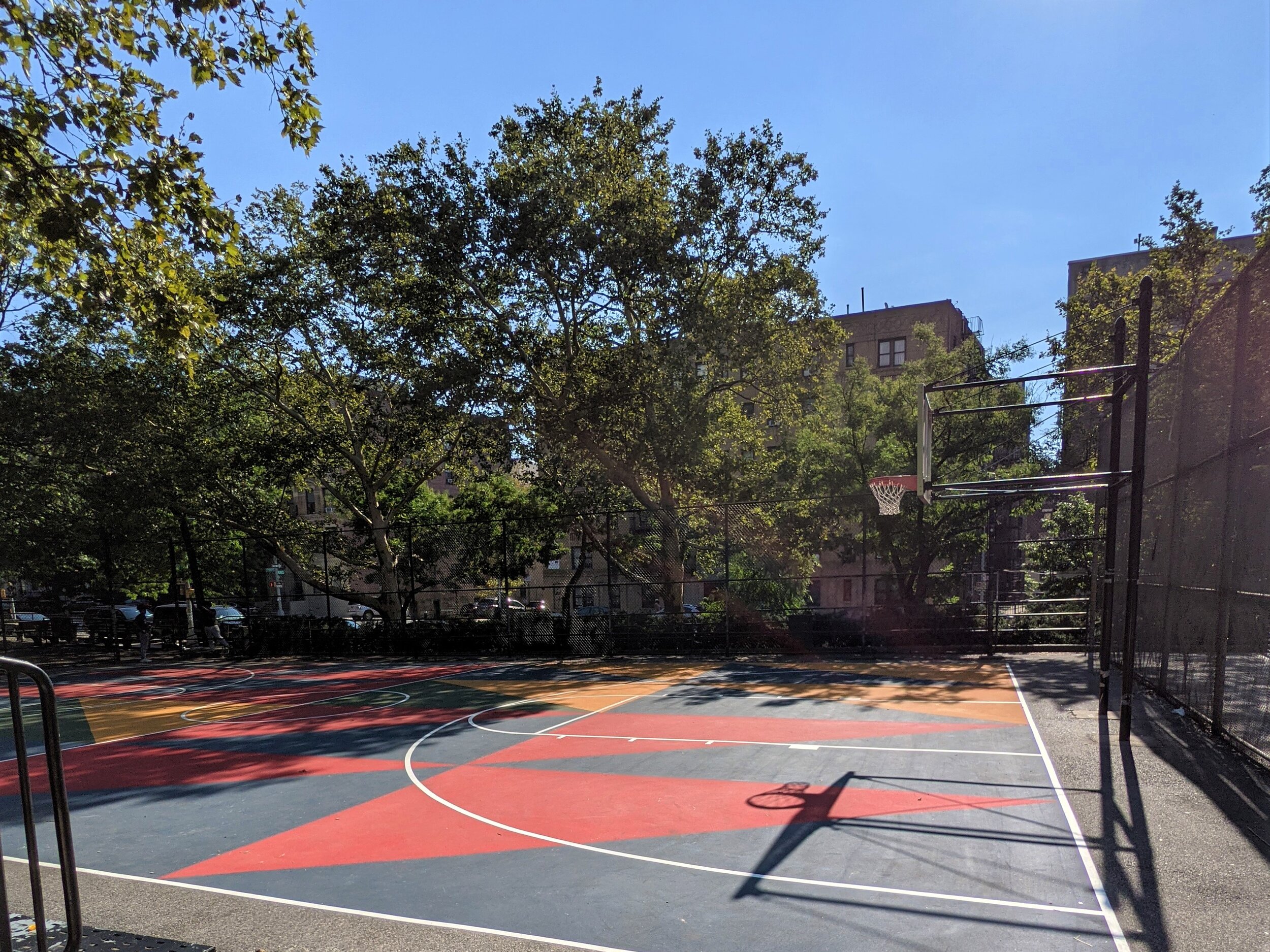
Almost every New York City park has at least one basketball court. They are ubiquitous in this city, a beloved space to enjoy time outdoors with friends and family. The courts in my neighborhood are in St. Nicholas Park, a stretch of parkland that runs from 127th Street to 141st Street, forming a green haven for residents of West Harlem. At almost any time of day, the basketball courts in St. Nicholas Park are full of kids practicing their skills, teenagers playing pickup games, or families enjoying the sunshine and exercise. One of my neighborhood courts recently got a makeover courtesy of an initiative called Project Backboard. This organization works with artists to repaint public basketball courts all over the country, installing colorful works of art “in order to strengthen communities, improve park safety, encourage multi-generational play, and inspire people to think more critically and creatively about their environment.” The St. Nicholas basketball court was designed by artist and Harlem native Faith Ringgold, a prolific multimedia artist best known for creating narrative quilts. The court design is based on her 1974 work “Windows of the Wedding #1: Woman.” The large-scale version of the work is an abstract, colorful pattern which “will be transformed into something of living narrative quilt” as countless stories play out on top of the painted surface.
The Baayfalls
The mural The Baayfalls on the High Line is a double portrait of a sister and brother that the artist, Jordan Casteel, painted while at an artist residency at The Studio Museum in Harlem. Casteel, known for her vibrant portraiture, painted Fallou, who designs and sells hats, and her brother, Baaye Demba Sow. The title is a references to Baye Fall, a sect of the Sufi brotherhood Mouride, which Fallou’s brother belongs to, and the hand gesture Fallou is making signifies Allah among members of Baye Fall. With her portraiture, Casteel “adds deeply nuanced expressions of human experience to the expanding collection of images we see every day.” Which is just what we need in these trying times.