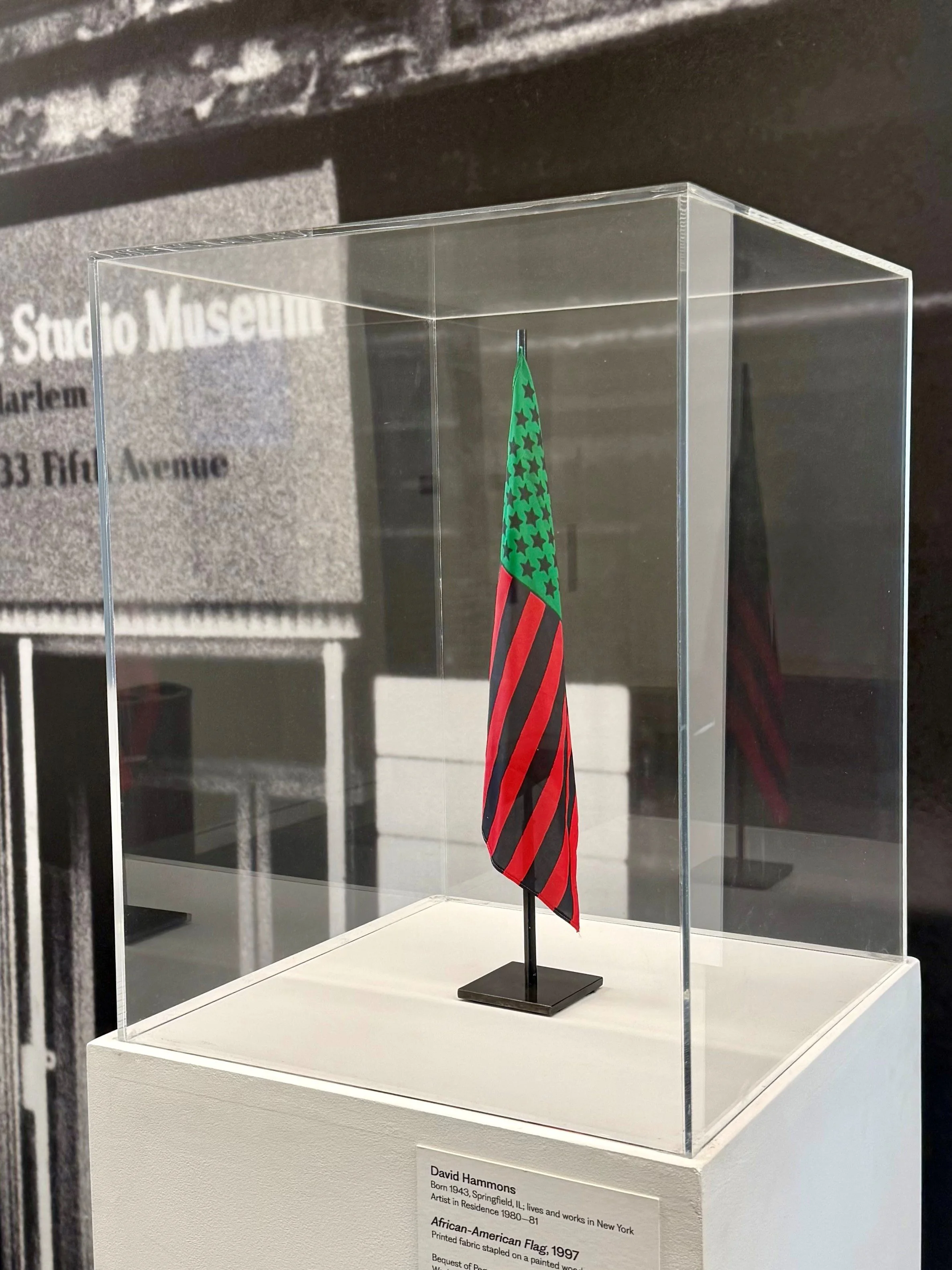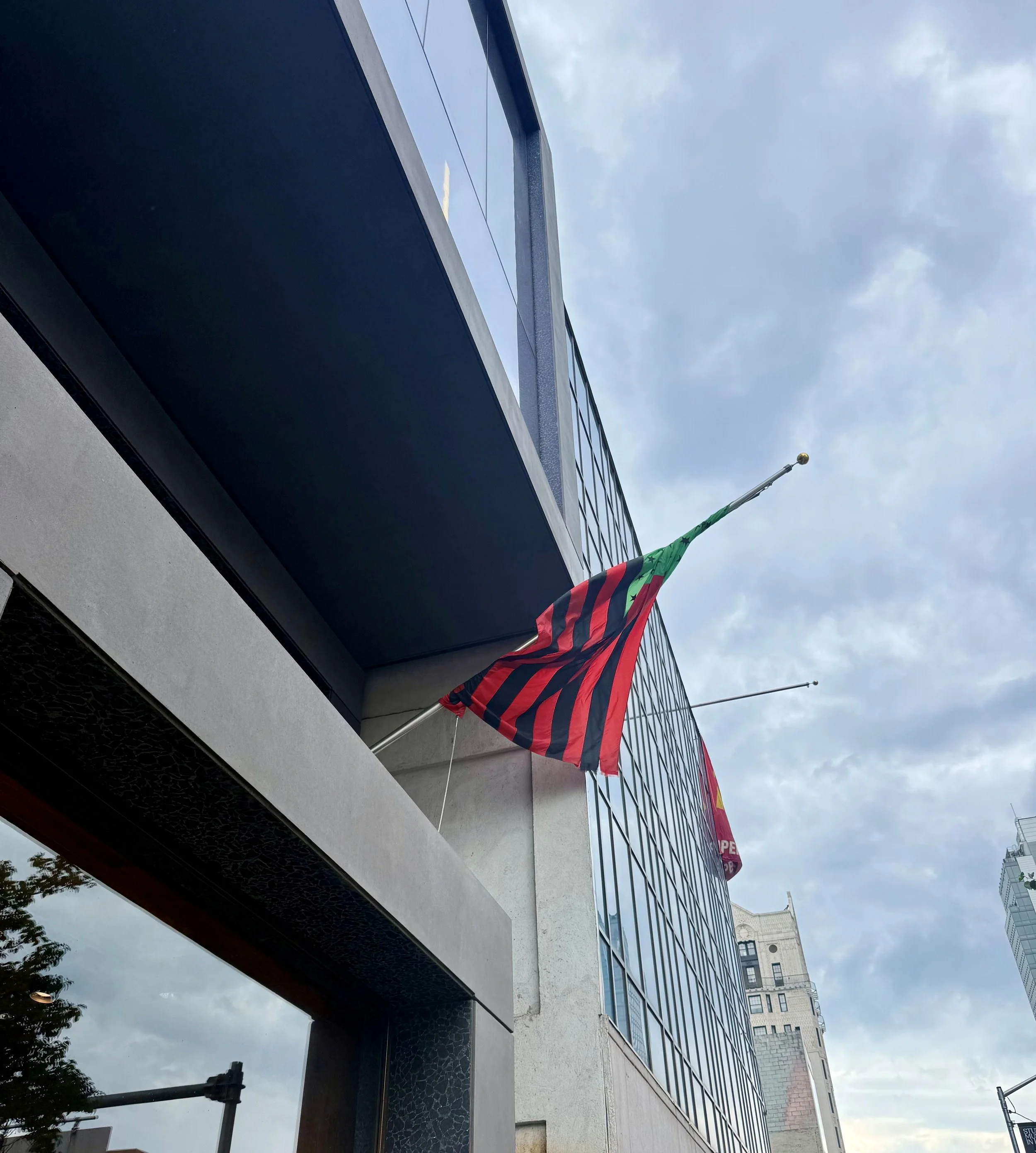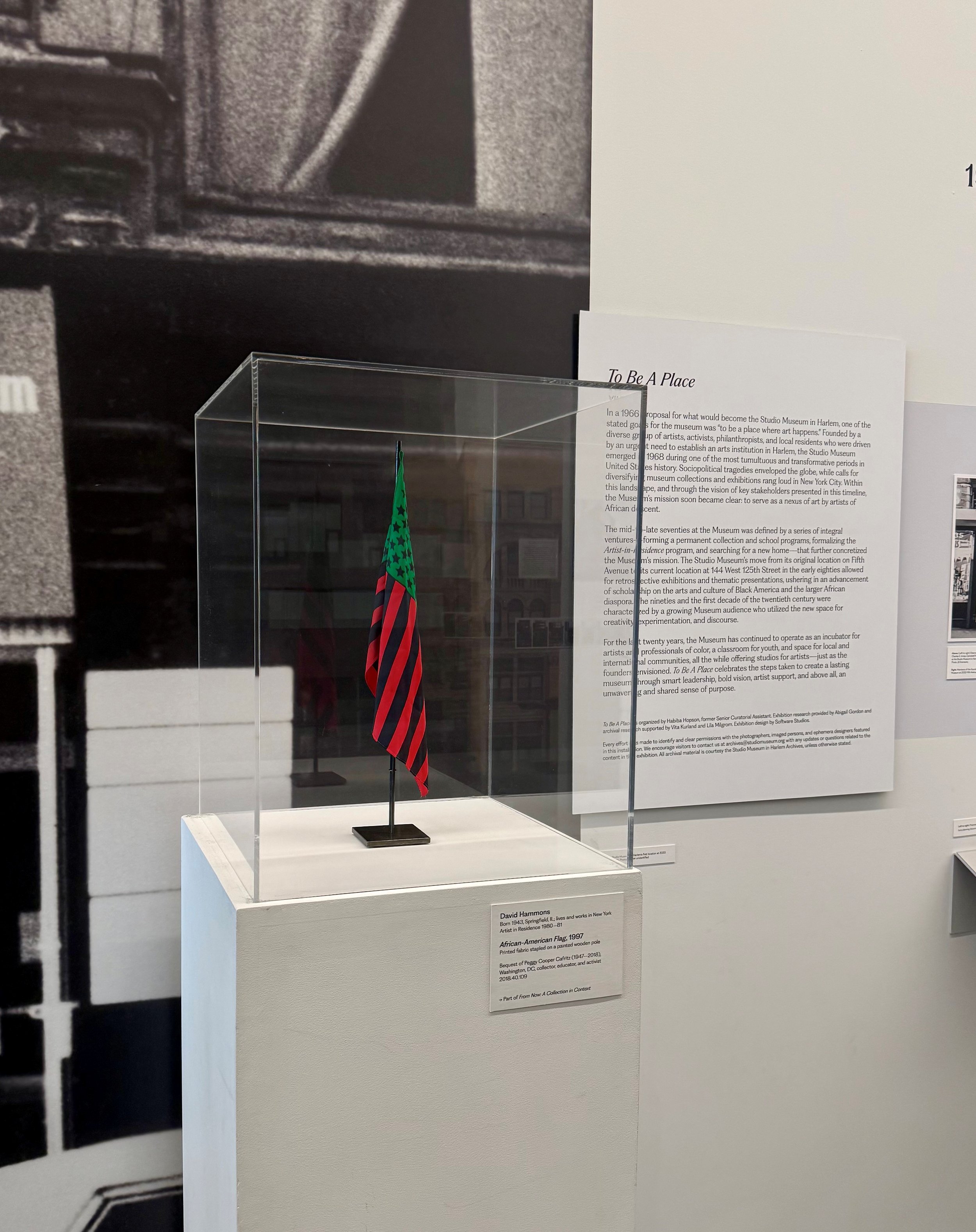
In celebration of Juneteenth, we headed uptown to visit the Studio Museum in Harlem, which exhibits work reflecting the African diaspora. The Museum, founded in 1968, is rich with history and showcases a stunning collection of art, from icons like Jean-Michel Basquiat and Kehinde Wiley to up-and-coming names supported by their Artists-in-Residence program. On display right now as part of the “To Be A Place” exhibit, is “African-American Flag” by David Hammons, an artist known for his use of political symbolism throughout multimedia practice. Another flag made by Hammons, this one untitled, is proudly hoisted in front of the museum. Together, the works stand as symbols of joy, resilience, and history, reflecting the rich cultural legacy of Harlem’s Black community and inspiring audiences far beyond the neighborhood.
Kehinde Wiley at Moynihan Train Hall
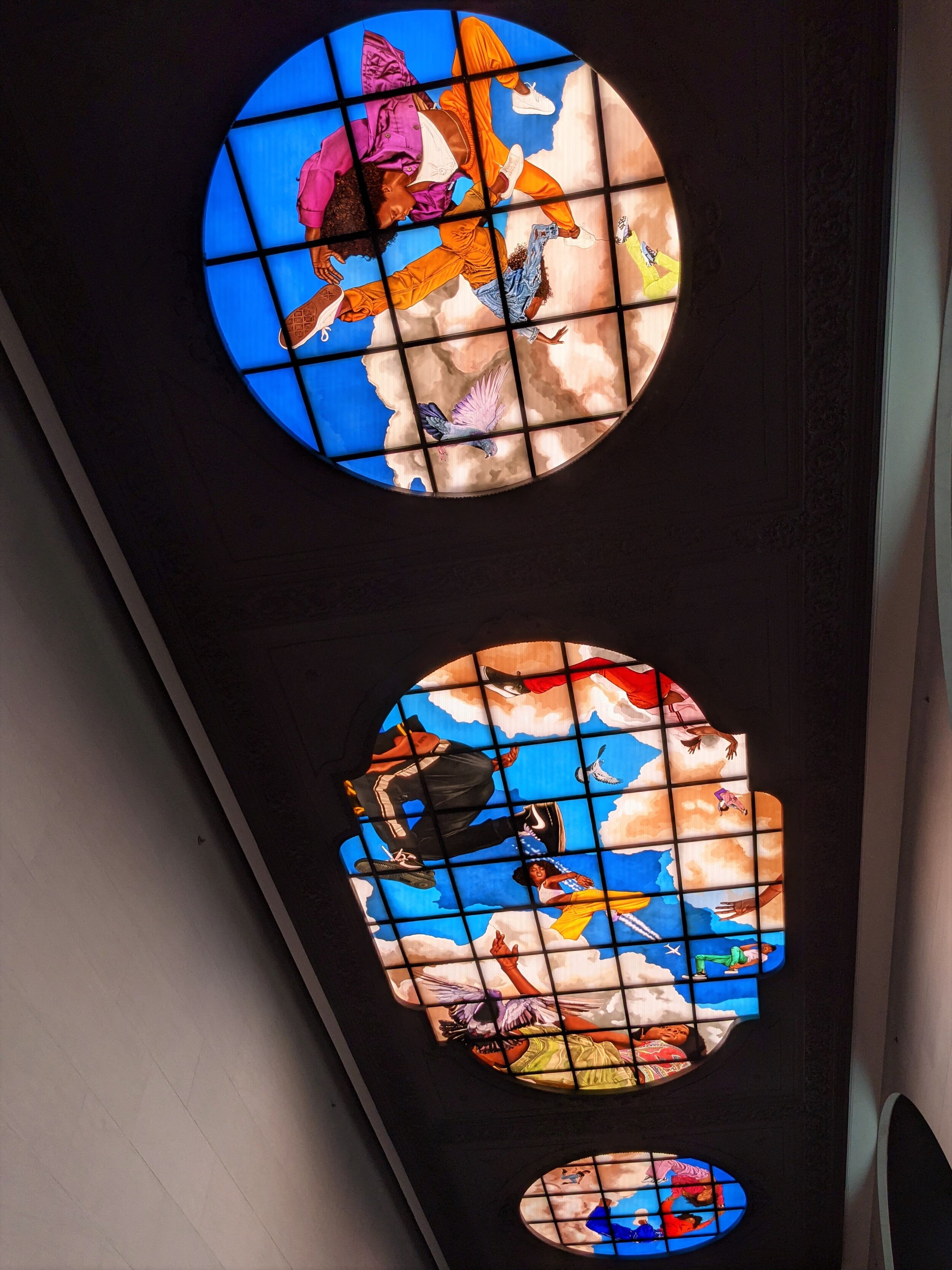
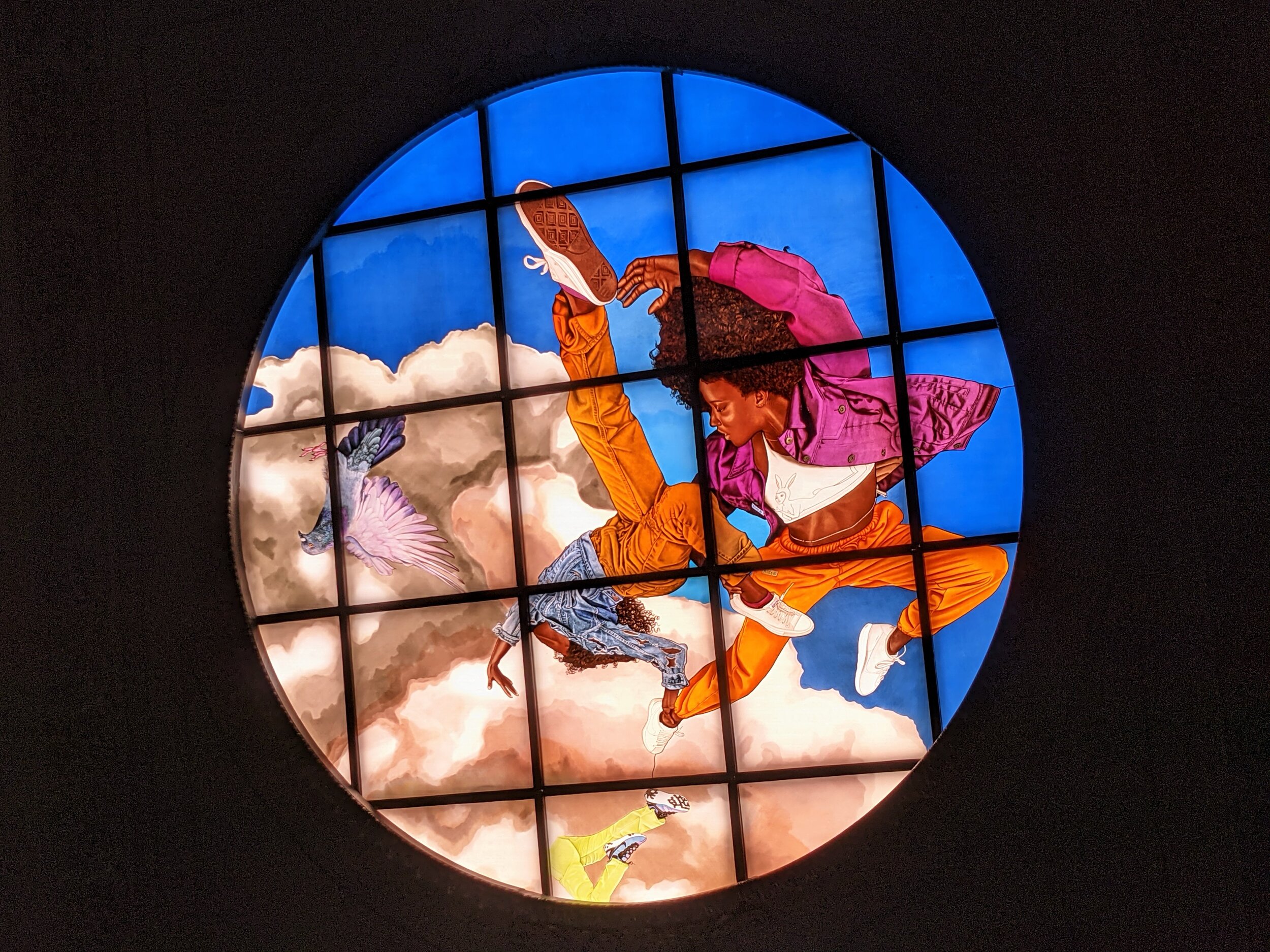
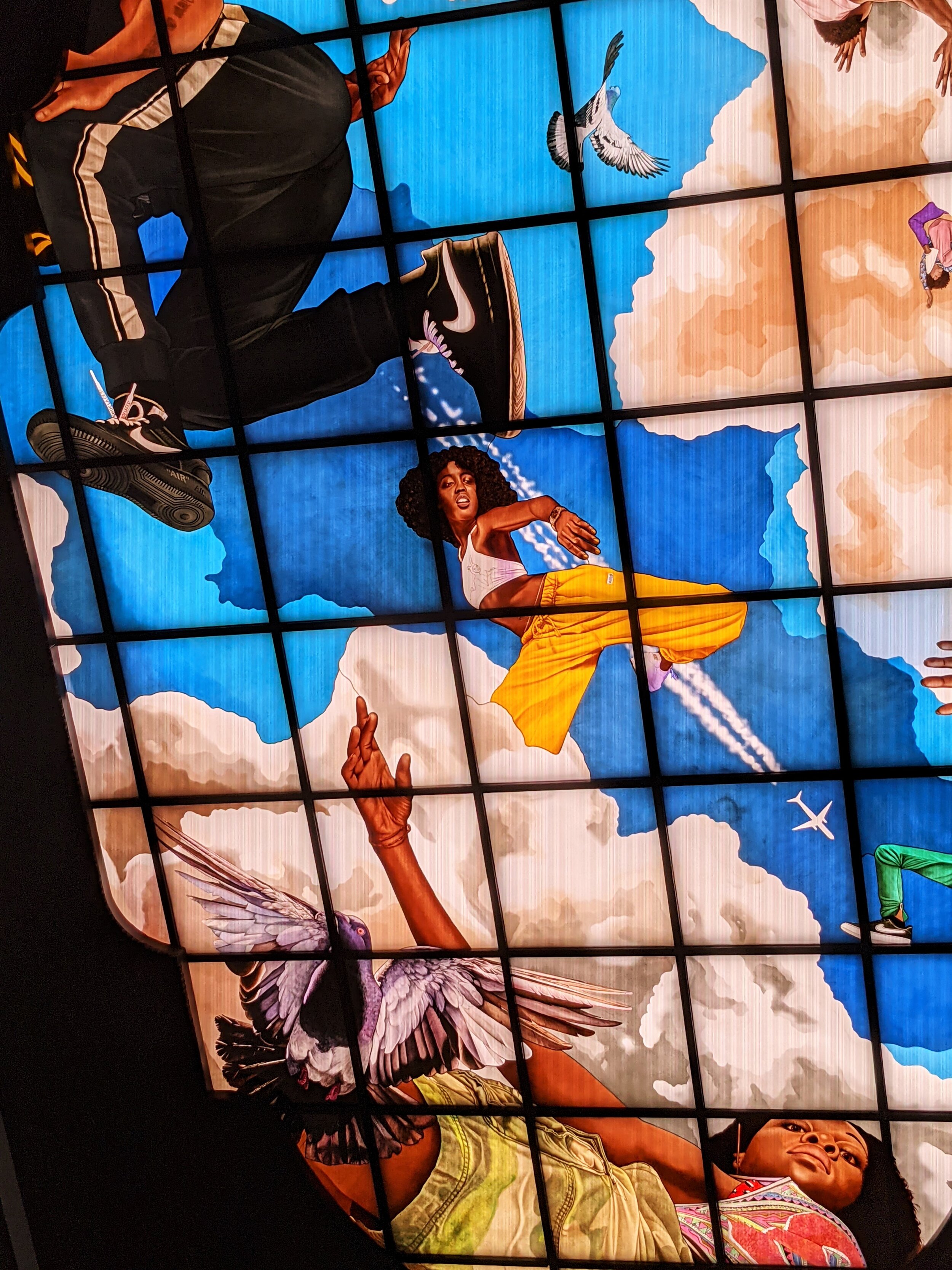
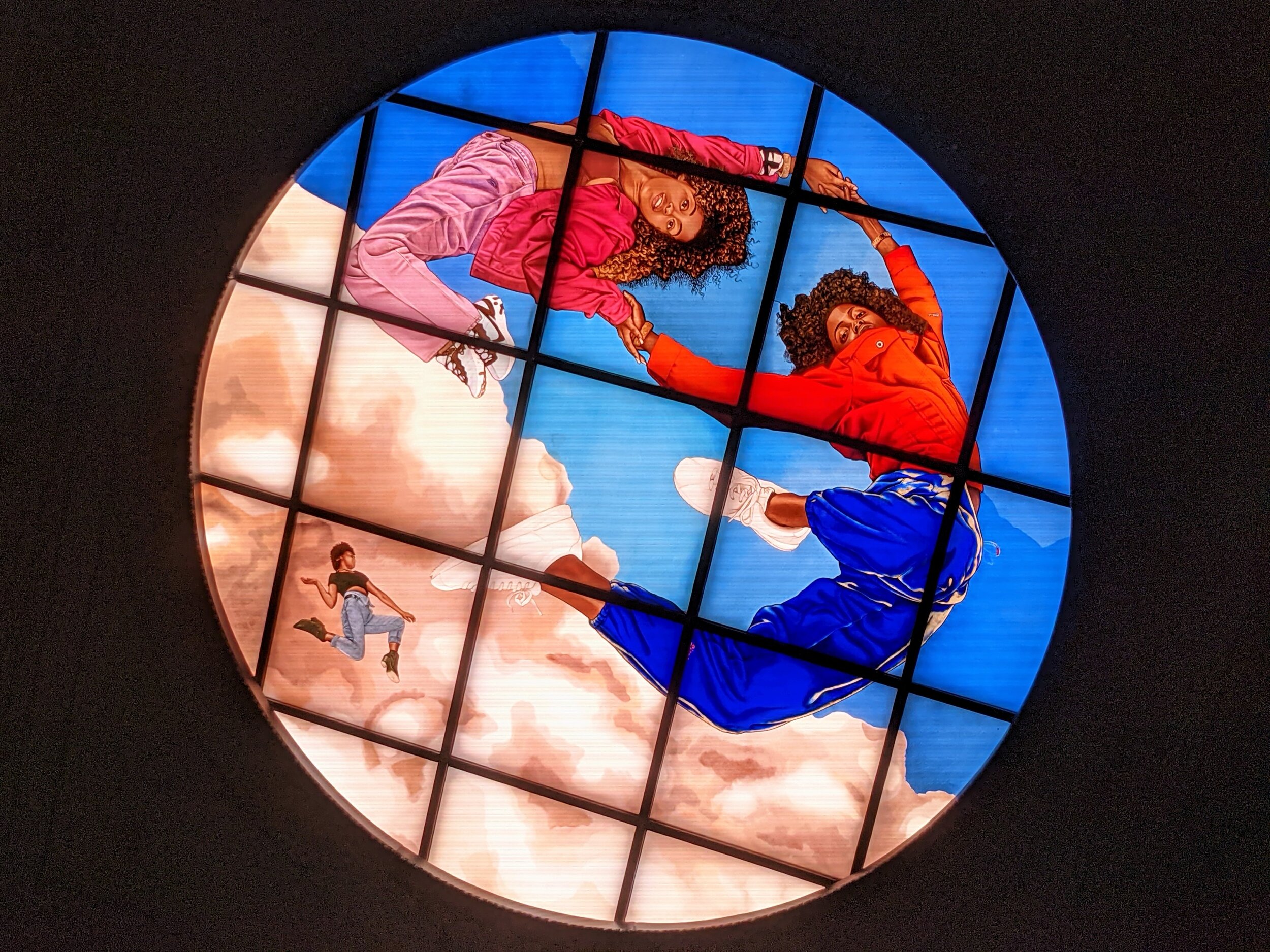
As commuters and sightseers stream into the Moynihan Train Hall at Penn Station via the W33rd street entrance, they are bathed in colored light. If they look up, they’ll see the reason: a gorgeous glass triptych by Kehinde Wiley, the artist famous for painting Barack Obama’s official presidential portrait, set into the ceiling. At first glance, the design is similar to the religious imagery that adorns the ceilings of churches and government buildings throughout the US and Europe – angels lounging in the clouds, looking down at the people moving below. But a second look reveals that the angels in Wiley’s work, titled “Go,” look very different from those that grace European frescoes. These angels are young, Black New Yorkers dressed in modern fashions. And they’re not lounging – these angels are breakdancing across the clouds. The work is joyful and dynamic, celebrating the Black people who have shaped and will continue to shape this city. This colorful piece is a perfect welcome to the city for travelers arriving in New York. At any rate, it is certainly an improvement over the current iteration of Penn Station.