Boat Dance 2015

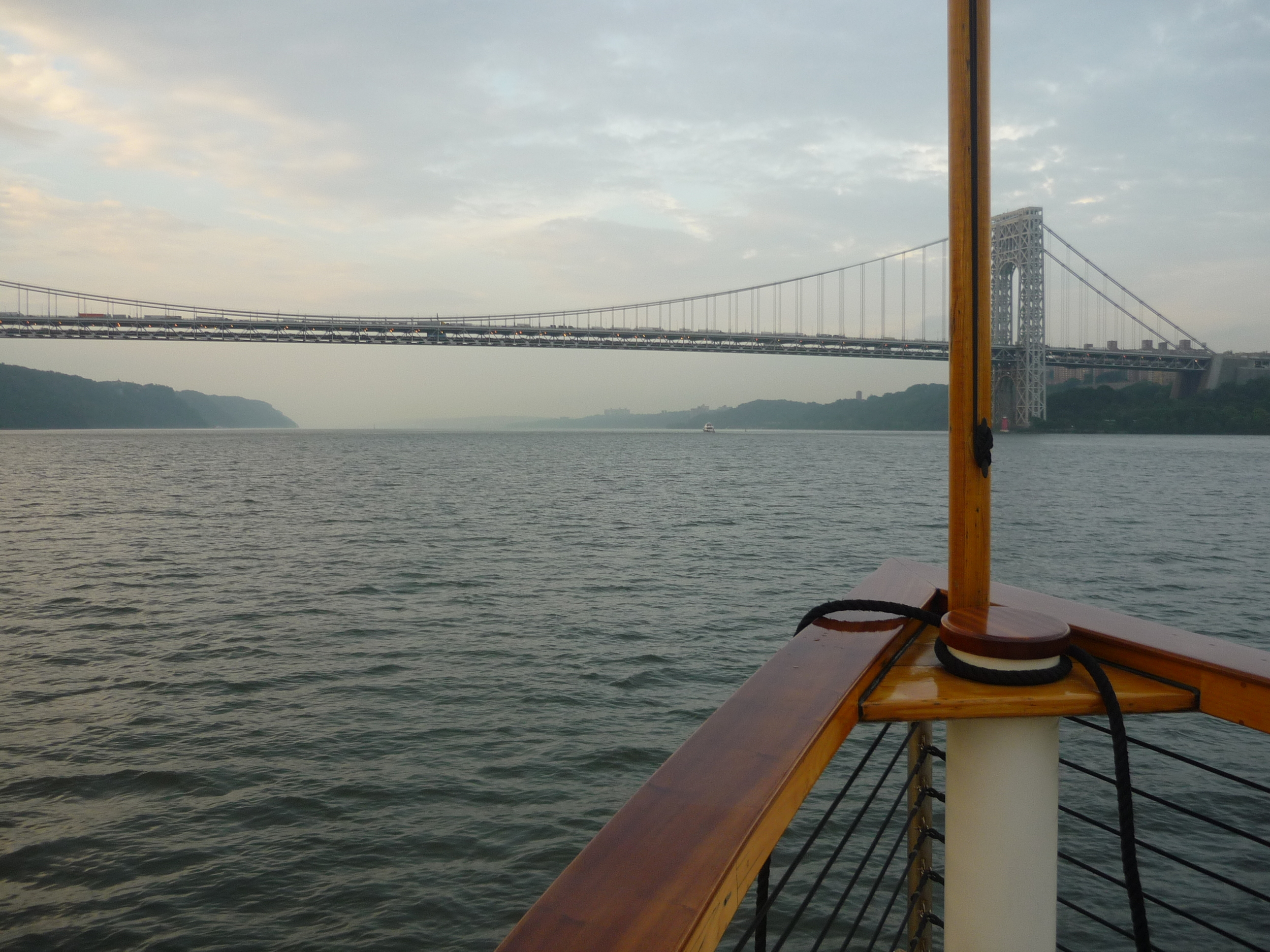
On the Hudson River looking at the George Washington Bridge.

On the Hudson River looking at the George Washington Bridge.

Only hours after a huge summer thunderstorm with high winds and heavy rain (there may have even been some hail), our firm hosted our annual boat cruise around Manhattan. There was even some sunshine peeking through the clouds! This cruise, affectionately dubbed the "Boat Dance" by our former paralegal/office manager, Briana, is a great way for our staff to relax a little after a long day of preparing and filing visa cases. And bond. So much employee bonding going on. Success!

5 Helpful Functions of USCIS.gov Every Foreign National Should Know

The USCIS.gov website, redesigned in 2013 with additional user-friendly features introduced throughout 2014, is inviting and still looks brand new. More importantly, as the official site of US Citizenship & Immigration Services (USCIS), USCIS.gov contains a great deal of helpful information and user-friendly tools (and they also have a cool blog!). Here are five functions of USCIS.gov that may serve as useful resources for many foreign nationals and those with cases with USCIS.  

1.  Check Your Case Status & Submit a Case Inquiry or Service Request Online

Instead of calling the USCIS 1-800 number to check on a case status, the case status online feature allows foreign nationals to track their application or petition by using their receipt number (a unique thirteen-character identifier assigned to each case and included on every I-797 Notice of Action) as it moves through the immigration process. Foreign nationals may also create an account to sign up for email or text message notifications when an update on their case is available, which is especially useful for those who do not want to keep checking USCIS.gov every day.

The case query/service request feature allows foreign nationals to submit case inquiries online—again, instead of calling USCIS—if they believe their pending case is taking longer than the normal processing time; or if a notice, card, or other document was not received by mail and may be lost or missing. It also allows foreign nationals to submit service requests if they need appointment accommodations or if they spot a typographical error in their case information, which is essential to get fixed as soon as possible.  

Read more

URGENT: Some DACA Recipients Who Received Three-Year Work Permits Must Return Them Immediately

US Citizenship & Immigration Services (USCIS) has urgent news for some recipients of Deferred Action for Childhood Arrivals (DACA). A February 16, 2015 court order in Texas v. United States specified that USCIS should continue to approve DACA deferred action requests and related employment authorization documents (EAD) for two-year periods, notwithstanding President Obama’s executive actions of November 20. After Obama’s announcement, USCIS had been issuing certain DACA renewals and EAD cards for the three years specified under the Obama executive action.

Certain 3-year EAD cards mistakenly issued must be returned to USCIS

After the February 16, 2015, court injunction was in place, USCIS mistakenly issued approximately 2,100 EAD cards for a three-year period rather than the allowed two-year period. USCIS has therefore updated their records to reflect a two-year period of deferred action and employment authorization for these affected individuals and has re-issued and mailed out the corrected two-year EADs. USCIS has also notified these individuals that the three-year EADs are no longer valid and must be immediately returned, along with any related approval notices, to their local USCIS office. USCIS is tracking the number of returns of these invalid EADs and continues to take aggressive steps to collect the remaining cards.

Who can keep their 3-year EAD work cards? 

USCIS has a helpful guide for DACA recipients.

After President Obama’s executive actions regarding immigration reform on November 20 last year, USCIS began to issue three-year EAD cards. The approximately 108,000 three-year EAD cards that were approved and mailed by USCIS after November 20 and received by DACA recipients before the February 16, 2015, injunction date (and that have never been returned or reissued by USCIS) do not need to be returned to USCIS.

Resources to determine if EAD card should be returned

Individuals who are required to return three-year EADs and have not done so will be contacted by USCIS by phone or in-person. USCIS reports that they also may visit the homes of those individuals who have not yet returned their invalid three-year EAD or responded to USCIS's request that they return the cards. USCIS will reportedly attempt to call the individual in advance of any home visit and USCIS employees will always show the individuals their credentials during any visits.

New resources are available at USCIS.GOV to help DACA recipients:

Those recipients who have not been contacted by USCIS and have received a three-year card after February 16, 2015, should use the new online tool or call the USCIS Customer Service line at 1-800-375-5283 to verify whether they are affected before returning the card.

What are the consequences of not returning card?

For those recipients who are required to and fail to return the card, USCIS will terminate DACA and all employment authorizations effective July 31, 2015. Since the consequences of not returning the card is severe, DACA recipients should note carefully if they are required to return their card and speak to an experienced immigration attorney if they have questions.

Organic Growth Pavilion

Organic Growth by Izaskun Chinchilla Architects (Madrid/London)

Organic Growth by Izaskun Chinchilla Architects (Madrid/London)

A trip to Governors Island, a 172-acre island approximately 800 yards from the southern tip of Manhattan, is a delightful way to spend a summer afternoon. Featuring miles of bike paths, historical reenactments with a canon being fired (fun for the whole family), delicious food, cultural events, and a hammock, this summer the island is also displaying some beautiful outdoor art pieces including the Organic Growth pavilion on the Parade Ground. Taking inspiration from nature and discarded and found materials, the design utilizes broken umbrellas, old stools, and damaged bicycle wheels. The pavilion is composed of elements that can be dismantled and re-used after the summer. "Branches composed of several umbrellas and tripods, can be easily reused as sun, wind, and rain protection in outdoor spaces all around the city. Larger elements can be beautiful indoor chandeliers and can be useful for community centers or other public spaces." The piece is being shown until September 20. If you go, don't forget, the last ferry on the weekend leaves at 7pm. Don't miss it!

A Beginner’s Guide to Special Immigrant Juvenile Status

     (Para español, haga clic aqui)

Created by Congress in 1990, the Special Immigrant Juvenile program seeks to aid foreign minors living in the United States. Minors unable to live with one or both of their parents in their home country due to abandonment, neglect, or abuse, may be eligible for special immigrant juvenile status (SIJS). SIJS permits a minor to remain in the United States and apply for legal permanent residency, and eventually, US citizenship.

Why is it important?

Last year, we wrote about the surge of Central American children crossing the US-Mexico border. While the number of unaccompanied minors entering the US has decreased, the motivations underlying their entry remain. Poor conditions in Central America, including poverty and gang-related violence, still prompt thousands of minors to flee their home countries every year. While some of these minors may be eligible for asylum (for individuals who have been persecuted on the basis of race, religion, nationality, political opinion, or membership in a particular social group), U visas (for victims of certain crimes in the US who aid law enforcement in investigating or prosecuting the offender), or T visas (for victims of human trafficking), others are better candidates for SIJS.

Read more

Washington Post: "Cuba and U.S. quietly restore full diplomatic ties after 5 decades"

depositphotos_54486179-Cuban-flag.jpg

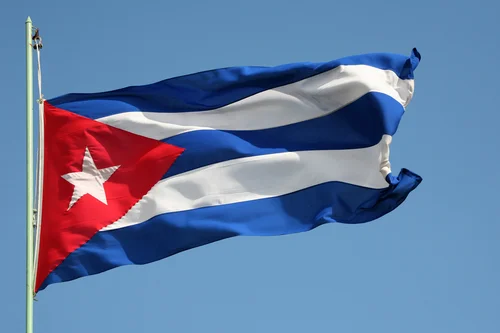
Yesterday marked the official restoration of diplomatic ties, after they were severed fifty-four years ago, between Cold War-foes Cuba and the United States. The historic Cuban Embassy in Washington D.C. (which is quite beautiful) held a small ceremony led by Cuba’s foreign minister Bruno Rodríguez to commemorate the event a few hours after the US State Department added Cuba’s flag to the line of flags for other US diplomatic partners.

The restoration of full diplomatic relations comes after two years of intense, and at times, secret negotiations that involved spies, Pope Francis, and yes, artificial insemination. In a joint press conference with Foreign Minister Rodríguez, Secretary of State John Kerry called it an "historic day; a day for removing barriers." Mr. Rodríguez, in his meetings with Mr. Kerry yesterday, "emphasized that the totally lifting of the blockade, the return of the illegally occupied territory of Guantanamo, as well as the full respect for the Cuban sovereignty and the compensation to our people for human and economic damages are crucial to be able to move towards the normalization of relations."

While some have criticized President Obama's actions regarding Cuba including Marco Rubio who said he would rollback all actions taken by the Obama administration if he were elected president, many others celebrated the restoration of diplomatic ties, the lifting of some travel restrictions and limits on remittances to Cuba, and the removal of Cuba from Washington’s list of state sponsors of terrorism earlier this year. Nonetheless there remain many issues for the two countries to resolve.

The issues, as Mr. Rodríguez stated, include disputes over Guantánamo Bay, the US naval facility used to detain terror suspects, and the ending of the trade embargo, which devastated the Cuban economy. While President Obama supports the lifting of the embargo and closing of the detention center in Guantánamo, both of these require action by the Republican-controlled Congress. As the Senate is expected to oppose the confirmation of any US ambassador to Cuba, President Obama will likely delay the nomination.

Although the US Embassy in Havana is open now, Secretary John Kerry will travel in August to the island and hold an official ceremony. As in Washington D.C. yesterday, there will presumably be a few shouts of “Viva Cuba” and “Viva Fidel.”
The Blue Lagoon

The Blue Lagoon. Looks nice, right?

The Blue Lagoon. Looks nice, right?

The Blue Lagoon is a geothermal spa in a lava field in Grindavík in southwestern Iceland. Originating at 2,000 meters below the surface where freshwater and seawater combine at extreme temperatures, the geothermal water is then "harnessed via drilling holes at a nearby geothermal power plant, Svartsengi, to create electricity and hot water for nearby communities." The geothermal water is composed of three active ingredients—silica, algae, and minerals—and the blue color comes from the way the silica reflects sunlight (algae in the summer may also produce a hint of green), but if the water is poured into a transparent cup, it will have a milky white color! The water is supposed to be great for your skin, but I wouldn't drink it.