

In listening to people (lawyers and non-lawyers) speaking about immigration I often think, like Inigo Montoya in The Princess Bride, “You keep using that word. I do not think it means what you think it means.” So, I thought I would try to bring some clarity to some terms we use all the time (Lizzie B already handled the acronyms), which can actually be confusing or which can be misused.
Read moreReport: Immigrants Less Likely to Commit Serious Crimes Than the Native-Born
With the recent tragic killing of Californian woman Kathryn Steinle in San Francisco allegedly by an undocumented immigrant with felony convictions who had been deported to Mexico five times, the issue of immigration and crime is being debated on the national level and, in particular, among presidential candidates.
While some are using the tragic death in San Francisco to prove a link between crime and immigrants, according to a new report by the Immigration Policy Center, a non-partisan organization whose mission is to provide research and rational analysis on immigration, immigrants (whether documented or undocumented) are less likely to commit serious crimes or be incarcerated than the native-born and are also less likely to engage in criminal behaviors; moreover; higher rates of immigration are associated with lower rates of violent and property crime.
The report uses a variety of studies and methodologies to provide a comprehensive look at the relationship between immigration and crime going back over a century. Data, for example, from the 2010 American Community Survey conducted by the authors of the report show roughly 1.6 percent of immigrant males age eighteen to thirty-nine are incarcerated, compared to 3.3 percent of the native-born. "This disparity in incarceration rates has existed for decades, as evidenced by data from the 1980, 1990, and 2000 decennial censuses," the authors state. The report also shows that even with dramatic increases in immigration, there is no corresponding increase in violent crime—in fact, during 1990 to 2013 when the foreign-born population grew over five percent and undocumented immigrants tripled from 3.5 million to 11.2 million, violent crime declined forty-eight percent and property crime fell forty-one percent. This is true even in cities with traditionally large immigrant populations such as Miami, Chicago, San Antonio, and San Diego.
While the report notes that immigrants as a group "tend to be highly motivated, goal-driven individuals who have little to gain by running afoul of the law," the authors state that unfortunately "immigration policy is frequently shaped more by fear and stereotype than by empirical evidence."
Politicians are already discussing changes to immigration policies as a result of the shooting death in San Francisco, but Christina Bejarano, professor of political science at the University of Kansas, cautioned in an interview to the Christian Science Monitor: “[I]t is not fair to rush to extreme action, since that can endanger people, as well as foster more racist and xenophobic commentary toward immigrants without actually thinking through how to best solve our immigration problems.”
One Family
"We can’t let people drive wedges between us because we are all one family...There is only one human race."
- Dolores Huerta, Labor leader and activist, honored recently with an exhibit on her life at the Smithsonian’s National Portrait Gallery
Pumpkin

Pumpkin a.k.a. Lumpy the Mutt
Our newest addition to our staff is a quarter-Chihuahua, eighth-Chow Chow, eight-Japanese Chin, and half a mystery. Her name is Pumpkin and she is a surprisingly fast typist even though she has no opposable thumbs. We put her to work right away. Also: she has a super cute Instagram with over one thousand followers.
Why I’m Pro Pro Bono and You Should Be Too
Pro bono refers to work for the public good and in service to low-income clients. As legal professionals, our law licenses symbolize the economic monopoly we have over the provision of legal services. With that monopoly comes an obligation to ensure that those legal services are available to all who need them, and not just the select few that can afford to pay for them. There are few fields where this obligation is more important than in immigration law. Unlike criminal law, where a defendant has a constitutional right to be provided an attorney in the event that they cannot afford one, in immigration law–and most other areas of civil law–there is no right to free counsel. Over the last decade, there has been an increasing recognition of the need for a “civil Gideon” right (Gideon refers to the seminal Supreme Court case, Gideon v. Wainwright, that established the right to counsel in criminal proceedings)–the right to counsel for the poor in civil matters, including housing, family, and immigration law, among other areas of law.
Read moreThe Guardian: "Donald Trump backlash: 'I love Mexico' but promises border wall if elected"
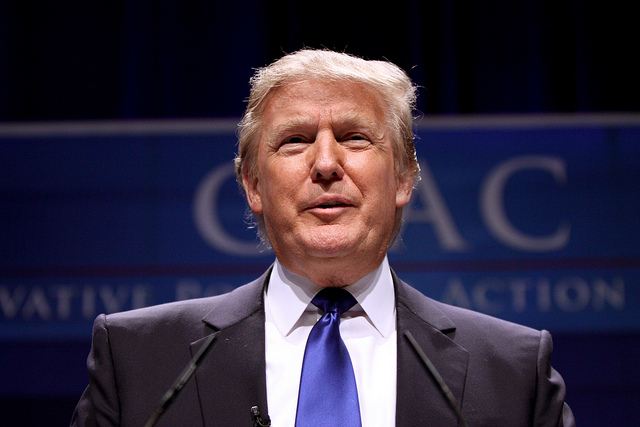
After Donald Trump called Mexican immigrants "rapists" and drug dealers and promised to build a wall on the US/Mexico border during his speech announcing his presidential run, the backlash continues. "The US has become a dumping ground for everybody else's problems," he said in the speech. "When Mexico sends its people, they're not sending their best...they're sending people that have lots of problems...They're bringing drugs, they're bringing crime, they're rapists. And some, I assume, are good people.”
Despite Trump later saying, "I love Mexico," in a statement issued yesterday he stood by his original comments and added that “tremendous infectious disease is pouring across the border.”
In response to his remarks, numerous companies have cut business ties with Trump: Macy's decided to stop carrying his men's line of clothing and merchandise (some of which are made in Mexico); Univision, the nation's largest Spanish-language TV network, announced they were dropping plans to broadcast the Miss Universe Pageant, which Trump co-owns, while the scheduled co-hosts and performers also pulled out; NBCUniversal ended its business relationship with Trump and will not air the annual Miss USA and Miss Universe Pageants; Televisa, the world’s largest Spanish-language media company, severed commercial ties with Miss Universe and all other Trump-related companies; Ora TV, a production company co-founded by Mexican billionaire Carlos Slim and TV personality Larry King, cancelled a program it was working on with Trump's companies; and Serta mattresses announced they are cancelling their business relationship (a line of mattresses) with Trump.
In addition, PGA of America said they will not be holding this year’s Grand Slam of Golf on Trump's Los Angeles golf course, ESPN has moved their ESPY Celebrity Golf Classic from Trump National Golf Club, NASCAR is severing business ties and will not host their season-ending awards ceremony at the Trump National Doral Miami, and the City of New York is reviewing its business relationships with Trump-operated venues including Trump's golf course in the Bronx, home to one of the nation’s largest Hispanic communities.
Trump's fellow Republicans running for president have also (mostly) condemned his remarks, and the response in the Latino community has been swift and strong. Lisa Navarrete, a spokeswoman for the National Council of La Raza, a Hispanic civil rights and advocacy group, told the Guardian that Trump’s claims were "absurd" and said: “I’m hoping that the saner, more rational people in the Republican party can put a stop to this kind of thing, and say: ‘No, we’re going to be constructive, we’re not going to needlessly and consciously alienate the fastest-growing group of voters in this country.’” What do Mexicans think of his comments? Well, Donald Trump piñatas are very popular right now.
Full Commitment
“As we celebrate Independence Day, we welcome over 4,000 new Americans who will be able to enjoy all the rights, privileges and responsibilities of U.S. citizenship…From Los Angeles to New York, Miami to Seattle, Indianapolis to Los Alamos, these individuals are showing their full commitment to the freedoms, values and ideals that have inspired Americans since the Declaration of Independence in 1776.”
- León Rodríguez
Director of US Citizenship & Immigration Services
Happy July 4th (and Pride)!

Pride Parade on 5th Avenue last Sunday.
My Immigration Story
A series of posts by Daryanani & Bland staff sharing their immigration stories—how they (or their families) came to America and/or how they came to work in the immigration law field.
The stories of people’s cultural backgrounds, how they came to America, and the cultural traditions they brought with them are fascinating to me. That’s part of why I became an immigration attorney and why my own family’s immigration story is one that I have thoroughly explored.
My mother’s side of the family comes from England through a line that can be traced back to the earliest American settlers, including a Francis Drake (who our family thinks may be a descendent of the Sir Francis Drake but have yet to confirm) who settled in the colony of New Hampshire. An alleged religious dispute with the Puritans caused him to move his family further south. With multiple generations of my family living in Connecticut, it’s ironic that I was already living in Brooklyn, NY when my mother and aunt decided to start a genealogy research project and discovered that my great-great-great-great-grandfather Theodore Drake spent most of his life in Brooklyn, NY and is buried in Greenwood Cemetery—only blocks from where I live now. Theodore Drake turned out to be an interesting character. If I were on the show Finding Your Roots (if it ever comes back on the air—thanks Ben Affleck and Henry Louis Gates Jr.!) he would surely be the character they focus on (apart from Sir Francis Drake).
Read moreState Department Visa and Passport Systems Back Online
Following the technological issues they experienced over the last few weeks, the State Department reports that as of last Friday all visa-issuing US Embassies and Consulates abroad are now back online. They are scheduling visa interviews as well as issuing nonimmigrant and immigrant visas. While consular posts may be still experiencing problems with some online immigrant visa application forms, which are still being fixed, they have been working to clear the extensive backlog, which they state will be done this week (which is perhaps a bit optimistic).
What happened?
A biometric hardware error brought the entire system down on June 7, preventing US Embassies and Consulates around the world from processing and issuing hundreds of thousands of visa stamps. Consular posts receive approximately 50,000 visa applications a day, and thus the downtime severely backlogged the system and caused major delays for many international travelers.
Who was able to obtain visas?
During the outage, with limited systems functionality, the State Department promised to prioritize visas for humanitarian reasons and also for foreign agricultural workers as part of the government's H-2A visa program. It was this latter group of workers that farmers especially needed as the summer harvest began. North Carolina, the top employer of seasonal workers under the H-2A visa program, was facing severe worker shortages and loss of revenue given the extensive delays in issuing visas.
"It's a crisis," Jason Resnick, general counsel for the Western Growers Association, said to the Wall Street Journal about the workers not being issued the visas. Crops affected by the shortage of foreign workers include berries, cherries, peaches, corn, vegetables, and tobacco. The Wall Street Journal reports:
In most cases the stranded workers’ motel bills in Mexico are being paid by the farmers or the U.S. agents who contracted them, according to the visa program’s requirements. Agents said some stranded workers, who typically travel to the border from far flung villages, are being approached by people-smugglers offering to spirit them over the border at a price. Coming at the start of the busiest season, 'it’s a desperate situation for growers,' said Libby Whitley, president of MAS Labor, a Virginia-based agency that sources 10,000 seasonal workers each year for U.S. agriculture. 'They have to get the stuff off trees and fields or you don’t have it anymore,' she said.
With delays costing farmers in California an estimated $500,000 to $1 million per day, the State Department reports that more than 3,750 temporary seasonal workers have been issued new visas in Mexico since last week, and they are stating that all pending H-2 visas that were delayed have been issued this week.
Who didn't get visas?
The systems outage caused major problems for many international travelers and performers to the US. Dutch theatre troupe Dood Paard had to cancel its Botox Angels production, set to run over Pride weekend in New York City, after they were unable to secure visas for its cast. International students were unable to attend the US National Youth Science Camp in West Virginia, a prestigious month-long educational program for high-school graduates from around the world.
As for the sporting world, the Ultimate Fighting Championship (UFC) had to cancel several high-profile fights scheduled for the UFC Fight Night event in Hollywood since twelve foreign fighters were unable to obtain visas. Players and staff with the Bayern Munich football club, which had planned a visit to the US to “crack the American market,” were unable to obtain visas and had to cancel their trip. Matthias Sammer, director of sport at Bayern Munich, called it a "shame" and said he hoped they could make it later.
Musicians were hit especially hard. Nigerian jazz singer-songwriter King Sunny Ade had to cancel his entire US tour due to the visa problem, and Chinese concert pianist Fei-Fei Dong also had to cancel performances. Peruvian electronic psychedelic band Dengue Dengue Dengue! were also not able to get visas in time, Australian pop band the Veronicas had to cancel their US tour, and Japanese heavy metal band Crossfaith had to cancel part of theirs. India's Barmer Boys, Sufi folk musicians from Rajasthan, India, also had to cancel their US tour. Even diplomats who needed to visit the UN headquarters and financial institutions in New York for "urgent negotiations" also faced visa delays because of the system outage.
Now that the systems are back up, we are hopeful the State Department and consular posts will work through the backlog and start issuing those visas. Because, on behalf of concertgoers across this great land, we don't want to miss anymore great international performances. And we definitely don't want a repeat from last year when Harry Potter was unable to enter the US because of a (different) systems glitch!