
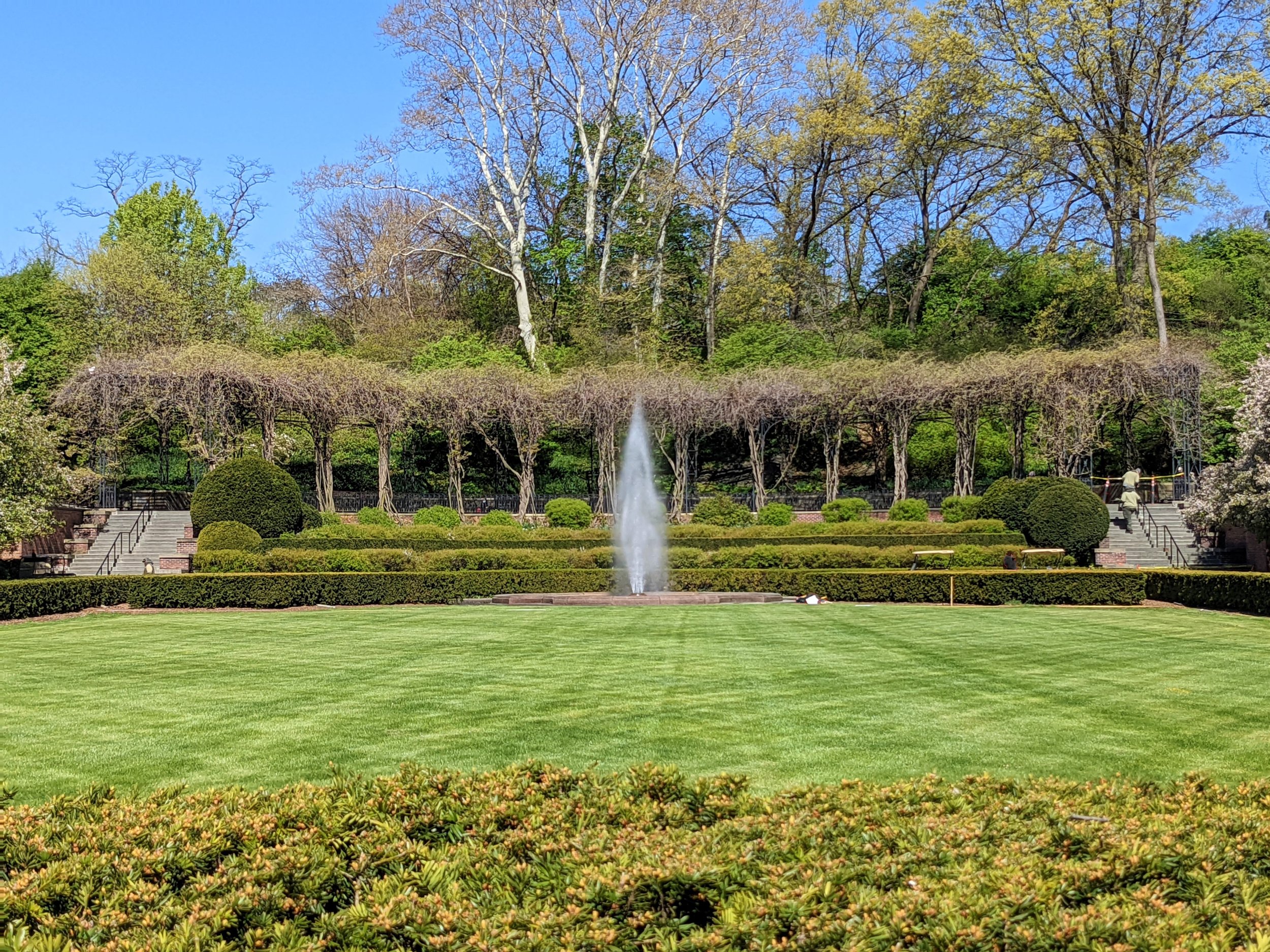
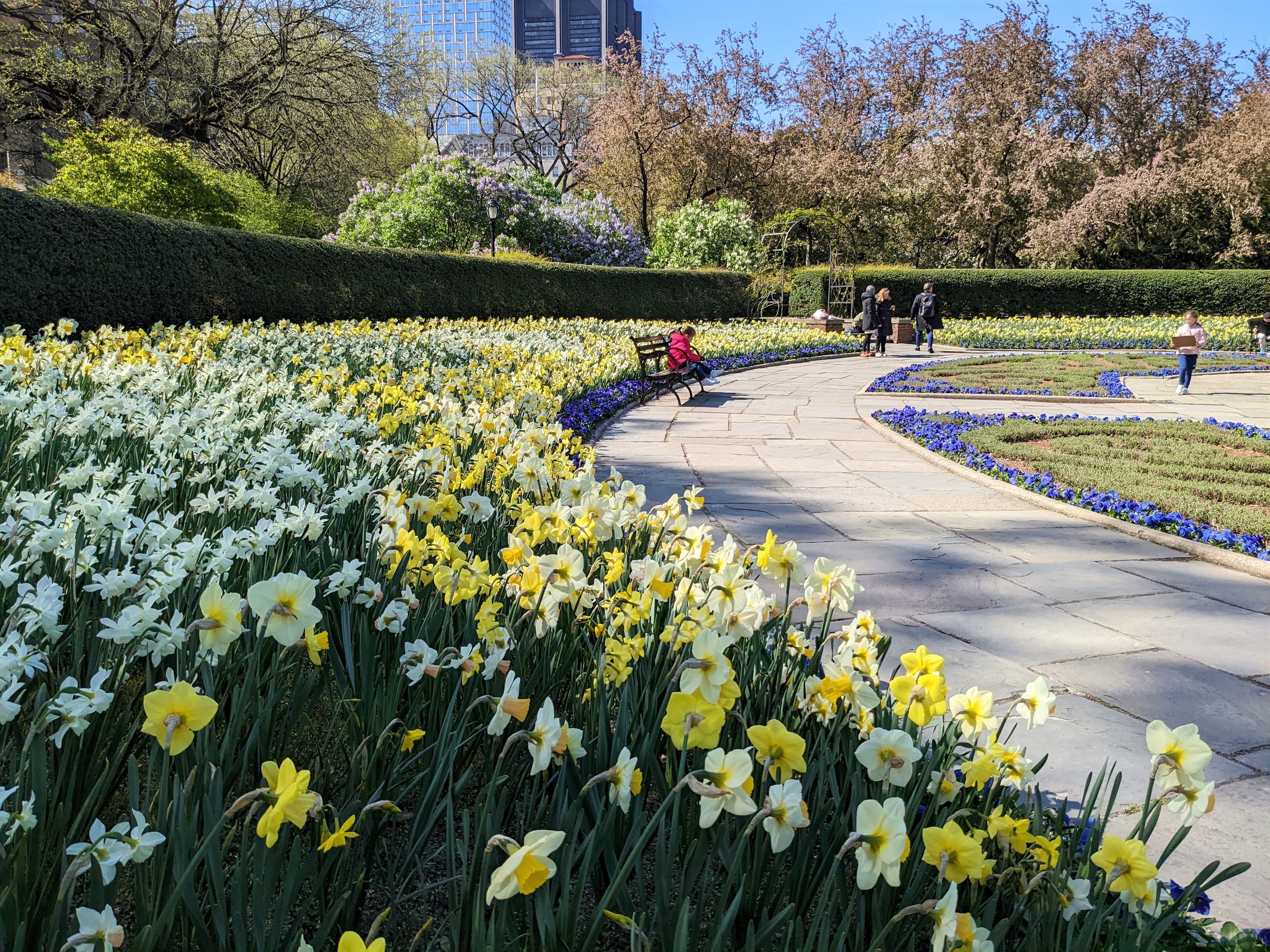
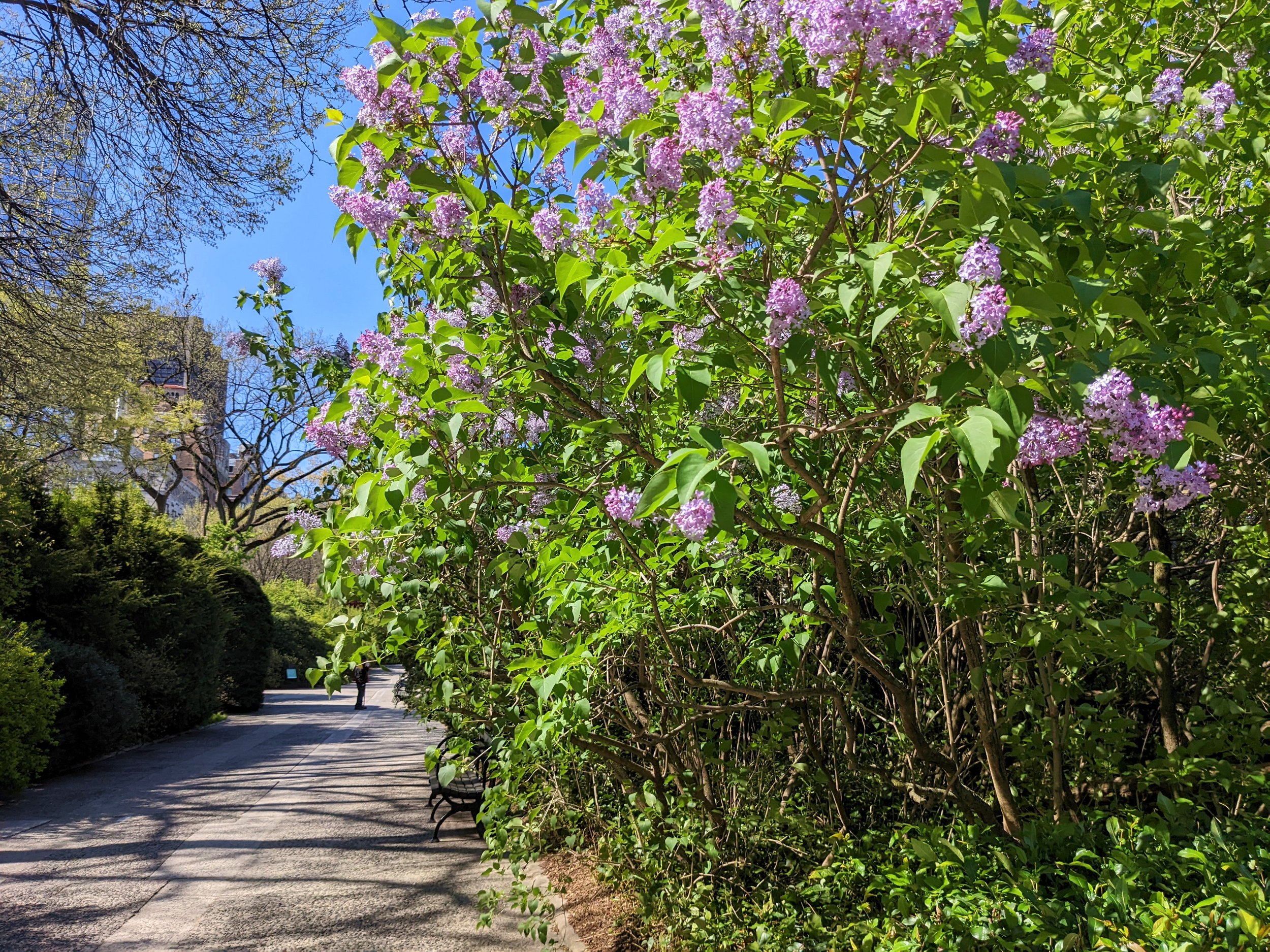
Central Park is usually known for its wide lawns, winding trails, and beautiful lakes. Few people know that the northeast corner of the park is home to six-acres of formal, European-style gardens. The Conservatory Gardens, named for the glass conservatory that was originally built on the site in 1899, are today a set of three immaculately kept gardens. The main gates on 5th Avenue open into the central Italian-style garden. A large, symmetrical parterre is framed at the far end by a wisteria-covered pergola and a simple fountain. The French garden to the north consists of rings of flowerbeds and a paved path surrounding a decorative fountain. The southern garden, designed in the English style, is currently closed for renovations. The gardens, which opened in 1937, were mostly neglected for decades, before the first major restoration took place in the 1980s. They are once again undergoing restoration, and soon the gardens will be accessible to all, and more beautiful than ever.
Conservatory Garden
USCIS Plans to Expand Premium Processing Services
United States Citizenship and Immigration Services (“USCIS”) plans to “increase efficiency and reduce burdens to the overall legal immigration system” in order to reduce their extensive adjudication backlogs and increased processing times, by expanding the premium processing service to include additional form types.
Read moreHumanitarian Efforts Initiated to Aid in the Resettlement of Ukrainian Refugees
Following the Biden Administration’s recent announcement to welcome up to 100,000 Ukrainians and others fleeing the war-torn country, the Department of Homeland Security (“DHS”) introduced the Uniting for Ukraine program. The new program which became effective April 25, 2022, provides a streamlined process for displaced Ukrainian citizens to apply for humanitarian parole in the US, allowing them to live and work in the US for up to two years.
Read moreActual Dignity and Compassion

US Embassy in London
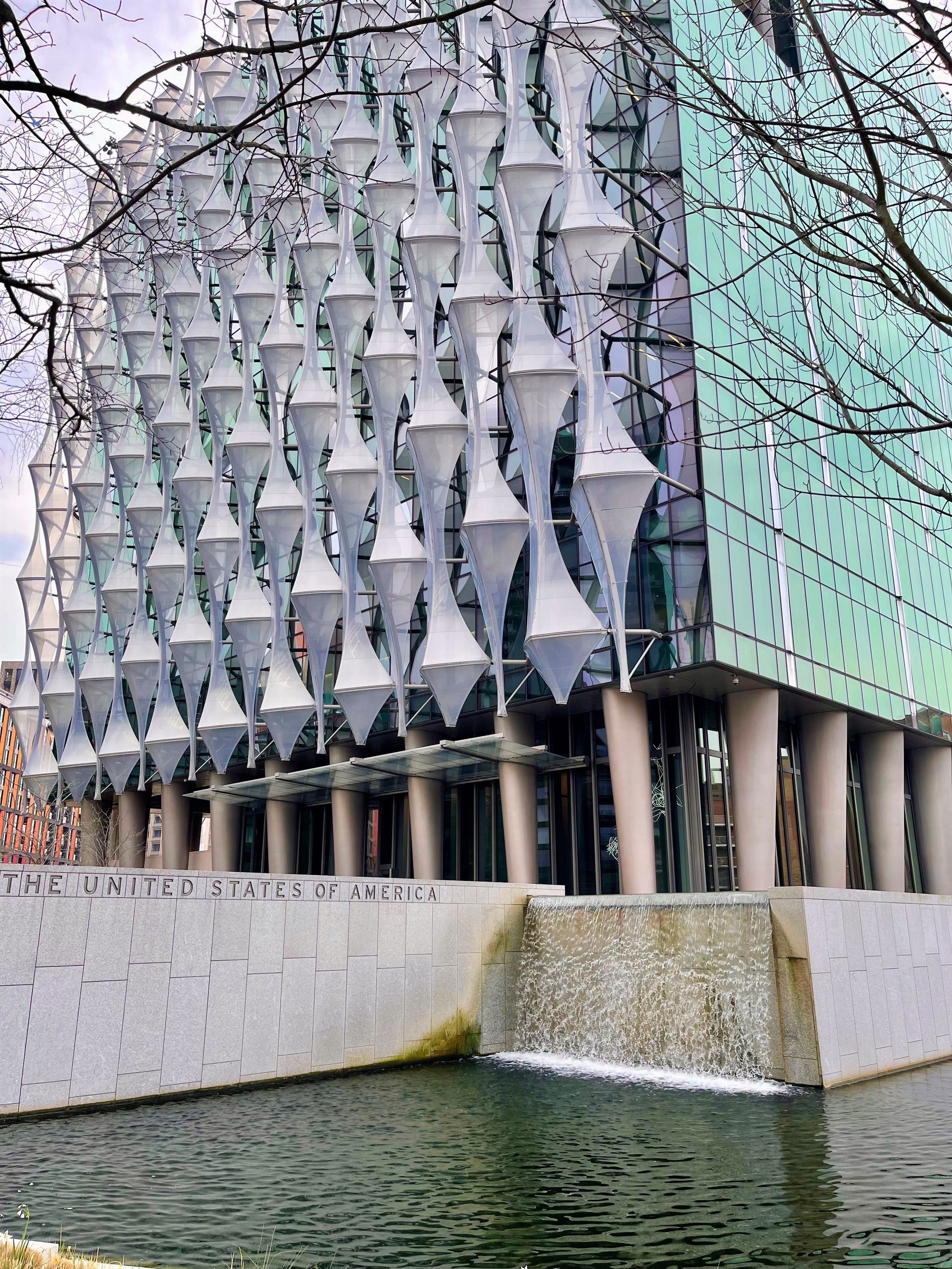
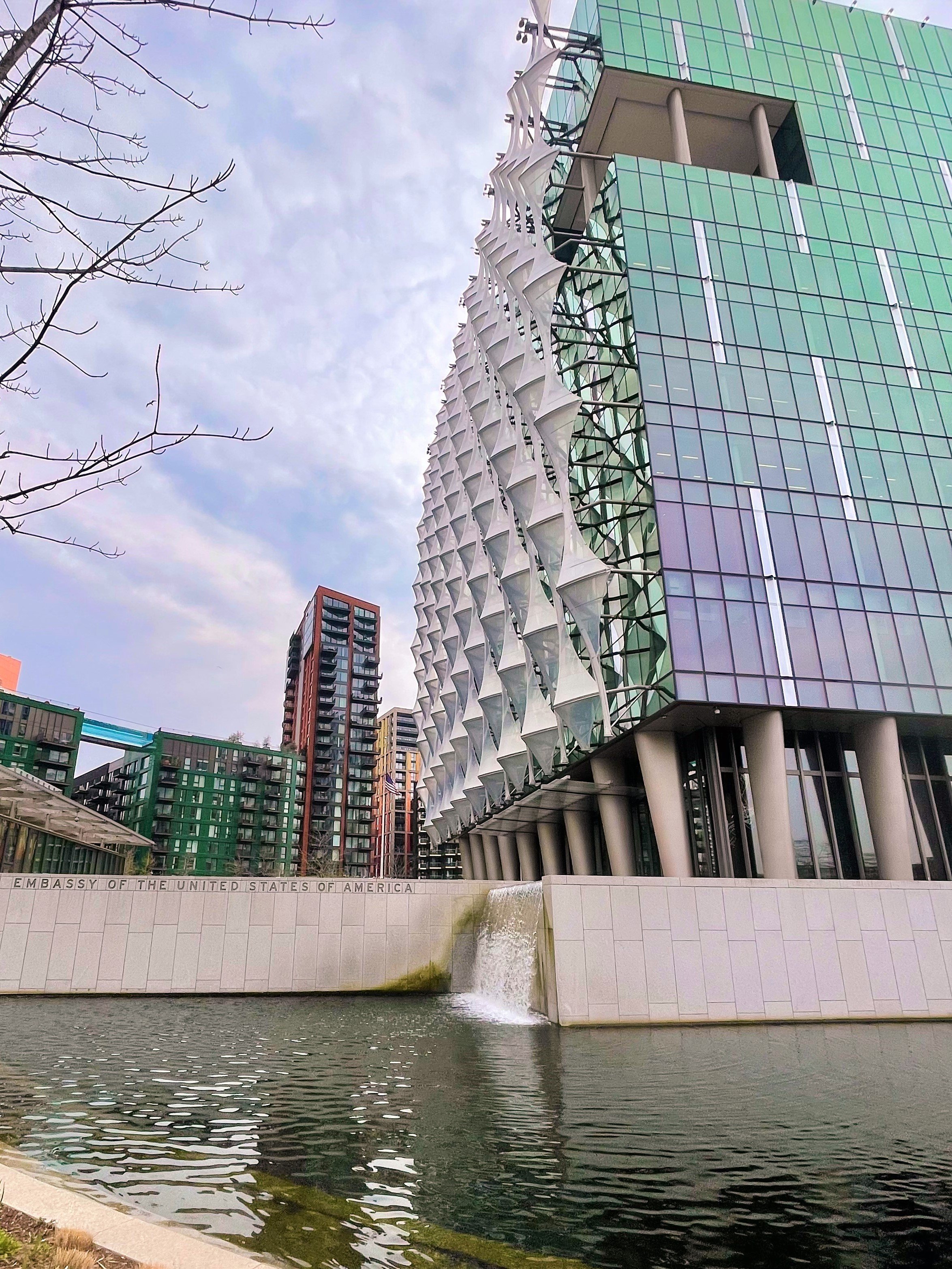
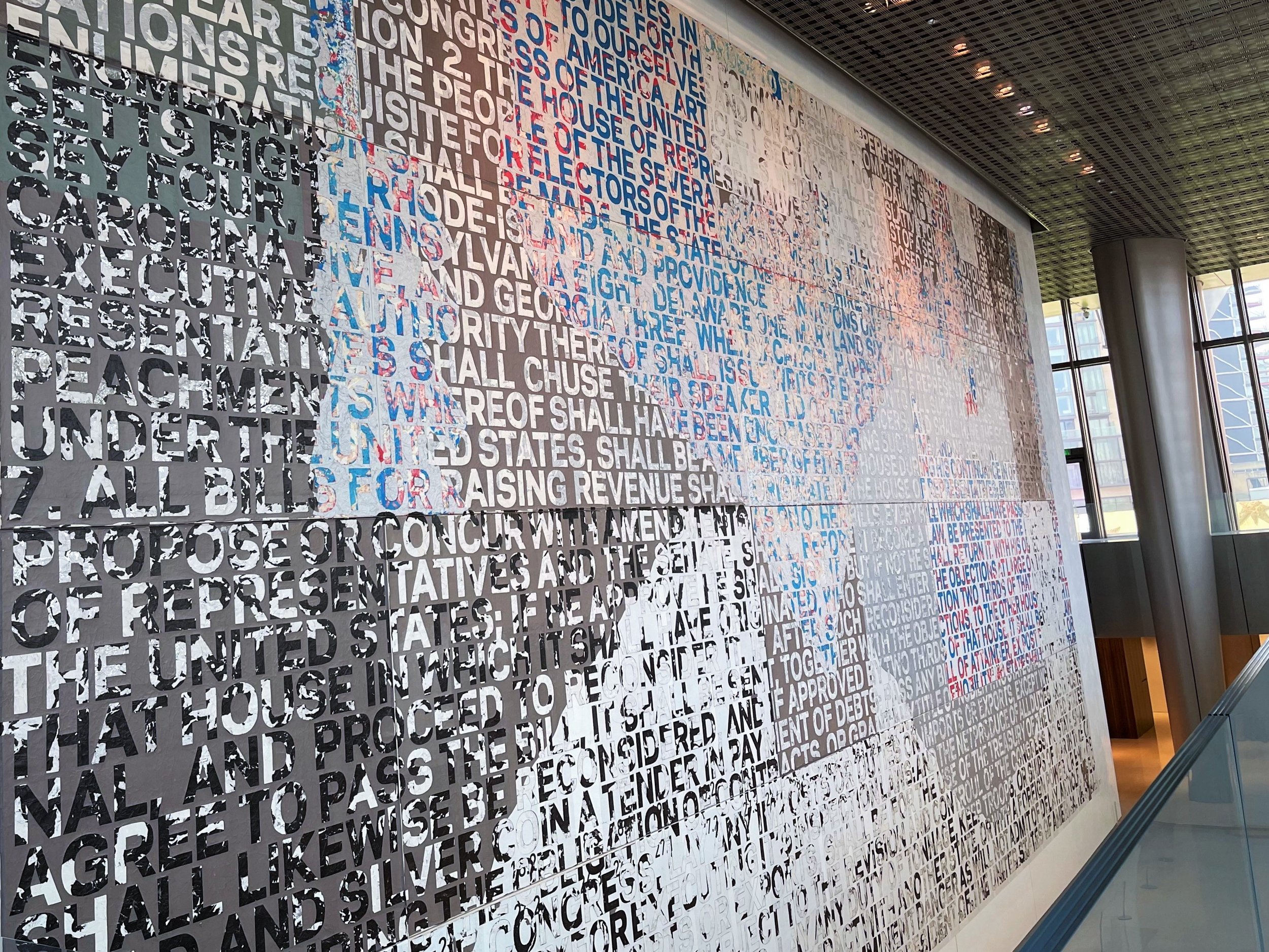
The US Embassy building in London is a remarkable landmark, with a design that combines utility, security, and sustainability with a striking appearance, inside and out. Opened in 2017, the building is relatively new. The design, by Philadelphia-based architecture firm Kieran Timberlake, is meant to evoke some of the foundational ideals of American government – transparency, openness, and equality. The building’s simple cube shape maximizes useable space in a high-traffic embassy, and the façade made of transparent, high-performance plastic catches the sunlight in an appealing and useful way, directing the natural light throughout the interior of the building. The outside of the building also boasts a landscaped pond that serves double duty as an attractive aesthetic feature and a rainwater retention system, reducing strain on the municipal water system and pollution of the nearby Thames River by repurposing collected water for irrigation and mechanical systems. The inside of the building is equally well designed, featuring indoor gardens and countless works of art, including an enormous mural created with the words in the US Constitution.
Life and Future May Depend on How Rapidly Paperwork is Processed

The Harlem Meer

Central Park, built in the mid-1800s, was the first landscaped public park in the United States. Its designers, Frederick Law Olmsted and Calvert Vaux, were ambitious, aiming to create a space in the middle of New York City where residents could experience a wide variety of landscapes all in one place. The park successfully combines landscaped gardens, wild wooded areas, pastoral fields, and more. The designers also incorporated several bodies of water – ponds, lakes, and streams – into their plans. In the northeast corner of the park, the Harlem Meer is one such manmade lake. The Meer, Dutch for “lake,” is today a haven for wildlife like fish, turtles, and waterfowl, as well as a popular destination for the neighboring community in Harlem.
USCIS Updates Policy to Waive Interview for Some Conditional Permanent Residents
United States Citizenship and Immigration Services (“USCIS”) announced it would be adopting a risk-based approach in its policy to allow immigration officers to waive in-person interviews for conditional permanent residents (“CPRs”) who have filed a petition to remove the conditions on their permanent resident status. The newly updated policy sets out the criteria USCIS officers are to use when deciding to waive interviews of the US citizens and lawful permanent residents’ (“LPR”) family members who have conditional permanent residency status in the US and have submitted a Form I-751 Petition to Remove Conditions on Residency. This update, effective immediately, replaces previous guidance that required all CPRs undergo an interview if they obtained CPR status through consular processing.
Read more