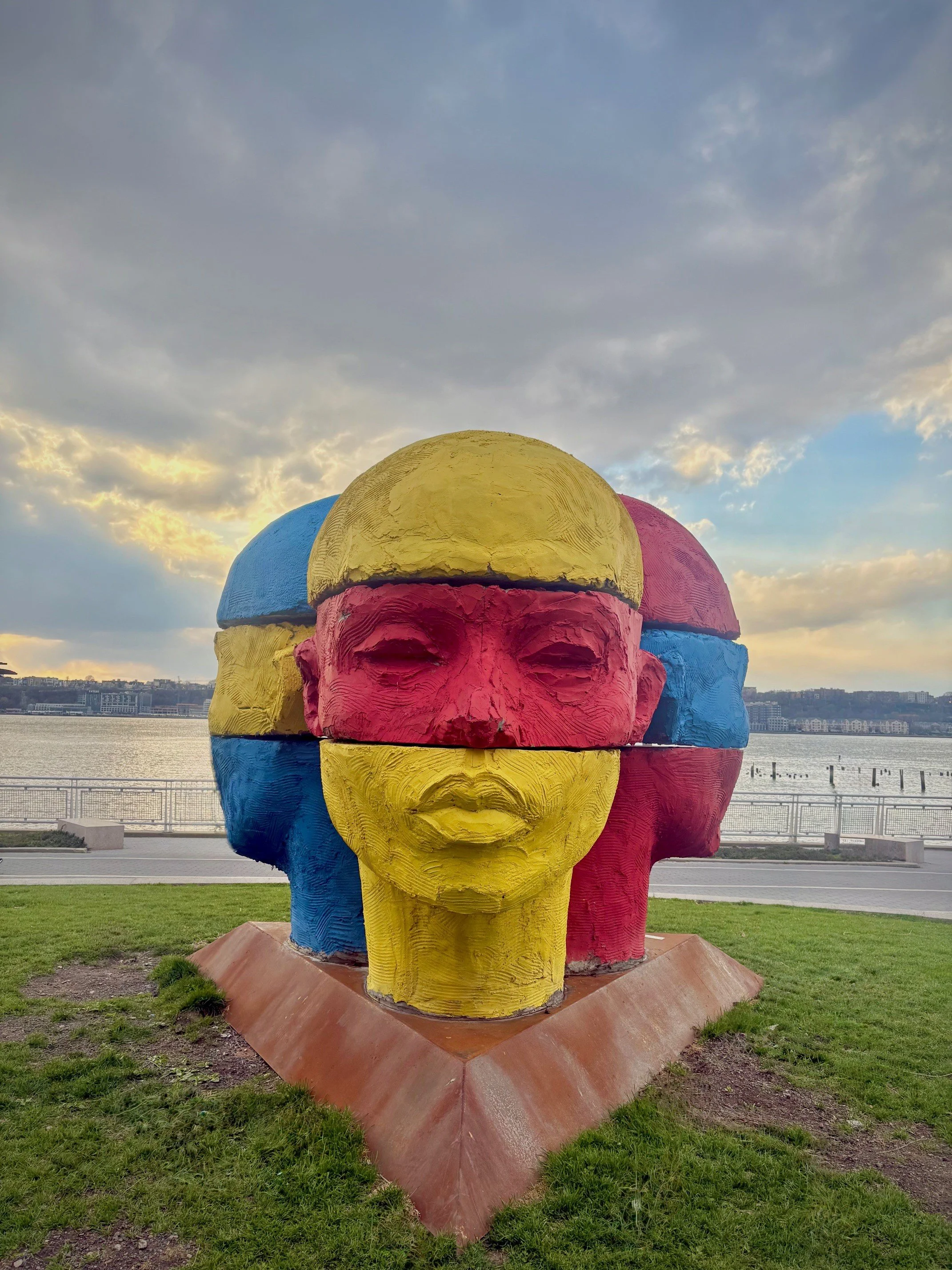
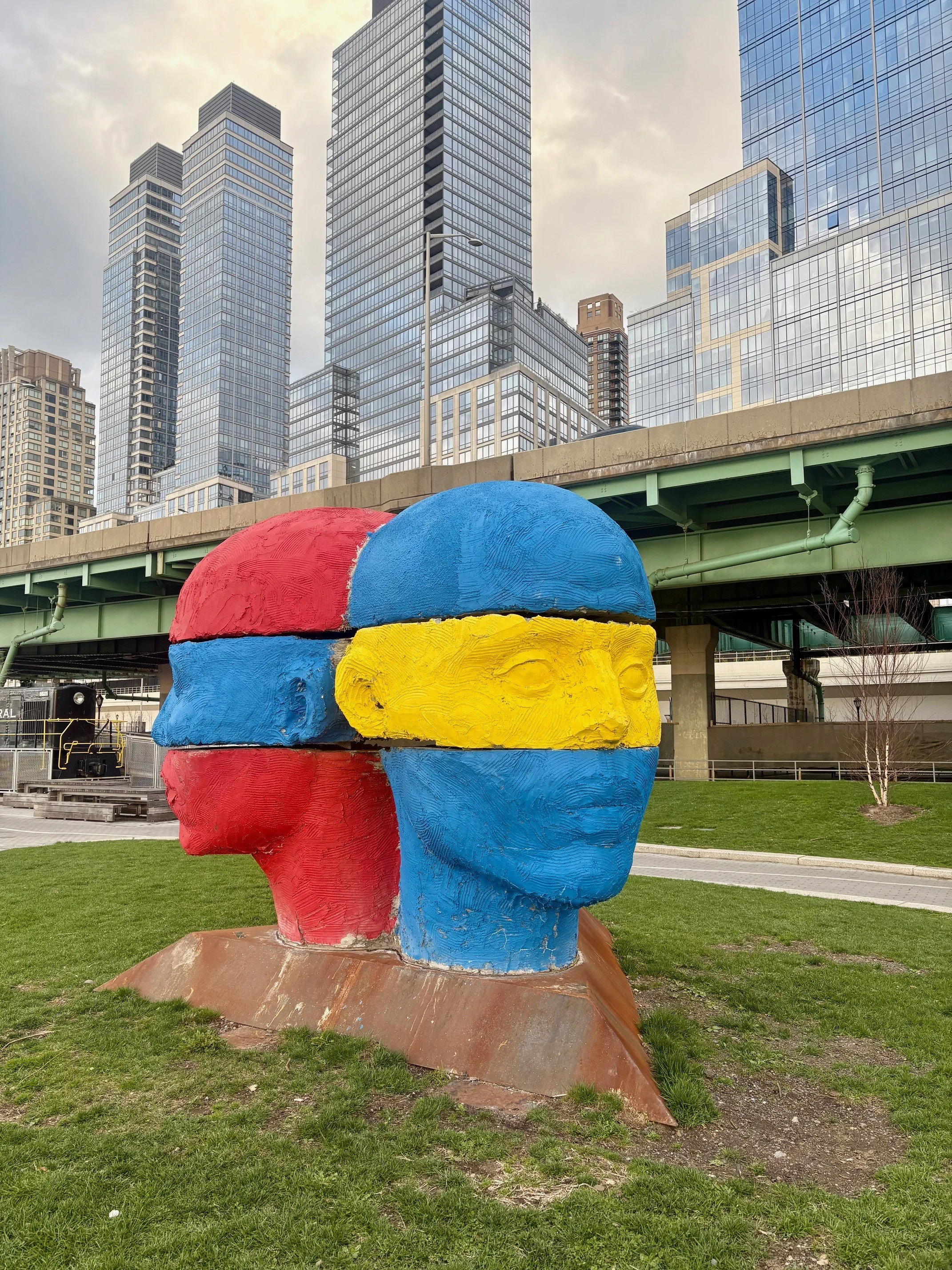
We love to explore the many pockets of nature within New York City, and this week we had the pleasure of exploring Riverside Park South, a recreational area along the Hudson River which blends the industrial heritage of the New York Central Railroad’s 60th Street Yard, with modern landscaping and design. Rising naturally from this setting is “All One” by Jason McCormack of the Art Students League. Composed of three distinct human heads wrapped in rotating bands of primary color, the sculpture draws attention to the layered histories of its location and the complexity of individual identity. Each color reflects the richness of human diversity, while the unified form and title gently underscore a shared connection, reminding us that despite our differences, we are part of one human story.
“All One” by Jason McCormack
Light Over Darkness

“Dear New York” by Brandon Stanton


This week, we happened upon “Dear New York,” a striking new exhibition at Grand Central Terminal. Conceived by artist Brandon Stanton, who is best known for his work “Humans of New York,” and produced in collaboration with the MTA, Pentagram, Juilliard, Korins Studio, and NYC Public Schools, the installation transforms one of the city’s most iconic public spaces into a powerful celebration of everyday New Yorkers.
Replacing the advertisements that typically adorn the space, Stanton’s immersive art installation of vivid photographs fills the terminal. Each photograph captures authentic moments and stories from across the five boroughs. In the grand concourse, 50-foot projections cycle through portraits and quotes, set to a moving live piano performance that adds emotional depth to the experience. A particularly meaningful section features portraits of individuals nominated by NYC students, accompanied by heartfelt notes explaining why their nominee inspires them.
“Dear New York” is more than an art installation, it’s a love letter to the city and its dwellers, as well as a reflection of its diversity, resilience, and creativity. It also highlights the transformative potential of public art in urban spaces. If you're in the area within the next two weeks, through October 19th we encourage you to visit and celebrate humanity.
Olympic Dreamers

Languages of New York City

Click on the image to explore the interactive map
New York City’s linguistic diversity is astonishing – the relatively small area is home to speakers of over 700 different languages and dialects. The Languages of New York City map documents over 1200 distinct “neighborhoods, community institutions, restaurants, and other locations where there is, or was, at least one speaker” of a language. The original language of the area was Lenape, spoken by the indigenous people who occupied what is now New York City. That language is still spoken by the descendants of those original New Yorkers, and there are ongoing initiatives to teach the Lenape language to more people. While Lenape is the language that has been spoken in this area the longest, there are hundreds of other languages brought to the city by immigrants from every corner of the globe. Within walking distance of Daryanani Law Group’s office, the Language Map pinpoints more than a dozen locations where someone speaks languages from Europe, Asia, Oceania, Africa, and the Americas. This is a map is a fascinating portrait of New York’s diverse immigrant communities, “our greatest and deepest asset.”
EL DORADO – The New Forty Niners by Cecile Chong
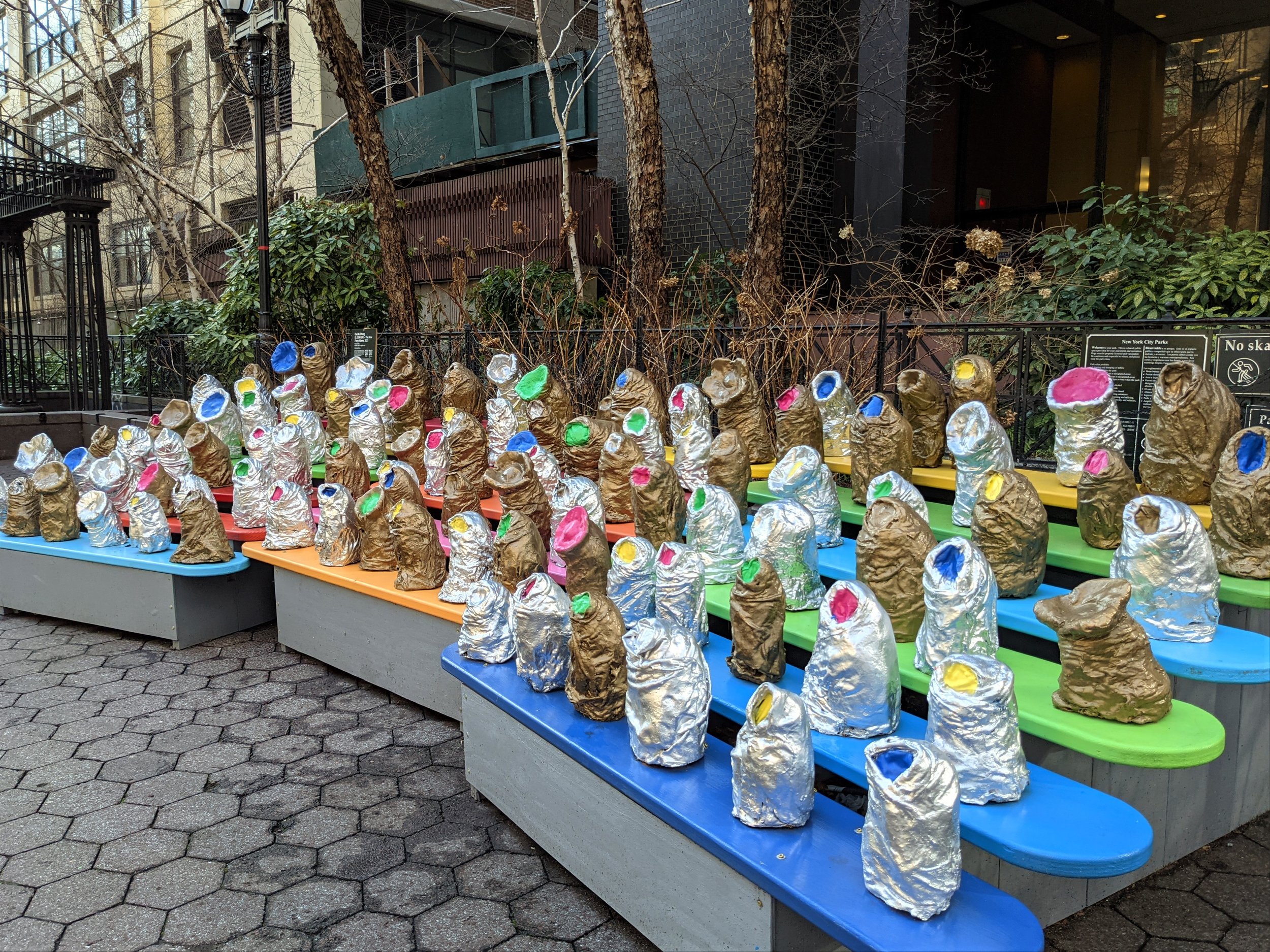
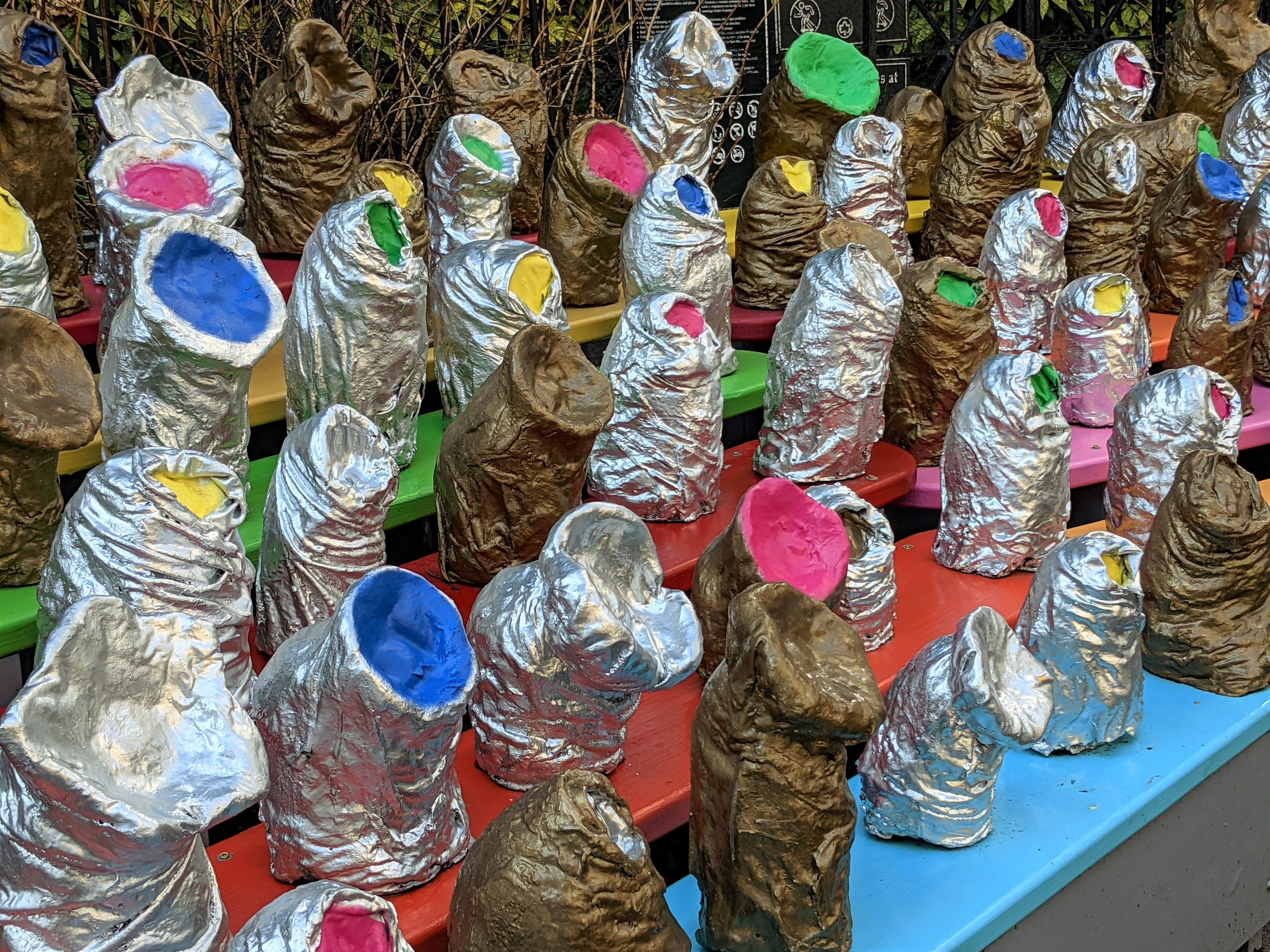
New York City is “the most linguistically diverse urban center in the world, probably in the history of the world.” The New York Metropolitan area is home to nearly twenty million people, who speak a total of over 800 languages. Forty-nine percent of households in New York City speak a language other than English. Artist Cecile Chong, originally from Ecuador and now living and working in New York, is interested in how and where world cultures overlap and interact. She created this installation, “EL DORADO – The New Forty Niners,” as a tribute to that forty-nine percent of households. The installation consists of one hundred “colored “guagua” (Quechua for baby) sculptures,” forty-nine of which are painted gold. It is a visual representation of the linguistic diversity of the city, and an endorsement of immigration and community.
Fight for Our Place

South China Morning Post: “The evidence is clear: anti-immigration is bad for economic growth”
Immigration is key to economic growth, argues Jason Furman, professor of the practice of economic policy at the Harvard Kennedy School and former chairman of the Council of Economic Advisers for the Obama administration, in a recently published opinion piece. In the piece, Furman says that the rise of populist nationalism (and anti-immigrant sentiment) in societies around the world will ultimately cause their economies to suffer.
Read more
Donec id justo non metus auctor commodo ut quis enim. Mauris fringilla dolor vel condimentum imperdiet.