
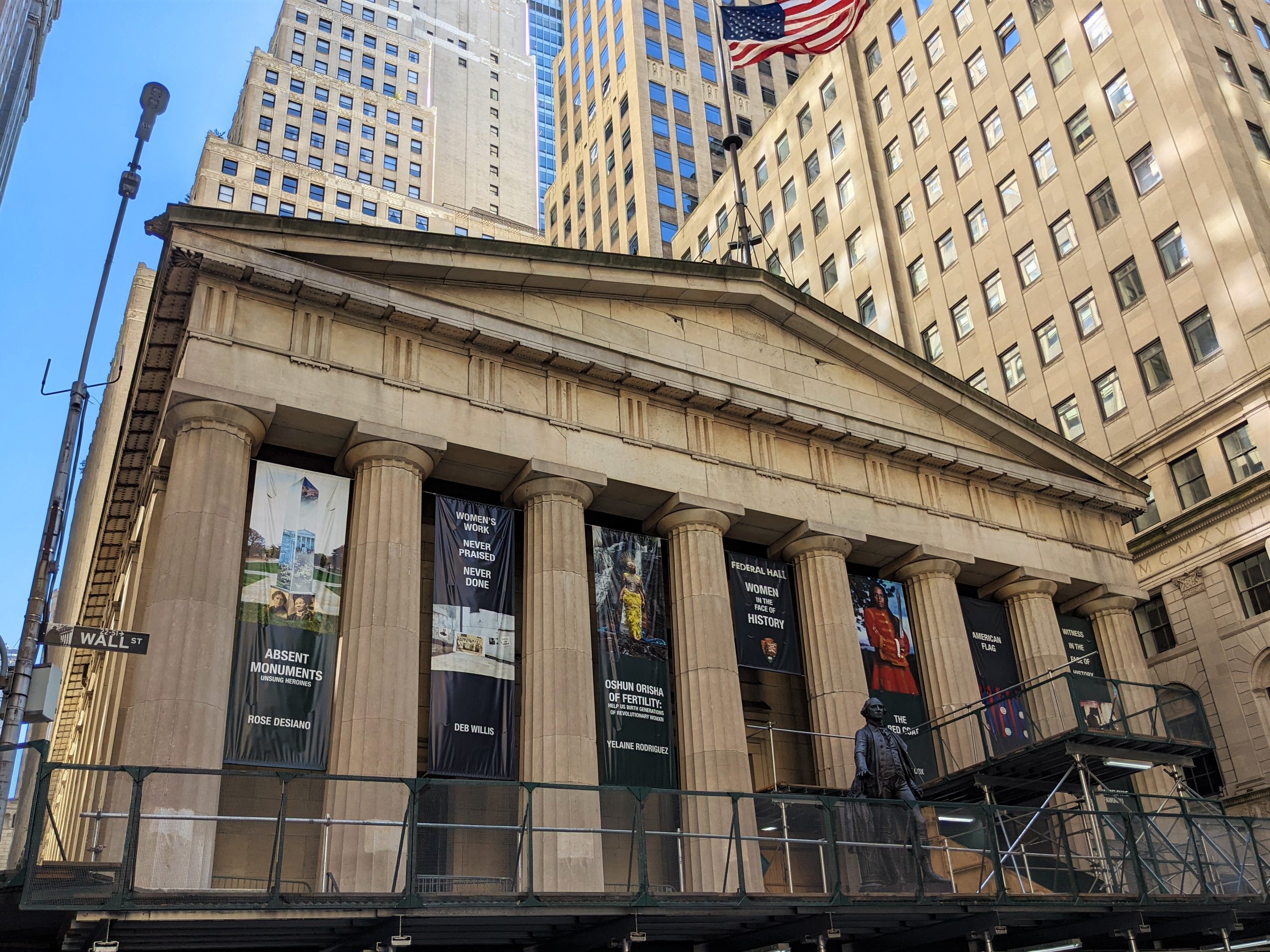
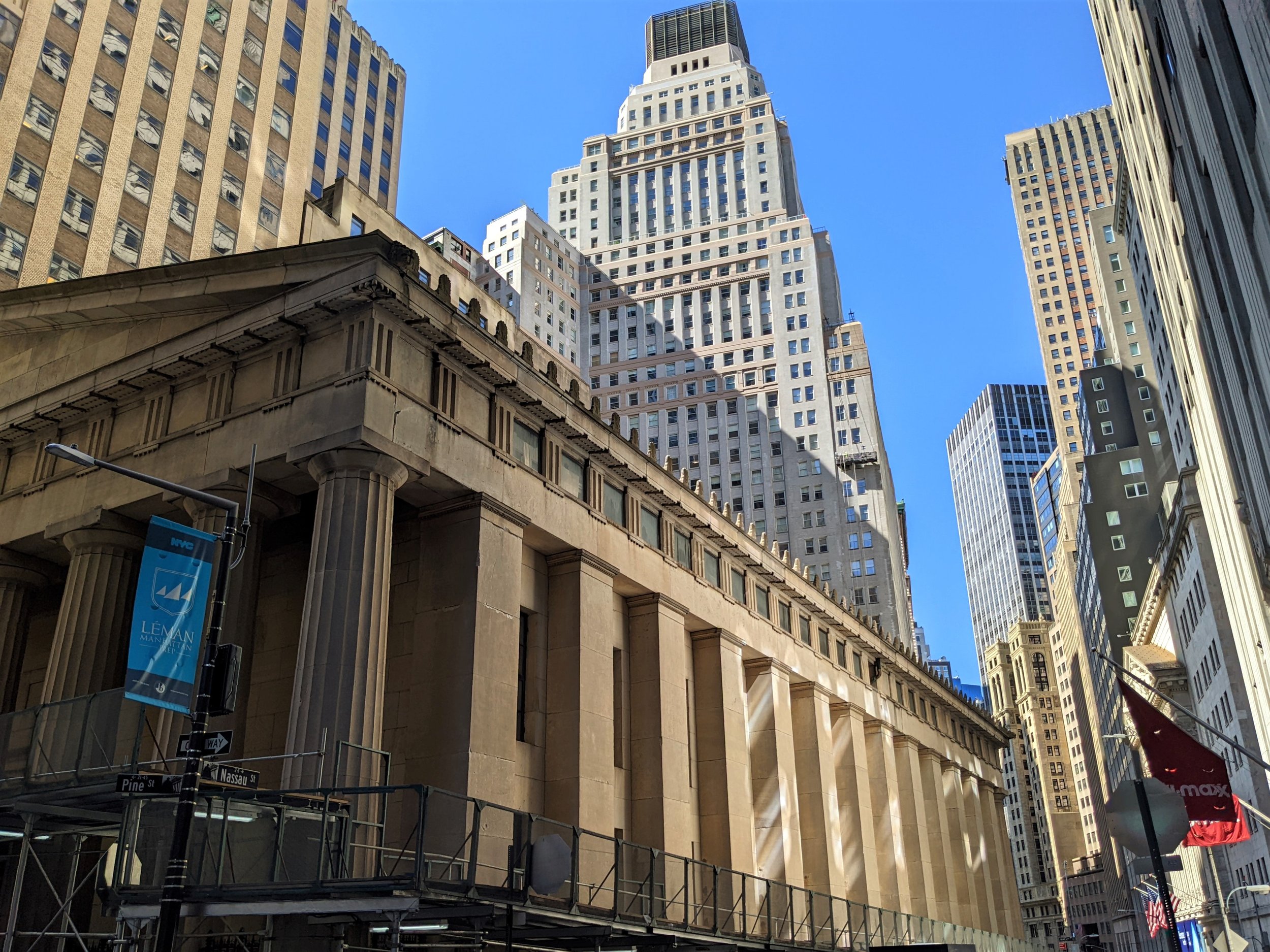
Nestled on Wall Street among the skyscrapers of lower Manhattan sits a historic landmark which has been a major seat of local and national government since before the American Revolution. Originally the site of New York City Hall, this spot has been a center of political activity since the 18th century: the Stamp Act Congress was held here to protest “taxation without representation,” and in the wake of the Revolutionary War, it was where the shape of the new nation was decided. The Continental Congress, which at that point was known as the Confederation Congress, met here between 1785 and 1789. Following the ratification of the Constitution in 1788, New York City was proclaimed the first capital of the United States. The same building, now known as Federal Hall, was the location for George Washington’s inauguration as the nation’s first president. It was here that the first United States Congress, made up at that point of exclusively white, property-owning men, met in 1789 and wrote the Bill of Rights, expanding and defining some of the rights of offered in America. Federal Hall also witnessed the nation’s first lobbying campaign, as abolitionists voicing their opposition to slavery prompted the new government’s first explosive debate over rights in 1790. The balance of power between the federal and state governments was hotly debated in this building – a debate which continues to this day. This Independence Day, the echoes of this landmark building’s rich history and this nation, where rights and liberties have been altered and debated again and again, seem more relevant than ever.
New York City’s Federal Hall
European Travel Information and Authorization System Set to Launch in May 2023
The European Union (“EU”) has announced it will be launching a visa waiver program, The European Travel Information and Authorization System (“ETIAS”), beginning in May 2023. ETIAS is a travel authorization for visa-exempt non-EU nationals to travel into the Schengen Area, and other EU member states that are not part of the Schengen Area including Croatia, Cyprus, Bulgaria, and Romania.
Read moreMarginalized Communities will Bear the Brunt of Forced Pregnancy Policies

The US Supreme Court has voted to overturn Roe v. Wade, the landmark ruling that established the constitutional right to abortion in 1973. Individual states now have the power to regulate abortion access, and many will ban the procedure outright, or severely restrict it.
Whitney Biennial 2022: Quiet as it’s Kept
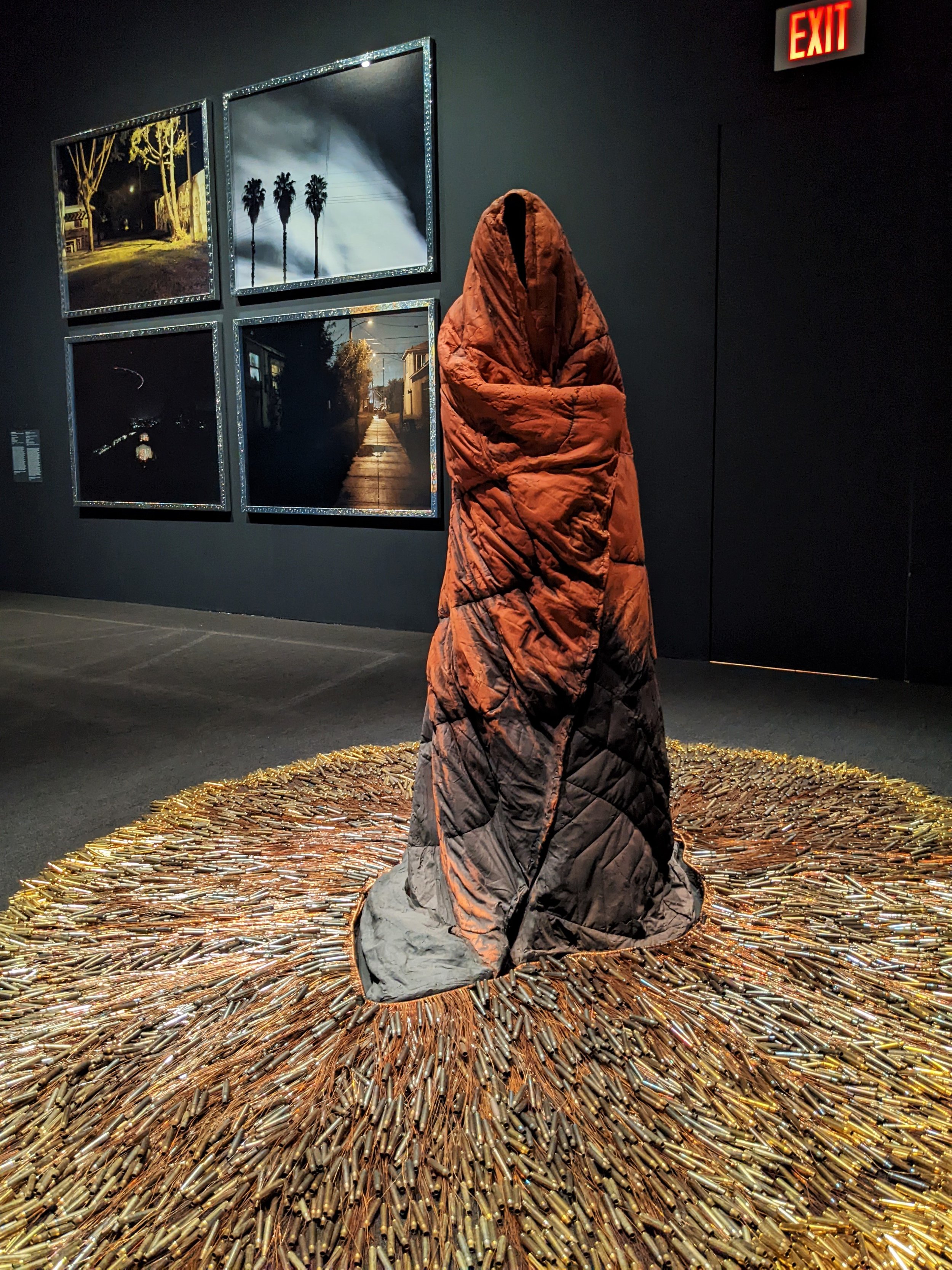
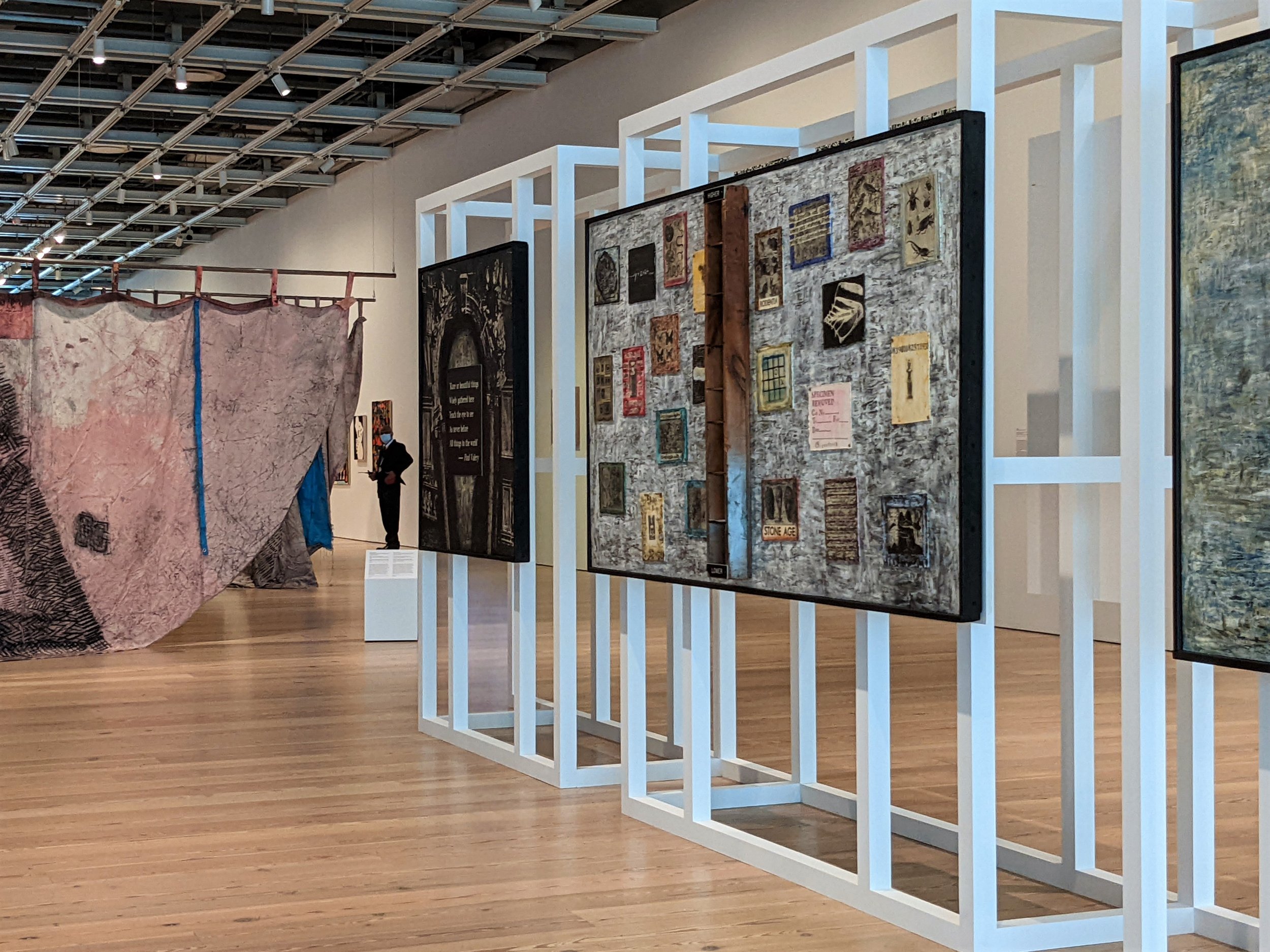
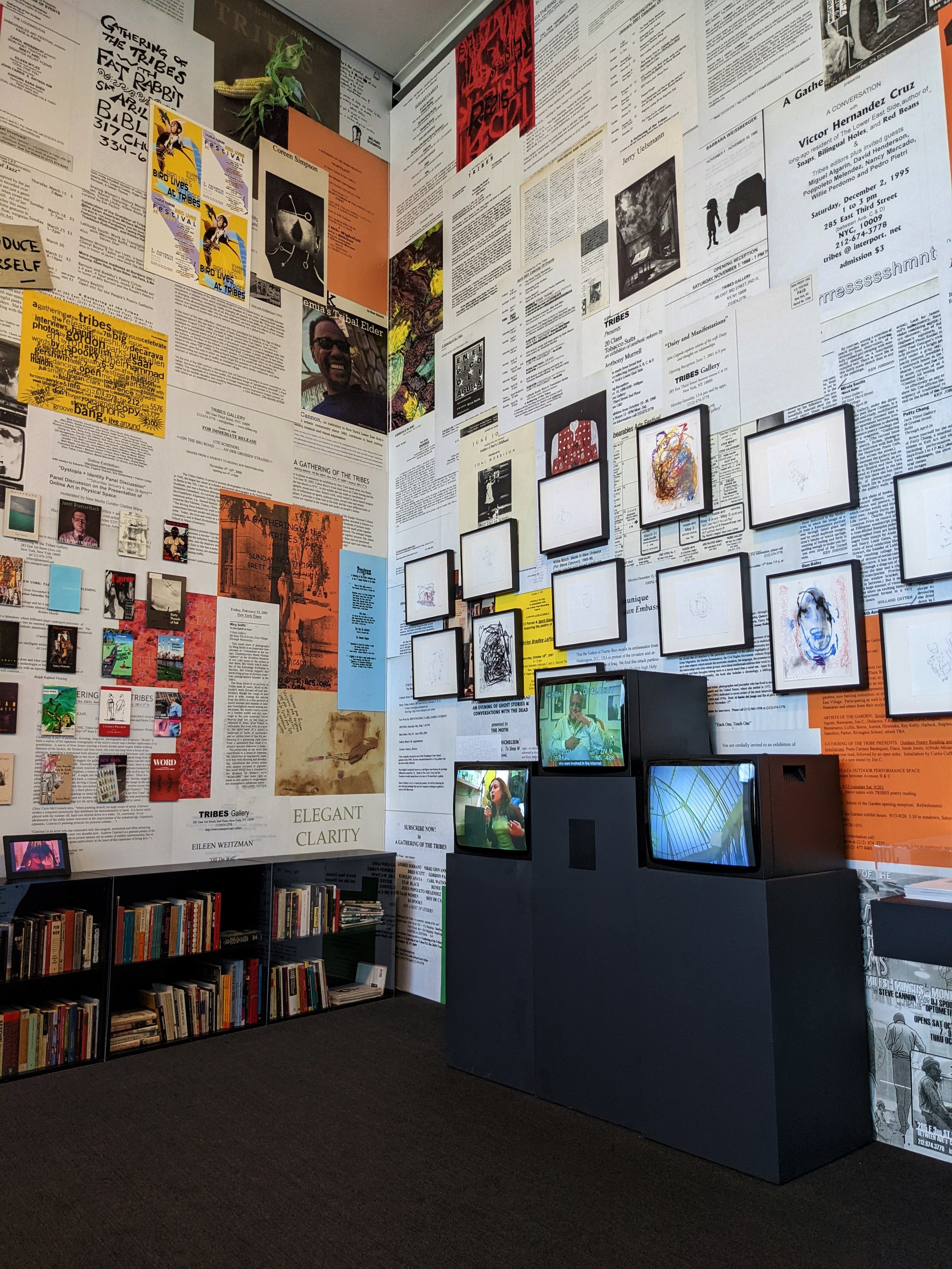
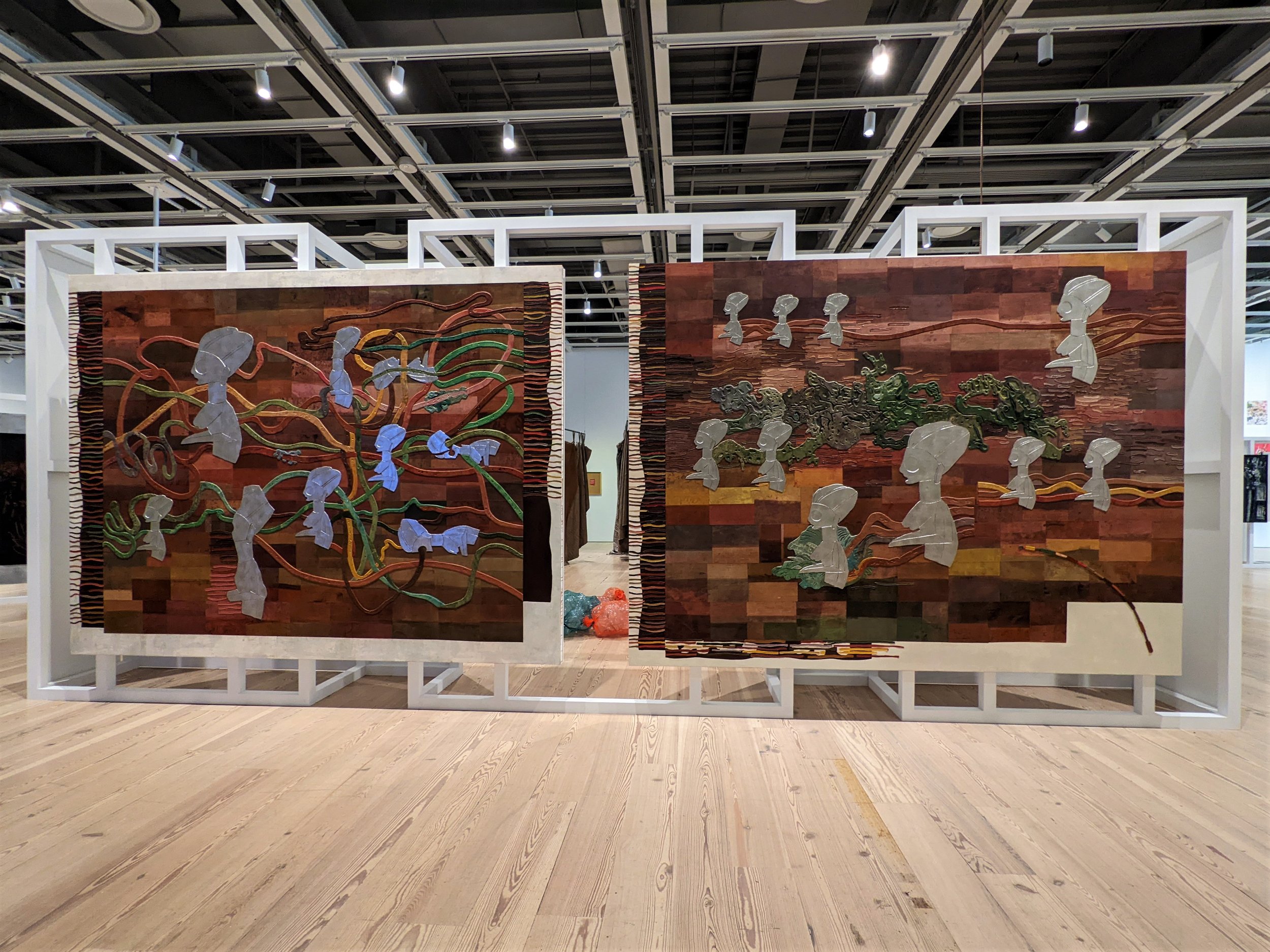
Every two years, the Whitney Museum holds an exhibition that is regarded as one of the most important and influential events in contemporary art. Some version of this exhibition, the Whitney Biennial, has been in existence since 1932, making it the longest-running survey of American art. Delayed for a year due to the COVID-19 pandemic, this year’s biennial is a “startlingly coherent and bold” forum for artists’ musings on the events, changes, and trials of last three years. There is a wide variety of perspectives and mediums, from more traditional painting, sculpture, and photography to experimentations with performance, video, light, chemicals, makeup and prosthetics, textiles, and technology. The artworks tackle a wide range of themes, including racial justice, class discrepancy, capitalism, corporatism, imperialism and the effects of colonialist action, the American prison system, indigenous issues, and the widespread grief of a global pandemic. An exhibition this far-reaching and ambitious could easily feel disjointed and chaotic, but instead it encourages the viewer to understand that the issues and conditions addressed by the art “are not new, their overlap, their intensity, and their sheer ubiquity created a context in which past, present, and future folded into one another.” The curators “organized this Biennial to reflect these precarious and improvised times.”
Let’s Treat Dreamers like the Americans they Are

"Here" by Santi Flores

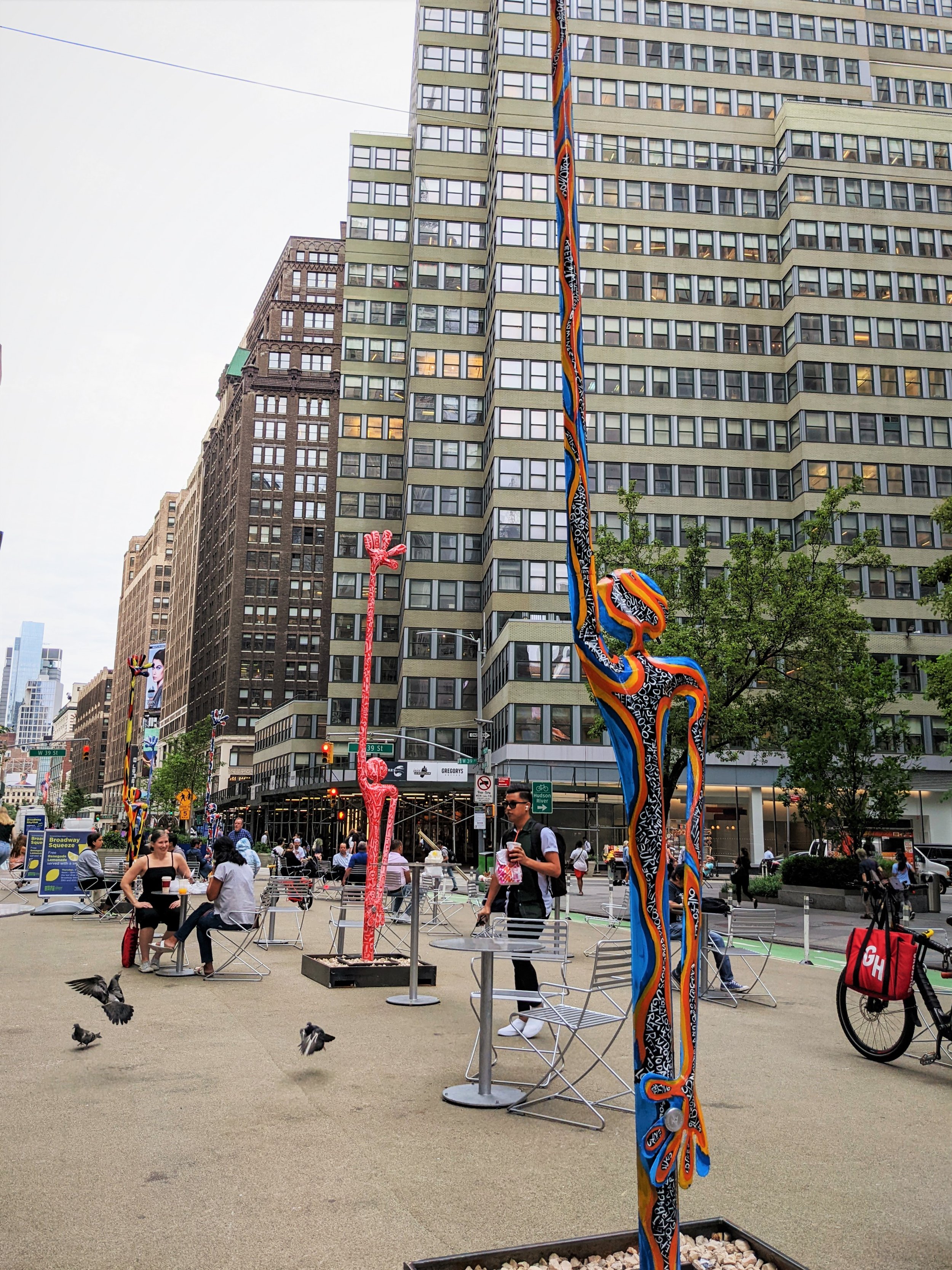
The city of New York, home to people from hundreds of different countries and cultures, takes great pride in its diversity. The Garment District, a neighborhood in midtown Manhattan, is currently home to an art installation celebrating the unique “unity, diversity, and individuality” of “New Yorkers and visitors passing through” the city. Called “Here,” the installation consists of fourteen figures standing in the pedestrian plaza with hands raised high in the air, “as if to say ‘Here we are. We are moving forward together.’” The installation is by Spanish artist Santi Flores, who created each figure out of steel and painted them with unique designs and patterns on their “skin.” The larger-than life figures are a whimsical tribute to New York and the people who live in and visit the city.
Immigration Backlogs Jeopardize Child’s Organ Transplants
While debates on immigration policy often tend towards philosophical ideas, in practice the immigration system in the United States can lead to serious and even life-threatening situations. Eleven-year-old Julia Espinoza was born in Miami while her parents were attending college on student visas. Julia was born with a congenital malformation to her small intestine, which prevents her from eating normally. As a lifesaving measure, doctors removed most of her small intestine. Julia survives by getting daily infusions of nutrients through an intravenous post in her chest.
Read moreIf This is the American Dream, then Immigrants Achieve It

COVID-19 Testing Requirements for International Air Travelers Expected to End This Weekend
Just in time for the summer holiday travel season, the Biden administration is set to announce today an end to the COVID-19 testing requirement for air travelers to the United States. As of midnight this Sunday, June 12th, 2022, the United States will no longer require proof of a negative COVID-19 test taken within 24 hours of entering the country for all air travelers.
Read more
Donec id justo non metus auctor commodo ut quis enim. Mauris fringilla dolor vel condimentum imperdiet.