
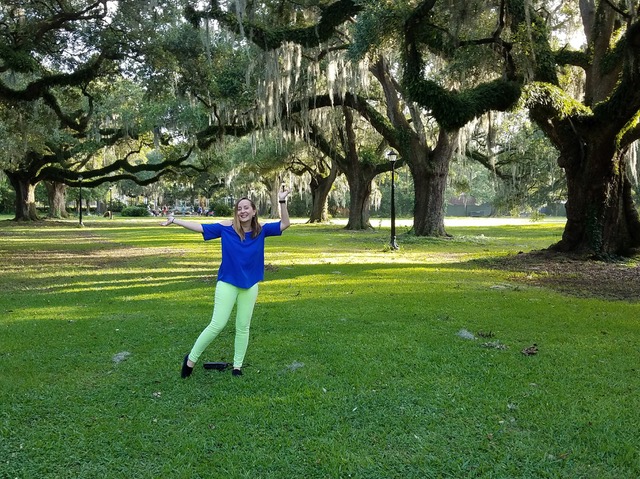
This year’s annual American Immigration Lawyers Association (AILA) conference took place in the beautiful city of New Orleans, and our very own Carolyn was incredibly excited to attend! The AILA conference offers the opportunity to meet colleagues and experts in the field of immigration law, as well as learn and discuss new changes and legal interpretations through extensive sessions and panels. Amid all the serious talks, Carolyn escaped for a bit to the beautiful oak trees in Audubon Park. This incredible park, largely designed by renowned landscape architect John Charles Olmsted, consists of pathways, lagoons, tennis courts, stables, and plenty of greenery to sit and relax next to the Mississippi River over a picnic. It even has a zoo! Don’t get lost, Carolyn! We need you back in NYC with all your new knowledge!
Immigration and Beignets: Highlights of the AILA Annual Conference June 2017
Last week, I attended my very first American Immigration Lawyers Association (AILA) annual conference. Lucky for me, it was in New Orleans, a city I have long wanted to visit. Protima and I had a great time touring the city, eating delicious food, and, oh yes, learning about immigration law! Being an AILA conference beginner, there was a lot to take in—four full days of panels was both exciting and exhausting. Here are some highlights of the experience.
Read moreCNN: “ Supreme Court narrows grounds for revoking citizenship of naturalized citizens”
The Supreme Court last week issued a ruling narrowing the grounds on which naturalized citizens can have their citizenship revoked. The case involved Divna Maslenjak, an ethnic Serb who arrived in the US in 2000 as a refugee and was granted citizenship and later naturalized; however, in 2013, a jury found her guilty of making false statements on her naturalization application. She was subsequently stripped of citizenship.
Read moreNBC News: “Trump Administration: Dreamers Can Stay, Undocumented Parents Must Go”
On the anniversary of the implementation of the Obama administration’s Deferred Action for Childhood Arrivals (DACA) program, which protects approximately 800,000 immigrants (also called “dreamers”) who came to the US as children with no legal status by shielding them from deportation and providing them with work authorization for periods of two years, the Trump administration and the Department of Homeland Security (DHS) formally eliminated a similar program proposed to protect the undocumented parents of these dreamers.
Read moreA Mosaic
Paparazzi Dogs
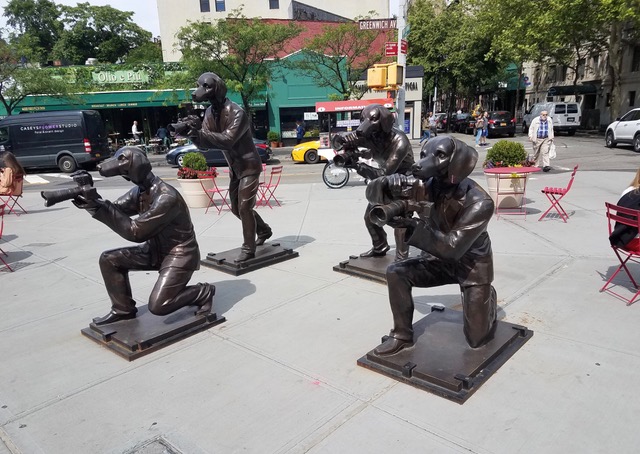
After taking a tour of Melbourne, Sydney, Beijing, and Shanghai, the Paparazzi Dogs are in New York City! The dogmen, as they are also called, were created by contemporary artists Gillie and Marc, and are currently “taking photographs” in Greenwich Village, after having visited Brooklyn’s DUMBO. “We’re so excited that our Pap Dogs are in New York!” Gillie says on their website. “They’ve traveled the globe taking photos, and now they’ve arrived at the place that has been photographed more than anywhere else.” The Sydney-based husband and wife duo created the series of four life-sized dog sculptures in 2013 and the dogs quickly created such a buzz that celebrities such as Snoop Dogg came to have their photo taken with the dogmen. Gillie and Marc created the sculptures in hopes of raising awareness about the tragic death of the late Princess Diana, which has been blamed in part on overzealous paparazzi. Although the message behind the sculptures is serious, don’t worry, the dogmen are pretty adorable. And don’t worry: they won’t bite!
Oasis: LGBTQ Wellness Center for Latinos and Immigrants
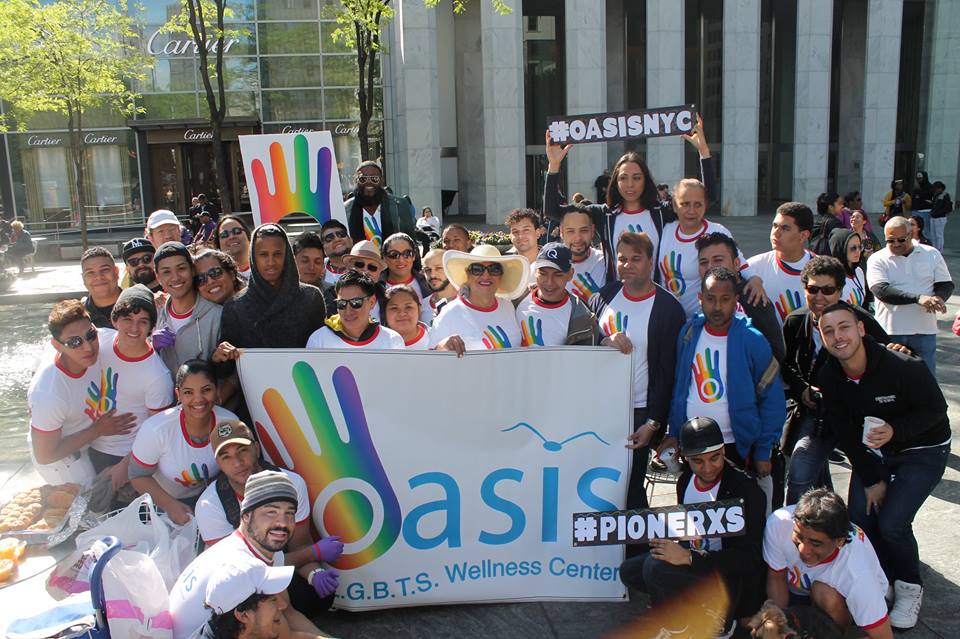
As the largest minority group in the US, Latinos/Hispanics are disproportionately affected by HIV/AIDS. To help deal with this crisis, the Latino Commission on AIDS, a nonprofit based in New York City, founded Oasis, which “provides compassionate, comprehensive and culturally competent wellness services to the LGBT community in New York City.” Operating for nearly a year now, Oasis provides vital HIV and Hep C testing, PrEP counseling, workshops, as well as related programs and services for those in the Latino/Hispanic and immigrant communities.
Read moreNew York Times: “Supreme Court Bars Favoring Mothers Over Fathers in Citizenship Case”
The Supreme Court ruled last week that unwed mothers cannot be treated differently than unwed fathers when it comes to matters of children claiming American citizenship, since the gender-based difference violates the equal protection granted by the Constitution. The ruling came out of a case brought by Luis Ramon Morales-Santana, born in the Dominican Republic in 1962 to unwed parents, whose father was an American citizen and a mother who was a non-citizen. Morales-Santana, who has been living in the United States since he was thirteen, was convicted for robbery and attempted murder, among other crimes, causing federal authorities to seek his removal from the US.
Read moreDiversity Makes Us Stronger

Metropolis

The Metropolis building ("Edificio Metrópolis") is one of Madrid's most famous landmarks. Designed in the early 1900s by the French architects Jules and Raymond Février for the insurance company Unión y el Fenix Español (the building was later purchased by rival insurance company Metrópolis Seguros), the French Beaux-Arts style was unusual in its time. The statues resting on the Corinthian twin columns represent Trade, Agriculture, Industry, and Mining. The building is topped with a beautiful black dome with gilded ornaments. Although many have mistaken the statue on the dome for Joseph, it is the winged goddess Victoria, designed by the Spanish sculptor Federico Coullaut-Valera Mendigutia. Joseph does sometimes wear angel wings to the office, which is where the confusion arises.