Democracy in Action

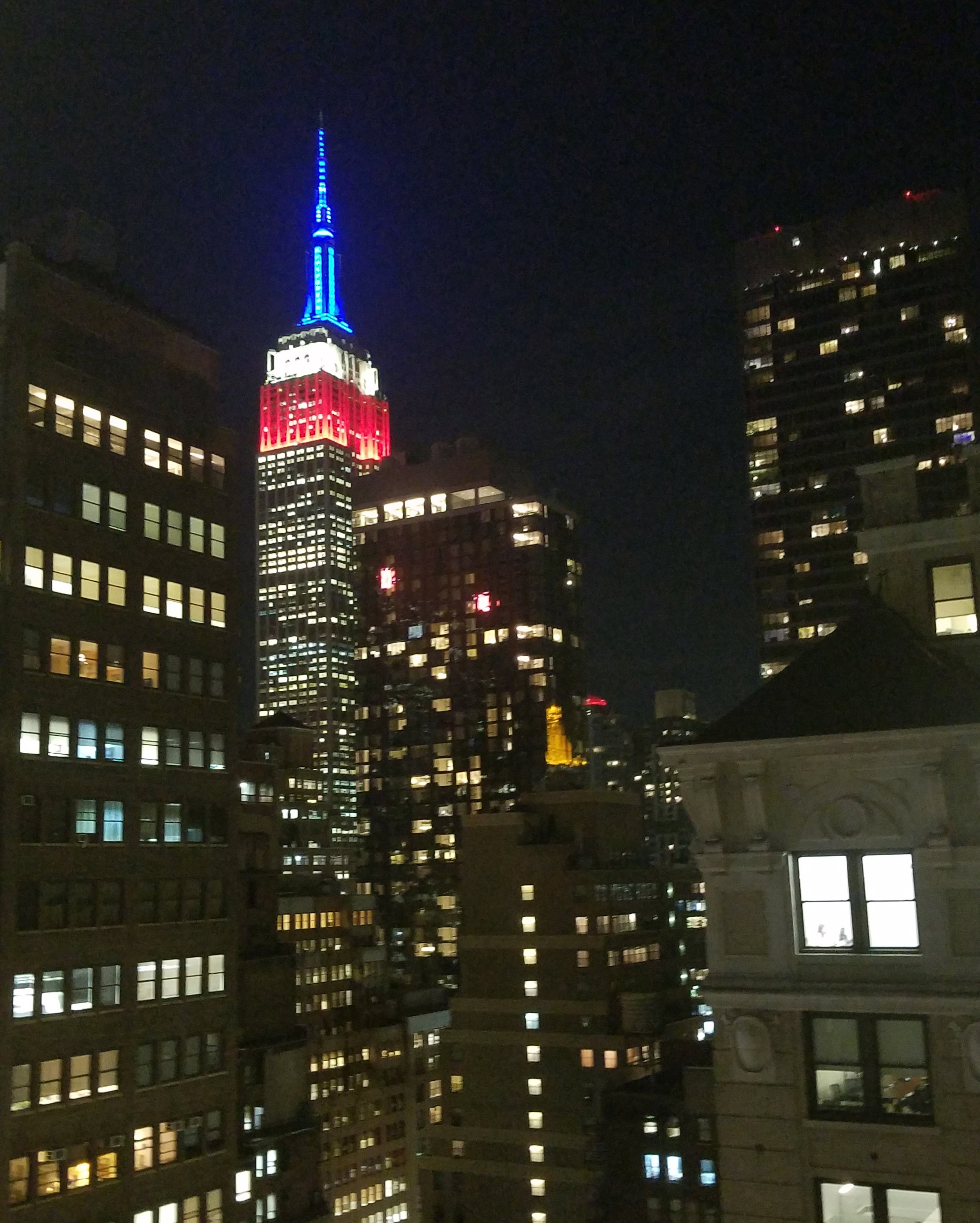
Empire State Building in red, white, and blue.

Empire State Building in red, white, and blue.

We must not remain inactive. We have no choice but to use this moment as an opportunity to give rise to new movements built on respect and empathy, and to really listen to those who feel unheard. We can only do this if we embody and enact the values that are essential to nurture our societies: generosity, inclusion, the empowerment of everyone. If we, collectively, do this, we can work towards a future that is sustainable and trust-driven for all.”

 - Olafur Eliasson

Top 10 “Quick” Immigration Questions (Spoiler Alert: The Answers are Rarely Quick!)

As an immigration attorney much of my day is spent answering “quick” questions from current and potential clients. I know their heart is in the right place when they ask what they think will be a simple question, so I try to be gentle when I break the news that answers are frequently much more complicated than the questions when it comes to immigration law. So, I thought it might be useful (and interesting) to discuss some of the most common ones. (As always, this post is for informational purposes only and should not be taken as legal advice. We strongly recommend consulting an experienced immigration attorney for legal advice and guidance.)

Read more

The Guardian: “Typecast as a terrorist”

Riz Ahmed, a Pakistani-British actor and rapper who struggled as a young actor to find work beyond two-dimensional stereotypical roles and who faced nearly constant interrogation and difficulty flying internationally after acting in such films as The Road to Guantanamo and Four Lions, says that airports and auditions are quite similar. In both, he is trying to play a fully realized three-dimensional character to an audience—producers and casting agents and immigration and security officers—who can’t get past the color of his skin and his “Muslim-sounding” name. Ahmed says:

You see, the pitfalls of the audition room and the airport interrogation room are the same. They are places where the threat of rejection is real. They are also places where you are reduced to your marketability or threat-level, where the length of your facial hair can be a deal-breaker, where you are seen, and hence see yourself, in reductive labels – never as “just a bloke called Dave”.  

Ahmed’s difficulty at airports—he was once illegally detained at Luton Airport where British intelligence officers insulted, threatened, and attacked him—echoes the treatment that many other Asians receive when traveling internationally, including actor Shah Rukh Khan, the “King of Bollywood,” who has been repeatedly detained at US immigration and who famously said: "Whenever I start feeling too arrogant about myself, I always take a trip to America. The immigration guys kick the star out of stardom."

After Ahmed’s experience at Luton airport—where he was illegally detained after having just won a film award for a movie about illegal detention—he wrote a song called “Post 9/11 Blues,” which included lyrics such as: “We’re all suspects so watch your back / I farted and got arrested for a chemical attack.”

In an airport holding pen, Ahmed explains, with few exceptions there are twenty slight variations of his own face, “like a Bollywood remake of Being John Malkovich. It was a reminder: you are a type, whose face says things before your mouth opens; you are a signifier before you are a person; you are back at stage one.” He adds

The holding pen also had that familiar audition room fear. Everyone is nervous, but the prospect of solidarity is undercut by competition. In this situation, you’re all fighting to graduate out of a reductive purgatory and into some recognition of your unique personhood. In one way or another you are all saying: “I’m not like the rest of them.”

With his passport stamped with visas and entries to such countries as Afghanistan, Iran, and Saudi Arabia, Ahmed found himself being questioned again and again. These “airport auditions” included such questions as “Did you become an actor to further the Muslim struggle?” and although so far they have always been successful in the end, “they involved the experience of being typecast, and when that happens enough, you internalize the role written for you by others. Now, like an over-eager method actor, I was struggling to break character.”

As he becomes better known (he has been featured recently in Rogue One: A Star Wars Story, HBO’s The Night Of, and the latest Jason Bourne movie), his experience at US airports becomes smoother. Now he is often able to find the additional airport baggage search and questioning “hilarious rather than bruising.”  

“But this isn’t a success story,” he says. “I see most of my fellow Malkoviches still arched back, spines bent to snapping as they try to limbo under that rope. These days it’s likely that no one resembles me in the waiting room for an acting audition, and the same is true of everyone being waved through with me at US immigration. In both spaces, my exception proves the rule.”

USCIS Does It Again....

It's that time all immigration attorneys have been dreading.  No, no, not a Trump presidency, but rather US Citizenship & Immigration Services (USCIS) increasing their fees. In all fairness, it has been over six years since the last fee increase and USCIS is almost entirely funded by fees paid by applicants and petitioners for their immigration applications.

Read more

The Intercept: “The US Government Wants to Read Travelers’ Tweets Before Letting Them In”

US Customs and Border Protection (CBP) wants to start collecting online information from travelers coming to the US under the Visa Waiver Program. Earlier this summer, CBP proposed including a field on certain customs forms for “provider/platform” and “social media identifier.” If approved by the Office of Management and Budget, these changes could take effect by December. The Visa Waiver Program is used by millions of travelers and enables citizens or nationals of participating countries to travel to the United States for tourism or business for stays of ninety days or less without first obtaining a visa, when they meet all the requirements.

The Intercept reports that in recent weeks privacy groups have criticized the proposal, saying it could stifle online expression and gives DHS and CBP too much authority to determine what kind of online activity constitutes a “risk to the United States” or “nefarious activity.” The United Nations special rapporteur on the right to freedom of opinion and expression says the amount of information being collected was “vague and open-ended,” and that he was “concerned” that “government officials might have largely unfettered authority to collect, analyze, share and retain personal and sensitive information about travelers and their online associations.” A group of eleven civil liberties organizations claim that with the proposed changes it “appears that even if a friend or associate has not directly interacted with the applicant on social media, the agency will ferret out connections.”

CBP and its parent agency, the Department of Homeland Security, claim the social media question will be optional, and that the agencies “would only have access to information publicly available on those platforms, consistent with the privacy settings of the platforms.” A CBP spokesperson also claims in a statement that collecting social media information “may help detect potential threats because experience has shown that criminals and terrorists, whether intentionally or not, have provided previously unavailable information via social media that identified their true intentions.” The CBP spokesperson did not clarify to The Intercept if refusing to answer the social media questions would negatively impact Visa Waiver Program applications, or flag travelers for extra screening.

While not listed as a question as part of the visa application process, for at least a few years consular officers at US Embassies/Consulates and immigration officers at US Citizenship & Immigration Services (USCIS) have been checking up on applicants online, typically to verify credentials and see if there is any evidence the applicant is misrepresenting work history. For example, consular officers may check the IMDB page or foreign equivalent to see if the actor has indeed worked on projects claimed. But it’s not just foreign nationals being affected, privacy groups warn. Access Now and other privacy groups note that by looking at the social presence of foreigners, DHS will “inevitably suck up, retain, and share with other agencies huge amounts of information on Americans who are connected to them, even in a tangential way.” 

The comment period for the proposal ended earlier this month, and now the Office of Management and Budget has sixty days to ask the agency to amend the proposal or sign off on the change.