
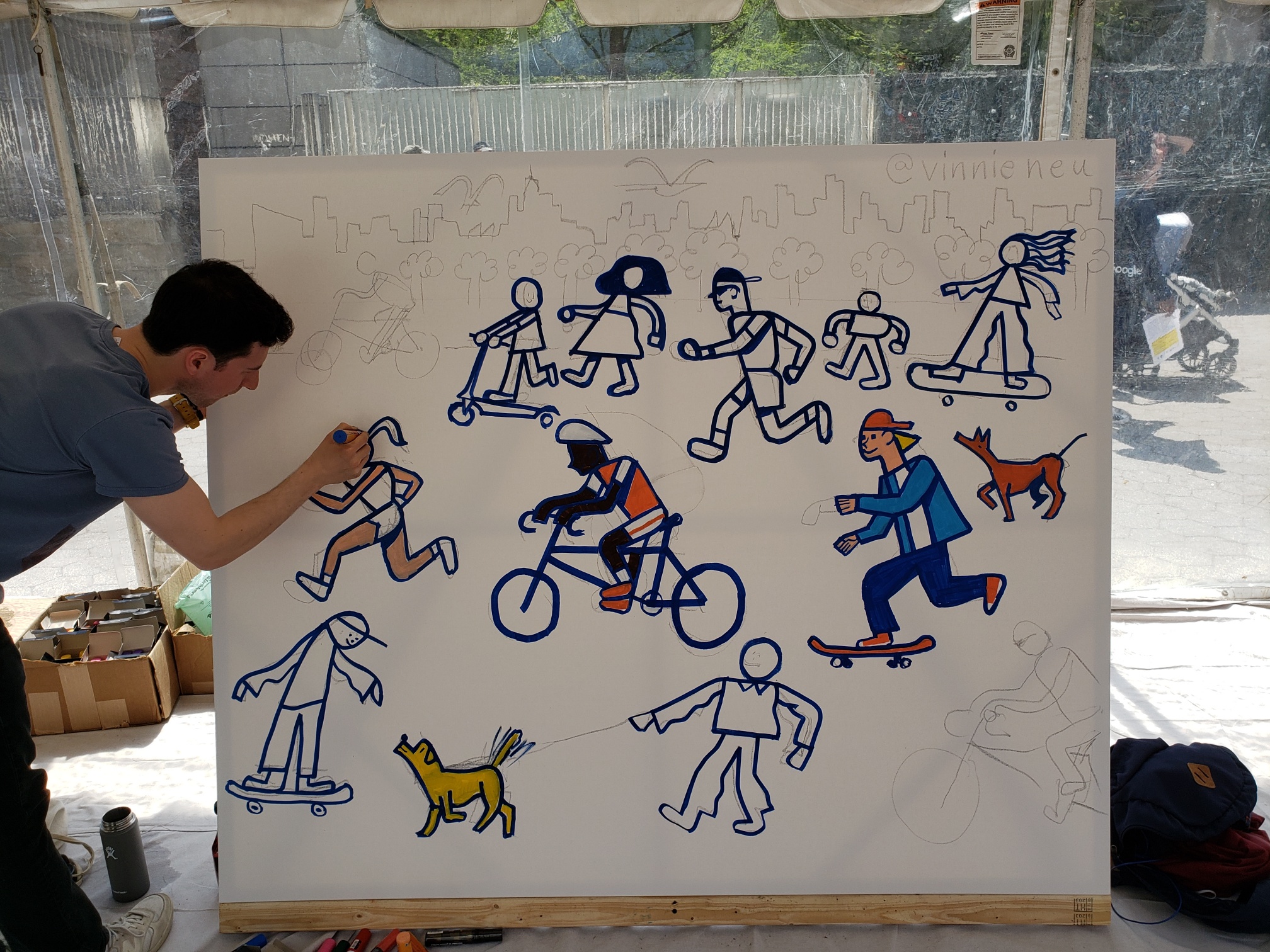
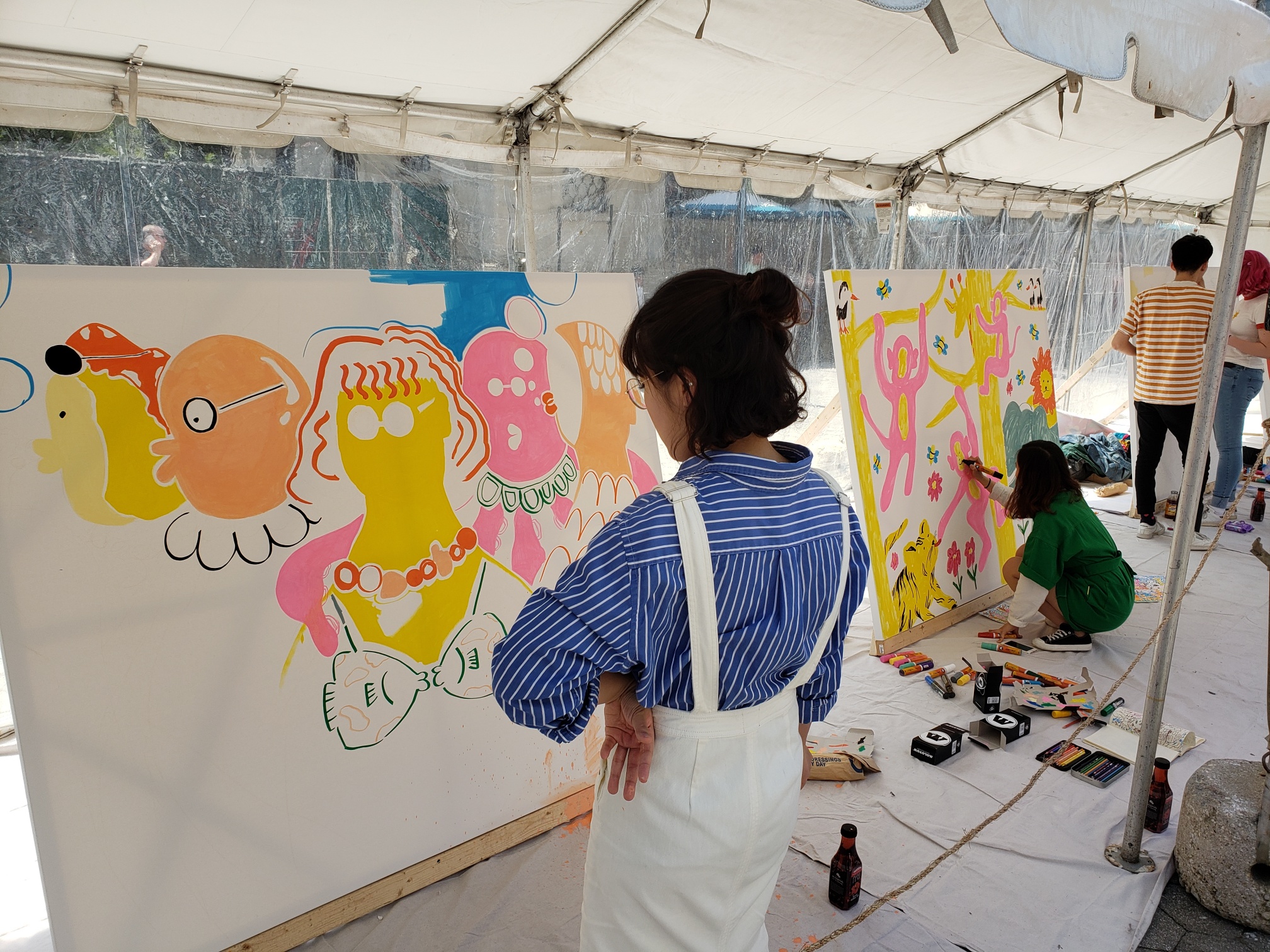
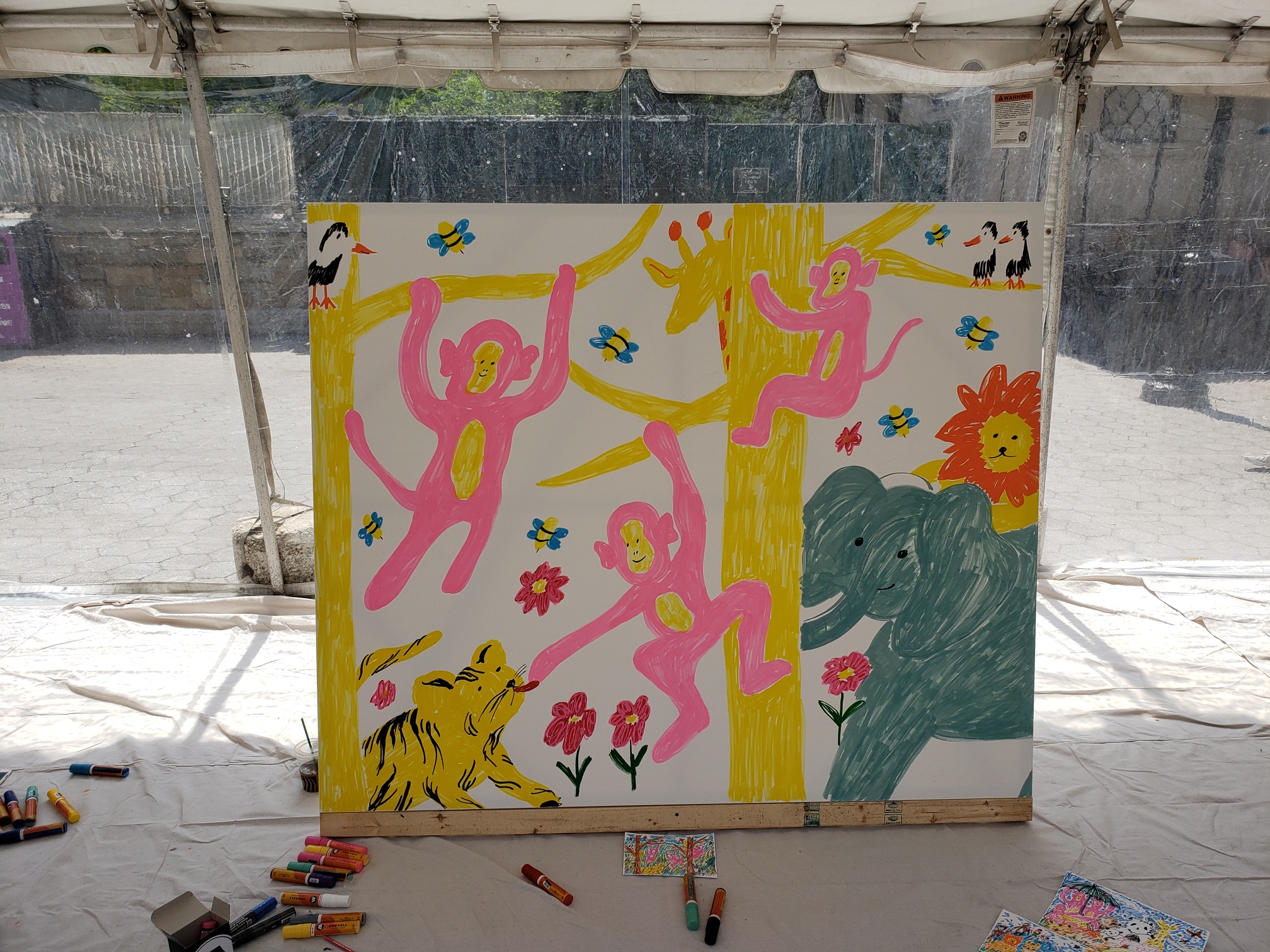
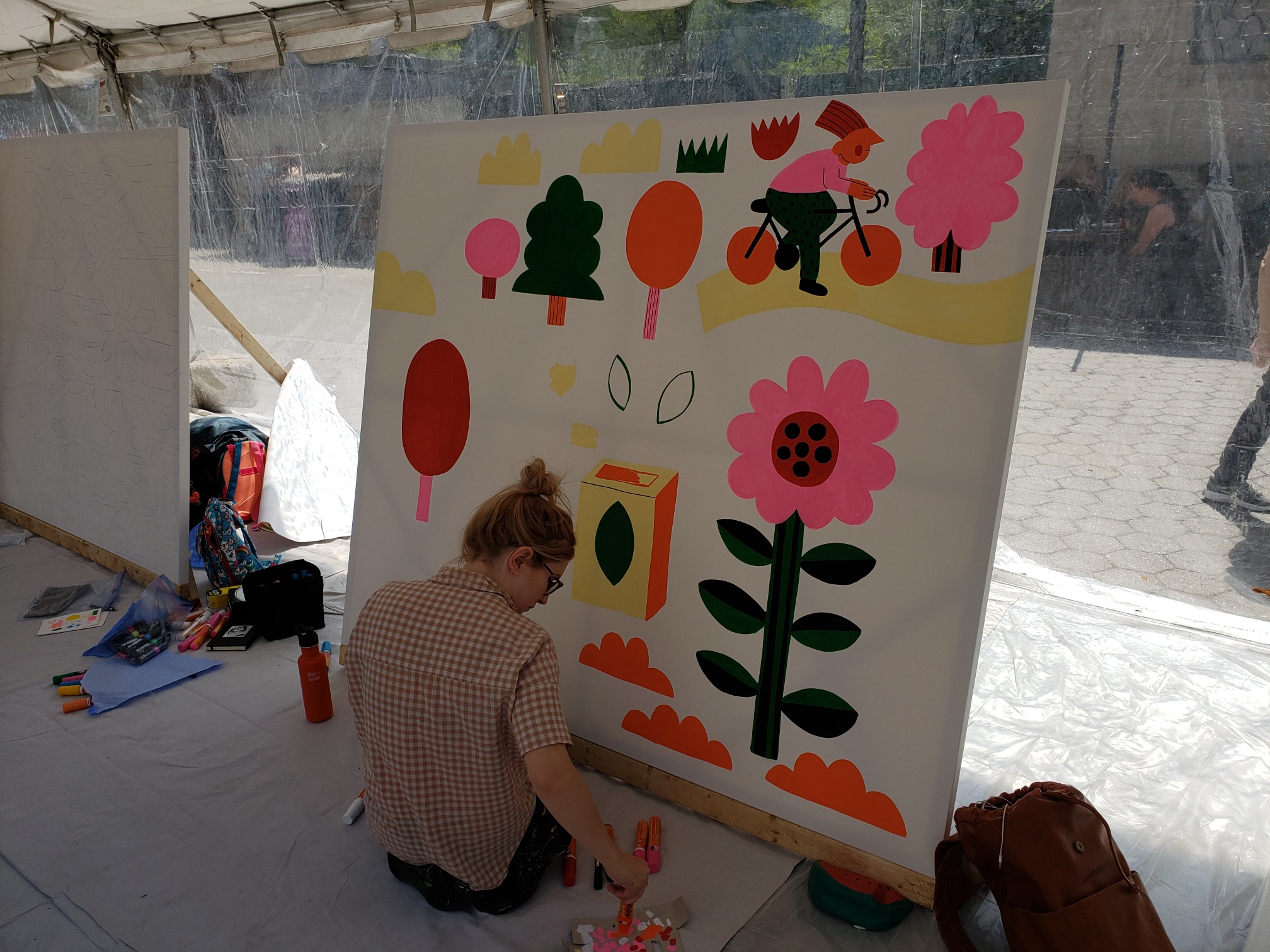
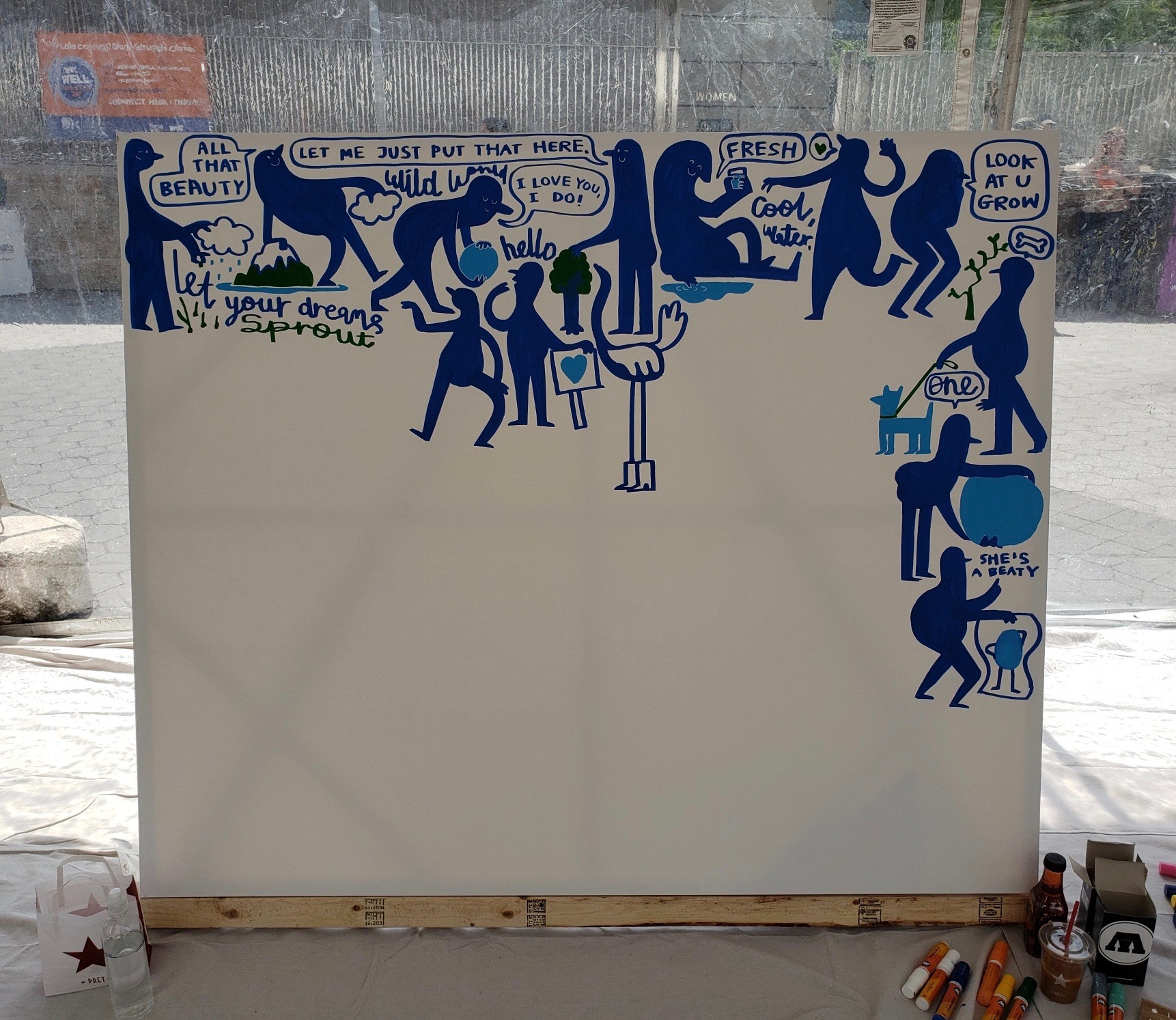
This week the Earth Day Initiative hosted its annual Earth Day New York Festival in Union Square, meant to inspire attendees to make increasingly environmentally-friendly choices. This year’s festival was a special edition of the event — the start of a year-long countdown to Earth Day’s 50th anniversary in 2020. In addition to the dozens of exhibitors, including non-profits, green businesses, kids' activities, and live performances, the outdoor festival featured artists who created works of art — live and on-site — surrounding environmental themes that were inspired by the recent Green New Deal proposal. Among those featured was Molly Egan, a Philadelphia-based artist who, in anticipation of the art installation, said that her artwork depicts “people making more sustainable choices like recycling, composting, replacing plastic water bottles with reusable ones, and eating more environmentally friendly foods.” John Oppermann, Earth Day Initiative’s executive director, emphasized the importance of interactive events like Earth Day New York and noted how important the event has been since its founding in 1970: “That was a time when people really raised their voices and said, ‘We need to do something about these environmental issues.’ A lot of the safeguards we have in place today, we take for granted.” He added: “That is something we should keep in mind…when we see attacks on environmental protections we have now.”
Earth Day New York 2019
Immigration Impact: “Director Jordan Peele Casts More Immigrant Actors, Tells More Inclusive Stories.”
Fifty percent of Latino immigrants, thirty-three percent of black immigrants, and twenty-five percent of Muslim immigrants on television are portrayed as criminals, according to a 2017 study by The Opportunity Agenda, a social justice communications lab. The study, called “Power of POP: Media Analysis of Representations of Immigrants in Popular TV Shows,” demonstrates that biased and narrow portrayals of immigrants and people of color in Hollywood is not new. But some in Hollywood, including Academy-Award winning writer and director Jordan Peele, are beginning to change this.
Read moreGenuine Acceptance
Museum of Street Art at Bowery Hotel
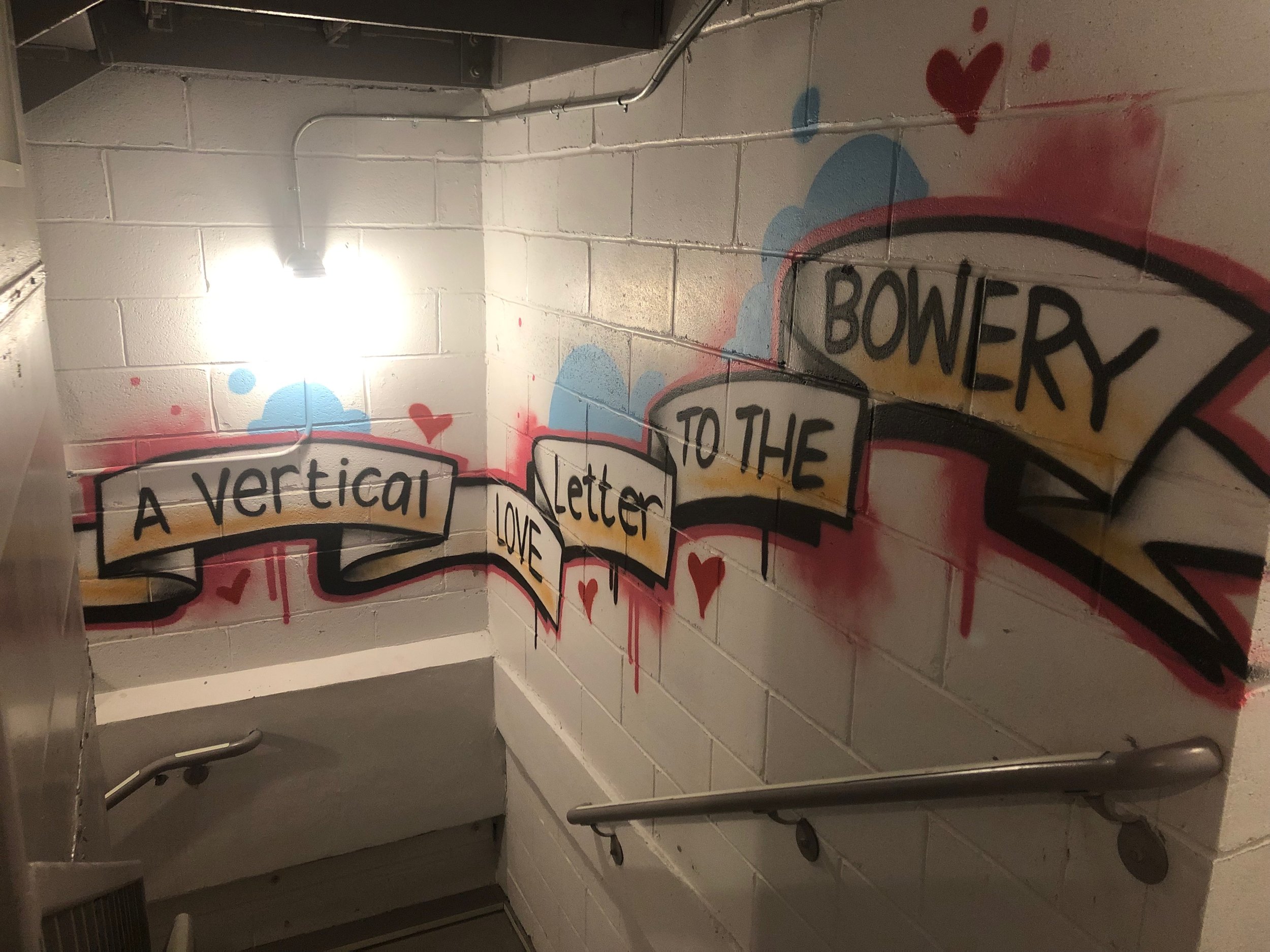
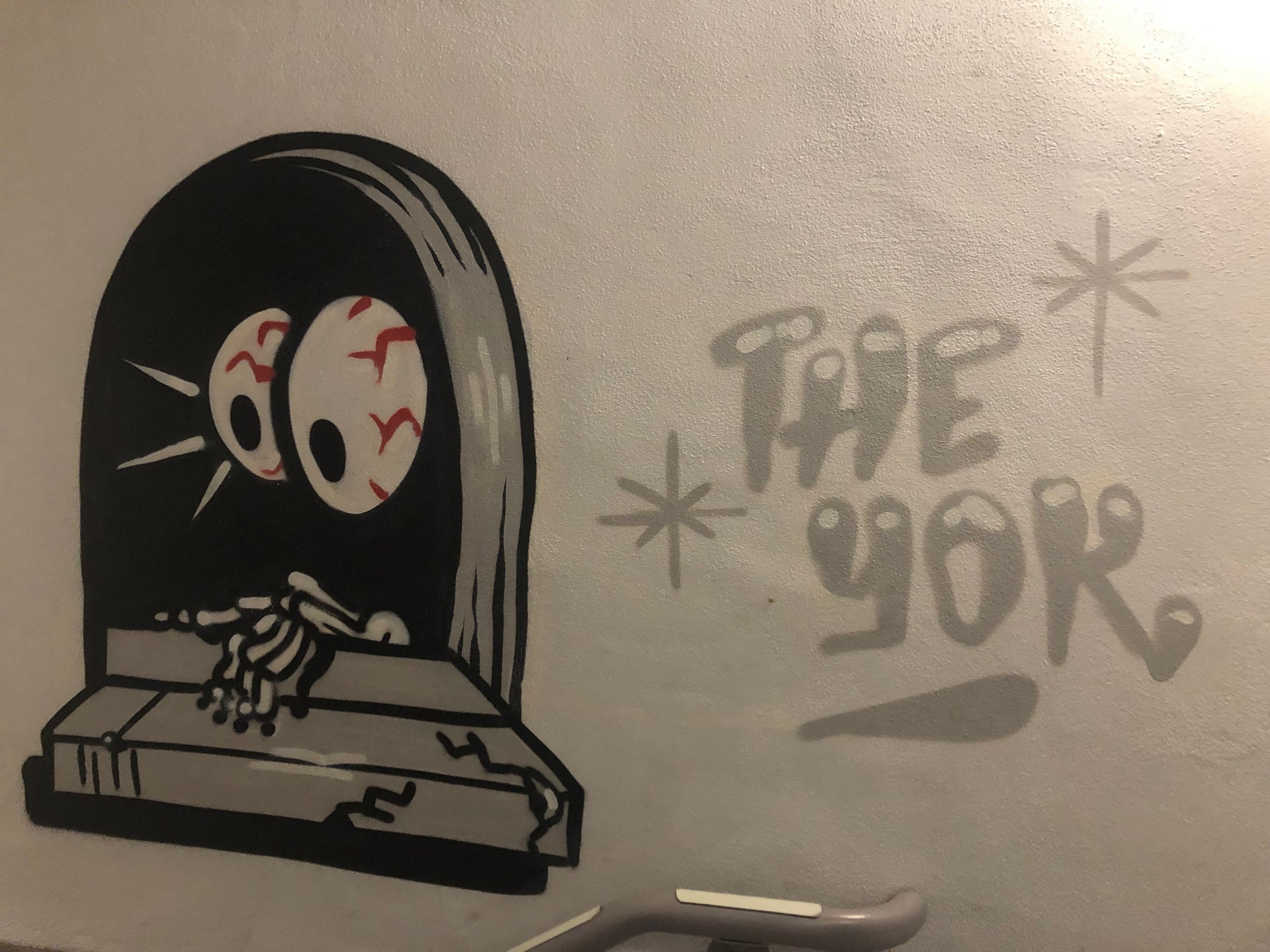
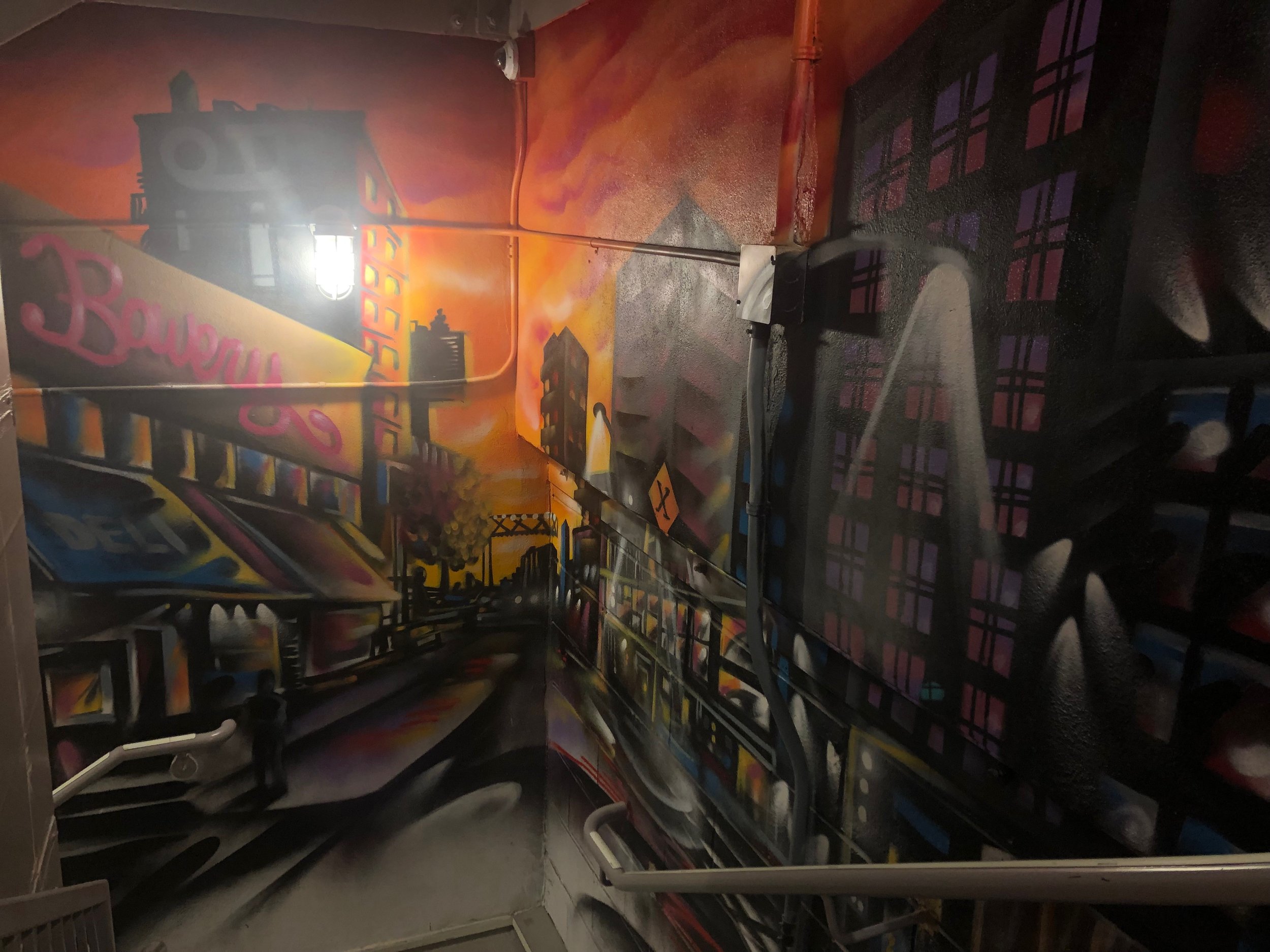
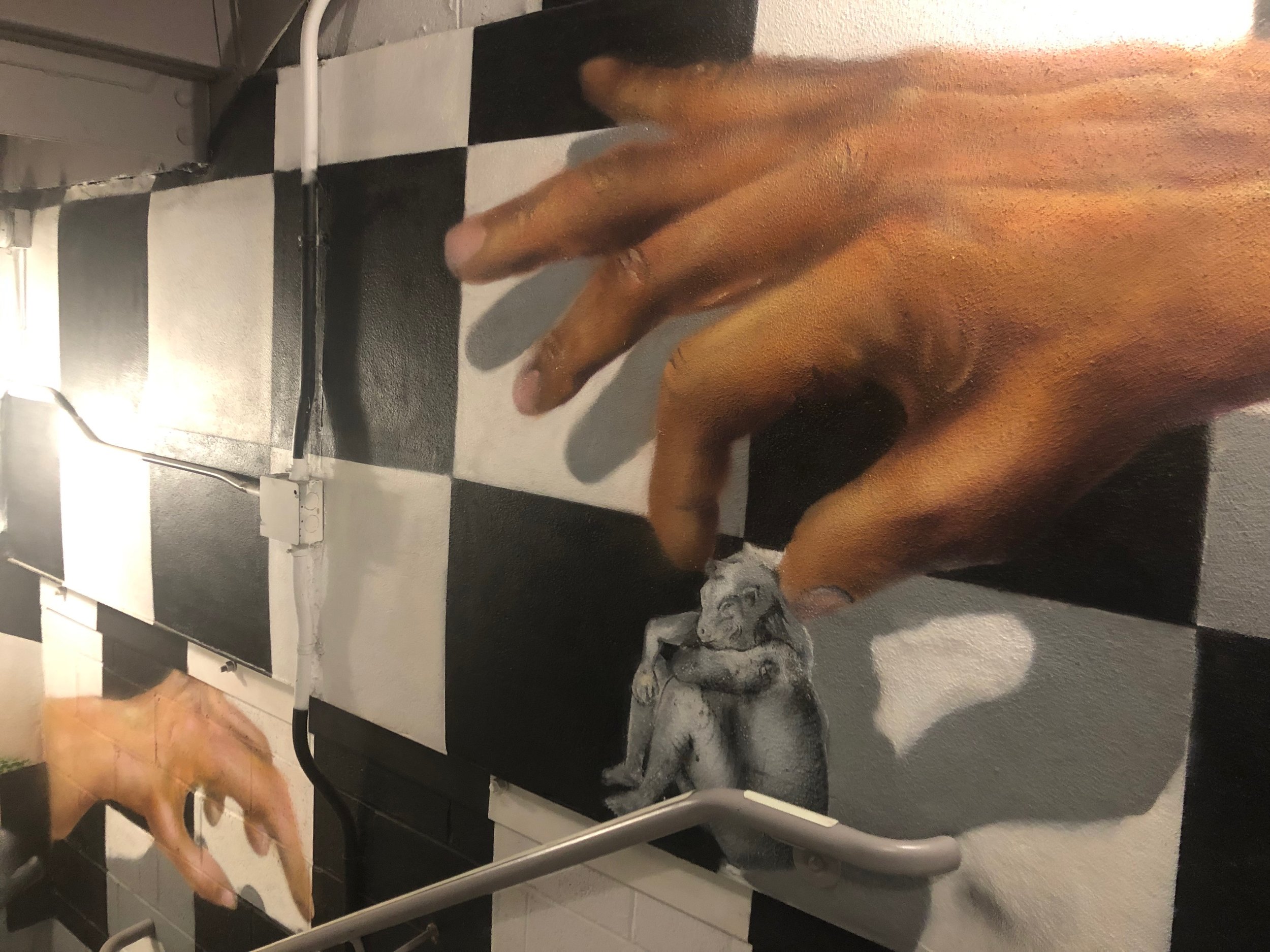
The Museum of Street Art (MoSA) in the citizenM New York Bowery Hotel is a “love letter” to downtown Manhattan’s the Bowery and the Lower East Side. The museum, dedicated to featuring the work of prominent graffiti artists, features work by the 5 Pointz creates collective, a group of twenty artists who originally painted work on 5 Pointz, the iconic five-story, block-long building in Long Island City that graffiti artists around the world used as a canvas for twelve years, but which was demolished in November 2013. Marie Cecile Flageul, MoSA’s curator, described the wonderful feeling of these graffiti artists having a new home: “It’s kind of like symbolizing us being a little happy again. Because now we have a home here and we’re able to, you know, come back and share a passion for aerosol art.” Visitors to the museum must check in at the hotel lobby, are guided by an ambassador to the 20th floor via the elevator, and enter the emergency stairwell (aka the “museum”) to descend back down to the lobby. Entry to the museum is free, but reservations are required.
Increased Denial Rates for H-1B and L-1s
H-1B denial rates in the US are reaching high levels compared to previous years, and L-1 visa applicants are facing challenges with renewals at the US/Canada border, according to recent reports. Data released through the H-1B Employer Data Hub from US Citizenship & Immigration Services (USCIS) shows that denial rates for initial H-1B petitions between FY 2010 and FY 2015 never exceeded eight percent, and today the rate is three to four times higher at thirty-two percent, analysis from The National Foundation for American Policy (NFAP) shows.
Read moreAs American As You Can Get

Come Closer and the View Gets Wider
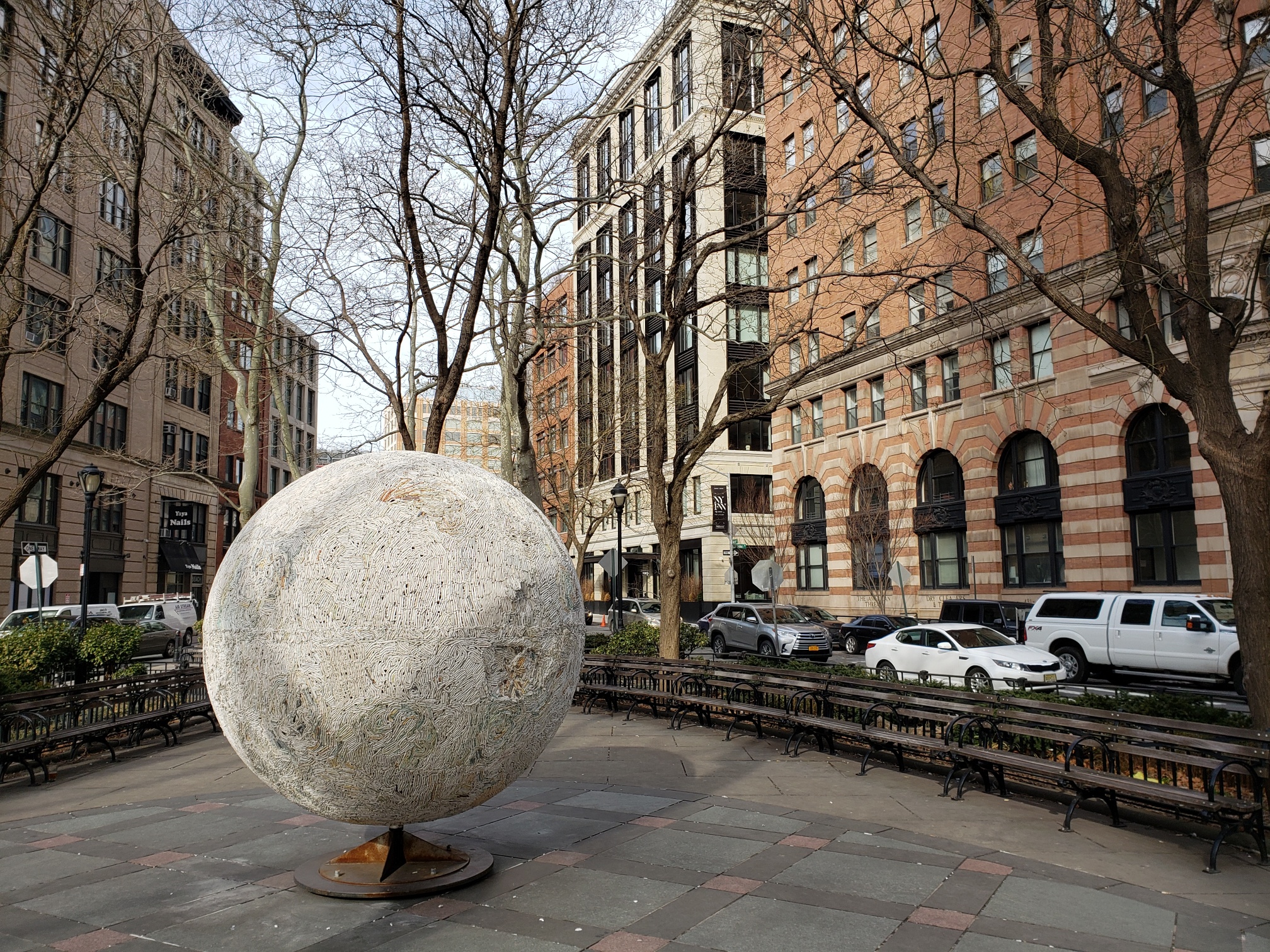
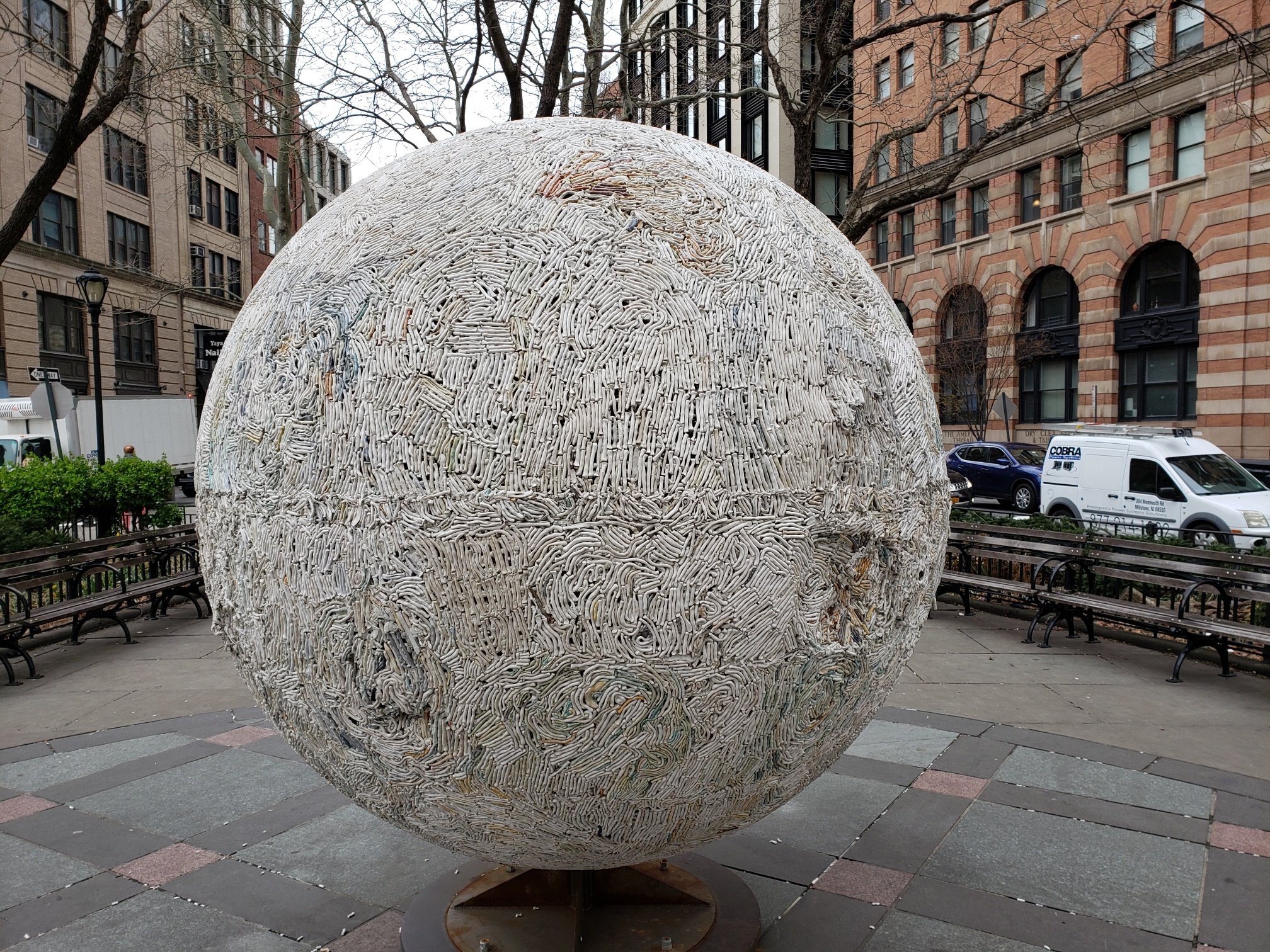
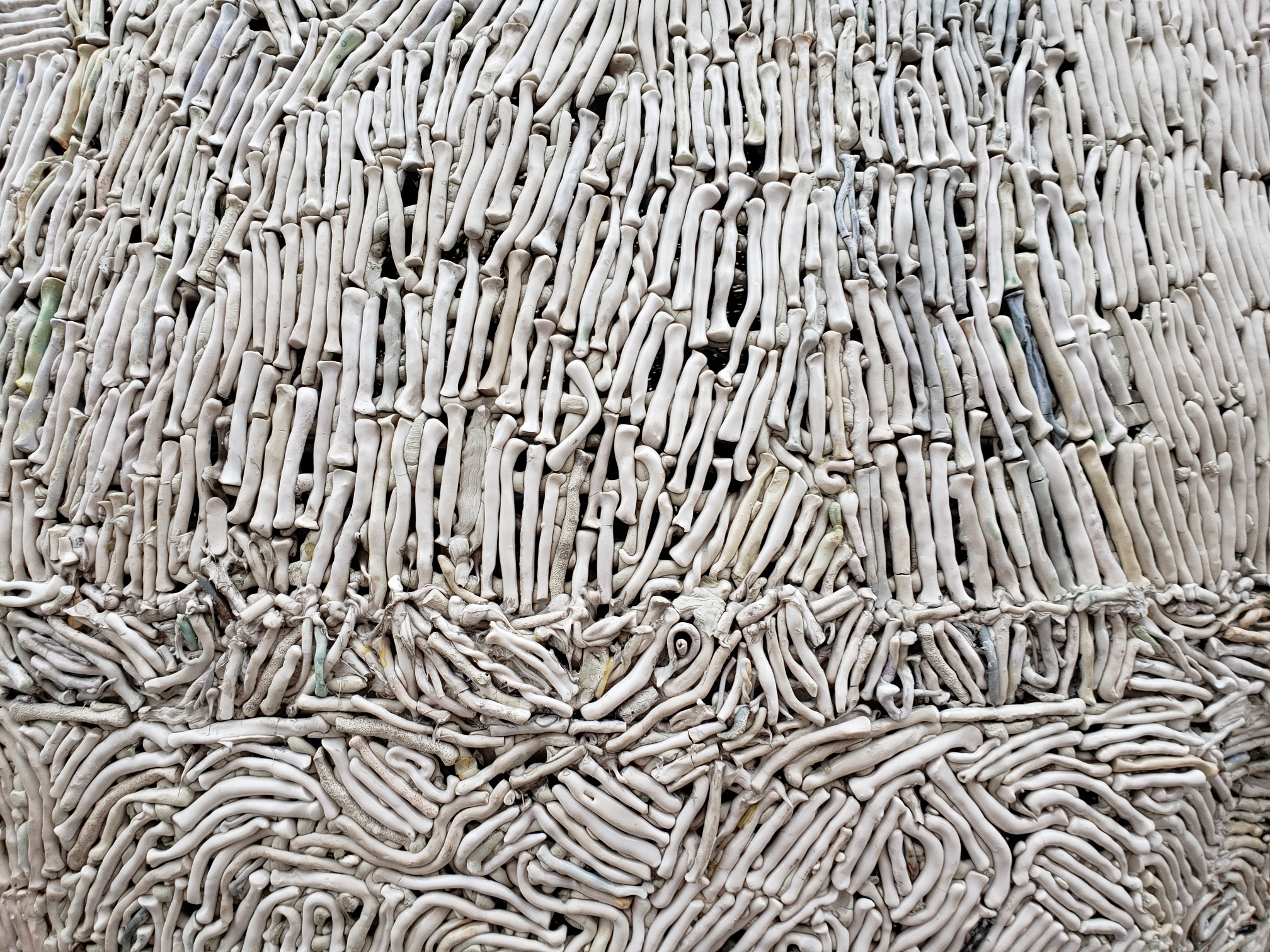
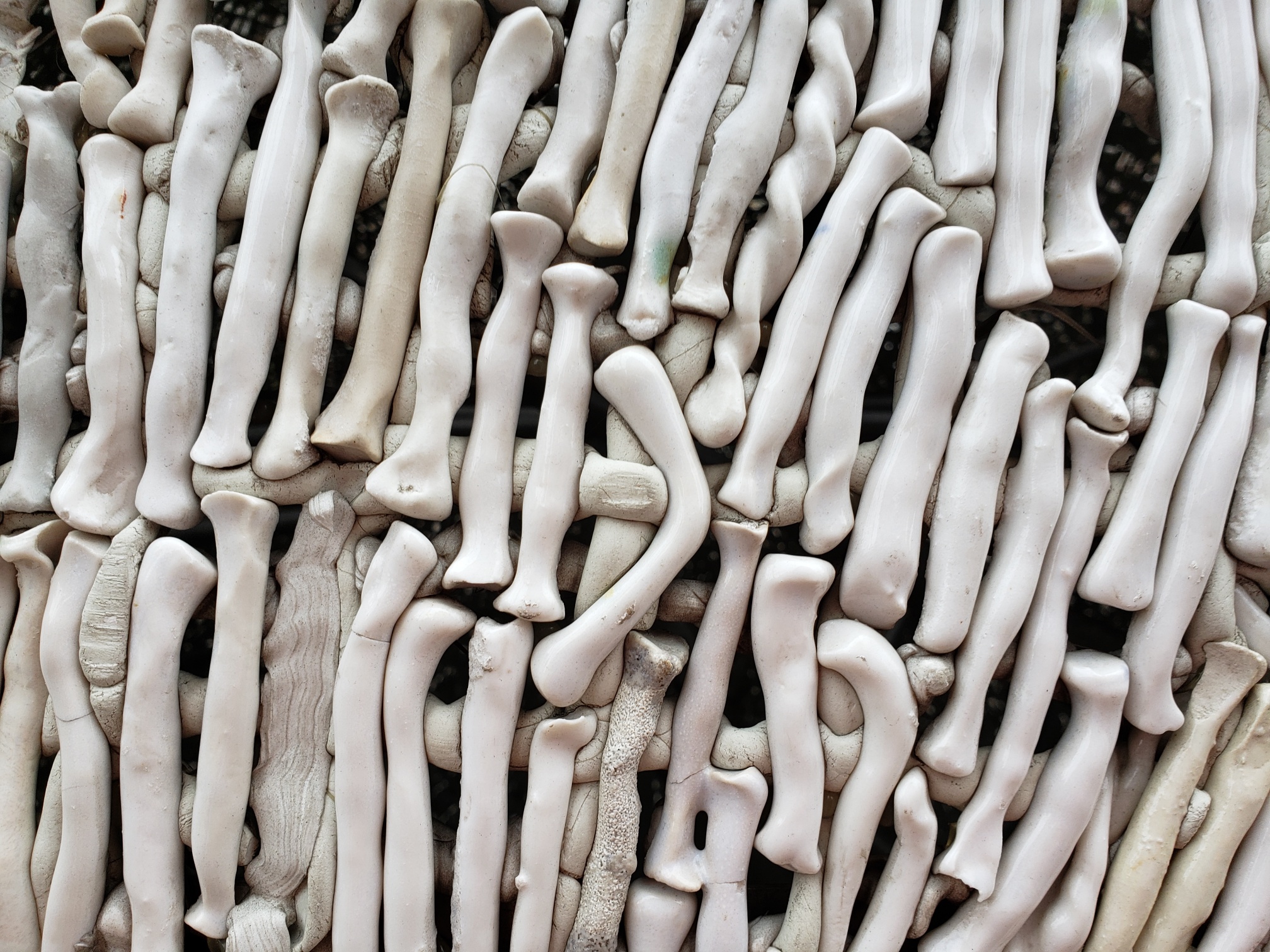
Come Closer and the View Gets Wider by Rebecca Manson at Tribeca Park may look a little gray and severe. But the structure is intricately designed and made up of thousands of handmade, glazed porcelain parts joined together to make an eight-foot orb. To construct the piece, Manson created tiny porcelain sculptures, each a small bone-like shape, and fused them to the structure made of aluminum and epoxy. The piece “celebrates the idea that small things together amount to something impactful; a monument to collective consciousness.” Manson, who mostly works with ceramics, metal, plaster, and epoxy, says the piece fits perfectly at Tribeca Park. She tells the Tribeca Trib: “I loved the geometry of the space and the idea of this quiet oasis in the middle of this busy Downtown area.”
The Mercury News: “H-1B: U.S. employers say Canada’s immigration policies better, as tech booms north of border”
Canada’s more favorable immigration policies are attracting tech talent away from the US, according to a report by Envoy, which helps companies navigate the immigration and visa application process. In 2017 Toronto, North America’s fastest growing tech hub, added more tech jobs than the Bay Area, Seattle, and Washington, D.C. combined, and Ottawa, the nation’s capital, has more than 1,700 tech companies.
Read moreUSCIS Has Reached the H-1B Cap for Fiscal Year (FY) 2020
US Citizenship & Immigration Services (USCIS) announced that they have received a sufficient number of H-1B petitions projected as needed to reach the congressionally-mandated 65,000 FY 2020 regular cap. Next, USCIS will determine if the agency has received enough petitions to meet the 20,000 US advanced degree exemption master’s cap. The agency will reject and return filing fees for all unselected cap-subject petitions which are not prohibited multiple filings. USCIS will continue to accept and process H-1B petitions exempt from the cap including petitions filed for current H-1B workers who have been counted previously against the cap and who still retain their cap number, as well as H-1B petitions for extensions, change in terms of employment, change-of-employer, and concurrent employment. To receive future updates about the H-1B program, USCIS encourages applicants to subscribe to the H-1B Cap Season email updates on the H-1B Fiscal Year (FY) 2020 Cap Season page.
UPDATE APRIL 12, 2019: On April 10, after USCIS selected enough H-1B petitions to meet the congressionally-mandated regular cap, USCIS determined that the agency had received enough petitions projected as sufficient to meet the 20,000 US advanced degree exemption master’s cap. In total, USCIS received 201,011 H-1B petitions during the filing period beginning April 1, including master’s cap cases. The agency additionally notes that in accordance with the new H-1B regulation, USCIS first conducted the selection process for H-1B cap-subject petitions submitted for all beneficiaries, including master’s cap cases, and afterwards from the remaining eligible petitions selected a number projected to reach the advanced degree exemption.