
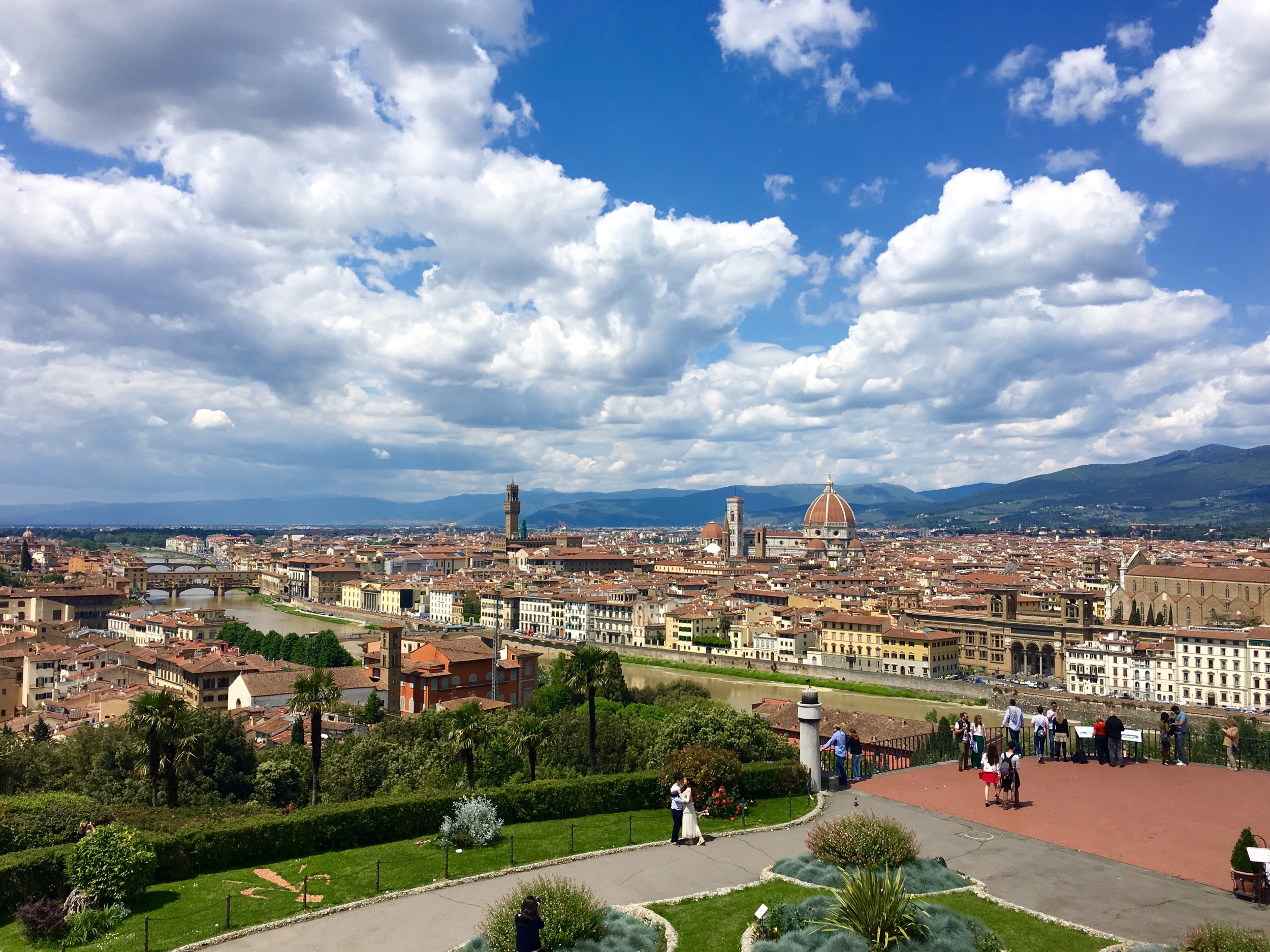
Taking a short break from meetings in London, I visited the beautiful city of Florence. The Piazzale Michelangelo, in the Oltrarno district of the city, features an incredible panoramic view of the city. You can see the Duomo, aka the Cathedral of Santa Maria del Fiore, a vast Gothic structure with the Renaissance dome added later. To the left is the Campanile and over the Arno River is the city's most well known bridge, Ponte Vecchio, featuring houses and many jewelry stores. Maybe I'll pick up some presents for the office…
VOX: “The disastrous, forgotten 1996 law that created today's immigration problem”
Immigration reform is sorely needed, as many activists, immigration practitioners, and (certain) politicians have been saying for the last few years. But how did we get into this immigration mess in the first place? Vox explains the 1996 immigration bill signed by President Bill Clinton that overhauled immigration enforcement in the US and consequently led to the massive deportations ongoing today as well as the huge increase in the number of undocumented immigrants in the US. This 1996 bill, the Illegal Immigration Reform and Immigrant Responsibility Act (called IIRIRA), produced key changes in American immigration law and enforcement policies.
The bill made more people eligible for deportation (i.e. removal)
Legal immigrants—including Green Card holders—can be deported if they're convicted of certain crimes, but in 1996, Congress retroactively expanded the crimes which made immigrants eligible for deportation. "Overnight people who had formed their lives here—came here legally or had adjusted to legal status, were working here, building their families, had ordinary lives in which they were on the PTA and everything else—suddenly, because of some conviction, weren't even allowed to go in front of a judge anymore,” Nancy Moravetz, a NYU law professor, tells Vox. “They were just fast-tracked to deportation."
The bill made it easier to deport and detain undocumented immigrants
Not only did IIRIRA allow immigrants convicted of certain crimes to be deported, it permitted undocumented immigrants apprehended within 100 miles of the border to be stripped of the ability to argue their case before a judge before getting deported. It also required the government to hold more immigrants in detention before deporting them, which makes it much more difficult to get legal representation, and decreased the discretion immigration judges and the executive branch had regarding removals. "Discretion was taken away from district directors and immigration judges almost entirely," Doris Meissner, former head of Immigration and Naturalization Service (now US Citizenship & Immigration Services), tells Vox. "And so deportations started to go up, people were deported who otherwise would not have been deported."
IIRIRA made it more difficult for undocumented immigrants to obtain legal status
As Vox explains, for much of the 20th century, certain undocumented immigrants were able to obtain legal status once they'd been in the US for a certain period of time. Before the law changed, in 1996, immigrants who had been in the US for at least seven years could obtain legal status if they showed it would cause them "extreme hardship" to be deported. IIRIRA changed this by limiting "cancellation of removal" to immigrants who were able to show that they had been in the US for at least ten years, and who had a US citizen (such as a child or spouse) who would suffer "exceptional and extremely unusual hardship," if the foreign national was removed from the US. This was a higher standard than the previous “extreme hardship” which only the foreign national themselves had to suffer. Moreover, the US would only grant cancellation of removal to 3,000 immigrants each year. IIRAA went further to also essentially eliminate one of the most common ways to gain citizenship. Vox explains:
Marrying a US citizen or permanent resident makes you eligible to apply for a green card. So does having an immediate relative who's a US citizen (like a child), as long as the citizen's over 18. These are true whether or not you already live in the US. And before IIRIRA, it was true regardless of whether or not you were legal to begin with. Starting after IIRIRA passed in 1996, though, an unauthorized immigrant couldn't directly apply for legal status — even if he had married a US citizen, or qualified for a green card through a relative. Immigrants were banished for at least three years if they'd lived in the US without papers for six months; the banishment lasted 10 years if the immigrant had lived in the US without papers for a year or more.
Applicants can apply for a waiver to the 3- and 10-year bars only if they leave the country first, making it too risky of a proposition for many. After IIRIRA, although deportations from the United States increased, the number of undocumented immigrants living in the US also increased dramatically, going from five million in 1996 to twelve million by 2006.
The 3- and 10-year bars, Vox says, has “caused millions of immigrants to remain unauthorized who'd otherwise be eligible for green cards or US citizenship by now.” According to Douglas Massey's estimate, without the 3- and 10-year bars, there would be 5.3 million fewer undocumented immigrants in the US today. "I don't think people fully appreciated what those laws had done," Nancy Morawetz tells Vox, referring to both IIRIRA and other 1996 immigration laws. In some ways, they're "still being sorted out today."
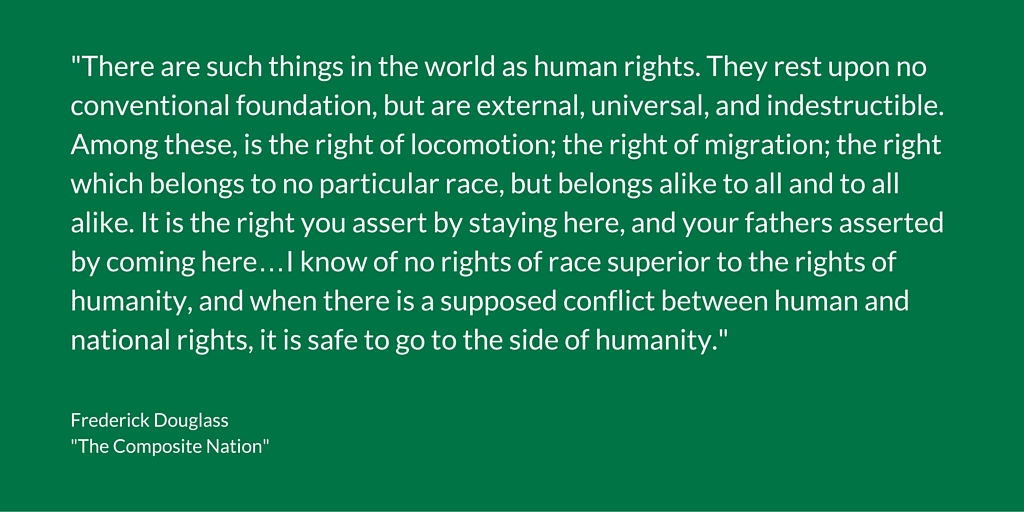
Right of Migration
Not Your Chippy’s Fish and Chips

Even though they were not served in paper, I still enjoyed these fish and chips, actually goujons and chips, while in London for meetings at the Goring Hotel. This Edwardian hotel, where Kate Middleton stayed before she married Prince William, has a royal warrant and is conveniently only a nine-minute walk from Buckingham Palace. And there is an award-winning afternoon tea served, which is wonderful. Lunch over, I am off to find their “gin garden."
Erik Ramberg: The DLG-Proust-Actors Studio Questionnaire
Born in Boston to a Canadian mother and Norwegian father, paralegal Erik Ramberg grew up in Vancouver and Oslo. His parents met in Kingston, Ontario at university, and as a child he learned to navigate the two cultures. “As a young kid moving back and forth it was hard to adjust to each, but looking back at it now I’m definitely grateful for that experience.” Both Canadians and Norwegians have the reputation for being polite and diplomatic folks, and Erik fits that mold. His cool but friendly demeanor and calmness under pressure is legendary. Seriously, people will be talking about if for years to come.
Read moreNY Times: “Inshallah Is Good for Everyone”
Khairuldeen Makhzoomi, a college student at UC Berkeley and a refugee from Iraq, was about to take off on a flight from Los Angeles to Oakland when he called his uncle to tell him about a dinner event he attended the previous evening featuring U.N. Secretary-General Ban Ki-moon. As he spoke to his uncle in Arabic, he noticed one passenger staring at him, and after Makhzoomi hung up, he was escorted off the plane and questioned by the airline and FBI about "threatening comments,” according to a statement by Southwest Airlines.
Although Southwest Airline’s statement claimed that Makhzoomi was removed for the “content of the passenger’s conversation” and not his language choice, Makhzoomi believes it was a clear case of discrimination and Islamaphobia. What did he say before the passenger alerted the airline? Apart from telling his uncle about the event, where he was able to ask the secretary-general a question about defeating ISIS, he explained, he signed off with the Arabic expression “inshallah,” which translates as “God willing.”
Wajahat Ali, author of the play The Domestic Crusaders and creative director of Affinis Labs, a hub for social entrepreneurship and innovation, elucidates the meaning of “inshallah” and its general use for Arabic speakers, calling it the “hallmark of the Arabic vernacular.” He writes:
Inshallah is the Arabic version of “fuggedaboudit.” It’s similar to how the British use the word “brilliant” to both praise and passive-aggressively deride everything and everyone. It transports both the speaker and the listener to a fantastical place where promises, dreams and realistic goals are replaced by delusional hope and earnest yearning.
Examples of how “inshallah” is used in conversation:
If you are a parent, you can employ inshallah to either defer or subtly crush the desires of young children.
Boy: “Father, will we go to Toys ‘R’ Us later today?”
Father: “Yes. Inshallah.”
Translation: “There is no way we’re going to Toys ‘R’ Us. I’m exhausted. Play with the neighbor’s toys. Here, play with this staple remover. That’s fun, isn’t it?”
Ali summarizes, tongue-in-check, that “inshallah is used in Muslim-majority communities to escape introspection, hard work and strategic planning and instead outsource such responsibilities to an omnipotent being, who somehow, at some time, will intervene and fix our collective problems.”
In recent months, those problems have included numerous incidents of alleged discrimination against Arabic speakers and “Muslim-looking” peoples including Sikhs while flying or attempting to board airplanes. Earlier this year, three Muslims and a Sikh filed a lawsuit after being removed from a flight because the captain of the airplane did not feel comfortable with them as passengers. In November, two men were nearly prevented from boarding a Southwest flight because a few passengers heard them speaking Arabic and were afraid to fly with them. While there are many more similiar incidents, perhaps there is a silver lining in this latest one, Ali writes: “Opportunity is often born from absurdities. I believe this latest episode is actually a great moment to bring the versatile and glorious term inshallah into the vocabulary of more Americans.”
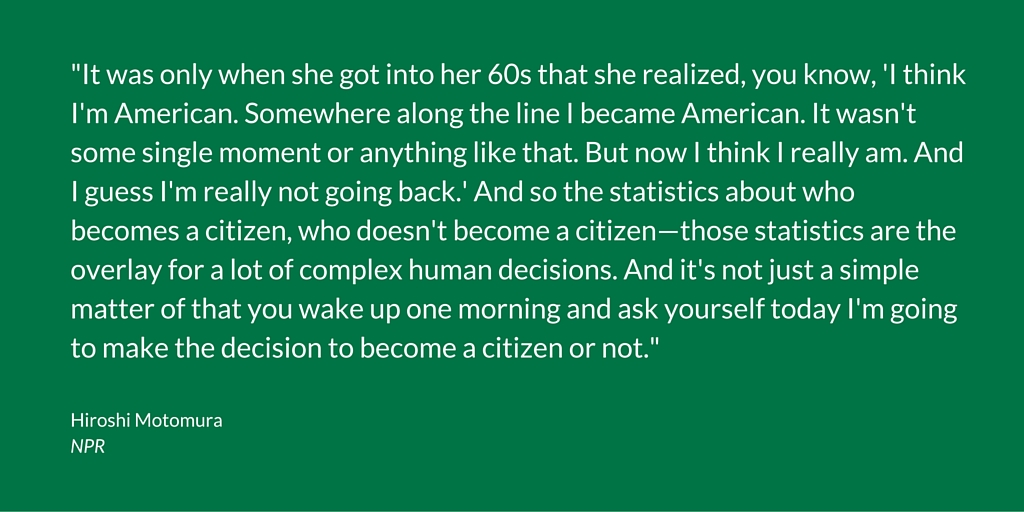
I Think I'm American
National High Five Day!

National High Five Day, started in 2002 at the University of Virginia by a group of students, celebrates high fives. And there is no one more enthusiastic about high fives in our office than Liz. She will do whatever it takes to make that high five. Including jumping great heights. Go Liz!
5 Reasons Why a Green Card May Not Be Right For You
For many people, the Green Card is the ultimate symbol of accomplishment. After years of waiting through backlogs or dreaming of coming to America, the card is the proof of success. Holding the Green Card in their hands, they can breathe a sigh of relief that all their hard work paid off.
Because the Green Card is held in such high regard many clients understandably want to discuss how they can get one. But another equally important part of that conversation has to include the possible negative consequences of obtaining a Green Card. Despite the appeal of a Green Card, for some people it may not be the best choice.
Read moreInside Sources: “On Tax Day, Remember the Contributions of Unauthorized Immigrants”
Millions of Americans have filed their taxes in advance of the April 18 “Tax Day” deadline. And it’s not only US citizens paying taxes. Undocumented immigrants also make immense federal, state, and local tax contributions, as Tom Jawetz at the Center for American Progress points out. A recent study by the Institute on Taxation and Economic Policy (ITEP) claims that undocumented immigrants pay an estimated yearly $11.64 billion in state and local taxes, adding significant amounts of money to state and local budgets. Tax contributions by undocumented immigrants also help to ensure the solvency of federal programs such as Social Security—the Chief Actuary of the Social Security Administration reported that in 2010 undocumented immigrants paid a net $12 billion in tax revenue into Social Security—even though many undocumented immigrants are unlikely to benefit from the programs themselves.
The study also claims providing a pathway for legal status in the US for undocumented workers would translate into even more tax revenue. ITEP’s analysis claims that combined state and local tax contributions of the nation’s eleven million undocumented immigrants would “increase by more than $800 million under full implementation of the administration’s 2012 and 2014 executive actions and by more than $2.1 billion under comprehensive immigration reform.” Meg Wiehe, ITEP State Tax Policy Director, said in a statement: “Regardless of the politically contentious nature of immigration reform, the data show undocumented immigrants greatly contribute to our nation’s economy, not just in labor but also with tax dollars. With immigration policy playing a key role in state and national debates and President Obama’s 2014 executive action facing review by the Supreme Court, accurate information about the tax contributions of undocumented immigrants is needed now more than ever.”
Texas, which sued the Obama administration over plans to expand the Deferred Action for Child Arrivals (DACA) program, would reportedly see an additional $154 million yearly in new tax revenues each year if Obama’s executive actions were put in place. Moreover, the Joint Committee on Taxation found that blocking the deferred action initiatives would increase the size of the federal deficit by $7.5 billion over ten years. The Supreme Court will issue a ruling for Texas's lawsuit, United States v. Texas, this summer.