Happy New Year!

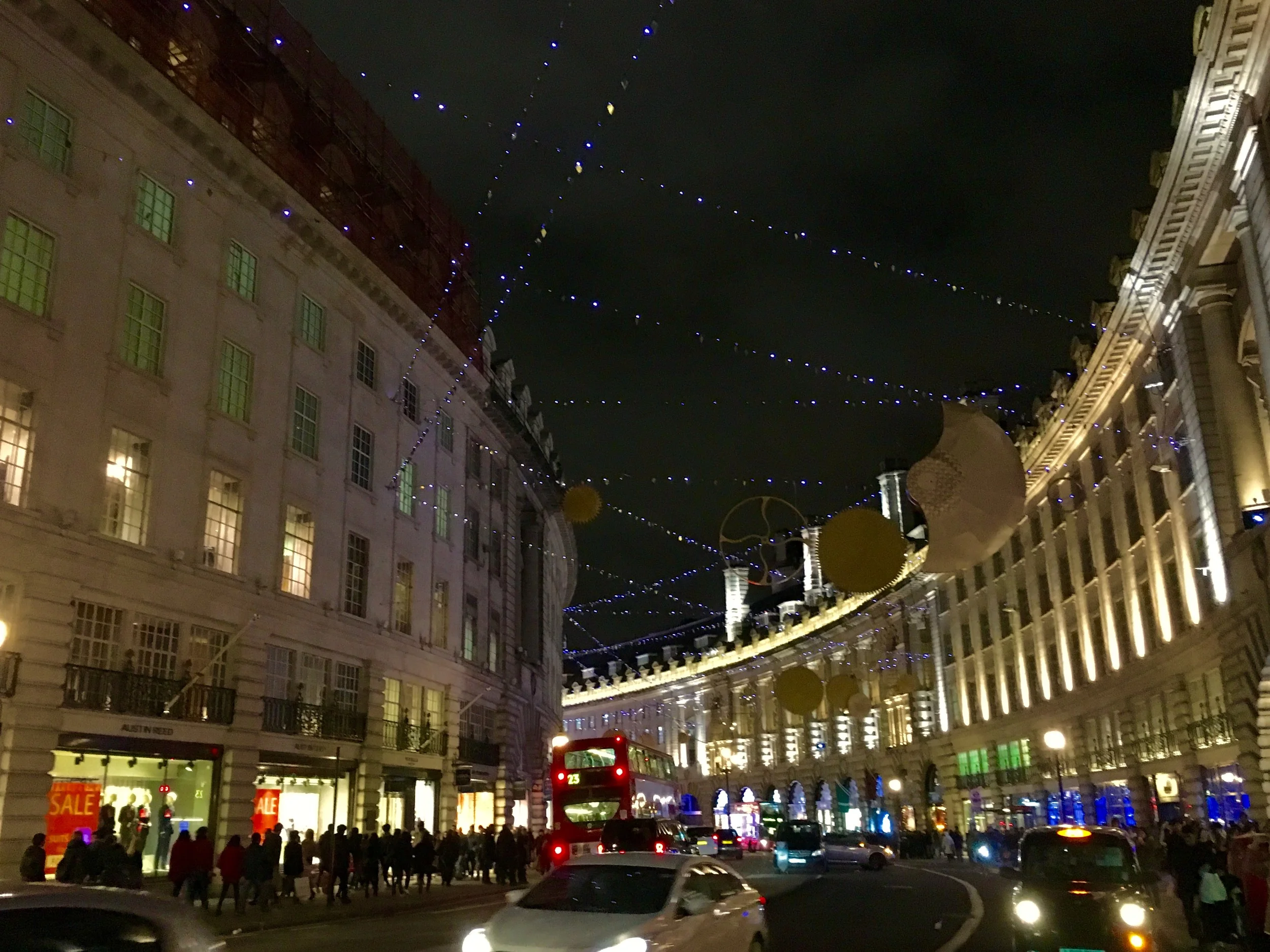
Lights on London's Regent Street, famous for its holiday decorations.

Lights on London's Regent Street, famous for its holiday decorations.

It's been another exciting year for us at the Daryanani Law Group. From a new partner climbing a volcano to the H-1B cap; from key additions on our staff and weddings to a visit from Roger, (not to mention our name change), it was eventful, to say the least. We look forward to 2016, whatever it may bring. From all of us here at DLG, we wish you and your family a Happy New Year!

US Increasingly Denying Entry to Muslims and Individuals of Certain Countries

In recent weeks, Muslims and individuals from certain countries are reportedly being refused entry to the US, leading some to think that innocent individuals are being caught up in increased US security measures.

Muslim Family Headed to Disneyland Denied Entry

In one case, a British Muslim family was barred earlier this month from flying from Gatwick Airport in the United Kingdom to the US for a vacation at Disneyland. Mohammed Zahid Mahmood said he and his family—which included two brothers and nine children—were not allowed to travel to the US for vacation, despite previously having obtained clearance. He told the BBC that his children were "traumatised, really upset" about the cancelled trip. "They think they've done something wrong," he said. "I want an explanation, and what's going to happen next. I would still like to go to America, I would like my kids to fulfil their dreams."

Stella Creasy, a member of the opposition Labour Party, said that her inquires to US officials on why her constituents—Mahmood and his family—were not allowed to board the flight to the US were not answered, and consequently she wrote to Prime Minister David Cameron to look into the matter, citing a "growing fear" among British Muslims that “aspects of Trump's plans are coming into practice even though they have been widely condemned.”

Because of other instances of US airlines either preventing Muslims or “Middle Eastern-looking” individuals from flying as well as alleged mistreatment, some think that presidential candidate Donald Trump’s proposed temporary ban on Muslims visiting the US and other anti-Muslim sentiment and discrimination in the US has led to increased and overly-aggressive scrutiny of Muslim and Middle-Eastern travelers to the US.

While Cameron’s office said they are investigating the matter, a top Muslim group in the UK said the incident appears to be related to the travelers’ religion and is very concerning to British Muslims. A US Customs and Border Protection (CBP) spokesman told ABC News that the "religion, faith or spiritual beliefs of an international traveler are not determining factors" for admittance to the US and that people can be denied entry for numerous reasons including health-related issues, prior criminal convictions, security concerns, or other grounds. The Muslim Council of Britain says the last-minute denial of boarding without explanation is unfair for Muslims. "There is a perception that such decisions are being made due to the faith or political activism of individuals," the council stated. 

Mahmood, whose family reportedly spent £9,000 on tickets for the Disneyland flights, told the Guardian that they received no explanation for why they were not allowed to board their flight, but he believed it was “because of the attacks on America—they think every Muslim poses a threat.” According to news reports, the US Embassy in London has not issued any comments or clarifications as to why Mahmood and his family were not permitted to travel to the US to visit Disneyland or regarding any increased travel security restrictions.

British Imam Ajmal Masroor Denied Entry

Ajmal Masroor, a British imam and broadcaster, reports he was also prevented from traveling to the US for business, despite having traveled to the US multiple times already this year. While Masroor was originally denied an ESTA, or Electronic System for Travel Authorization, after US Embassy staff contacted him to apply, he had been granted a business and tourism B1/B2 visa, which he said he used to travel to the US.

“In my mind, the refusal and revoking of my visa was calculated. For me it’s very callous,” he told the Guardian. In response, the US Embassy in London said: “The embassy is aware of this matter. We are in contact with the individual and therefore have no further public comment at this time.” Masroor believes US officials are singling out Muslims. "This is absolutely discrimination. It is not acceptable and playing into the hands of the terrorists," he said. Masroor also said he had heard of twenty similar cases of fellow Muslims being denied entry to the US, and David Cameron has been informed of additional cases as well.

In addition, Indian students have been denied entry to the US. In two separate cases, twenty Indian students with valid student visas for colleges in California were denied entry in Chicago and returned to India, and nineteen students were barred from boarding an Air India plane headed to San Francisco for the same schools.

It’s not only travelers to the US being excluded entrance, but Australia has also faced criticism for denying entry to certain individuals, including Zahra Ramadani, a Syrian-born British national whose visa was issued and revoked without explanation right before she was scheduled to fly to Sydney, and a Pakistani family who were trying to visit their terminally ill son who was unable to travel out of Australia.

Those who are planning a visit to the US should be aware of the proper ESTA and visa procedures and requirements, and also their rights if denied entry.

Understanding the O-1 Criteria: A Mermaid of Extraordinary Ability

One of the main visa types we deal with at our firm is the O-1 nonimmigrant visa for individuals of extraordinary ability. We previously dealt with some common misconceptions about this visa type and now, to explore it in a little more depth, we offer a fictional meeting between a potential client and her lawyer, discussing her potential petition for O-1 classification.

This isn’t, however, just any potential client. The Little Mermaid is a classic fairy tale about a mermaid princess with a beautiful voice, who falls in love with a human prince at first sight and sells her voice to a sea witch in order to follow him onto land and make him fall in love with her. In an attempt to make the story a little less tragic, and help illustrate the requirements for an O-1 visa, we’re imagining up a scenario in which the Little Mermaid meets with a lawyer to more sensibly discuss her temporary immigration options, rather than immediately going to such drastic measures.

Read more

Holiday Traditions From Around the World

The holidays are upon us yet again. While many of us have our own unique family and American Christmas traditions—including decorating the Christmas tree, kissing under the mistletoe, drinking as much eggnog as possible, watching Lifetime Christmas movies, and mad dashes to overcrowded stores to get that perfect gift—we thought we’d take a look at holiday traditions from around the world and see if there are any worth incorporating. My vote is on the Christmas pickle!     

Romantic

In Austria on St. Barbara’s Day, December 4, the tradition is to place a single cherry twig in a vase. If it blooms before Christmas Eve then good luck and marriage will follow. In Thessaly, Greece, boys place a cedar branch and girls place a white cherry branch over a fire. The branch that burns the fastest brings the person good luck and an upcoming marriage (yay, more marriage). In Sweden, whoever finds the almond in the Ris à la Malta (rice pudding) will marry within the next year (yep, more weddings).

In Poland during Wigilia, also known as Christmas Eve Supper, straw is placed under a tablecloth to commemorate the birth of Jesus in the manger. Guests take turns removing a piece of straw. If you pick a green one, lucky you, it means good luck or marriage will come to you, while yellow means another year of being single, which depending on your outlook may be a good thing. Meanwhile in the Czech Republic, single women throw a single shoe over their shoulder. If the shoe points to the front door, marriage is coming. If not, time to have another glass of that wonderful Czech beer.

Fun

When German families decorate the Christmas tree, the “last ornament to be hung is the Christmas pickle—usually a glass ornament that may have been passed down through generations.” The pickle is hidden away on the tree and the first child to spot the pickle gets a special treat and good luck the rest of the year. I really hope I spot the pickle this year.  Really hope I do. Please, I want the pickle.

But if you can’t find the pickle, take comfort in the Icelandic myth of the Jólakötturinn, a savage beast whose name roughly translates to “Yule Cat.” The Jólakötturinn is a huge, angry monster who “attacks the badly dressed.” Originating in medieval times as a way to motivate workers during the autumn wool processing time, those who worked hard would be rewarded with new clothes, and those who did not would have to face the Jólakötturinn—poorly dressed, which he does not like at all. If you’re on the naughty list this year (badly dressed or not) and happen to live in Austria, watch out for Krampus, Santa’s helper whose job it is to beat naughty children with branches.

Nativity scenes are a common sight here in the US and in other countries, but in some parts of Catalonia in Spain they allegedy take it to a different level. Along with the manger and baby Jesus, Mary, Joseph, wise men, and maybe a few angels, there’s a man defecating. Called the "Caganer," the figurine is typically depicted as a peasant with his trousers down, emptying his bowels, apparently in an attempt at "fertilising the Earth.” In that same vein, Catalans celebrate Caga Tió (translated as the “pooping guy”), whose smiling face, red nose, and legs (along with a red hat) are stuck on a log full of candy. During advent, children care for the log like it’s a pet, and on Christmas Eve or thereabouts they beat it until the candy comes out.

Since in Norway witches and other spirits come out to play on Christmas Eve, women hide all the brooms in the house before going to bed. Because witches might be doing their own Christmas shopping.

Unusual (but in a Totally Non-Judgmental Way)

In Venezuela, families roller skate to early morning mass in the week before Christmas. Roads are closed to provide a safe and easier journey. While many children wait for Santa Claus to come down the chimney and leave presents, Italian children wait for Befana, a kindly old witch who flies around on her broomstick and deliveries gifts and fills stockings with toys, candy, and fruit (for those children who have been good) and lumps of coal, onions, or garlic (for those who have been bad). Very helpfully she uses her broom to tidy before she leaves which is why Italian parents leave her a well-deserved glass of wine.

In Estonia, many families go to the sauna to spend quality time together on Christmas Eve. It’s believed that a sauna “elf” lives there to protect it and to make sure people behave themselves. But they need to be careful after sunset, because that’s when the sauna turns into a place for the spirits and dead ancestors.

Ukrainians decorate their Christmas trees with artificial spiders and cobwebs due to folklore about the woman who could not afford to decorate her tree. The next morning the children woke up to the tree covered in cobwebs which then turned into gold and silver making the family rich. So a spider web on Christmas morning brings good luck. Christmas in Latvia sounds like fun to me. There groups dressed as mummies go house-to-house getting treats and giving blessings in return. In Japan be sure to send white Christmas cards to friends and family, because traditionally red is saved for funeral announcements.

Food

We’ve shared our favorite holiday recipes, but what does the rest of the world eat? In Japan, it’s not Christmas unless there’s KFC—yes, that’s Kentucky Fried Chicken. Since a marketing campaign in the 1970s (apparently very effective), KFC has been associated with Christmas, and the tradition was born. We’re more used to Christmas hams and stuffing, but South Africans snack on deep-fried Christmas caterpillars from the Emperor moth. Icelanders typically eat reindeer on Christmas and before that, they have some boiled potatoes and fermented skate fish.

Since Christmas is in summertime in Australia, many celebrate with a barbecue, while Argentinians typically eat their main Christmas meal on Christmas Eve, which includes a dish of veal, tuna, mayonnaise sauce, and capers. In Oaxaca, Mexico, there is a huge contest and festival surrounding the Night of the Radishes, where people use oversized radishes to carve holiday scenes and display them in public every December 23, though it’s unclear if they eat them afterwards. And Christians in India celebrate with banana trees!