
“But he was no longer in Tollygunge. He had stepped out of it as he had stepped so many mornings out of his dreams, its reality and its particular logic rendered meaningless in the light of day. The difference was so extreme that he could not accommodate the two places together in his mind. In this enormous new country, there seemed to be nowhere for the old to reside. There was nothing to link them; he was the sole link. Here life ceased to obstruct or assault him. Here was a place where humanity was not always pushing, rushing, running as if with a fire at its back.”
Lizzie B Climbed a Volcano
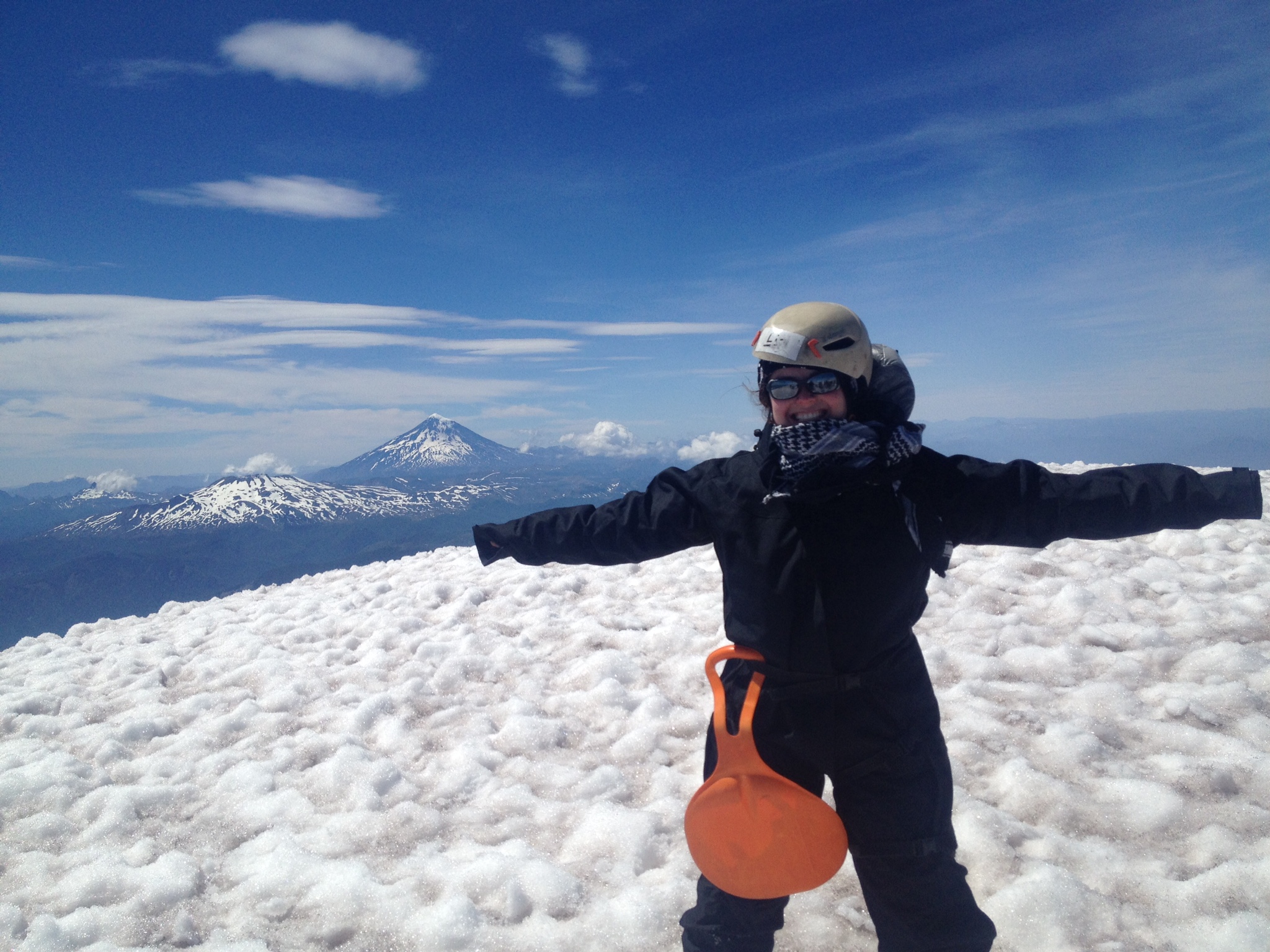
Now that Lizzie B is a partner at the firm, she can do pretty much anything, including climbing volcanoes. Here she is at the Villarrica Volcano, one of Chile's most active volcanoes.
New Year's Eve Around the World
Santa has come and gone (obviously, he uses Global Entry). It's time now to decide how to celebrate New Year's Eve (for those of us on the Gregorian calendar). In the always-delightful-never-crowded New York City's Times Square, you can watch that famous ball drop. This ball (a geodesic sphere, rather) is twelve feet in diameter, weighs 11,875 pounds, and is covered with 2,688 Waterford Crystal triangles. Before you go make sure to have some some black-eyed peas and collared greens for good luck and fortune in the new year. Approximately one million people are expected in Times Square. There is no alcohol allowed.
In Paris at midnight, the Eiffel Tower will have a light show "offering a truly festive and magical sight for the eyes!" If your eyes survive, take a walk down the Champs-Élysées and have a glass (okay, bottle) of Champagne. Or avoid Paris and go to Plérin in Brittany for a New Year's Eve swim in the freezing sea. Better have a drink after that. Salut!
In Beirut, smash some china with Orthodox Christians (or how about some celebratory gunfire?). In Spain, as the clock strikes midnight, eat twelve grapes keeping time with the striking clock to have twelve prosperous months. Or gather with the locals in the plaza where bars typically stay open all night. In Japan with your family, watch NHK's Kohaku, "a marathon TV show in which J-pop stars reprise the year's most nauseating hit singles." In Mexico City, wear red underpants, run around the block carrying an empty suitcase, and eat twelves grapes (okay, sounds familiar) in quick succession each time making a wish for the coming year.
In Rio de Janeiro, wear newly-purchased white clothing, cleanse yourself in the ocean, and throw small mementos into the surf making a wish (if the waves do not bring the mementos back, the wish will be granted), and, of course, head to Copacabana Beach for the fireworks display. In Santiago, wear yellow underwear (if you're a woman looking for love), eat twelve grapes (yes, again), and head to Valparaíso for the reportedly largest fireworks display in South America. In Bangkok, for a Times-Square-like countdown party, go to Central World shopping mall for friendly crowds, live bands and DJs, and more fireworks.
Or you can take comedian John Oliver's sage advice and skip all New Year's Eve celebrations. But whatever you do, Happy New Year!
The Next America
"Immigration is about more than immigration. It always has been. The question of immigration is a question about America. About our national identity and destiny. What is America? What does it mean to be an American? Who are we as a people and where are we heading as a country? What will the 'next America' look like? What should the next America look like?"
May Your Holidays Be Filled With Lots of Beautifully Designed Chocolate!
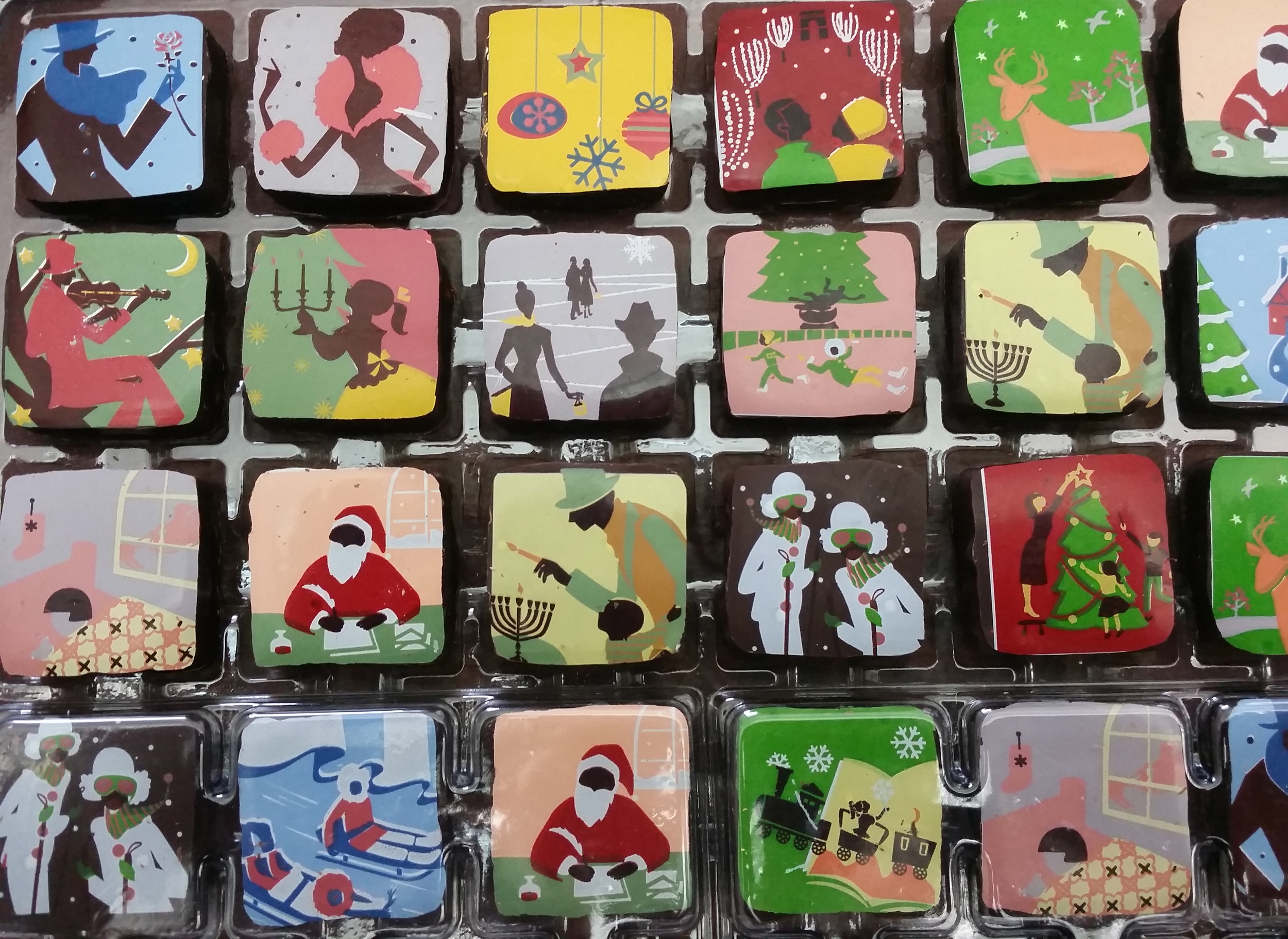
Chocolate by Mariebelle. Happy Holidays, everyone!
United States to Resume Diplomatic Relations with Cuba After More than Fifty Years
The United States will restore diplomatic relations with Cuba, President Obama announced last week, ending he said "an outdated approach that for decades has failed to advance our interests, and instead we will begin to normalize relations between our two countries." The announcement was the result of secret eighteen-month negotiations between the two governments aided by Pope Francis that involved a prisoner swap as well as the release of imprisoned Cuban political dissidents and, separately on humanitarian grounds, American contractor Alan Gross.
The next steps will involve re-establishing the US Embassy in Havana in the coming months and high-level diplomatic talks between the two governments under the leadership of Secretary of State John Kerry, who said that the move to restore relations (severed in January 1961) is the "best way to help bring freedom and opportunity to the Cuban people, and to promote America's national security interests in the Americas, including greater regional stability and economic opportunities for American businesses."
While the US trade embargo will need congressional action to be fully lifted, President Obama's actions will facilitate the expansion of travel to Cuba by US nationals under the general travel licenses (which, incidentally, is how Jay-Z and Beyoncé traveled to Cuba), ease travel for Americans for business purposes, facilitate authorized financial transactions between the US and Cuba as well as the use of American debit and credit cards in Cuba, and expand commercial sales and exports to and from the US.
Cuban President Raúl Castro praised the move but "told his nation that the change did not mean the end of communist rule in Cuba."
On Coming to America
"In a land of immigrants, one was not an alien but simply the latest arrival. Rather than be asked to abandon one’s own heritage and to adapt to the mores of the new country, one was expected to possess a treasure of foreign skills and customs that would enrich the resources of American living. The foreign accent was a promise, and indeed, all over the country, European imports added spice to the sciences, the arts, and other areas. What one had to give was not considered inferior to what one received."
Corkbuzzed
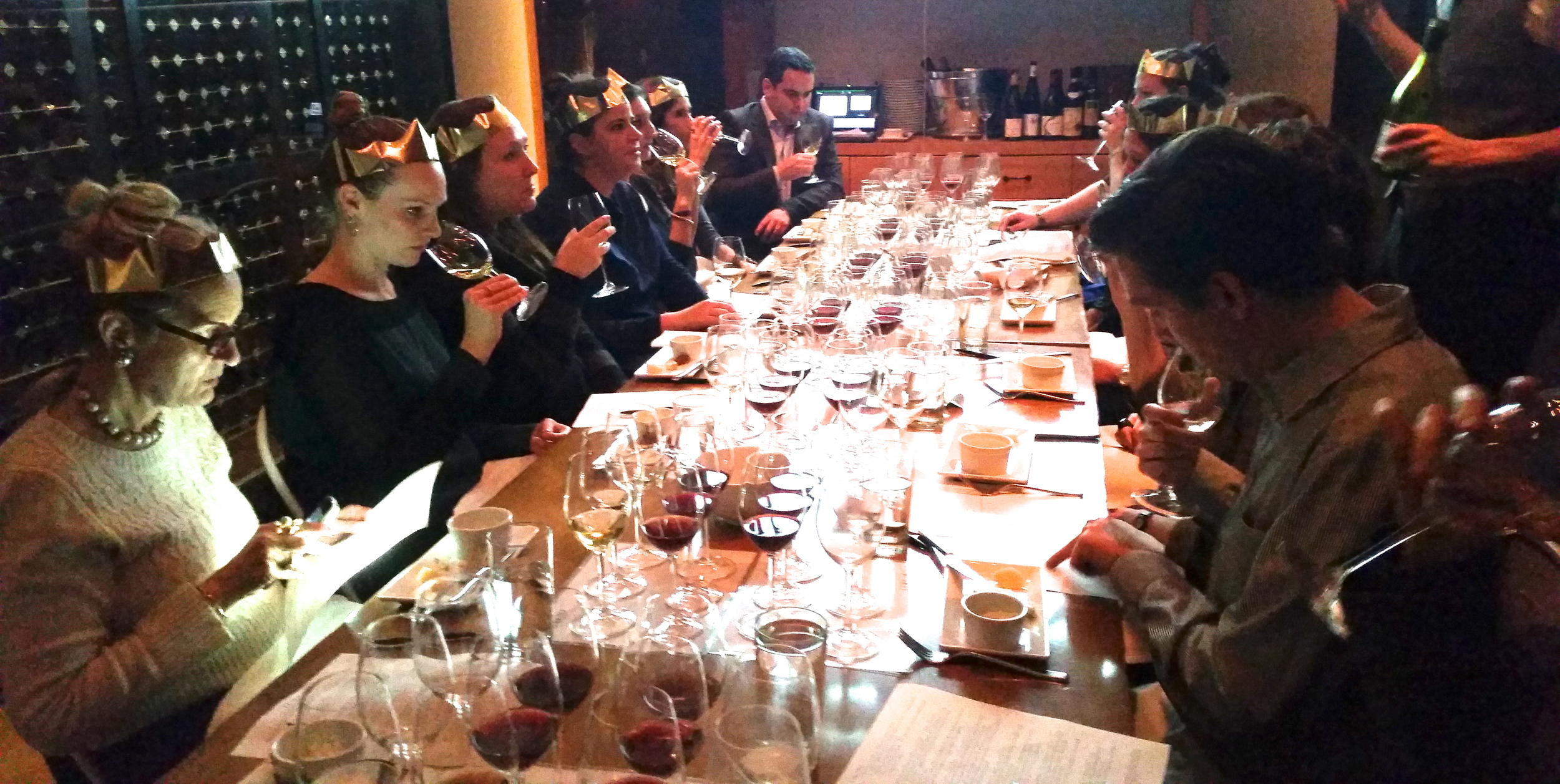
From our annual holiday party. This year a wine class with cheese pairings at Corkbuzz. Here (after we pulled open the holiday "crackers" and put on our crowns) we're drinking an "off-dry" Riesling, which many thought went well with the Cambozola blue cheese.
I love you. You’re perfect. Now, we need a visa.
When I became an immigration attorney, something happened that I wasn’t quite expecting. I found myself curious about the immigration aspects of strangers’ lives. From the famous actress on the Oscars’ red carpet who is speaking with that lovely accent to the athlete from Eastern Europe joining the NBA to the random bike messenger with a brogue, I wanted to know the path that led them to the US. It was more than that, too. When Justin Bieber was arrested (multiple times) my first thought was, “How will this affect his immigration status?” When George Clooney became engaged to a British woman, my mind immediately went to what kind of a visa would she get (and then shortly thereafter to, “Guess my chances are gone”).
Needless to say, I love all things pop culture, and that includes reality television. So, when Joseph sent me a link to TLC’s 90 Day Fiance, I was immediately intrigued.
Read more"Shakedown: How Deportation Robs Immigrants of Their Money and Belongings"
Out of the 400,000 people deported from the US in fiscal year 2013, nearly one third were deported without their money or personal belongings, a new report by No More Deaths says. Using data from No More Deaths' Property Recovery Assistance Project, the report argues that dispossession has become a prevalent and dangerous deportation practice. The report explains the three main ways whereby immigrants being deported lose their money and/or their belongings: complete failure of US officials to return money and belongings before they are deported; cash or funds returned in forms that cannot generally be accessed internationally, such as personal checks, money orders, or prepaid debit cards; and, least common, money directly stolen by US agents.
While the report acknowledges that some Customs and Border Protection (CBP) "agents have indicated that they go out of their way to ensure the return of confiscated belongings," these officers "view this activity as a favor outside of the scope of their duties." This view as well as comments by "higher-level officials suggest a willingness, at all levels of CBP, to use the power to seize belongings at will rather than in accordance with the law."
While the money lost is generally valued at under $100 USD per person, nevertheless this amount represents significant funds for many deported immigrants. As a result of their loss of funds or property, these immigrants reported that they could not afford to travel home, afford shelter or food, were unable to obtain employment due to loss of identification documents, or were exposed to dangers such as threats, robbery, or attacks. This is not to mention the psychological trauma of the loss of personal keepsake and family heirloom items.
The report recommends that detained immigrants be granted access to vital belongings including medications while in custody, that belongings should never be destroyed while detained immigrants are serving a sentence, and that funds are provided to immigrants in cash before they are deported.
In response to the allegations, Department of Homeland Security spokeswoman Marsha Catron said in an email that the "agency has standards to ensure detainees' property is safeguarded and returned when they are released or deported" and that any "'allegation of missing property will be thoroughly investigated[.]'"