
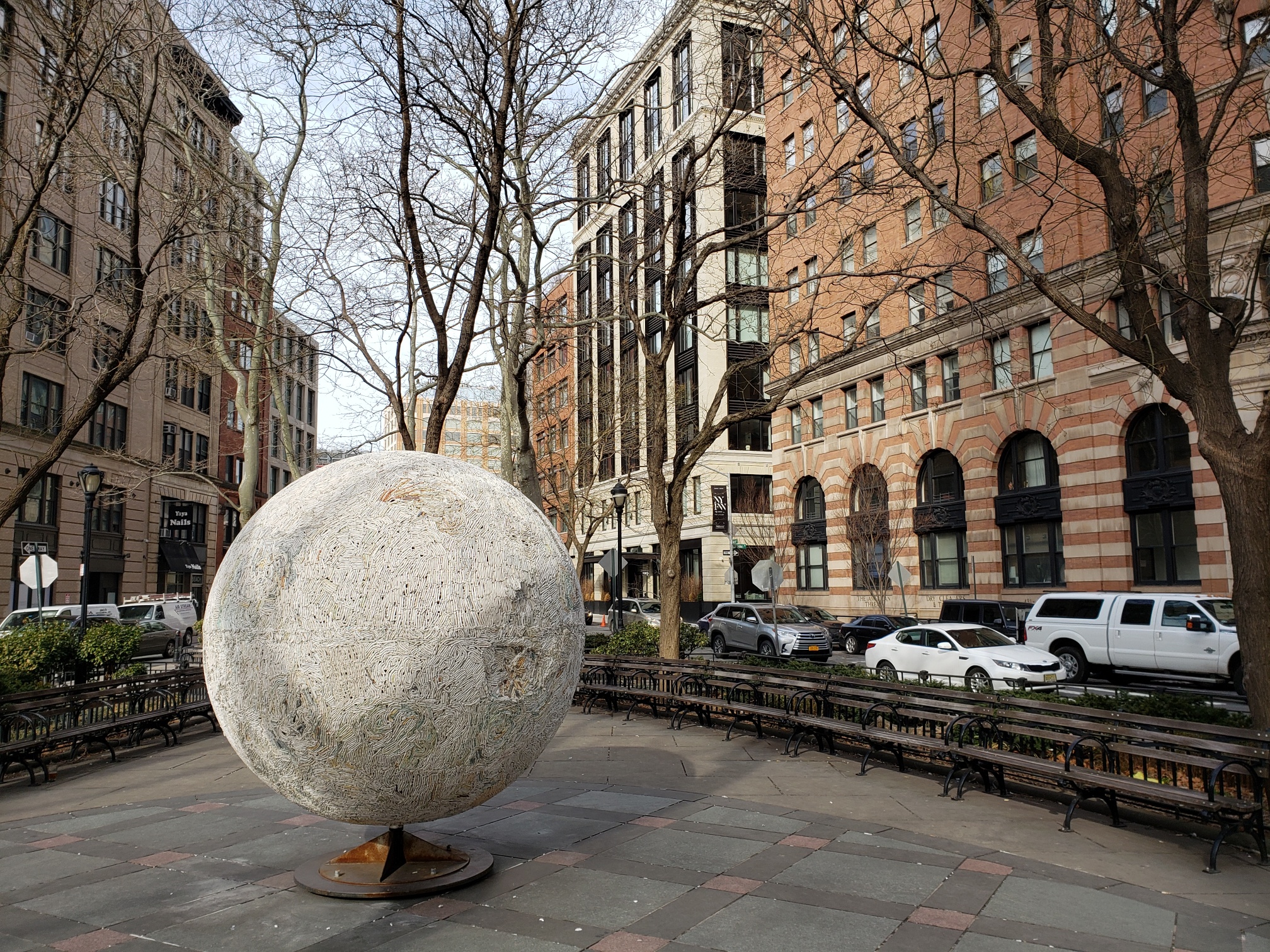
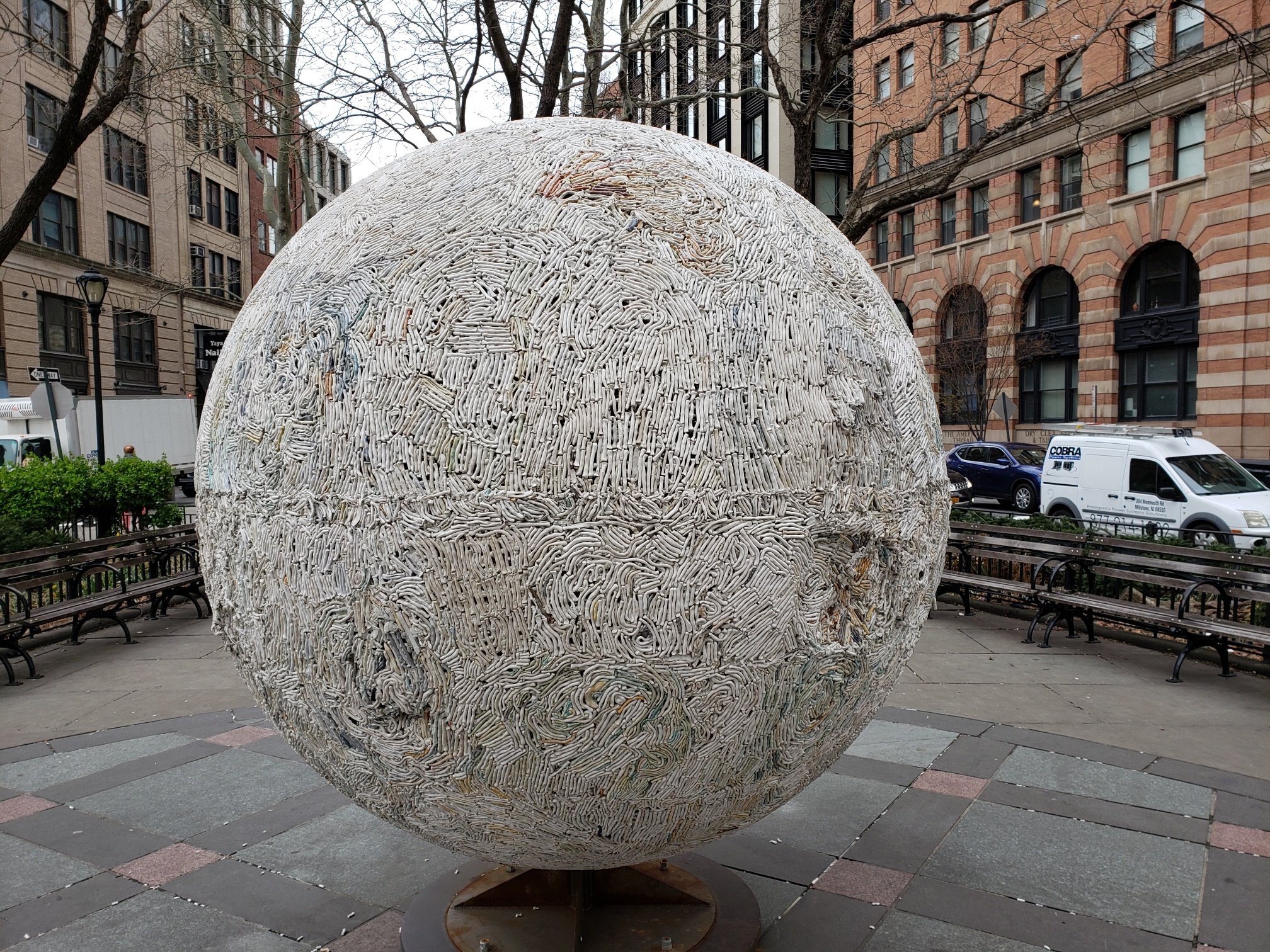
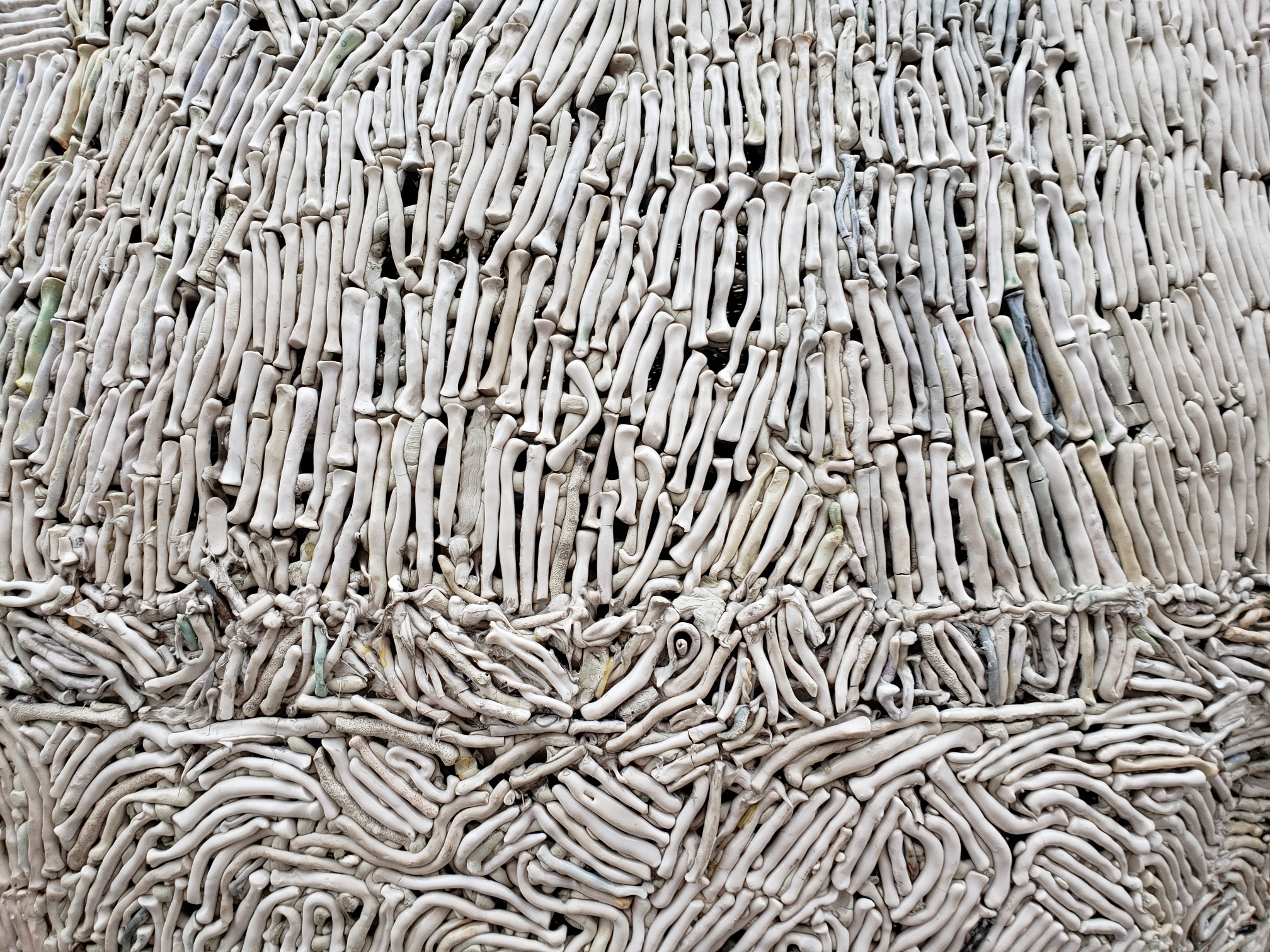
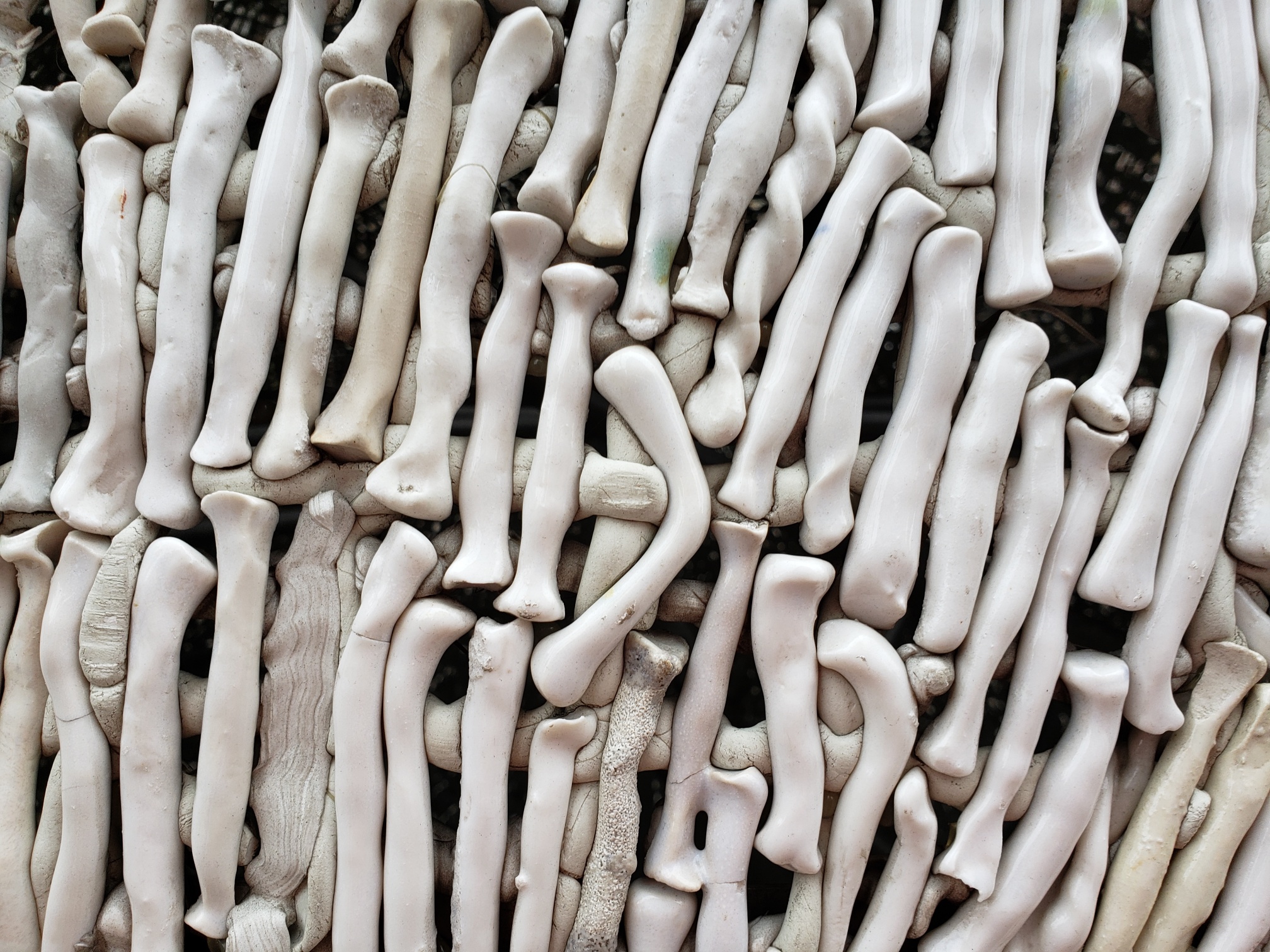
Come Closer and the View Gets Wider by Rebecca Manson at Tribeca Park may look a little gray and severe. But the structure is intricately designed and made up of thousands of handmade, glazed porcelain parts joined together to make an eight-foot orb. To construct the piece, Manson created tiny porcelain sculptures, each a small bone-like shape, and fused them to the structure made of aluminum and epoxy. The piece “celebrates the idea that small things together amount to something impactful; a monument to collective consciousness.” Manson, who mostly works with ceramics, metal, plaster, and epoxy, says the piece fits perfectly at Tribeca Park. She tells the Tribeca Trib: “I loved the geometry of the space and the idea of this quiet oasis in the middle of this busy Downtown area.”
Come Closer and the View Gets Wider
The Mercury News: “H-1B: U.S. employers say Canada’s immigration policies better, as tech booms north of border”
Canada’s more favorable immigration policies are attracting tech talent away from the US, according to a report by Envoy, which helps companies navigate the immigration and visa application process. In 2017 Toronto, North America’s fastest growing tech hub, added more tech jobs than the Bay Area, Seattle, and Washington, D.C. combined, and Ottawa, the nation’s capital, has more than 1,700 tech companies.
Read moreUSCIS Has Reached the H-1B Cap for Fiscal Year (FY) 2020
US Citizenship & Immigration Services (USCIS) announced that they have received a sufficient number of H-1B petitions projected as needed to reach the congressionally-mandated 65,000 FY 2020 regular cap. Next, USCIS will determine if the agency has received enough petitions to meet the 20,000 US advanced degree exemption master’s cap. The agency will reject and return filing fees for all unselected cap-subject petitions which are not prohibited multiple filings. USCIS will continue to accept and process H-1B petitions exempt from the cap including petitions filed for current H-1B workers who have been counted previously against the cap and who still retain their cap number, as well as H-1B petitions for extensions, change in terms of employment, change-of-employer, and concurrent employment. To receive future updates about the H-1B program, USCIS encourages applicants to subscribe to the H-1B Cap Season email updates on the H-1B Fiscal Year (FY) 2020 Cap Season page.
UPDATE APRIL 12, 2019: On April 10, after USCIS selected enough H-1B petitions to meet the congressionally-mandated regular cap, USCIS determined that the agency had received enough petitions projected as sufficient to meet the 20,000 US advanced degree exemption master’s cap. In total, USCIS received 201,011 H-1B petitions during the filing period beginning April 1, including master’s cap cases. The agency additionally notes that in accordance with the new H-1B regulation, USCIS first conducted the selection process for H-1B cap-subject petitions submitted for all beneficiaries, including master’s cap cases, and afterwards from the remaining eligible petitions selected a number projected to reach the advanced degree exemption.
Why They Do What They Do

Prismatica
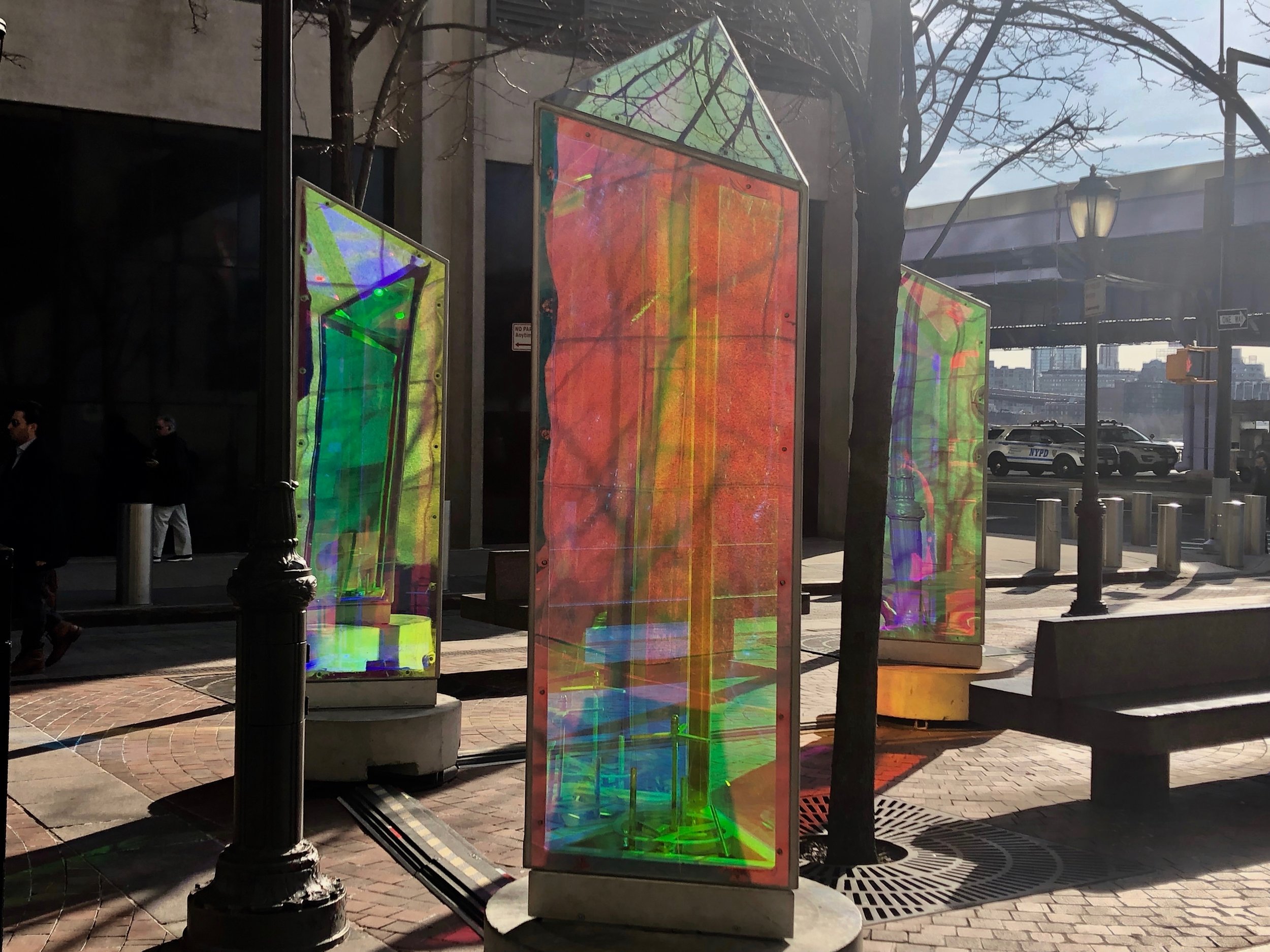
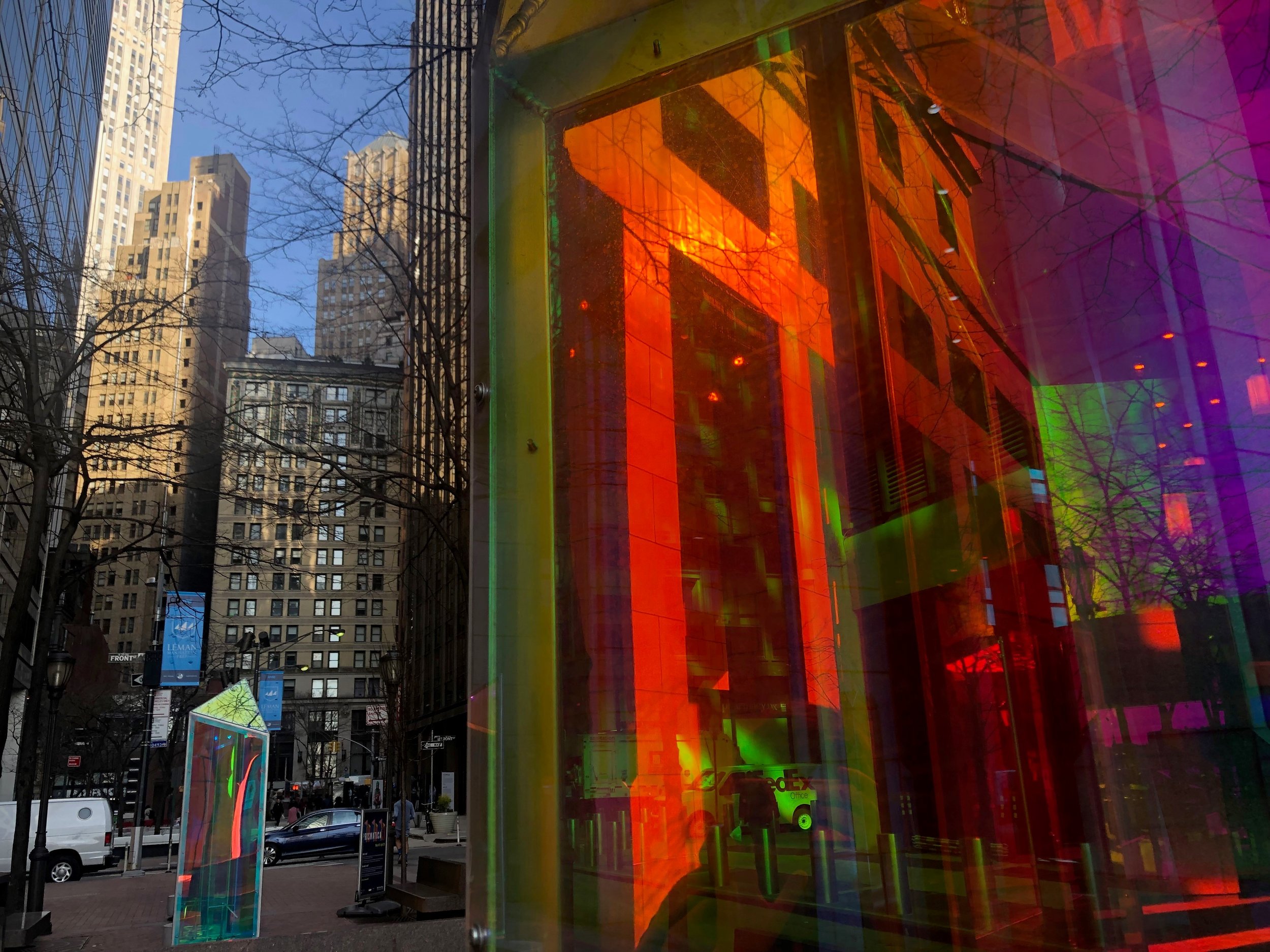
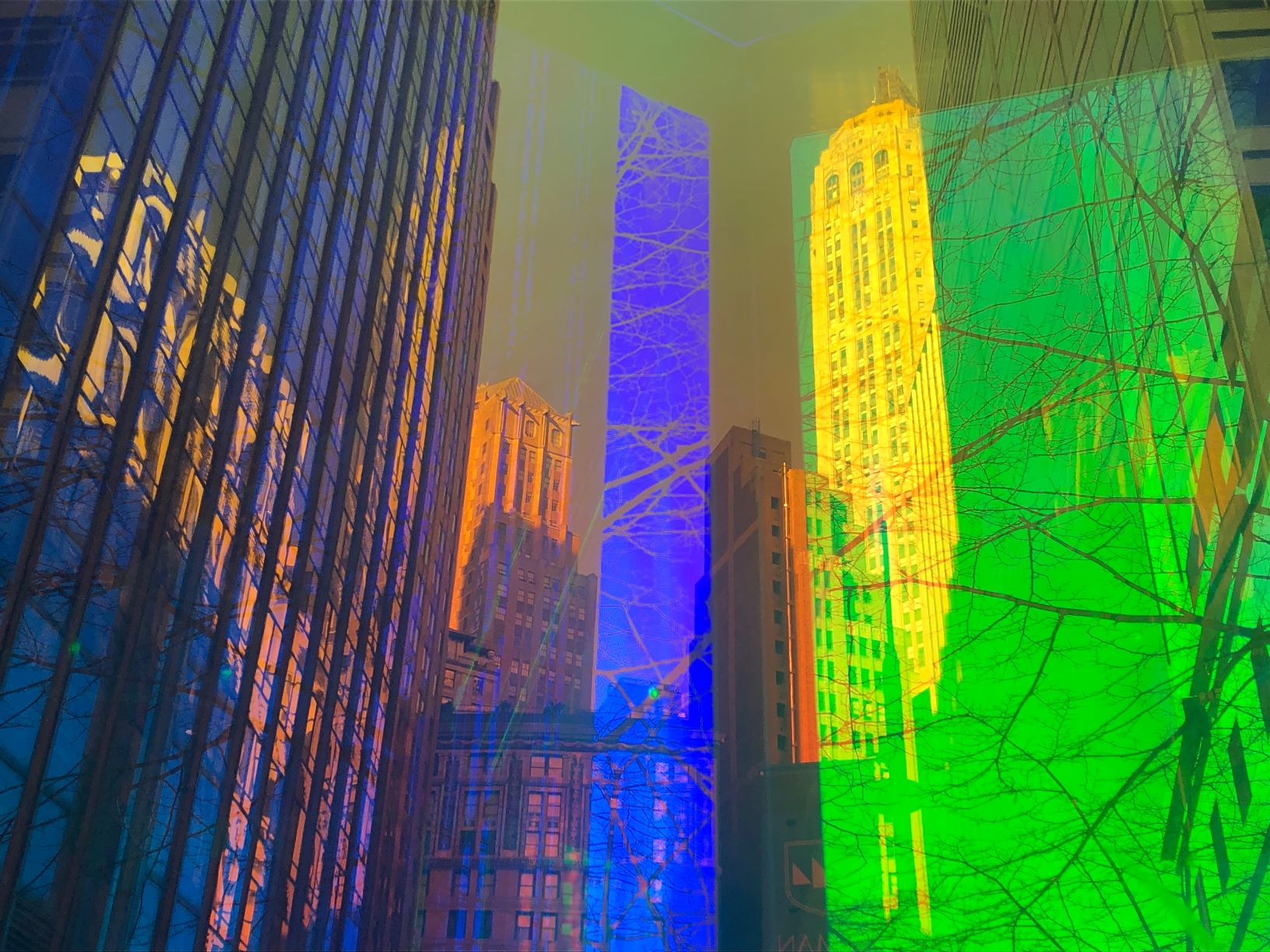

Prismatica is an interactive “art trail” of twenty-five kaleidoscopic prisms located in three public plazas in downtown Manhattan: 75 Wall Street, 77 Water Street, and 32 Old Slip. The seven-foot-tall prisms are covered in a dichroic film and, depending on the angle and light hitting the prism, can reflect every color in the visible spectrum. During daytime the prisms, which are able to spin, glimmer under natural light and send explosions of color over the surroundings. At night they provide atmospheric and colorful lighting. The project was originally created by Canadian architecture firm RAW Design for the 2014 Luminothérapie Competition in Montreal, and has since traveled across North America to such places as Ottawa’s Parliament Hill, Washington’s Potomac River, and Niagara Falls. Roland Rom Colthoff, director of RAW Design, says that they “wanted people to play around” and “have fun” with the prisms. Prismatica’s stay in New York will end after five weeks on April 21st.
The Washington Post: “Parents separated from their kids returned to the U.S. to be reunited. They’ve been detained for almost a month.”
Twenty-nine parents who were separated from their children and removed to their home countries in Central America last year traveled to the US/Mexico border last month with the hope of reuniting with their children in the US. The twenty-nine parents, some who have been separated from their children for nearly a year, presented themselves at the US/Mexico border on March 2. The parents asked to be allowed back into the US to resume their asylum applications and to be reunited with their children, who are in American foster homes, shelters, or with relatives.
Read moreStill Here

H-1B Blood, Sweat, and Tears
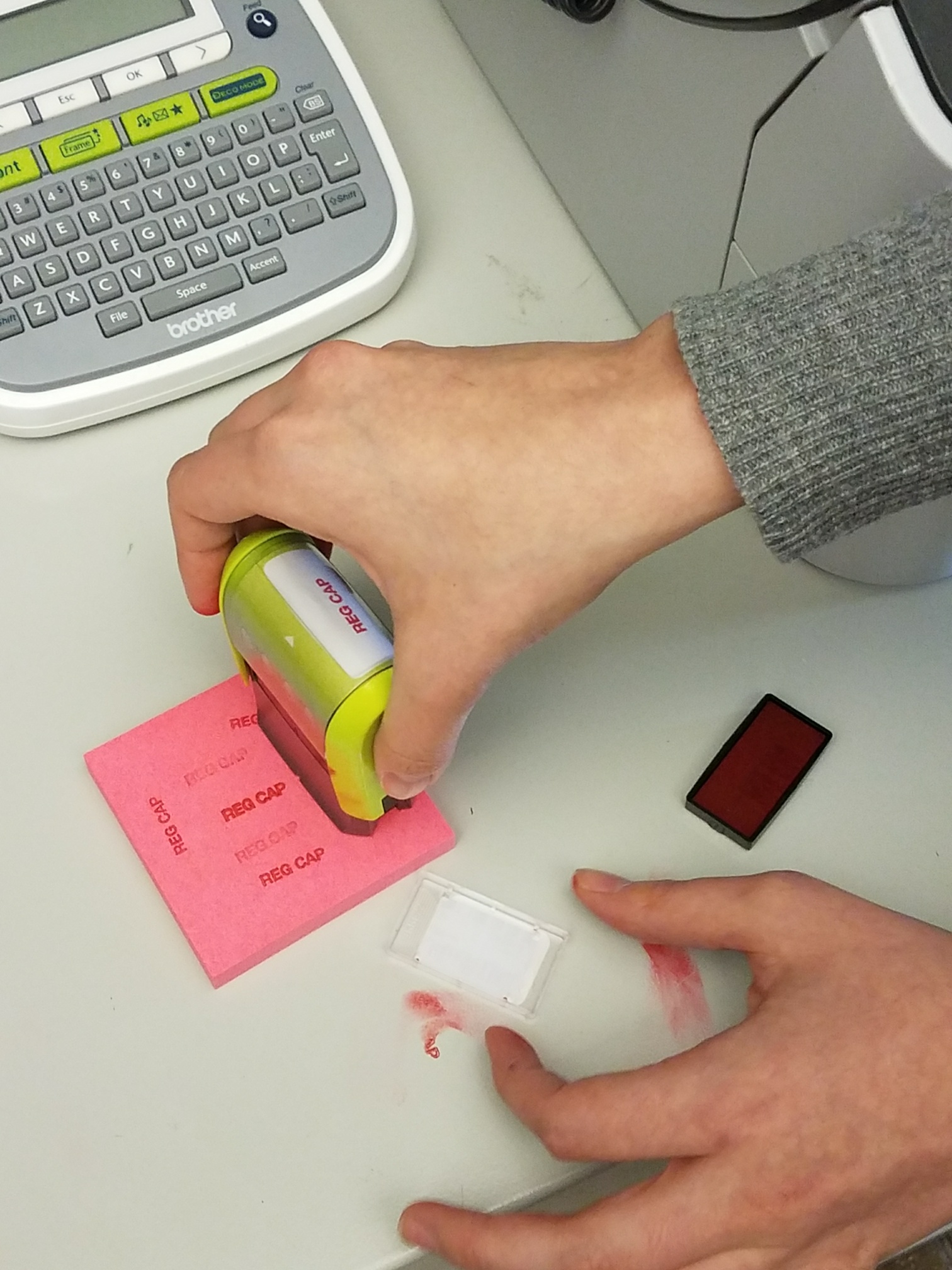
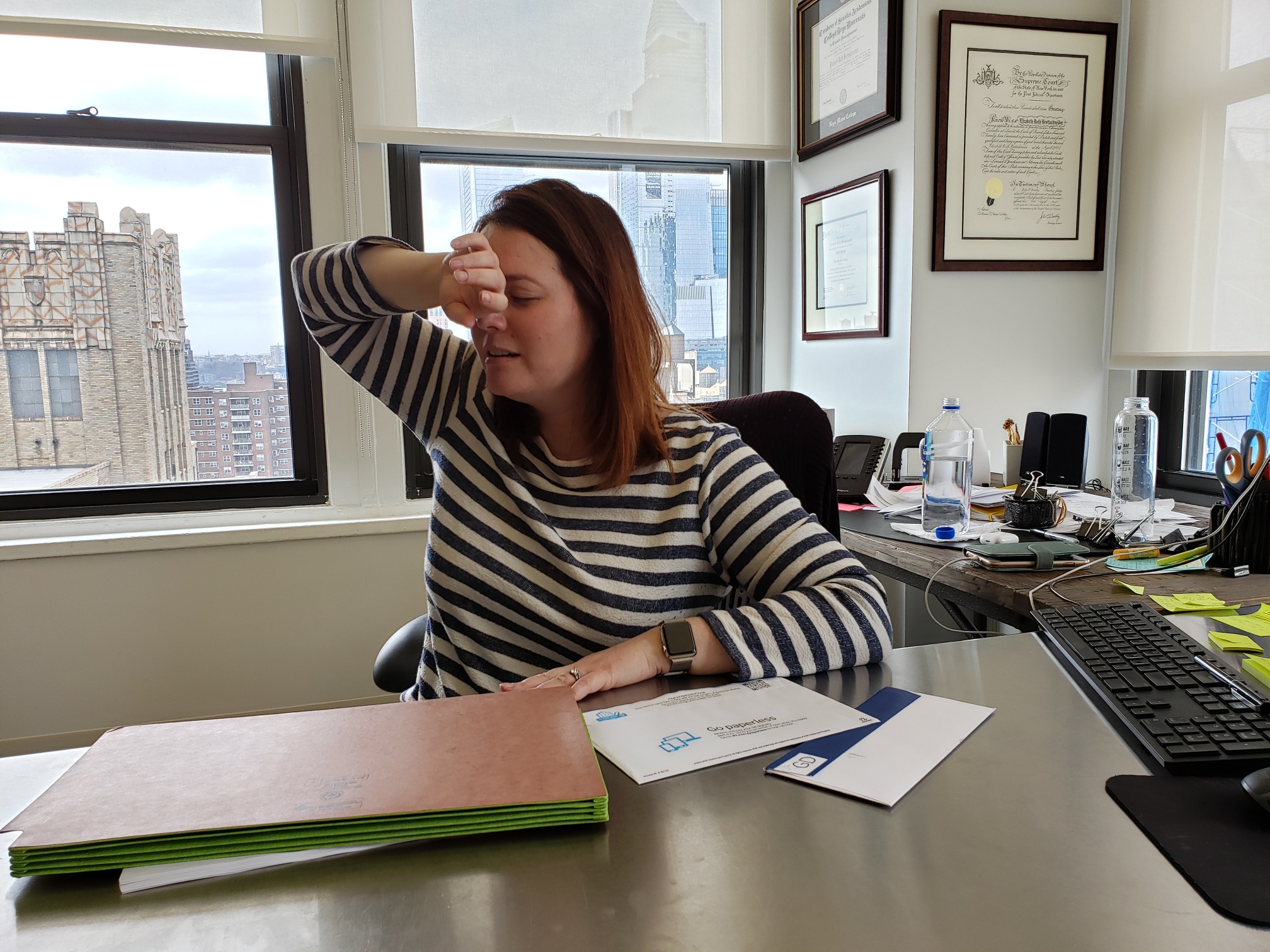
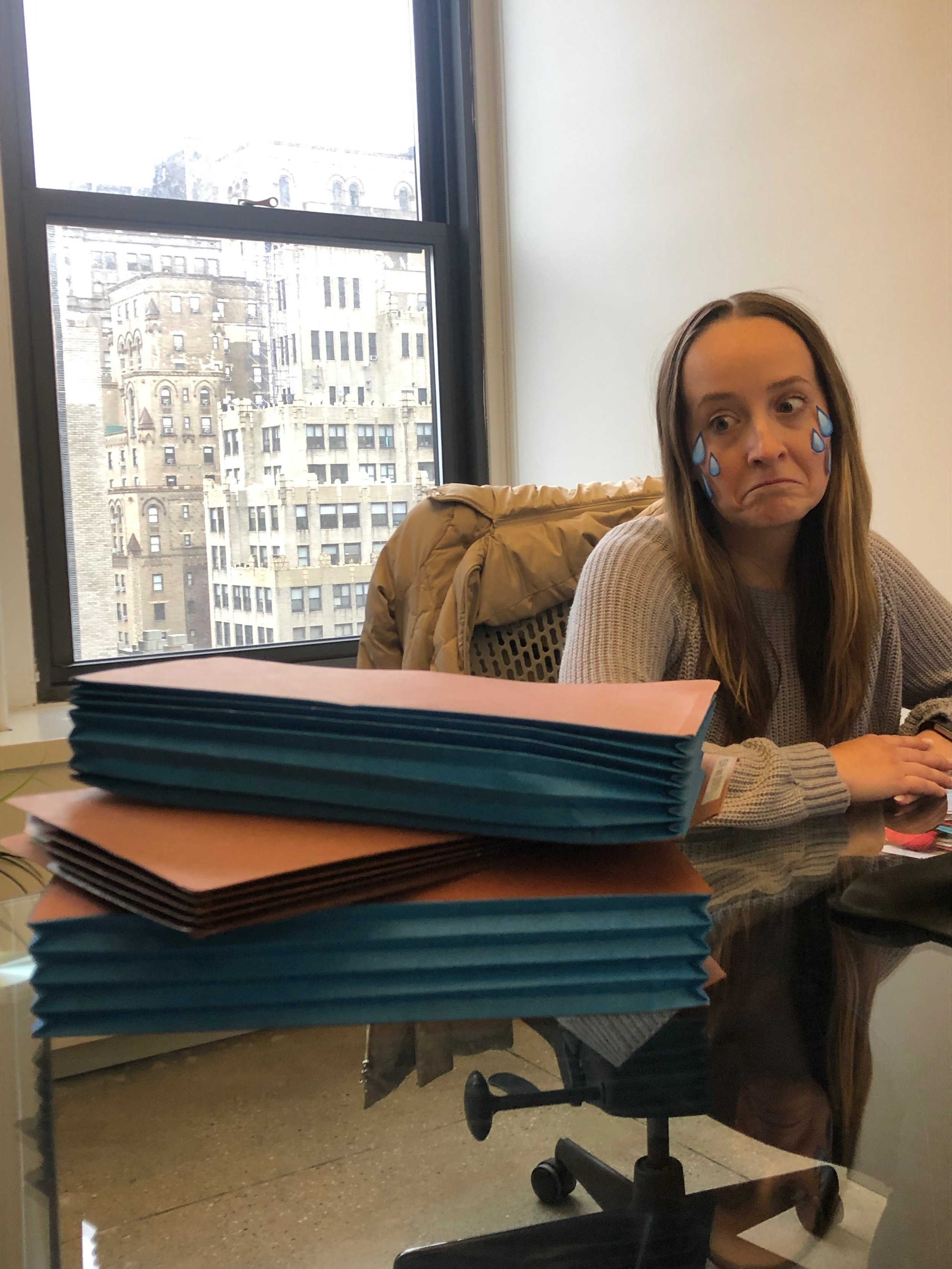
H-1B cap season is tough (as our previous Friday Photos over the years have shown). This week the firm pushed to put the final touches on all our cap petitions that will be filed starting April 1.
In preparation for sending out our H-1Bs, Gaby got into a bloody fight with our REG CAP stamp, Liz broke a sweat from running around to check in with our paralegals, and Carolyn bid some petitions a tearful goodbye. Nothing says a labor of love like some blood, sweat, and tears!
The Washington Post: “How a flight attendant from Texas ended up in an ICE detention center for six weeks.”
DACA beneficiary Selene Saavedra Roman from Peru, who has lived in the US for twenty-five years and is a flight attendant for Mesa Airlines, was detained shortly after she landed in Houston on a return flight from Mexico in February. Saavedra Roman remained in custody for six weeks and was released last Friday, but advocates are pointing to her case as an example of how the Trump administration’s attempts to end DACA continue to confuse program beneficiaries, their families, government agencies, and private employers.
Read more