Musicians and musical artists come to the United States from all over the world. How they may enter and using which visa depends on a number of factors, and some may be surprised as to the many restrictions in place for musicians who would like to play and perform in the US. The issues relating to visas for musicians appeared in headlines throughout major media in 2017, when a number of musicians attempting to travel to the US to perform at the South by Southwest festival in Austin, Texas were not allowed entry. Many of these artists attempted to enter the US on B visas, or through the Visa Waiver Program. While it might be possible in certain situations for musicians to enter in the US under these options, a variety of other visa categories are available that may indeed be a better choice for those who wish to come to the US to play music, depending on a number of factors. Some of the possible visa categories for musicians are: O visas, P visas, the Q-1 visa, and B visa, all of which we will discuss in this post.
Read moreThe New York Times: “Supreme Court Upholds Trump’s Travel Ban, Delivering Endorsement of Presidential Power”
In a five to four vote, the Supreme Court has upheld President Trump’s third travel ban against several predominantly Muslim countries, reasoning that the President has broad statutory authority to make such judgments related to national security and immigration, which is not undermined by his previous insensitive and discriminatory statements against Muslims. This decision comes after a federal judge in Hawaii indefinitely blocked Trump’s travel ban earlier this year, challenging its constitutionality and referencing anti-Muslim statements made by the President. This block on the travel ban was upheld by two federal appeals courts, citing religious discrimination as their reason to uphold the decision, before being brought before the Supreme Court.
Read moreFundamentally Important

USCIS to Recall 800 Incorrectly Printed Employment Authorization Documents
As of June 21, 2018, US Citizenship & Immigration Services (USCIS) will also begin the process of recalling approximately 800 Employment Authorization Documents (EADs) that were issued in connection with Form I-589, Application for Asylum and Withholding of Removal. These EAD cards, that were granted by USCIS officers and mailed to recipients in April and May of 2018, contain a production error that rearranged individuals’ first and last names. Although this recall will not affect these individuals’ employment authorization, as their Form I-94s show that they were granted asylum and thus have employment authorization, USCIS will be sending notices to the recipients of these incorrect EADs, or their attorneys, so that the incorrect EADs may be sent back to USCIS in the pre-paid envelope provided within twenty days of receiving the notice or returned to a USCIS field office. According to the agency, replacement EADs will be sent to recipients within fifteen days of receiving the incorrect cards. If an individual needs proof of employment authorization, they may contact the USCIS Contact Center.
Delirious Matter
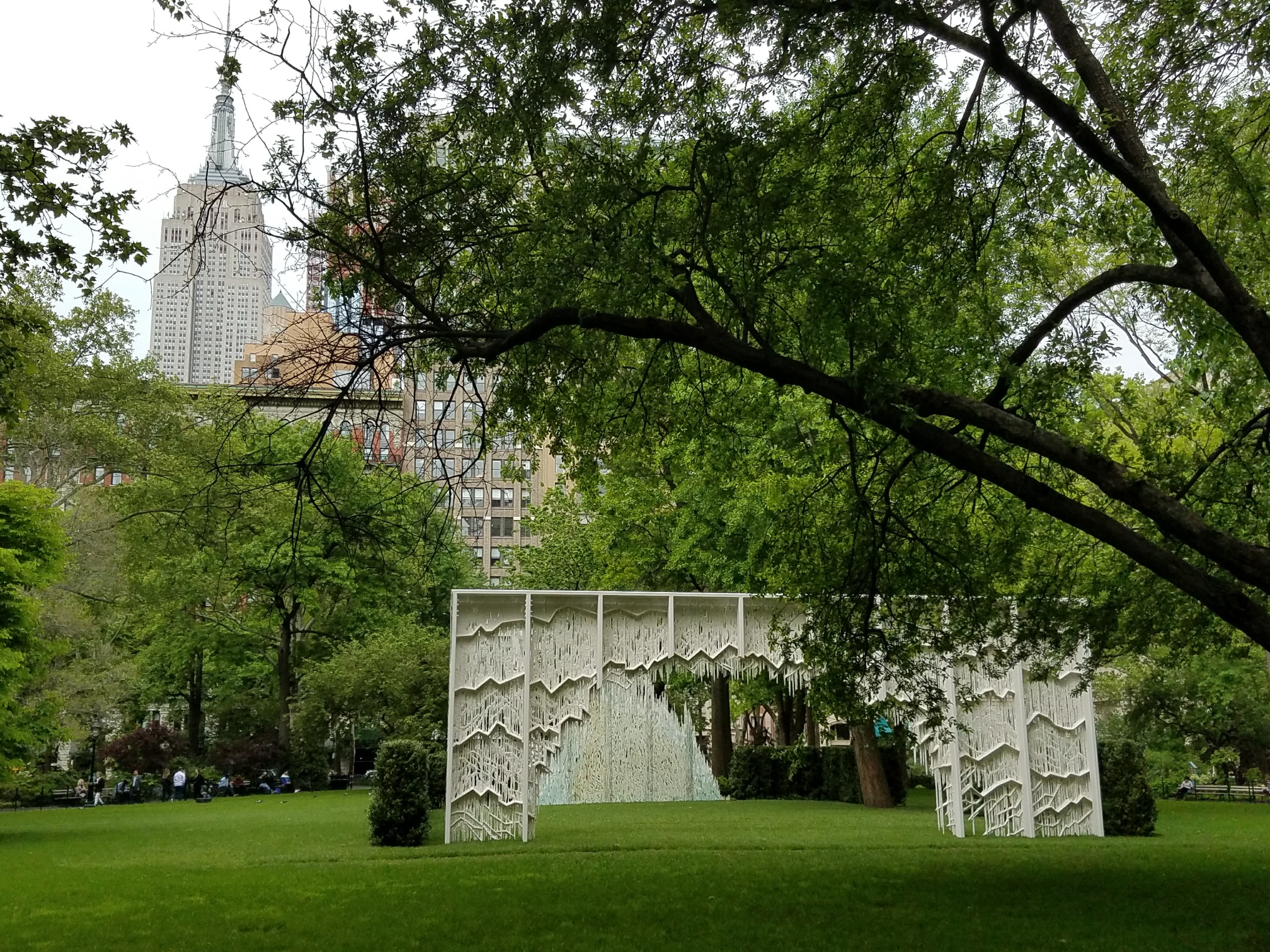
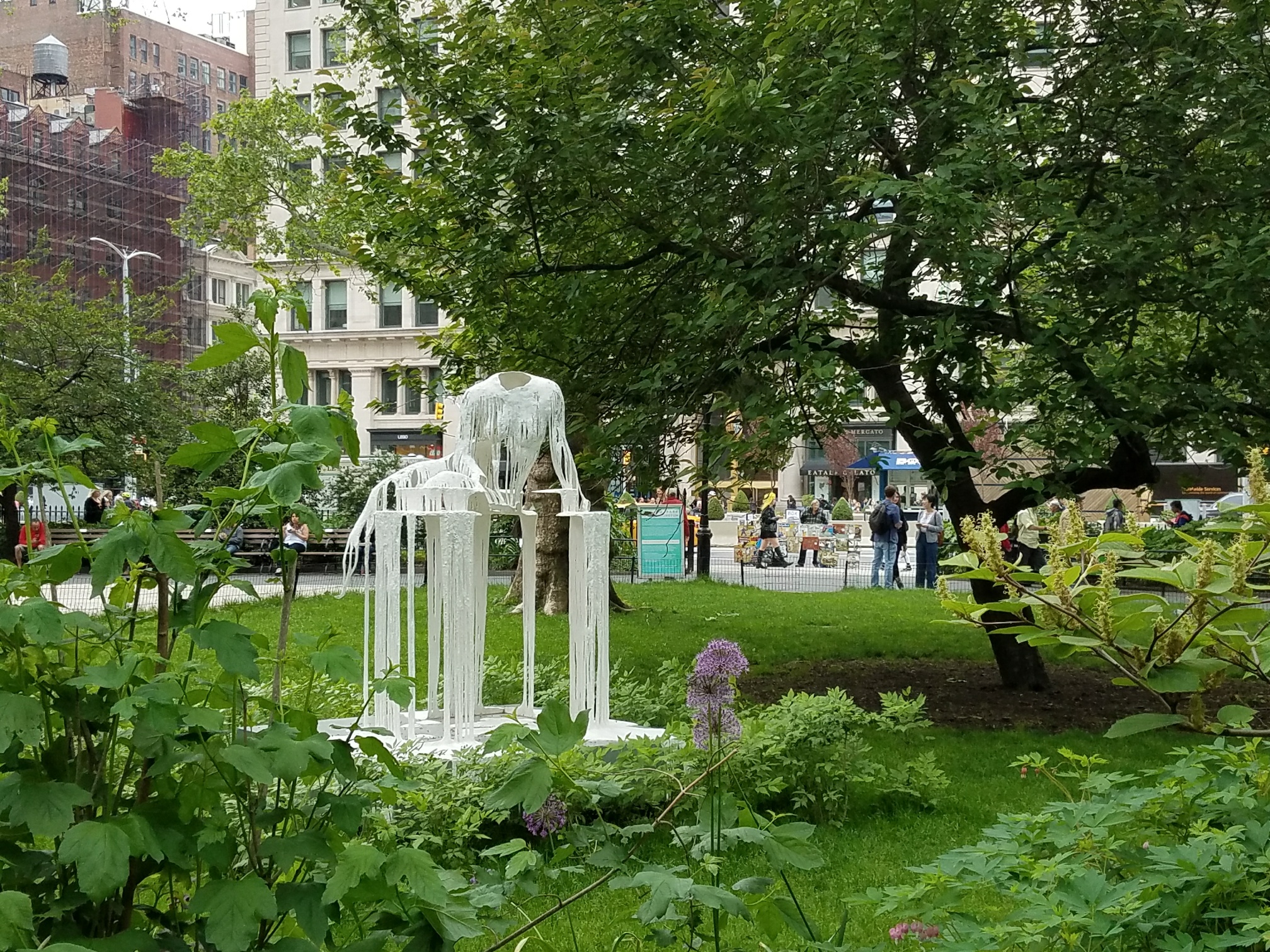
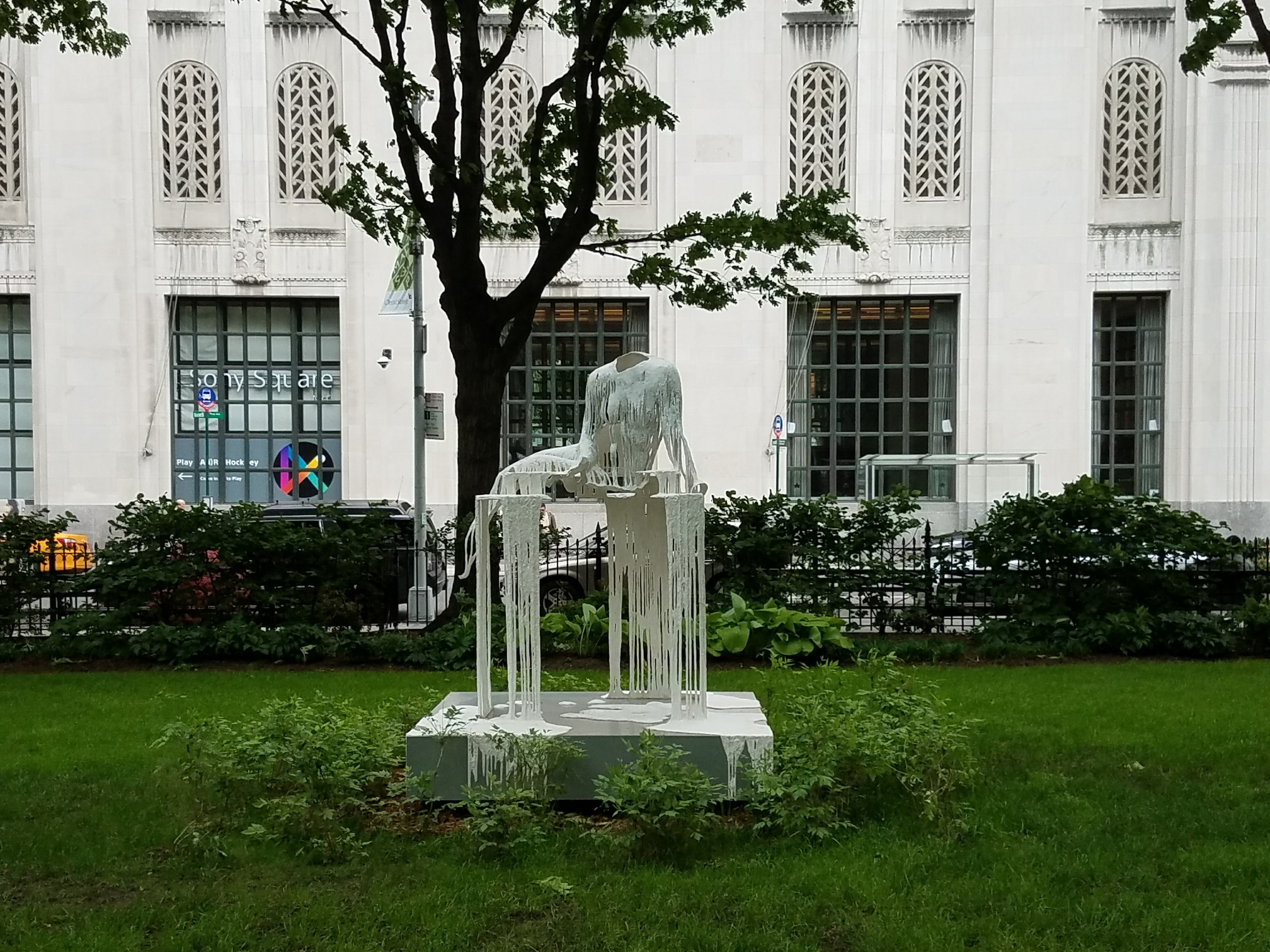
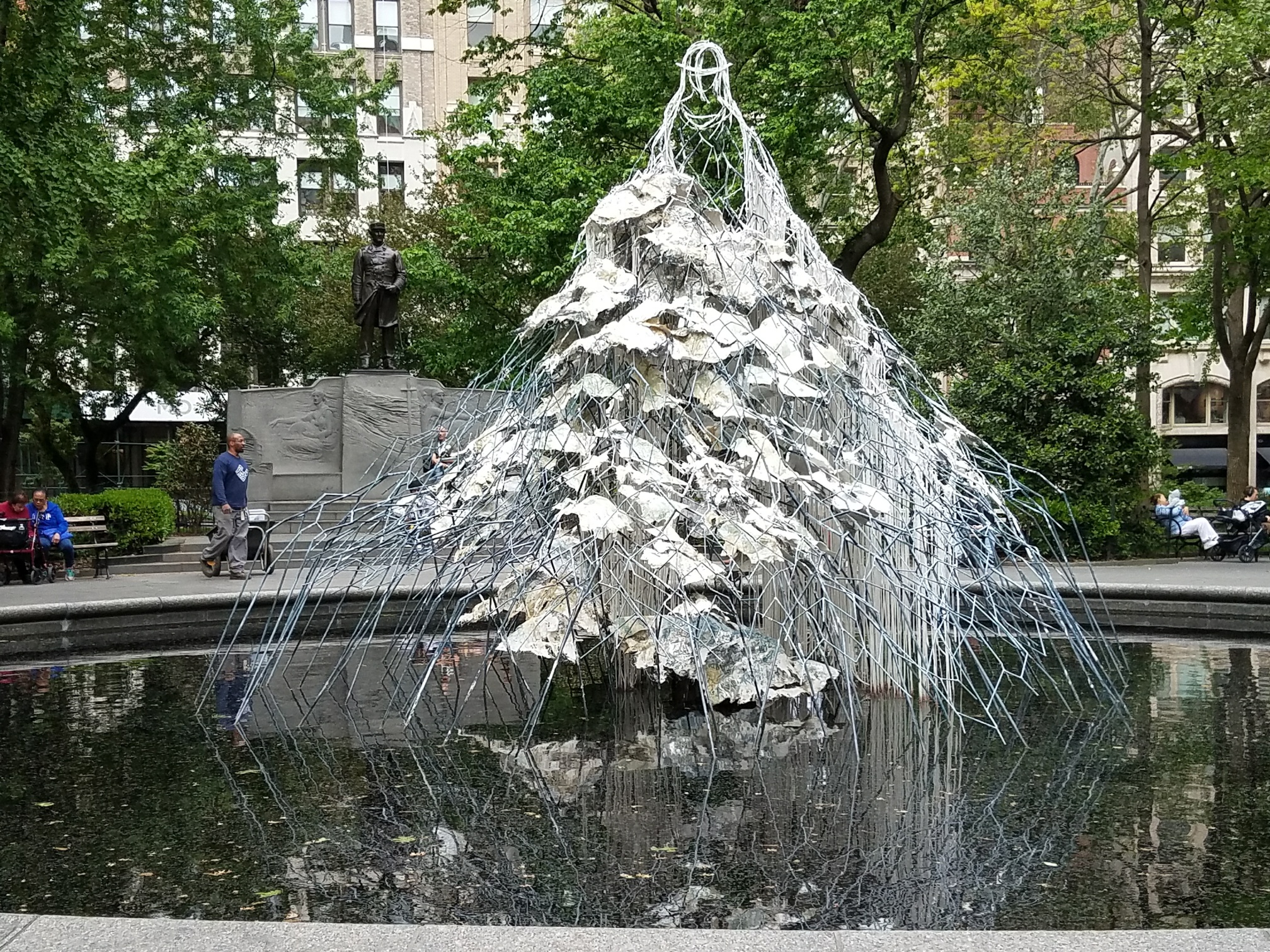
Delirious Matter by artist Diana Al-Hadid consists of six new sculptures in Madison Square Park. Al-Hadid, who was born in Syria and lives and works in Brooklyn, elegantly combines sculptures and plantlife to create a distinctive look that according to her is “a blend between fresco and tapestry.” Inspired by mythology, history, and, in one sculpture, an early Netherlandish painting, the pieces include two wall works combined with rows of hedges, three reclining female figures atop plinths, and a sculptural bust of a female figure on a fragmented mountain. Brooke Kamin Rapaport, deputy director and Martin Friedman Senior Curator of Mad. Sq Art, says: “Al-Hadid’s work summons sculpture and painting, architecture and literature in a beauteous, atmospheric narrative.” The installation will be on display through September 3, 2018.
Human Flow
Over 65 million people around the world have been displaced from their homes due to famine, climate change, violence, and war—the greatest displacement of people since World War II. Human Flow, a documentary by famed international artist and activist Ai Weiwei, demonstrates the scale of the refugee crisis and provides a glimpse into the devastating conditions and heartbreak that many of these refugees face.
Read moreThe Washington Post: “’They just took them?’ Frantic parents separated from their kids fill courts on the border”
Under the Trump administration’s “zero-tolerance” policy, federal courts across Texas have become flooded with undocumented immigrant mothers and fathers that have been separated from their children and criminally charged for illegally crossing the US border. This new policy shift has become an increasingly popular tactic amongst border patrol officials as a way to stop undocumented immigrants and their families from entering the US. “If you’re smuggling a child, then we’re going to prosecute you, and that child will be separated from you,” Attorney General Jeff Sessions says. “If you don’t want your child to be separated, then don’t bring him across the border illegally.”
Read moreI Could Be That Child

Hello from Transamerica Pyramid Center and the Sentinel Building

On a break from the many excellent panels and sessions at the annual conference for the American Immigration Lawyers Association (AILA), I managed to get a wonderful look at two iconic San Francisco buildings. On the left is the famous Transamerica Pyramid Center, designed specifically by William Pereira & Associates to "allow natural light and fresh air to filter down to the streets below." On the right is the Sentinel Building, which I was not familiar with prior to this trip. The building has had a number of owners and tenants since its completion in 1907, but is currently owned by Francis Ford Coppola, who bought the building in 1972 to be the headquarters for his production company, American Zoetrope, from where the cafe on the ground floor gets its name. Films including the Godfather II and III, Apocalypse Now, The Conversation, One From the Heart, The Outsiders, and Dracula were written, edited, or sound mixed inside this pretty green building. Perhaps they'd like a law firm tenant?
USCIS: Update to Form I-797 Receipt Notices for Form I-751 and Form I-829
US Citizenship & Immigration Services (USCIS) has announced that as of June 11, 2018, petitioners who file Form I-751, Petition to Remove Conditions on Residence, or Form I-829, Petition by Entrepreneur to Remove Conditions on Permanent Resident Status, will receive a Form I-797 receipt notice which can be presented with their Form I-551, Permanent Resident Card, as evidence of continued status for eighteen months past the expiration date on their Permanent Resident Card.
Read more