


This is not actually a Halloween decoration, but a scene from our office today as we move locations. Moving sure is stressful. Joseph is to the right. We had to tie him down because he was babbling. Protima is holding a baby and has an axe for some reason. And Dana is hiding in the back letting out some good screams. Happy Halloween/Moving Day, everyone! See you at our new location soon: 330 Seventh Avenue, Suite 2003, New York, NY 10001.
Happy Halloween/DLG Moving Day!
USCIS Does It Again....
It's that time all immigration attorneys have been dreading. No, no, not a Trump presidency, but rather US Citizenship & Immigration Services (USCIS) increasing their fees. In all fairness, it has been over six years since the last fee increase and USCIS is almost entirely funded by fees paid by applicants and petitioners for their immigration applications.
Read moreThe Intercept: “The US Government Wants to Read Travelers’ Tweets Before Letting Them In”
US Customs and Border Protection (CBP) wants to start collecting online information from travelers coming to the US under the Visa Waiver Program. Earlier this summer, CBP proposed including a field on certain customs forms for “provider/platform” and “social media identifier.” If approved by the Office of Management and Budget, these changes could take effect by December. The Visa Waiver Program is used by millions of travelers and enables citizens or nationals of participating countries to travel to the United States for tourism or business for stays of ninety days or less without first obtaining a visa, when they meet all the requirements.
The Intercept reports that in recent weeks privacy groups have criticized the proposal, saying it could stifle online expression and gives DHS and CBP too much authority to determine what kind of online activity constitutes a “risk to the United States” or “nefarious activity.” The United Nations special rapporteur on the right to freedom of opinion and expression says the amount of information being collected was “vague and open-ended,” and that he was “concerned” that “government officials might have largely unfettered authority to collect, analyze, share and retain personal and sensitive information about travelers and their online associations.” A group of eleven civil liberties organizations claim that with the proposed changes it “appears that even if a friend or associate has not directly interacted with the applicant on social media, the agency will ferret out connections.”
CBP and its parent agency, the Department of Homeland Security, claim the social media question will be optional, and that the agencies “would only have access to information publicly available on those platforms, consistent with the privacy settings of the platforms.” A CBP spokesperson also claims in a statement that collecting social media information “may help detect potential threats because experience has shown that criminals and terrorists, whether intentionally or not, have provided previously unavailable information via social media that identified their true intentions.” The CBP spokesperson did not clarify to The Intercept if refusing to answer the social media questions would negatively impact Visa Waiver Program applications, or flag travelers for extra screening.
While not listed as a question as part of the visa application process, for at least a few years consular officers at US Embassies/Consulates and immigration officers at US Citizenship & Immigration Services (USCIS) have been checking up on applicants online, typically to verify credentials and see if there is any evidence the applicant is misrepresenting work history. For example, consular officers may check the IMDB page or foreign equivalent to see if the actor has indeed worked on projects claimed. But it’s not just foreign nationals being affected, privacy groups warn. Access Now and other privacy groups note that by looking at the social presence of foreigners, DHS will “inevitably suck up, retain, and share with other agencies huge amounts of information on Americans who are connected to them, even in a tangential way.”
The comment period for the proposal ended earlier this month, and now the Office of Management and Budget has sixty days to ask the agency to amend the proposal or sign off on the change.
International Talent

Our Brand New Office!
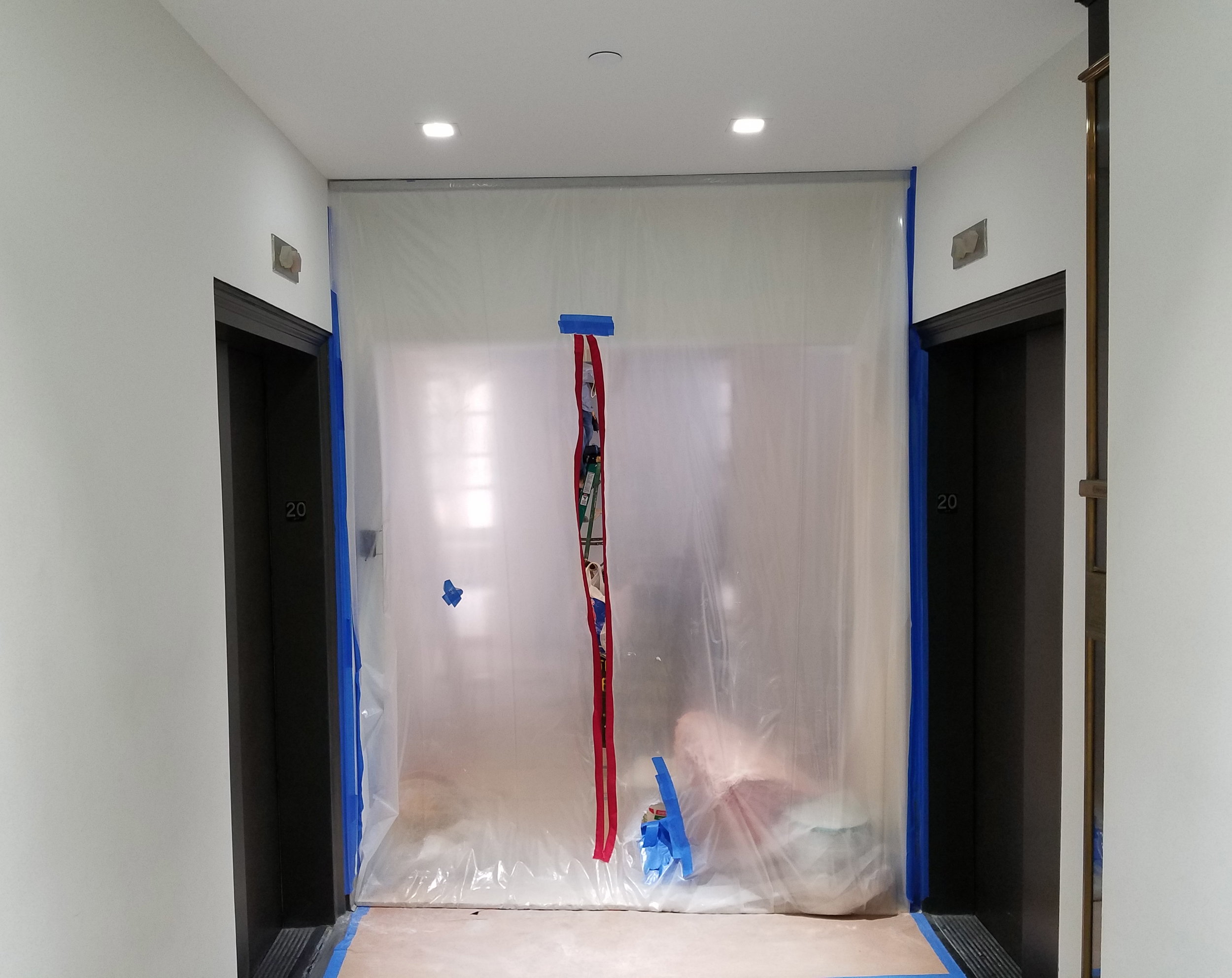
Okay, not quite. It still needs a little work. But it will all be done by next week, right? Maybe? But seriously, we are excited to announce that we are moving effective October 28th to a new space in Chelsea in Manhattan. We will post further updates and pictures next week. Yay, moving!
Key Differences between EB-1-1 Immigrant Petitions and O-1 Nonimmigrant Petitions
Jessica, a third year law student at Fordham University School of Law, is our fall associate. She is currently the Senior Notes Editor for the Fordham Journal of Corporate and Financial Law and a student attorney at the Immigrant Rights Clinic.
We regularly work with “extraordinary” individuals. And we don’t just mean “extraordinary” in the normal sense of the word—rare, phenomenal, and special—but also the type of “extraordinary” that fits US Citizenship & Immigration Service’s (USCIS) legal standard. That’s right, we’re talking about the O-1 nonimmigrant visa classification for individuals with “extraordinary” ability or achievement and the EB-1-1 immigrant visa classification for individuals who demonstrate “extraordinary” ability in the sciences, arts, education, business, or athletics through sustained national or international acclaim.
Read moreThe Washington Post: “Louisiana isn’t letting immigrants get married”
A new state law passed earlier this year in Louisiana has effectively made it illegal for thousands of immigrants to get married. Last year, after losing the fight over the legalization of gay marriage, legislators in Louisiana claimed undocumented workers—and even terrorists—had discovered they could exploit Louisiana’s marriage laws to gain citizenship, leading to a so-called epidemic of “marriage fraud.” In response, legislators passed a law stating that any foreign-born person wanting to get married in Louisiana must produce both a birth certificate and an unexpired visa (although a federal court ruled that marriage licenses cannot be denied based on immigration status).
The law has effectively prevented undocumented immigrants as well as many legal immigrants from marrying in the state. Louisiana is home to thousands of refugees, predominantly Vietnamese and Laotians who received asylum in the 1970s and 1980s after escaping war and communism, and even though these Louisianans often have Green Cards and even US citizenship, many have no access to their original birth documents. Xanamane, a US permanent resident in the process of applying for citizenship who was born in a village near Savannakhet, Laos, in 1975, the year the country fell to communism, never received a birth certificate. Although Xanamane and his partner, US-born citizen Marilyn Cheng, were married in a Buddhist temple in 1997, like many in the local Laotian community, they never obtained an official marriage license. When Xanamane was diagnosed with cancer this summer and was asked to provide evidence of his marriage, they attempted to get married in Louisiana and were twice turned away, even though they presented Xanamane’s Green Card, refugee documents, and driver’s license, “They told me I have to go back to Laos and get my birth certificate,” Xanamane tells the Washington Post. “But there isn’t any birth certificate there, either.” The couple opted for a last-minute courthouse wedding in Montgomery, Alabama, a seven-hour drive away, which takes appointments for courthouse marriage ceremonies and accepts Green Cards as proof of identity.
Since the law went into effect in January this year, six to eight couples each month have been turned down for a marriage license in Orleans Parish, the Times-Picayune reports, demonstrating how the law has affected marriage applicants. “My parents don't have birth certificates. They came over as refugees,” Minh Thanh Nguyen, executive director of the Vietnamese Young Leaders of New Orleans, which works with immigrant communities, tells the Times-Picayune. “They are born in rural areas and, I mean, who is going to produce a birth certificate for you? That is just a reality of immigrant communities. They come from rural areas…It's not as formal as the United States."
Only individuals born in the US or a US territory can apply to a judge for a waiver for the birth certificate requirement, but that is not an option for foreign-born applicants. "I think it is going to get worse and worse," State Senator Conrad Appel, who fought the bill’s restriction on immigrants, tells the Times-Picayune. "If people want to get married, I want them to get married."
The legislation's sponsor, Representative Valarie Hodges, said the law’s purpose is to prevent marriage fraud. Hodges told the House Civil Law committee that she introduced the bill because “one of her friends had accidentally married a man who was also married to someone else.” But other supporters of the legislation were clear what impact it would have on immigrants. Gene Mills, the leader of the Louisiana Family Forum organization, told a committee he backed the legislation because it "prevents persons who are in the United States illegally from marrying in Louisiana."
"If you are trying to use marriage as an immigration (regulation) tool, I think that's a mistake," Appel told his fellow Senators before they voted on the legislation last year. There are now discussions about introducing a bill to allow legal immigrants to get a marriage license without a birth certificate, but the earliest this would happen is in the next legislative session starting in April 2017. Fernando Lopez, a community organizer at the New Orleans Center for Racial Justice, says the organization is filing a lawsuit on behalf of those denied marriage licenses.
This Is Your New Country

I want a president

Just in time for the upcoming presidential election, artist Zoe Leonard's I want a president, installed on the High Line under the Standard Hotel through November 17, 2016, is a "poignant portrait of the cultural and political climate in the early ‘90s in New York City with words that still resonate today." Leonard wrote I want a president in 1992 in the same year that poet Eileen Myles ran for president as an independent candidate alongside George H.W. Bush, Bill Clinton, and Ross Perot. Leonard admits that I want a president is not the text that she would write today, but says: “I am interested in the space this text opens up for us to imagine and voice what we want in our leaders, and even beyond that, what we can envision for the future of our society. I still think that speaking up is itself a vital and powerful political act.”