
Obama’s election signaled a turning point in American politics and was welcomed by progressives everywhere as the culmination of generations of civil rights activism. Immigrant communities, particularly Latin American communities, were a major part of the Obama coalition, and looked forward to significant and long overdue reform of immigration laws that would provide a path to citizenship for the more than 12 million estimated undocumented immigrants in the United States.
Read moreNY TIMES: “Shah Rukh Khan, ‘King of Bollywood,’ Was Detained at a U.S. Airport for the Third Time”
Shah Rukh Khan, the “King of Bollywood” and one of the most popular actors in the world, was detained and questioned at Los Angeles International Airport last week, making it at least the third time he has had difficulty entering the US. While it is not clear exactly why he was held—Customs and Border Protection (CBP) say they cannot comment on specific cases—Khan has expressed that it is most likely because his name is the same or similar to a known or suspected terrorist.
Khan announced his detention at LAX to his 20.8 million Twitter audience: “I fully understand & respect security with the way the world is, but to be detained at US immigration every damn time really really sucks.” He added: “The brighter side is while waiting caught some really nice Pokemons.” Previously, Khan was detained in 2009 in Newark while in the United States to promote his film My Name is Khan, which deals with racial profiling of Muslims after the 9/11 attacks, and in 2012, when he was detained in White Plains, New York, on his way to address students at Yale. “Whenever I start feeling too arrogant about myself, I always take a trip to America,” he later told the students. “They always ask me how tall I am and I always lie and get away with it and say 5 feet 10 inches. Next time I am getting more adventurous. ‘What color are you?’ I am going to say white.”
Khan’s many fans as well as Indian officials have condemned the stops and accused officials at American airports of racial profiling. In response, Rich Verma, the American ambassador to India, apologized to Khan on Twitter, saying that they are “working to ensure it doesn’t happen again.” Nisha Biswal, the Assistant Secretary of State for South and Central Asia, tweeted: “Sorry for the hassle at the airport, @iamsrk — even American diplomats get pulled for extra screening!”
Khan, who is estimated to have a net worth of $600 million in 2014, making him one of the richest actors in the world after Jerry Seinfeld, wrote in 2013 of being profiled and stopped at airports because of his name:
I became so sick of being mistaken for some crazed terrorist who coincidentally carries the same last name as mine that I made a film, subtly titled My name is Khan (and I am not a terrorist) to prove a point. Ironically, I was interrogated at the airport for hours about my last name when I was going to present the film in America for the first time. I wonder, at times, whether the same treatment is given to everyone whose last name just happens to be McVeigh (as in Timothy)??
Many innocent individuals have mistakenly ended up on the terror watch list and no fly lists or faced travel problems because of similar names on the lists, including the late Senator Ted Kennedy, Nelson Mandela, and more than one minor, such as six-year-old Ohio girl Alyssa Thomas.
According to an investigation by The Intercept, federal government guidelines allow individuals to be “designated as representatives of terror organizations without any evidence they are actually connected to such organizations, and it gives a single White House official the unilateral authority to place entire ‘categories’ of people the government is tracking onto the no fly and selectee lists.” Curiously, it also allows for dead people to be watchlisted. Political activists as well as Muslims who have refused to become confidential informants have been placed on the lists, leading critics to accuse the federal government of using the no fly list as retaliation. The Guardian reports that Washington had previously denied allegations that Khan was singled out because his name denotes him as a Muslim instead simply stating that someone with the same name is reportedly on the US no-fly list, causing him repeated problems when traveling to the US.
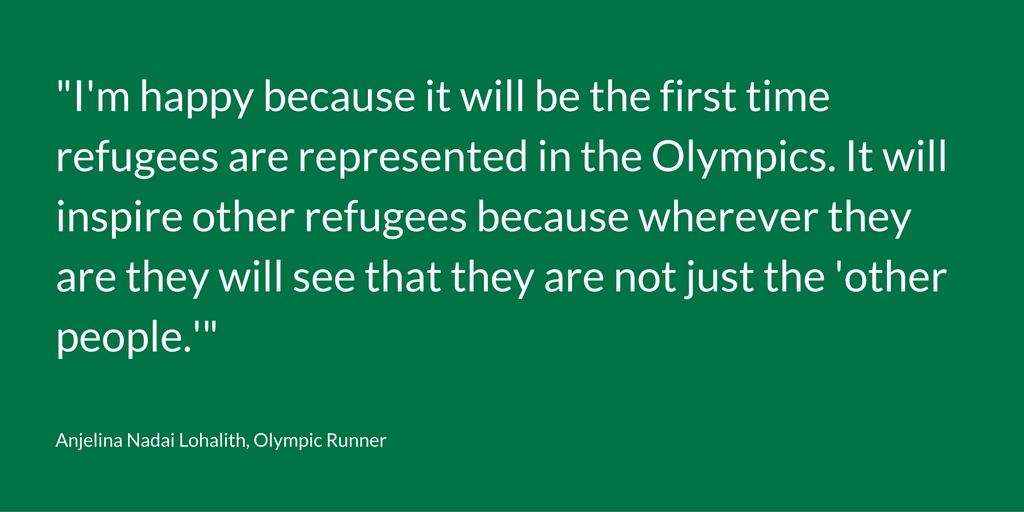
Refugee Olympic Team
Summer in St James Park

St James Park, London.
Thanks to some beautiful summer weather in London, I was able to enjoy St James Park one evening. Along with the ducks, I admired the view of the London Eye, also known now as the Coca-Cola London Eye. St James's Park, which was once farmland, woods, and a hospital for women lepers, is the oldest of the capital's eight Royal Parks. The park includes The Mall and Horse Guards Parade and provides the setting for spectacular pageants including the annual Trooping the Colour, a traditional ceremony performed by regiments of the British and Commonwealth armies. The ducks here were trying to give me a demonstration of what it's like. I get the idea. Nicely done, ducks.
Joseph McKeown: The DLG-Proust-Actors Studio Questionnaire
The one fact that I love recounting about Joseph is that it took him four years (maybe more) to find a pair of rain boots. This is not an exaggeration. Around the time he first started working at the firm, he was looking for rain boots. He ordered a few boots, didn’t like the fit, ordered more, again didn’t like the fit, left the law firm for an extended trip but still didn’t have the right boots. (He wasn’t afraid of sending a pair of boots back and starting again even when they came all the way from France.) When he came back to the law firm, after a year of traveling the world, he was still without rain boots, and, finally, only in the past year did he find, purchase, and keep a pair of rain boots.
Read moreNew York Times: "A Mother’s Love? Of Course. Her Citizenship? Not So Fast"
Twenty-seven countries around the world do not allow or limit the ability of mothers to pass on their citizenship to their children and a non-citizen spouse, according to data from the United Nations. In countries such as Iran and Qatar, for example, restrictive laws state that women cannot pass citizenship onto their children even if the children are left stateless, while in Nepal or the United Arab Emirates, there are exceptions if the father is unknown or stateless himself. Such laws restricting citizenship can potentially leave children and stateless parents without identity documents, access to education, health care, or employment. The New York Times explains:
The laws are not just a measure of the unequal treatment of women. They can also have grievous consequences for the children who, as citizens of nowhere, may be kept from being able to go to school. Syrian refugees born in Lebanon, for instance, may be in especially dire straits because so many of their fathers are dead or missing; Lebanon and Syria are among the 27 countries, and Lebanon is among the most restrictive.
While some countries will let a woman pass on citizenship when she is unmarried—and prevent her from doing so when married—advocacy group Equality Now says this reinforces the belief that “a woman, once married, loses her independent identity[.]”
Examining the UN data and other sources, the Pew Research Center found that these types of laws and policies preventing women from transmitting citizenship were present in most countries around the world sixty years ago. Gradually countries have revised their laws, and recently in the past five years, multiple countries, including Kenya, Monaco, Yemen and Senegal, have decided to change their laws to allow women to transmit citizenship. Only last month, Suriname changed its law and now allows women to transmit citizenship to children and non-citizen spouses.
Such restrictions regarding citizenship are most common in the Middle East and North Africa, where twelve out of twenty countries have restrictive nationality laws. In Jordan, the law prohibits women married to non-citizens from passing citizenship to their children. This potentially affects the 84,711 Jordanian women who are married to non-citizens and their 338,000 children, a figure from a recent statement from the country’s Interior Ministry. Laws in Saudi Arabia prevent women married to non-citizens from transferring citizenship to their children; moreover, they are required to obtain government permission prior to marrying a non-citizen, a rule that also applies to Saudi men who want to marry a non-citizen from outside the Gulf Cooperation Council member states (Bahrain, Kuwait, Oman, Qatar, and the United Arab Emirates). Eight countries in sub-Saharan Africa have laws or policies limiting women’s ability to pass citizenship to their children, even though three of these countries—Burundi, Liberia and Togo—have “enshrined the principle of gender equality” in their constitutions. Men in these listed countries have few if any barriers in transmitting citizenship to their children and non-citizen spouse.
In the Asia-Pacific region five countries have laws or policies limiting women in their ability to pass citizenship to their families. Two in the Americas have similarly restrictive laws, including in the Bahamas, where the law “makes it easier for men with foreign spouses than for women with foreign spouses to transmit citizenship to their children,” according to a State Department Human Rights Report.
The United Nations tracks citizenship laws as part of its mandate to monitor stateless populations, particularly stateless children who cannot acquire nationality from either parent. While in most circumstances children can obtain nationality from their father, if the father is stateless, the child may also be at risk to become stateless. With nearly one in one hundred people displaced from their homes, the highest amount since World War II, stateless peoples and children are especially vulnerable and at risk.
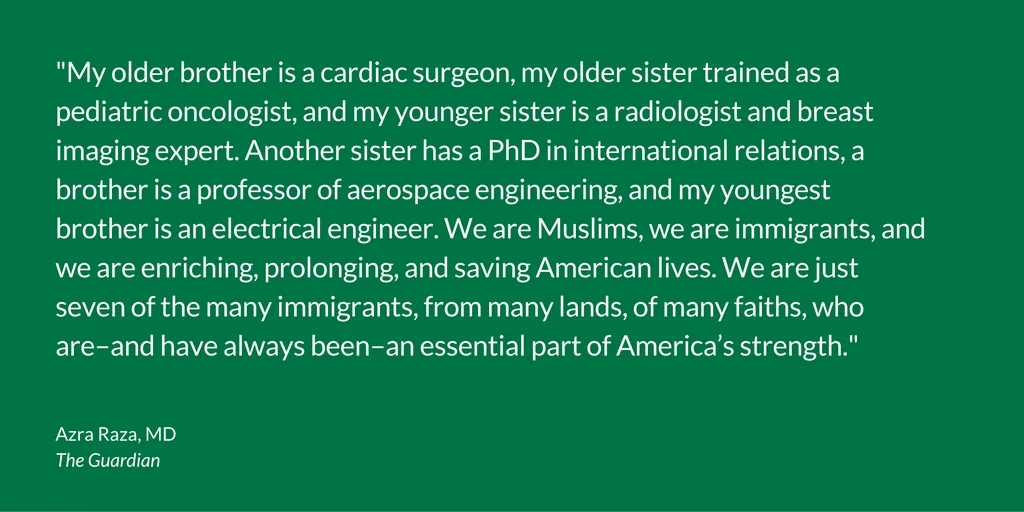
America's Strength
Go, America!
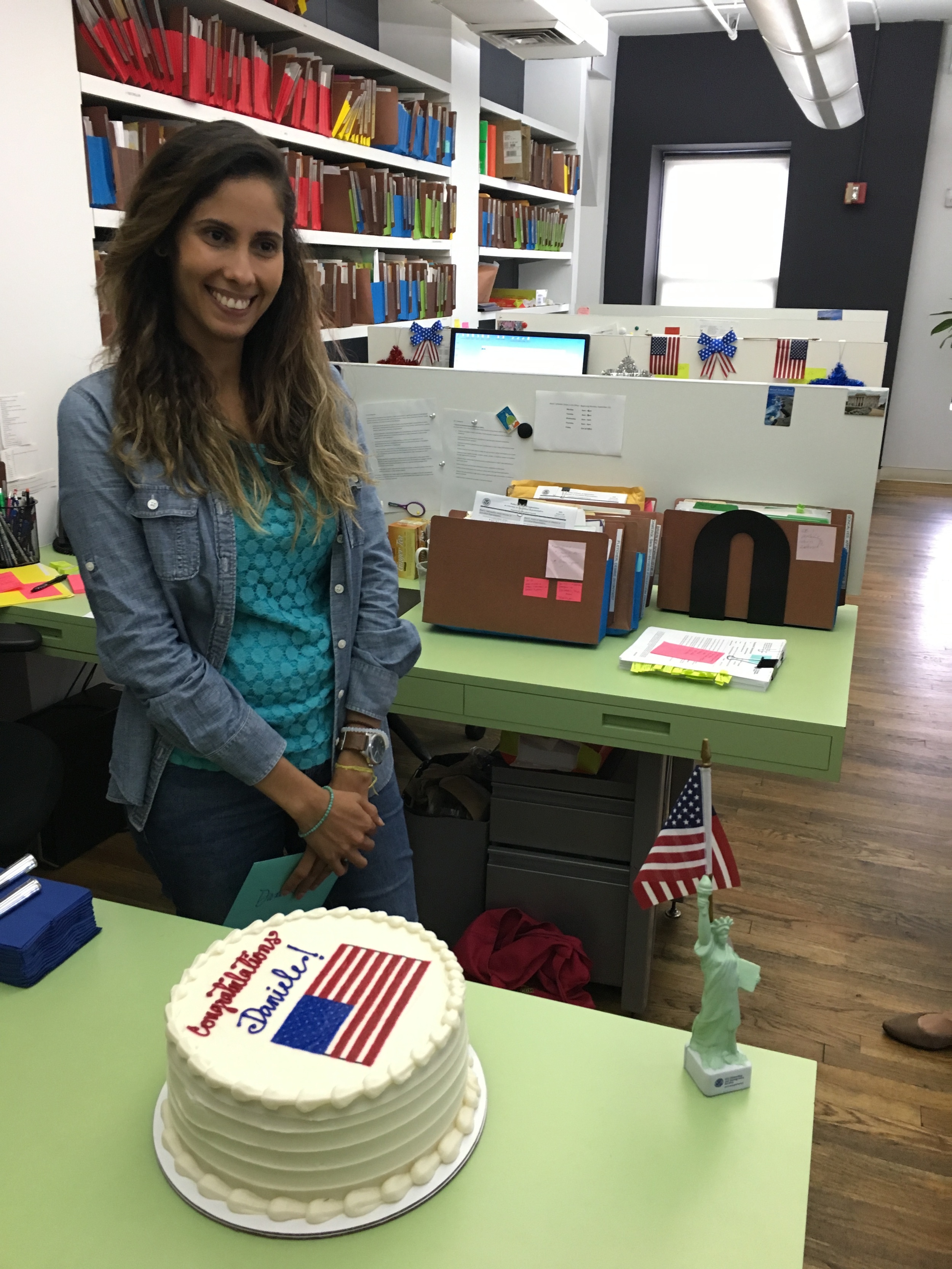
Last week Daniele, one of our paralegals, and her husband became US citizens. To celebrate this momentous occasion, we had some good old-fashioned American cake and decorated the office with lots of US flags. Her oath ceremony in New York City was conducted by the first Filipino-American Judge, the Hon. Lorna Schofield, who during the ceremony shared her own immigration story with the 160 oath-takers from forty-seven different nations. "Although the whole procedure took about three hours, the wait was totally worth it," Daniele says. "I am so happy to finally be a US citizen." Congratulations, and enjoy that super delicious cake, because that's what America is pretty much all about!
My Immigration Story

Jessica, a rising third year law student at Fordham University School of Law, is one of our summer associates. She is currently the Senior Notes Editor for the Fordham Journal of Corporate and Financial Law and a student attorney at the Immigrant Rights Clinic. Here she shares her family’s immigration story.
As a child, being deemed an American seemed quite arbitrary in my young mind since it was bestowed upon me solely based on my mother's physical location when I was born. Though born and raised in the States, I frequently divided my years between the United States and Taiwan, where my parents had emigrated. My Taiwanese relatives often did the same, visiting the US every so often. Growing up as an American citizen amongst non-citizen friends and families invoked the ever slight feeling of guilt, yet also one of pride. Though at the time I could not fully comprehend why, non-citizens of the United States always wanted citizenship.
Read moreWall Street Journal: “What American Citizenship Makes Possible”
Immigration is a vital part of our nation because people come to the United States to not only make a better life for themselves and their family, but to become American citizens, according to General Colin Powell, the former secretary of state and chairman of the Joint Chiefs of Staff. He says of his own immigration experience and his professional achievements:
Only in America could the son of two poor Jamaican immigrants become the first African-American, the youngest person and the first ROTC graduate from a public university to hold those positions, among many other firsts. My parents arrived—one at the Port of Philadelphia, the other at Ellis Island—in search of economic opportunity, but their goal was to become American citizens, because they knew what that made possible.
Saying that “America stands to benefit…as much as, if not more than, the immigrants themselves,” he goes onto refute common misconceptions about immigrants: neighborhoods with greater concentrations of foreign-born immigrants have lower rates of crime and violence than comparable nonimmigrant neighborhoods; foreign-born men between ages eighteen and thirty-nine are jailed at one-quarter the rate of native-born American men of the same age; immigrants today are learning English at the same rate or faster than earlier generations; first-generation immigrants are less likely to die from cardiovascular disease or cancer than native-born people, and experience fewer chronic health conditions, have lower infant-mortality and obesity rates, and have a longer life expectancy.
General Powell’s own parents met and married in the US while working in the garment industry, making $50 to $60 a week. General Powell was educated in the New York City public education system, from kindergarten through to Morris High School in the South Bronx and City College of New York—back when tuition was free—and experienced great success in his military career. He writes that while some countries including Japan and Russia worry that population decline threatens their economies, America benefits from immigrants’ energy, creativity, and drive. “We are all immigrants, wave after wave over several hundred years,” he writes. “And every wave makes us richer: in cultures, in language and food, in music and dance, in intellectual capacity. We should treasure this immigrant tradition, and we should reform our laws to guarantee it.”
For those interested in naturalization, US Citizenship & Immigration Services (USCIS) has a helpful guide titled “10 Steps to Naturalization: Understanding the Process of Becoming a U.S. Citizen.” In this guide, USCIS explains who is eligible to apply for naturalization, steps to file Form N-400, Application for Naturalization, information about the process when the N-400 is pending, and, of course, what happens after approval, including taking the Oath of Allegiance and the naturalization ceremony.