
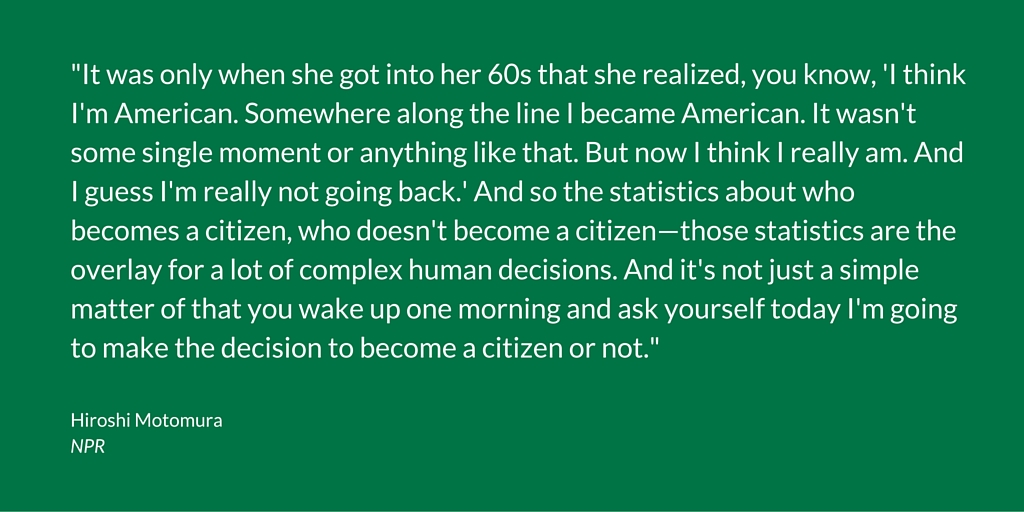
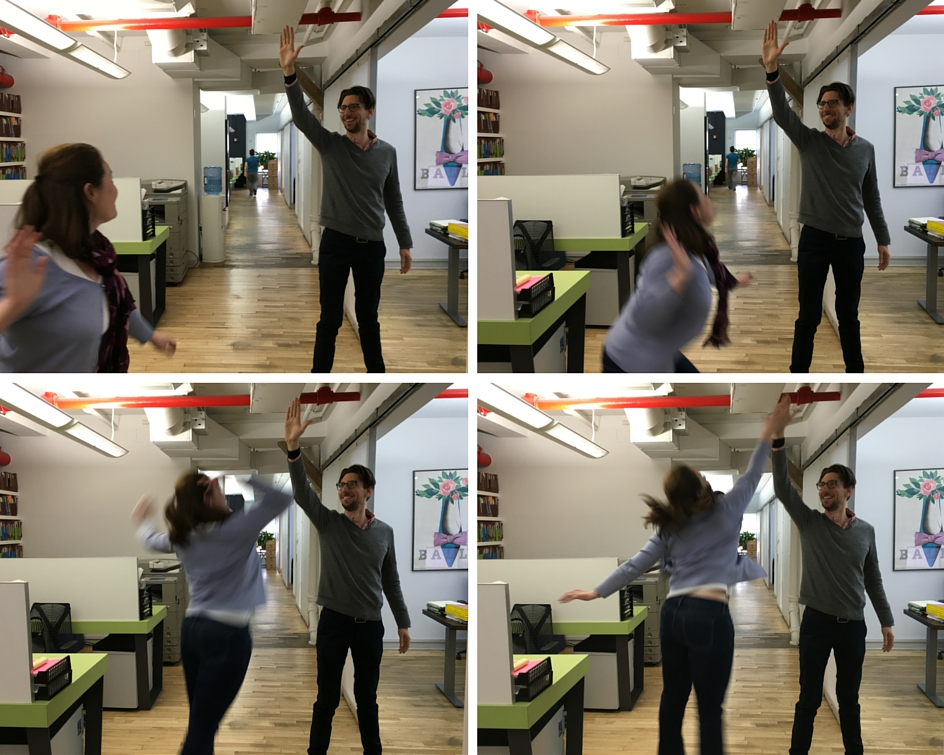
National High Five Day, started in 2002 at the University of Virginia by a group of students, celebrates high fives. And there is no one more enthusiastic about high fives in our office than Liz. She will do whatever it takes to make that high five. Including jumping great heights. Go Liz!
National High Five Day!
5 Reasons Why a Green Card May Not Be Right For You
For many people, the Green Card is the ultimate symbol of accomplishment. After years of waiting through backlogs or dreaming of coming to America, the card is the proof of success. Holding the Green Card in their hands, they can breathe a sigh of relief that all their hard work paid off.
Because the Green Card is held in such high regard many clients understandably want to discuss how they can get one. But another equally important part of that conversation has to include the possible negative consequences of obtaining a Green Card. Despite the appeal of a Green Card, for some people it may not be the best choice.
Read moreInside Sources: “On Tax Day, Remember the Contributions of Unauthorized Immigrants”
Millions of Americans have filed their taxes in advance of the April 18 “Tax Day” deadline. And it’s not only US citizens paying taxes. Undocumented immigrants also make immense federal, state, and local tax contributions, as Tom Jawetz at the Center for American Progress points out. A recent study by the Institute on Taxation and Economic Policy (ITEP) claims that undocumented immigrants pay an estimated yearly $11.64 billion in state and local taxes, adding significant amounts of money to state and local budgets. Tax contributions by undocumented immigrants also help to ensure the solvency of federal programs such as Social Security—the Chief Actuary of the Social Security Administration reported that in 2010 undocumented immigrants paid a net $12 billion in tax revenue into Social Security—even though many undocumented immigrants are unlikely to benefit from the programs themselves.
The study also claims providing a pathway for legal status in the US for undocumented workers would translate into even more tax revenue. ITEP’s analysis claims that combined state and local tax contributions of the nation’s eleven million undocumented immigrants would “increase by more than $800 million under full implementation of the administration’s 2012 and 2014 executive actions and by more than $2.1 billion under comprehensive immigration reform.” Meg Wiehe, ITEP State Tax Policy Director, said in a statement: “Regardless of the politically contentious nature of immigration reform, the data show undocumented immigrants greatly contribute to our nation’s economy, not just in labor but also with tax dollars. With immigration policy playing a key role in state and national debates and President Obama’s 2014 executive action facing review by the Supreme Court, accurate information about the tax contributions of undocumented immigrants is needed now more than ever.”
Texas, which sued the Obama administration over plans to expand the Deferred Action for Child Arrivals (DACA) program, would reportedly see an additional $154 million yearly in new tax revenues each year if Obama’s executive actions were put in place. Moreover, the Joint Committee on Taxation found that blocking the deferred action initiatives would increase the size of the federal deficit by $7.5 billion over ten years. The Supreme Court will issue a ruling for Texas's lawsuit, United States v. Texas, this summer.
I Was a Happy Woman

Gone But Not Forgotten

Damien Hirst's Gone but not Forgotten is the gilded skeleton of a three-metre tall woolly mammoth currently on display in the garden of the Faena Hotel Miami Beach. The sculpture, which I saw recently when I was in Miami to see some tennis, was originally auctioned in support of amfAR, an organization dedicated to using innovative research to end the global AIDS epidemic. Hirst said of the sculpture: "The mammoth comes from a time and place that we cannot ever fully understand. Despite its scientific reality, it has attained an almost mythical status and I wanted to play with these ideas of legend, history and science by gilding the skeleton and placing it within a monolithic gold tank. It's such an absolute expression of mortality, but I've decorated it to the point where it's become something else, I've pitched everything I can against death to create something more hopeful, it is gone but not forgotten."
5 Visas We Wish Existed
We are lucky here at the firm to meet so many interesting and talented people from all over the world. But nothing is more frustrating than when we meet someone with a genuine and legitimate reason to be in or come to the US, but we are unable to help them because there is no appropriate visa type that matches their qualifications or situation. This got us to thinking—what if we could invent or re-style existing visas to match some of the people we meet and cannot help. We may have to get creative with the alphabet here…
Read moreNY Times: “European Union to Consider Requiring Visas for U.S. Travelers”
The days of visa free travel for Americans to the European Union may be over. While Americans take for granted the ease of traveling without a visa to many European countries—while, conversely, many Europeans travel to the US visa-free under the Visa Waiver Program (VWP)—the European Union is threatening to change the requirements if the US government does not agree to include additional European member states, including Bulgaria, Croatia, Cyprus, Poland, and Romania, in the Visa Waiver Program. Although the deadline for the decision was this week, and has now been moved to this summer, the timing is not ideal, as the New York Times explains:
The escalating dispute comes at a time when Washington is especially concerned about security, in the aftermath of terrorist attacks in Europe and the presence of suspected terrorists in the flow of migrants to the Continent out of the Middle East. Should the commission decide to move toward imposing visa requirements, it could be a blow to trans-Atlantic relations just before a visit to Europe by President Obama and could complicate negotiations on other issues, including a proposed trade deal.
Security concerns, however, haven’t affected certain European officials who are pressuring Washington to include the additional countries in visa-free travel. “Over the past months, all sides have intensified their efforts in order to reach tangible and concrete progress,” Mina Andreeva, a spokeswoman for the commission, said in a statement. “Our goal is full reciprocal visa waiver with our strategic partners,” she said.
The Visa Waiver Program currently includes thirty-eight member countries, and the program enables eligible citizens of approved countries to travel to the United States for tourism or business for stays of ninety days or less without first obtaining a visa, as long as they apply and are approved under the ESTA program. Last year additional security measures were added to the Visa Waiver Program.
In Bulgaria, the economy minister, Bojidar Loukarsky, reportedly told local news media in 2014 that his country’s support for a trade pact with the US was contingent on visa-free travel to the US for his country’s citizens, while Marietje Schaake, a Dutch member of the European Parliament, disagreed, telling the New York Times: “No matter what happens with visas, this should not impact trade negotiations with the United States as immigration plays no formal part in those talks.”
Artur Habant, the spokesman for the Permanent Representation of Poland to the European Union in Brussels, said it’s a matter of fairness, as US citizens can travel to Poland visa-free. “Polish governments have been lobbying for a long time with the U.S. authorities, in Congress and in the administration, to eliminate this obstacle in traveling to the United States.” US officials, however, are concerned that countries such as Romania have not met the requirements to be included in the VWP.
The America Effect

Bye, Ashley!
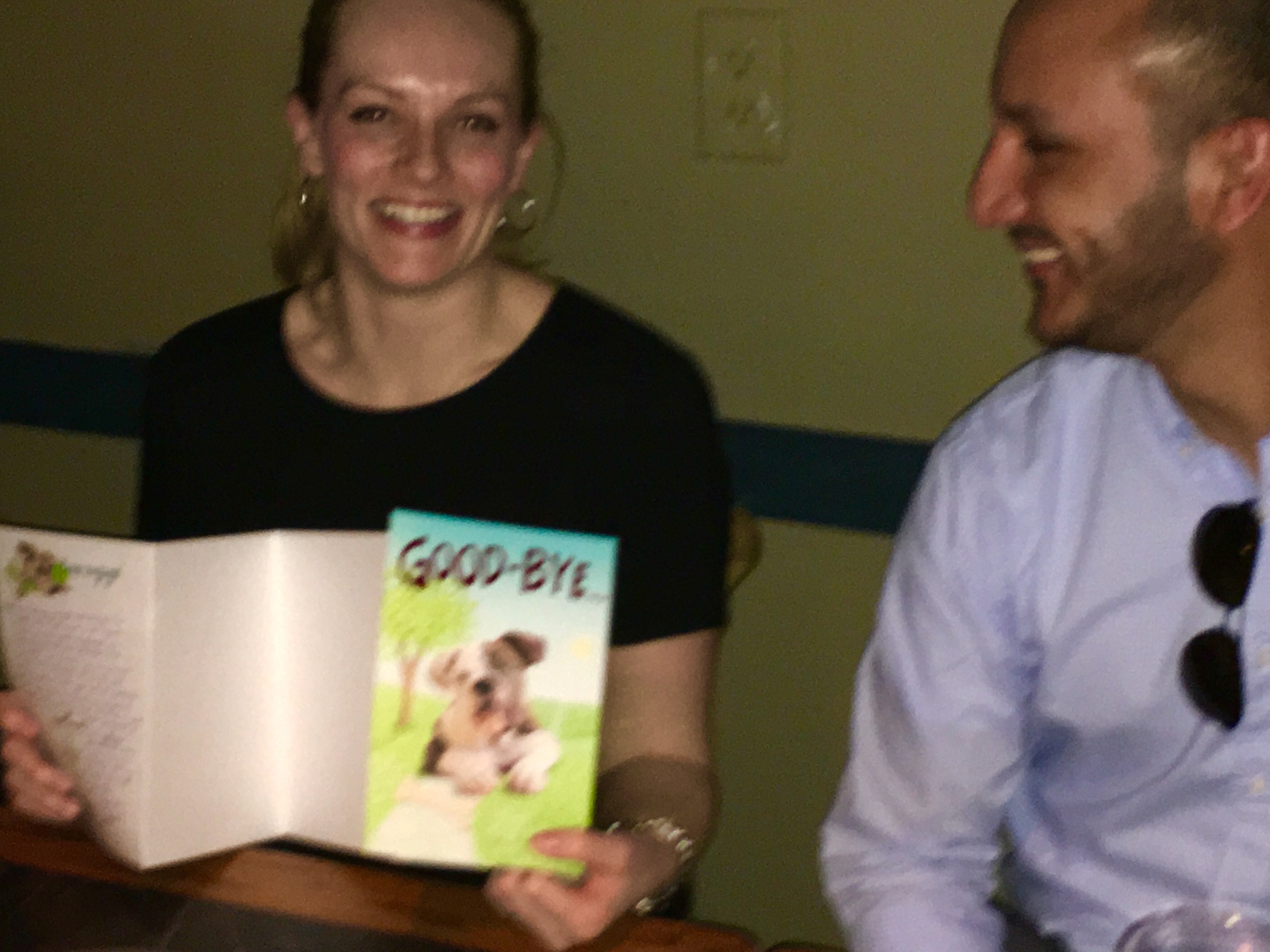
With heavy hearts we say goodbye to Ashley, who has worked at the firm for nine years. She's moving to Connecticut to live and work closer to family. We wish her all the best on her new adventure!
Donec id justo non metus auctor commodo ut quis enim. Mauris fringilla dolor vel condimentum imperdiet.