
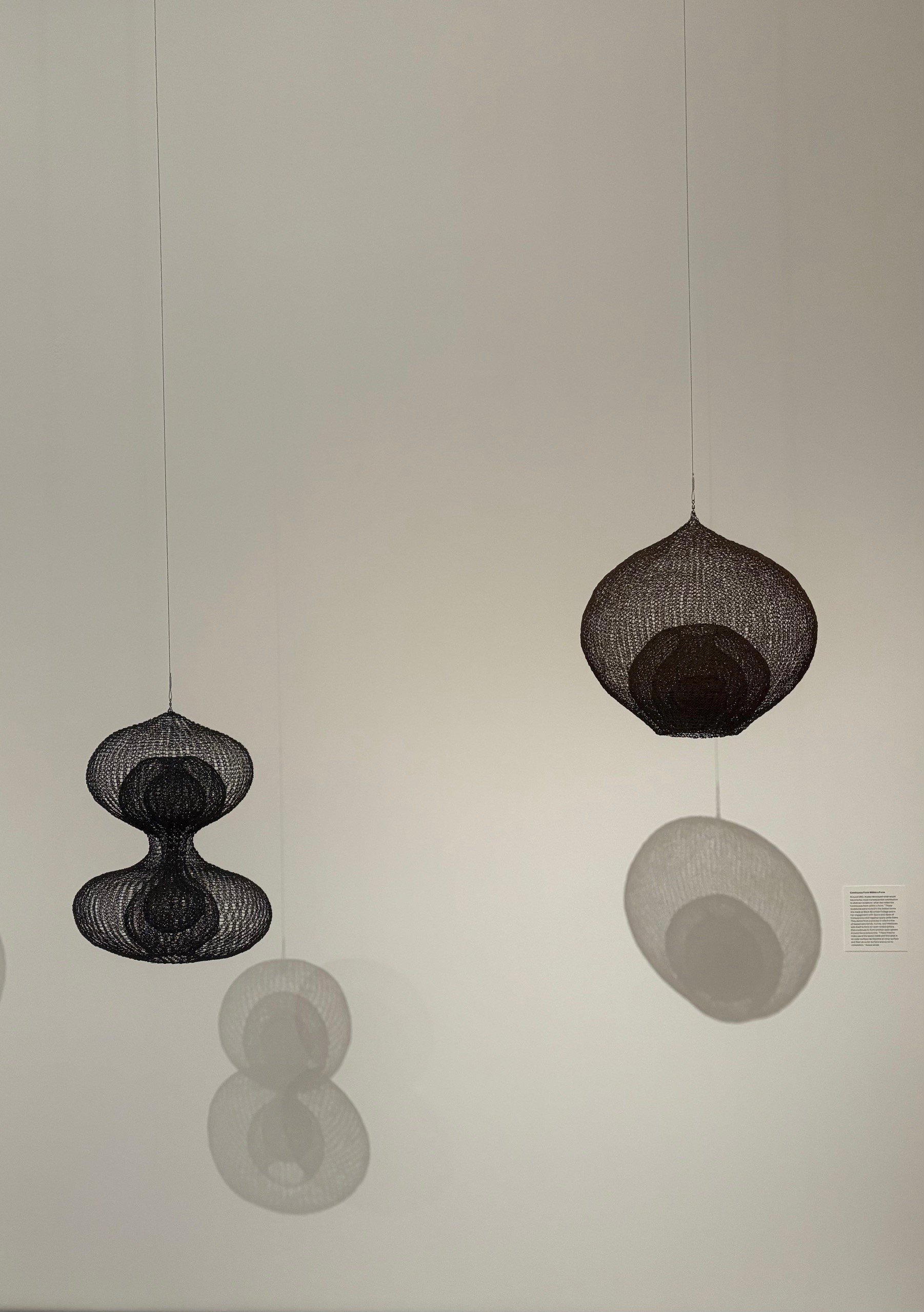
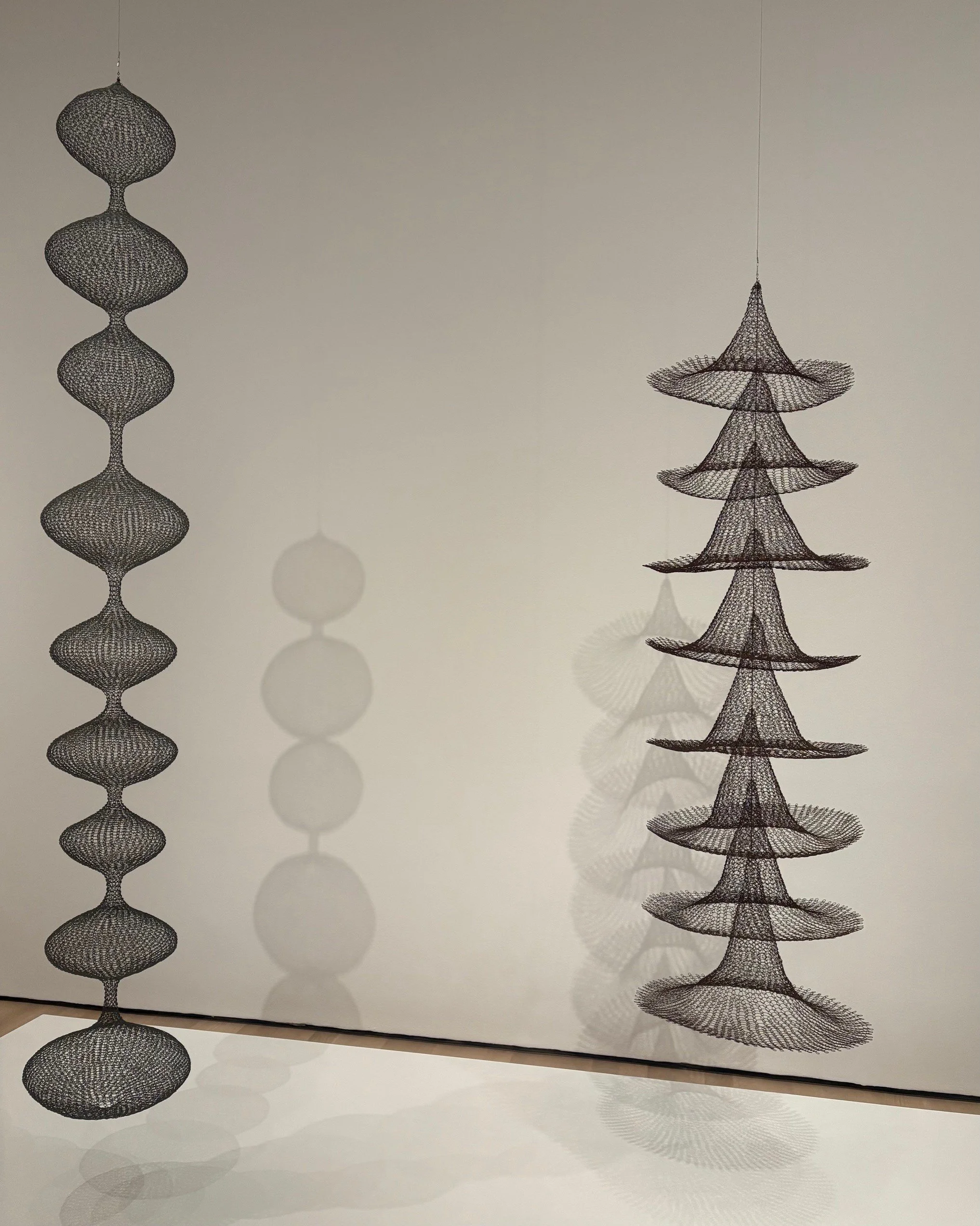
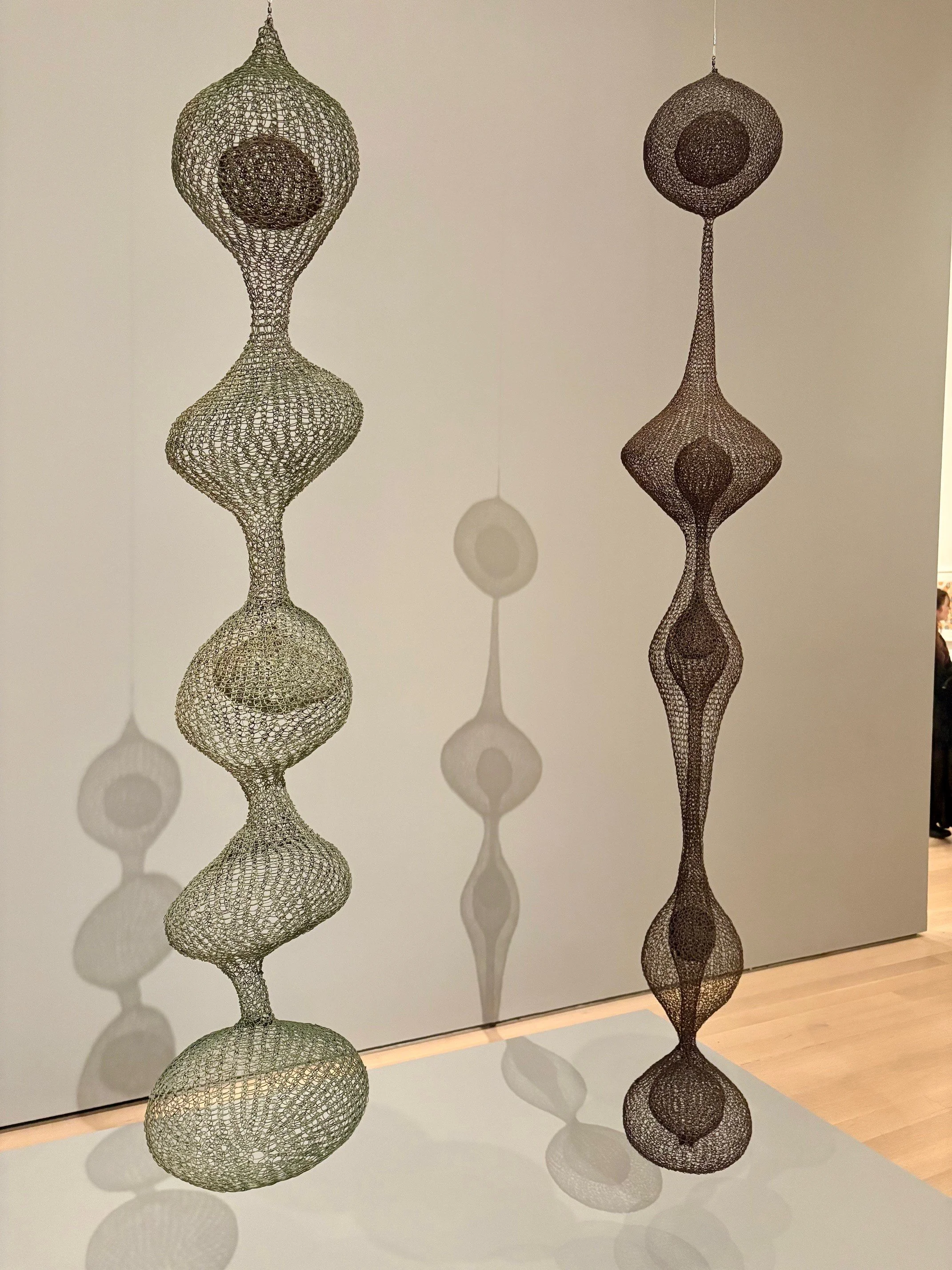
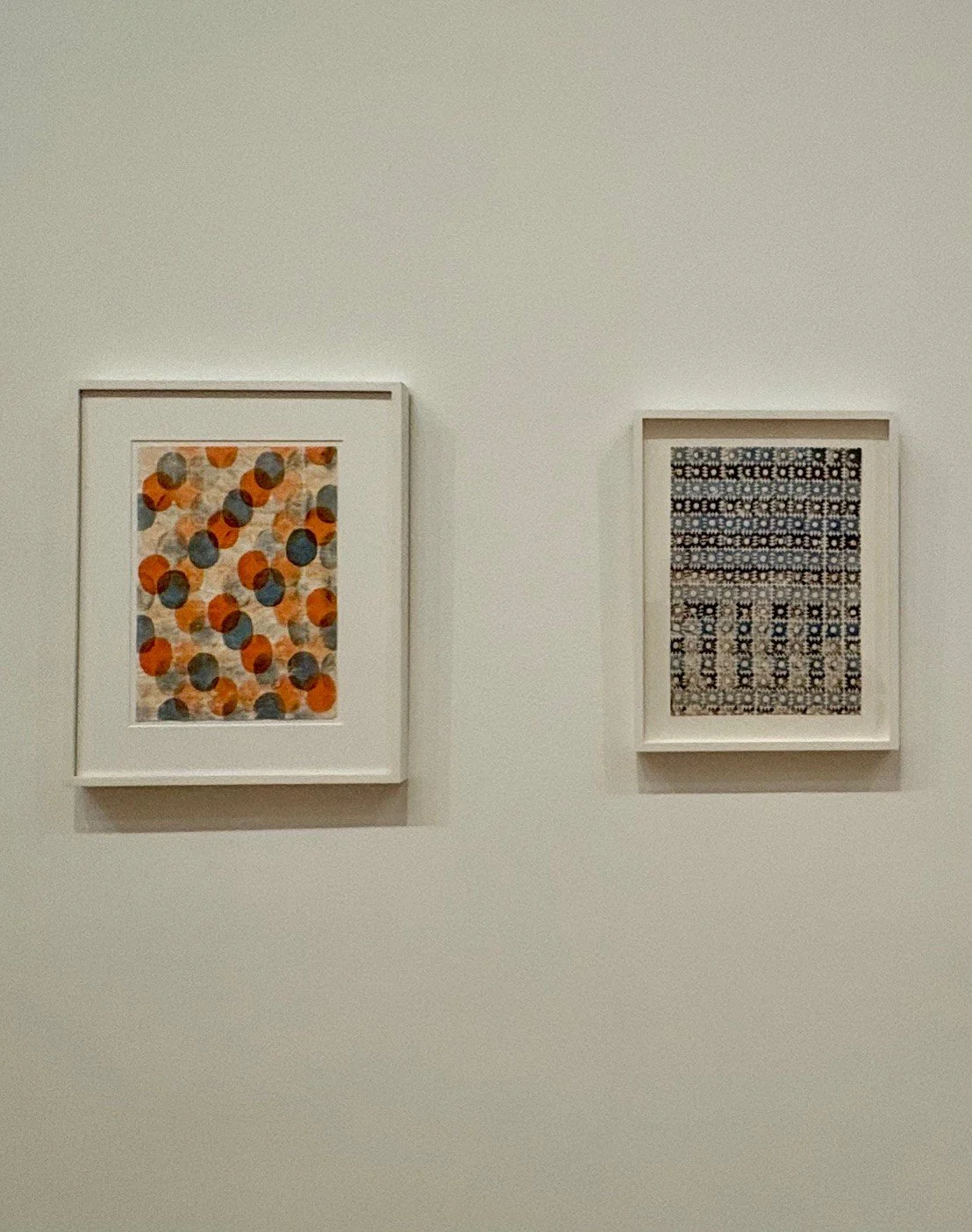
Last week, we had the chance to see the final days of “Ruth Asawa: A Retrospective” at the Museum of Modern Art. The exhibition traces Ruth Asawa’s remarkable journey from her early academic training to her rise as one of the most innovative voices in American contemporary art. Featuring more than 300 works from across Asawa’s career, the retrospective highlights the breadth of Asawa’s practice, while centering her iconic wire sculptures. Formed from continuous, interlocking loops of wire, these intricate pieces explore texture, light, and shadow. Their delicate, suspended forms shift with their surroundings, creating an almost meditative visual experience. Asawa’s life story is as compelling as her art. Born in California in 1926 to first generation Japanese Immigrants, she endured profound injustice because of her background. In 1942, her family was forcibly separated and incarcerated in internment camps under U.S. government policies targeting Japanese Americans. After her release, she enrolled at the Milwaukee State Teachers College to study education, but discriminatory laws in Wisconsin prevented her from receiving a teaching credential due to her ancestry. The exhibition effortlessly underscores the resilience behind Asawa’s work and the transformative power of American modern art. It invites reflection on creativity born from adversity and the enduring ability to make beauty in the face of hardship. The retrospective will next travel to the Guggenheim Bilbao in Bilbao, Spain, and the Fondation Beyeler in Riehen/Basel, Switzerland, where it will remain on view through January 2027.
“Ruth Asawa: A Retrospective”
Donec id justo non metus auctor commodo ut quis enim. Mauris fringilla dolor vel condimentum imperdiet.