
The United States is one of the most popular places for foreign nationals to come to study. In the 2015 to 2016 academic year, over one million international students came to the US! Although numbers have dropped since President Trump was elected, and there are reports of foreign nationals reconsidering higher education in the US in light of the anti-immigrant rhetoric and atmosphere, many foreign nationals will still come to the US to study at our highly respected educational institutions. As I’ve written before, it’s not uncommon for certain foreign students to move onto work visas once they have completed their studies. In this post, however, we wanted to examine how exactly foreign nationals come to the US as students, and some general issues that foreign students face, including employment while in school and visas for their dependents. It may surprise some readers that there is not just one visa option for students. In fact, there are three different routes for students: F-1, M-1, and J-1. Each visa has its own set of rules concerning how it can be used and what benefits (and potential detriments) may follow.
Read moreThe Washington Post: “Immigration judges say proposed quotas from Justice Dept. threaten independence”
The Trump administration is attempting to impose “numeric performance standards” on federal immigration judges in order to reduce the immense backlog of cases, a move that many fear will threaten judicial independence. In a proposal made by the White House earlier this month as part of negotiations regarding the Deferred Action for Childhood Arrivals (DACA) program, the Trump administration says that their intention is to “establish performance metrics for immigration judges.” More specifically, documents obtained by the Washington Post show that the Justice Department "intends to implement numeric performance standards to evaluate Judge performance." Dana Leigh Marks, the spokeswoman and former president of the National Association of Immigration Judges, says this is alarming. “That is a huge, huge, huge encroachment on judicial independence. It’s trying to turn immigration judges into assembly-line workers.”
Read moreAn Act of Faith

USCIS: “Changes to Direct Filing Addresses for Form I-129 Petitions”
Effective October 12, 2017, US Citizenship & Immigration Services (USCIS) has changed the direct filing addresses for certain petitioners submitting Form I-129, Petition for a Nonimmigrant Worker. Petitioners must now file Form I-129 according to the “state where the company or organization’s primary office is located.” Petitioners previously filed Form I-129 based on where the beneficiary’s temporary employment or training was located. Additionally, petitioners located in Florida, Georgia, North Carolina, and Texas will now file Form I-129 at the California Service Center.
UCCIS publishes the list of direct filing addresses for Form I-129, Petition for a Nonimmigrant Worker, on their website. Beginning November 11, 2017, USCIS may reject Form I-129s that are filed at the incorrect service center, so it’s recommended to verify (and double-check) the correct address before submitting.
Under One Roof

The living room of Ramonita Saez and her two children. (Photo courtesy of the Tenement Museum.)
Under One Roof is a new exhibit at the Tenement Museum exploring post-WWII immigration in the Lower East Side. The Tenement Museum is comprised of two historic tenement buildings, 97 Orchard Street, which tells the stories of immigrant families between 1863 and 1935, and 103 Orchard, which now houses its first exhibit to feature modern immigration stories. This week I attended a preview tour of Under One Roof, and learned about residents at 103 Orchard, including Bella Epstein, whose parents survived the Holocaust; Jose and Andy Velez, whose seamstress mother, Ramonita Saez, left Puerto Rico and worked for many years in the garment industry; and the Wong siblings, whose mother sewed in Chinatown garment shops. Under One Roof takes visitors into the homes of these three families from the 1950s through the 1970s and uses an astonishing attention to decorative details (notice the plastic furniture slipcovers above) as well as audio, visual, and in-person storytelling by the tour guide to convey their immigrant experience. The exhibit is open for preview tours now, and is scheduled to officially open later this fall.
CNN: “United States and Turkey mutually suspend visa services”
The United States has suspended nonimmigrant visa services in Turkey, after last week’s arrest of a US embassy employee in Istanbul. In return, Turkey announced they were also suspending nonimmigrant visa services for American nationals. The US mission in Ankara said in a statement on October 8, 2017 announcing the suspension: “Recent events have forced the United States government to reassess the commitment of government of Turkey to the security of US mission and personnel."
Read moreUSCIS: Updated Form I-765 Streamlines Process To Obtain Work Authorization Document and Social Security Number
US Citizenship & Immigration Services (USCIS) and the Social Security Administration (SSA) have a new information-sharing partnership that now allows foreign nationals in certain categories or classifications to apply for work authorization along with a Social Security number using only one form—namely, the updated Form I-765, Application for Employment Authorization.
Read moreThe Last Place You Left

Positano from the Sea
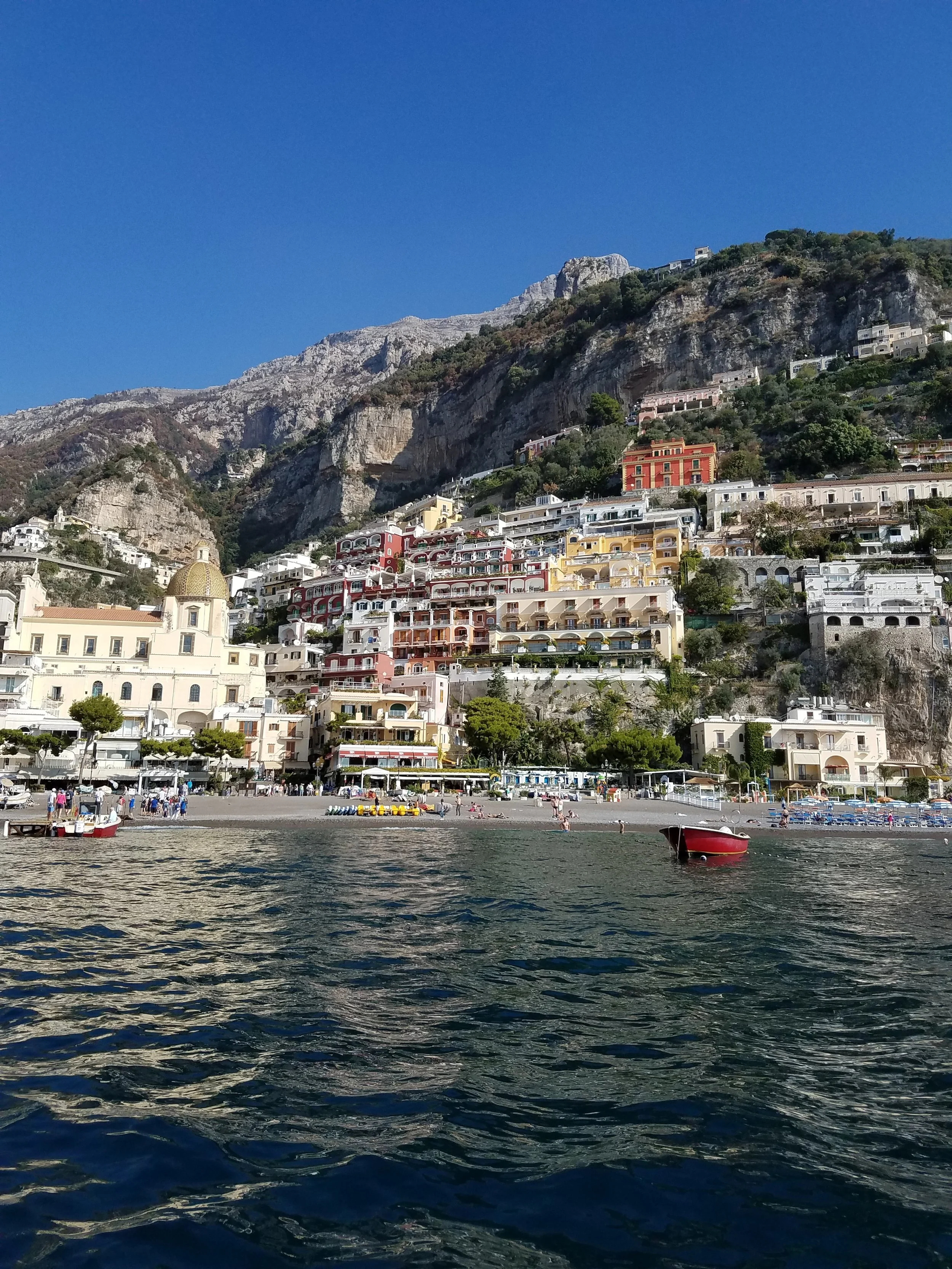
I could do a whole blog on how much I love Positano. This seaside town on the Amalfi Coast is one of my favorite places to visit. We try to come here every year for at least a few days. This year I spent a lot of time on the water which is one of the best ways to see the region. Yesterday, I went on a lovely boat ride and stopped at several places along the coast for a swim in the Tyrrhenian Sea, which is refreshing (“fresca” as they say here). Afterwards, with a Bellini in hand, we admired the great views of the coast from the sea and slowly made our way back to Positano. I will miss this view (until next year).
5 Quick (But Important) Tips for ESTA
The Electronic System for Travel Authorization (or ESTA, as it is commonly known) is an automated system that determines the eligibility of visitors to travel to the United States under the Visa Waiver Program (VWP). The VWP enables most foreign nationals from participating countries to travel to the US for tourism or business without first obtaining a visa, if they meet certain requirements. These prospective travelers are required to demonstrate their eligibility for the VWP by applying for travel authorization via ESTA prior to boarding a plane or vessel bound for the US. Through ESTA, the US government compares the applicant’s personal information against various databases in order to determine whether there is a law enforcement or security reason to deem that person ineligible to travel to the US under the VWP. While the ESTA is valid for two years or until the applicant’s passport expires, the actual permitted stay in the US on the VWP is only ninety days at a time.
Read more