
Effective July 1, 2016, the Nebraska Service Center (NSC) is accepting certain H-1B and H-1B1 (Chile/Singapore Free Trade) petitions which were previously required to be filed at other service centers. The NSC is now accepting H-1B and H-1B1 I-129 petitions if the petitioner requests a “continuation of previously approved employment without change from the same employer” in response to Question 2 and also requests that US Citizenship & Immigration Services (USCIS) “notify the office in Part 4,” “extend the stay of the beneficiary,” or “extend the status…based on a free trade agreement” in response to Question 4.
Read moreThe Guardian: “Theresa May says she will make success of Brexit as prime minister”
Home Secretary Theresa May will be the next prime minister of the United Kingdom reportedly as early as Wednesday this week, bringing a fast resolution to the dramatic events surrounding last month’s “Brexit” vote to leave the European Union and the subsequent resignation of current Prime Minister David Cameron. May’s candidacy for prime minister is uncontested after Andrea Leadsom, Britain’s energy minister, dropped out of the race; Boris Johnson, former London mayor, declined to run; and Michael Gove, who with Johnson was a prominent proponent of the Leave Campaign, failed to attract enough support for the position.
The most pressing issue facing the incoming prime minister, of course, is overseeing the departure of the United Kingdom from the European Union as part of the Brexit vote. In a statement, May says she would provide “strong, proven leadership to steer…through what will be difficult and uncertain economic and political times” and also to “negotiate the best deal for Britain in leaving the EU, and to forge a new role for ourselves in the world.”
While many voters have expressed regret for their Brexit votes after the sudden economic downturn that happened immediately post-Brexit referendum, May left no room for a second referendum, saying: “Brexit means Brexit, and we are going to make a success of it.” What success that might be is difficult to tell, as she has not released any specifics about how she will negotiate UK’s departure from the EU. May says that “her priority would be reclaiming greater power for Britain to control immigration, even if it meant sacrificing access to the Continent’s single market for goods and services.” As Home Secretary since 2005, Ms. May has overseen some controversial immigration initiatives and programs:
- One of her most controversial policies to drastically reduce immigration from outside the EU was a new rule barring British citizens from bringing their spouses or children into Britain unless they earned more than £18,600, no matter how much their non-British spouse earned. Critics say this law is causing families to be split apart. The law is being challenged in the UK Supreme Court;
- She also was responsible for the widely criticized “go home vans,” which drove around the country offering undocumented immigrants assistance in returning to their home countries. Plagued with hoax calls and texts and widely mocked, the program resulted in just 11 people leaving the country.
Despite all this, she says she will be a unifier and bring together a wide variety of people in the UK, saying “we need a strong, new positive vision for the future of our country, a vision of a country that works not for the privileged few but that works for everyone of us.”
The whirlwind of events culminating with this new prime minister without a general election—which was originally scheduled for 2020—has led some to call for a popular vote. Tim Farron, the head of the Liberal Democrats, is objecting to Ms. May’s becoming prime minister, saying on Twitter: “With @TheresaMay2016’s coronation we need an early General Election. The Tories now have no mandate. Britain deserves better than this.”
Brave, Courageous Thing

Sunset at Wimbledon

As the sun sets at the AELTC (All England Lawn Tennis & Croquet Club), only the last few matches of the tournament remain to be played. The incredible Serena Williams is set to play Angelique Kerber in the women's final. For the men's final, Andy Murray is playing Milos Raonic (who broke my heart in beating Roger Federer). What a great tournament it's been. Good luck to all these players, and see you next year!
OPINION: United States v. Texas: Where Do We Go from Here?
By now, most people have heard about the decision last month by the US Supreme Court that effectively halted the Obama administration’s plans to defer deportations of and grant work cards to millions of undocumented immigrants present in the US. These programs, known as DAPA (Deferred Action for Parents of Americans and Lawful Permanent Residents) and expanded DACA (Deferred Action for Childhood Arrivals), would have effectively temporarily blocked the deportations of the millions of people whose children are US citizens or lawful permanent residents (Green Card holders), or who were brought to the US as children and were either in school or the military or had been. (A prior DACA program remains in effect.) These programs were announced by the president in November 2014 after years of Congressional inaction on comprehensive immigration reform, along with a number of other initiatives, most of which have proceeded.
Read moreThe Nation: “The Deportation Machine Obama Built for President Trump”
While Obama’s executive actions announced in November 2014 were seen as a step forward for many immigrants (even though these actions have stalled in a variety of lawsuits) and his administration has crafted an image as being “smart” on deportation policy and advocating for comprehensive immigration reform, nevertheless Obama will leave his successor the “most sophisticated and well-funded human-expulsion machine in the history of the country.”
When President Obama took office in 2009 he inherited a burgeoning deportation apparatus from President Bush who had created the Office of Homeland Security in 2001 (which subsequently become the Department of Homeland Security) with the “War on Terror” in mind. Tom Ridge, then Director of the Office of Homeland Security, expanded his department to include an immigration enforcement plan that aimed for a “100% removal rate” of undocumented immigrants in the US, a vision encapsulated in a document titled “ENDGAME Office of Detention and Removal Strategic Plan.” With Obama in office, the Nation reports, this went on:
Instead of reversing that architecture and disavowing that plan, President Obama turbocharged it. To pay for the ballooning enforcement-first approach, the budget for immigration enforcement grew 300 percent from the resources given at the time of its founding under Bush to $18 billion annually, more than all other federal law-enforcement agencies’ budget combined.
Before the end of his first term in office, the Obama administration had taken a small program developed in George W. Bush’s last days that aimed to turn local police into “force multipliers” and expanded it by about 3,600 percent.
Two years after being elected, President Obama had doubled the number of people being prosecuted for unauthorized entry into the US by expanding Bush’s border-court system, Operation Streamline, which tries up to 70 people per day. What started out as an experiment in three jurisdictions in 2008 expanded to every single border sector except California by 2010, eventually sending 209,000 individuals, over a period of four years, to serve federal prison sentences for the sole reason of crossing the border without documentation. To implement the strategies of ENDGAME, DHS has become the largest law-enforcement agency in the country, with more than 48,000 personnel dedicated to immigration enforcement alone (up from 26,000 agents in 2002).
Although the Obama administration has promoted prosecutorial discretion to target immigrants who commit crimes and also provided resources for the temporary relief program and deferred action, it does not alter the massive deportation net the president has constructed.
By April 2014, immigration authorities scanned a total of 32 million sets of fingerprints, a number three times the undocumented population and equivalent to 10 percent of the entire US population. In fiscal year 2012, the height of its deportation quota pursuit, ICE processed 9 million prints, matching 436,000 submitted by local law enforcement, and issued detainers (a practice largely abandoned now due to constitutional concerns) for over a quarter-million of those it identified.
Not all agree that Obama is a hardliner on immigration. “There’s no question that there’s been a record number of formal removals, no question that enforcement has not tailed off,” Marc Rosenblum, a deputy director at the nonpartisan Migration Policy Institute, tells The Daily Beast. “But [Obama] is exercising a lot of discretion in the interior, a lot of people are coming across ICE’s radar and not being put through removal.”
In the end, what happens to this deportation machine is up to the next president. With the possibility of presumptive Repubilcan nomineee Donald Trump—who has repeatedly made far-reaching claims about deporting all undocumented immigrants—being elected as the next president, with this well-functioning deportation apparatus, the Nation believes he may have the necessary tools to beat Obama’s reputation as the “deporter-in-chief.”
My America

Del Potro at Wimbledon

Amid all the uncertainty and craziness surrounding Brexit, it was fun to focus on other things, such as the welcome return of Juan Martin del Potro back to Wimbledon. The last time del Potro, who has been recovering from wrist injuries and surgeries for the past three seasons, was seen at the All England Club was in 2013 when he faced Novak Djokovic in the longest semi-final in Wimbledon history (where Djokovic prevailed 6-3 in the fifth). This week del Potro beat Stephane Robert in the first round and tough opponent Stan Wawrinka in the second. “Great sensations after three years," he said after his first win. "This year is completely different for myself, and I am enjoying tennis a lot. Of course, when you win your first round, everything is much better." It is much better with you here, Delpo.
Leaving Las Vegas: Highlights of the AILA Annual Conference June 2016
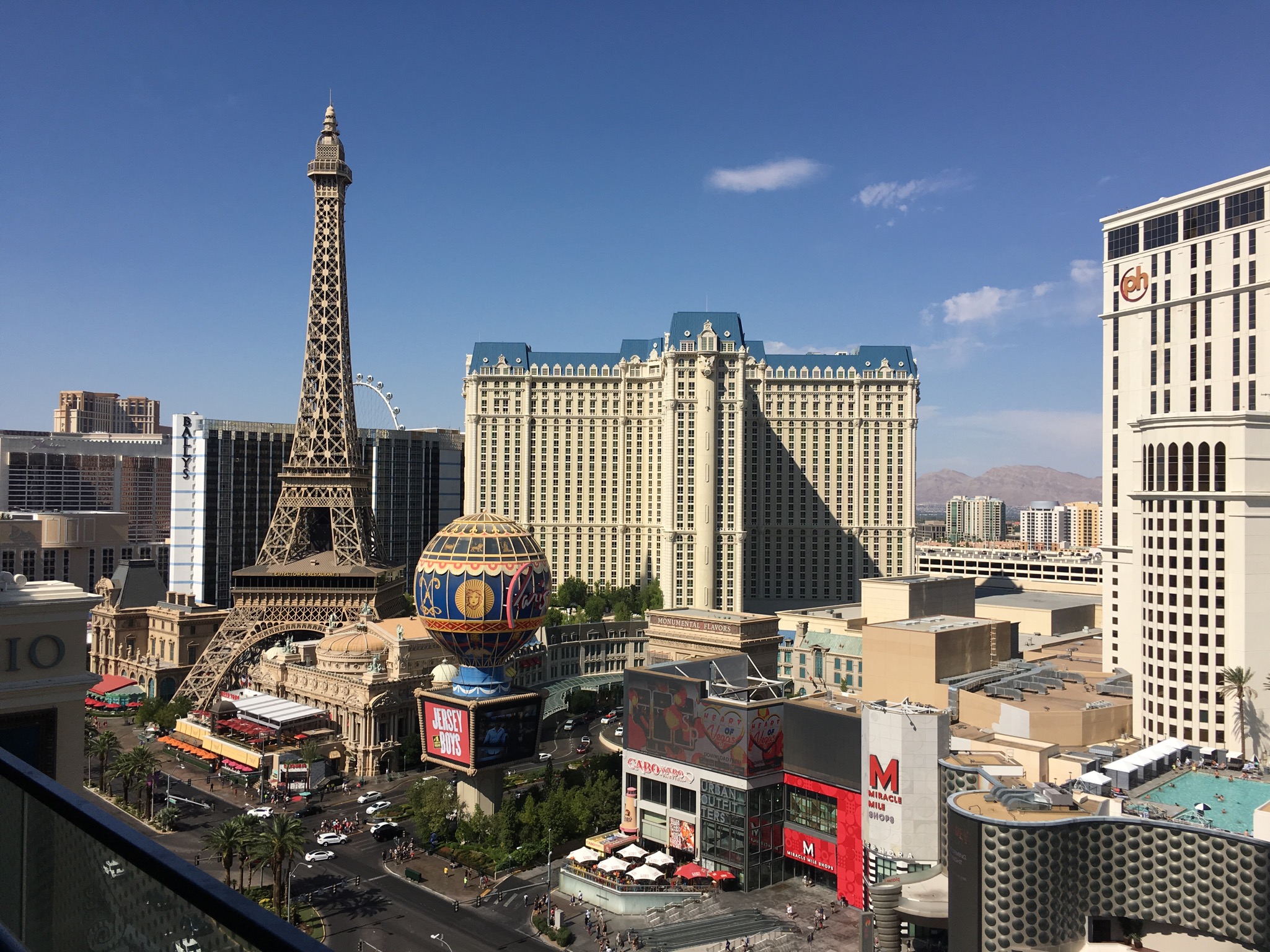
Despite the oft-repeated phrase, “What happens in Vegas, stays in Vegas,” I am bravely willing to throw caution to the wind and re-cap this year’s American Immigration Lawyers Association (AILA) annual conference that ran from June 23rd through the 25th in Las Vegas, Nevada. Both Protima and I attended three days of meetings held at the Cosmopolitan Hotel on the Vegas strip where thousands of lawyers swarmed a hotel typically filled with gamblers and partygoers. We did our best to fit in.
Read moreSlate: “Why Immigration Pushed Britons to Brexit”
Last week voters in England and Wales choose to leave the European Union in a nationwide referendum commonly referred to as the “Brexit” vote, with many voters claiming immigration fears as a top decider for them. The aftershocks of this referendum have been far reaching. In response, Prime Minister David Cameron, who opposed Brexit, offered his resignation, the Labour party is in turmoil, Britain’s credit rating has been downgraded, the British pound fell to a thirty-one year low against the dollar, the euro fell, and global stock prices have plummeted.
Many are offering their views on what exactly caused so many voters to want out of the European Union when many economists and financial leaders warned that it would not be a prudent move. Slate examines former Prime Minister Tony Blair’s role in opening up Britain’s borders to immigrants beginning in the late 1990s. Britain soon received roughly twice as many immigrants in the United Kingdom as had arrived in the previous half-century. Britain additionally become a highly sought-after destination for less-skilled European immigrants, due to the structure of the UK’s economy and its public policies, as well as the free movement of peoples, one of the core principles of the European Union. This, combined with loss of economic opportunity in many areas of the United Kingdom and the availability of public benefits for many recent immigrants, fueled an anti-immigrant backlash.
Many Leave campaigners, including Boris Johnson, the former London mayor, claimed that the EU was preventing the UK from enacting immigration controls. In the run-up to the vote, however, London’s new mayor, Sadiq Khan, who was for the Remain campaign, objected to the scapegoating of immigrants and said of his Leave opponents that it wasn’t so much “project fear, it’s been project hate as far as immigration is concerned.”
Tony Blair weighed in post-Brexit vote, acknowledging the role that high immigration numbers played, but framed it slightly differently:
The strains within Britain that led to this referendum result are universal, at least in the West. Insurgent movements of left and right, posing as standard-bearers of a popular revolt against the political establishment, can spread and grow at scale and speed. Today’s polarized and fragmented news coverage only encourages such insurgencies — an effect magnified many times by the social media revolution.
While the Leave campaigners promised to swiftly reduce the number of immigrants coming to Britain from other parts of Europe, with claims that a vote to leave would “bring down the numbers” by 2020, afterwards, however, the Leave campaigners adjusted their remarks: “Frankly, if people watching think that they have voted and there is now going to be zero immigration from the E.U., they are going to be disappointed,” Daniel Hannan, a prominent Leave advocate and member of the European Parliament, admits now.
The Brexit vote has already given rise to an increase in xenophobia and reports of abuse against immigrants. Meanwhile, many eligible UK nationals, unsure of what lies ahead for the United Kingdom, are busy applying for duel citizenship.